

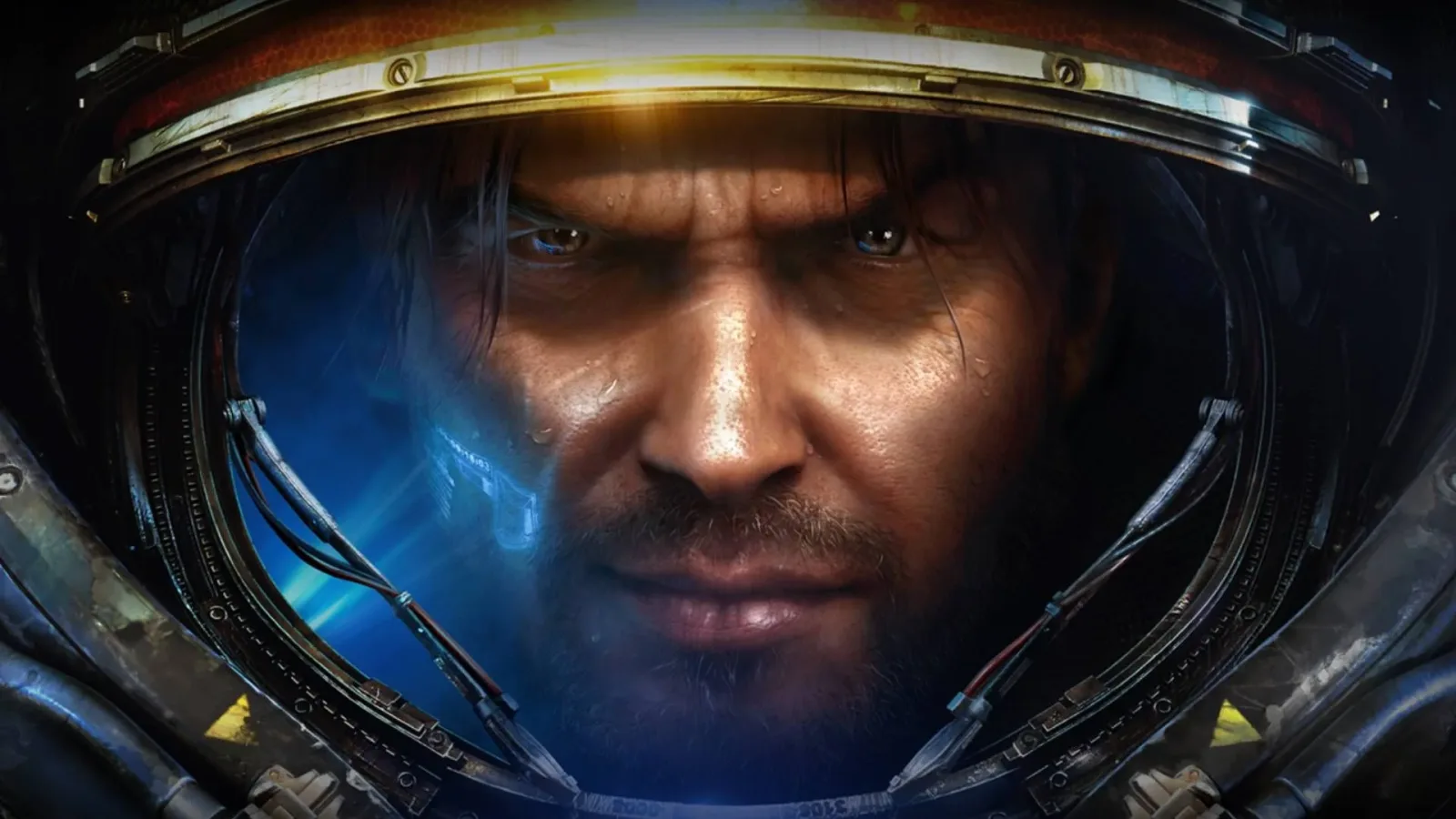
Ben Affleck has offered a remarkably relatable answer to the question of which game absorbed the most time in his life: StarCraft. The actor and filmmaker, known for roles including Batman and for co-writing and starring in Good Will Hunting, says Blizzard's landmark real-time strategy game became a defining pastime during the early period of his fame.
Asked to name the game that "sucked the most life" out of him during an appearance on the Happy Sad Confused podcast with Josh Horowitz, Affleck said it was difficult to settle on only one. Still, he quickly landed on the original StarCraft as the standout. He recalled having recently become famous, then spending roughly three years largely staying home and playing the game.
It is an amusingly candid image: an actor whose public profile had suddenly changed dramatically, choosing to devote huge amounts of downtime to building bases, gathering resources, and commanding Terran, Zerg, and Protoss forces. But it also speaks to why StarCraft has remained such a major name in PC gaming history. For many players, Blizzard's 1998 strategy classic was not merely a game to finish. Its competitive depth and constantly shifting tactical decisions made it easy to return to again and again.
StarCraft's endless strategic pull
StarCraft has always been particularly suited to the kind of long-term fixation Affleck described. The game asks players to balance economic growth, scouting, unit production, map control, and combat micro-management at high speed. Its three factions are dramatically different in style, yet designed around a competitive balance that encouraged players to learn matchups in extraordinary detail.
For useful background on this topic, read Arc Raiders Thermal Shaker locations: Where to Search in Pendola Pass.
That structure can make a single round feel like a puzzle, while the next match immediately presents a new challenge. An early rush, a defensive opening, a hidden expansion, an air-unit transition, or a surprise technology choice can completely alter the pace of a game. Even outside ranked competition, StarCraft offered campaign missions, custom maps, skirmishes, and a wider multiplayer culture that gave players plenty of reasons to keep returning.
Affleck did not specify whether his three-year stretch was primarily spent in the campaign, against computer opponents, or in online competition. The distinction almost hardly matters when describing the game's pull. The original StarCraft, and later StarCraft: Brood War, became fixtures of the PC strategy scene precisely because players could spend years improving without exhausting the game's possibilities.
For a player coming to it during the late 1990s and early 2000s, it was also part of an era when a personal computer could become a social gaming hub. LAN sessions, direct multiplayer games, and Battle.net communities made strategy games a regular shared activity, while the single-player side still had enough personality and fiction to make the universe memorable beyond competitive play.
Valorant provides a harsher modern multiplayer lesson
Affleck's current gaming interests have moved beyond real-time strategy, even if the feeling of being overwhelmed by more skilled players has remained familiar. He specifically highlighted Riot Games' tactical shooter Valorant, though not because he has been enjoying a dominant run through its matches.
Instead, he said the problem is that he gets thoroughly beaten by 11-year-old players, calling the experience humiliating. It is a complaint that will sound recognizable to plenty of adults who have entered a competitive online shooter after years away from the genre, only to encounter opponents with quick reactions, practiced aim, detailed map knowledge, and seemingly limitless confidence on voice chat.
Valorant is especially unforgiving in that respect. Its rounds revolve around tactical positioning, precise gunplay, information gathering, agent abilities, team communication, and rapid decision-making under pressure. The game can reward patience and planning, but it also asks players to execute consistently in the brief seconds when an encounter begins. A small mistake in movement, crosshair placement, or timing can decide an entire round.
Affleck's comments also underline a cross-generational reality of online games. Fame, age, and professional accomplishment do not matter much once a match starts. A player may be an Oscar-winning writer, a blockbuster actor, or a major public figure, but they are still vulnerable to a teenager who has spent countless hours mastering a game's angles, recoil patterns, strategies, and character abilities.
That leveling effect can be part of competitive gaming's appeal, even when it is painful. Multiplayer games create a space where experience in life offers no automatic advantage. Everyone has to learn the systems, adapt to teammates, and accept that somebody younger may be much better at the game.
NBA 2K turns family time into trash talk
Affleck also discussed a more personal version of that competitive defeat: playing NBA 2K with his son. He said his 14-year-old son beats him and then mocks and derides him afterward. The actor again described losing as humiliating, though the story carries the familiar tone of family competition rather than serious frustration.
Sports games are built for these kinds of household rivalries. A basketball game can be immediately understandable even for someone who does not know every system beneath the surface, yet repeated play exposes a substantial skill gap. Players who understand shooting timing, defensive rotations, dribble moves, play calling, and roster strengths can turn a casual game into a one-sided contest very quickly.
There is also a distinct satisfaction in a teenager defeating a parent in a game the parent believes they should understand. Basketball has recognizable rules, famous athletes, and an easy-to-read scoreline. But proficiency in a digital version of the sport is its own skill, and it can give younger players an opportunity to confidently take control of the contest. Affleck's account suggests that his son has fully embraced that opportunity.
Doom breaks during Good Will Hunting
Long before Valorant and contemporary sports-game rivalries, Affleck's gaming life included another defining PC classic: Doom. He said that he and others played the first-person shooter endlessly during the making of Good Will Hunting. In context, "we" appears to include Matt Damon, Affleck's co-writer and co-star on the film.
Affleck remembered taking long breaks from writing to play Doom, and expressed disbelief at just how long ago the game originally released. The anecdote places one of gaming's most influential shooters alongside one of the most significant creative periods in his career.
Doom was already an ideal break-time game. Its fast movement, aggressive combat, memorable weapons, and maze-like environments offered an immediate rush of action. It did not require the same prolonged planning as a strategy game, making it an obvious choice for a reset between stretches of writing. Yet it had enough intensity to make a brief session easily become a much longer one.
The game's legacy remains immense. Its speed, technical influence, modding culture, multiplayer history, and unmistakable atmosphere helped establish the foundations for the first-person shooter genre. Affleck's recollection is another reminder of how deeply games such as Doom entered the everyday routines of people far beyond the core game industry.
From Myst to Madden and Civilization
Affleck's gaming tastes are not limited to competition or action. He also praised Myst, calling it a fabulous game and particularly appreciating its storytelling. He suggested there is an opportunity for someone to create something similar again.
That admiration makes sense given what made Myst stand apart. The puzzle adventure was defined by its quiet, solitary exploration, mysterious worlds, environmental clues, and gradual discovery of a larger narrative. Rather than depending on reflexes or direct competition, it asked players to observe carefully and think through the meaning of the places they visited. Its success demonstrated that games could captivate players through atmosphere, narrative curiosity, and puzzle-solving as much as combat.
He also named Madden and Civilization among the games he enjoys. Together, those choices sketch a broad gaming history: sports competition, grand strategy, first-person shooting, atmospheric adventures, and real-time strategy. They also show that Affleck's enthusiasm is not confined to one platform or one period of gaming.
Civilization, like StarCraft, offers the slow-building satisfaction of strategy, though at a radically different pace. Where StarCraft often demands decisions in seconds, Civilization lets players guide an empire across centuries, weighing exploration, diplomacy, technology, culture, warfare, and economics one turn at a time. Madden, meanwhile, provides another route into social play and friendly--or not-so-friendly--competition.
A gaming history many players will recognize
Affleck's answers form a compact history of how games can fit into different stages of a person's life. Doom was there during a major writing project. StarCraft became an all-consuming refuge during the abrupt adjustment to fame. Myst earned admiration for storytelling and design. Madden, Civilization, and NBA 2K supplied different forms of strategy, sport, and social play. And Valorant is now delivering the humbling reality of modern online competition.
The specific games span decades, but the underlying experience is consistent. Games can be a private escape, a creative break, a shared family activity, or a venue where anyone can be humbled by a better player. In Affleck's case, the story ranges from long nights with StarCraft to getting beaten and verbally challenged in Valorant by children decades younger than him.
For anyone who has looked up after "one more match" turned into hours, or who has lost decisively to a younger relative in a sports game, the details may be unusual only because of who is telling them. The gaming experience itself is very familiar.
Community
Discussion
Start the conversation.
No comments have been posted yet.