

Bethesda is taking legal action connected to Doomsol, a browser-based project tied to the $DOOM memecoin that used Doom branding while being promoted by veteran designer Sandy Petersen. The company has said its concern centers on potential consumer confusion over whether the game and cryptocurrency were official products, as well as the commercial use of Doom assets.
The precise contents of the legal communication have not been publicly disclosed. Bethesda has not identified the person receiving it, though Petersen was listed as Doomsol's creator on an archived version of the project's website. That does not establish whether he created the cryptocurrency itself, and the full relationship between Petersen, the project, and the people behind the token remains unclear.
What is clear is that the dispute arrives after an unusual and short-lived promotional push involving one of gaming's most recognizable franchises, a cryptocurrency token, and a longtime contributor to Doom and Quake. Bethesda's position is that community experimentation remains welcome within the boundaries of the license, but that recreating and redistributing Doom in a browser to market a memecoin goes beyond those boundaries.
Embedded X/Twitter post
Embedded X/Twitter post
A sudden turn toward $DOOM
On August 3, Petersen began posting videos on X that placed him directly alongside promotion for $DOOM. In one video, he wore a Doom shirt while sitting at a PC and directed viewers to his profile on the crypto-trading site Fomo. He described himself as being part of the community and said that people could build it together. The video showed him buying more than $187 worth of the token.
For useful background on this topic, read Graveyard Keeper 2 Nears $3 Million in Steam Pre-Orders Ahead of Launch.
Later that same day, Petersen shared another video showing an additional $1,000 purchase. He then promoted a website where people could play a Doom-related game in their browser while earning Sol, the cryptocurrency associated with the Solana blockchain. That game was called Doomsol.
Petersen continued to publicize Doomsol and the token over the following days, at one point saying the game had attracted thousands of players. His exact involvement was never fully defined in public posts. However, his activity indicated that he was at minimum helping to promote the venture and working on Doom levels for it.
Arthur Petersen, Sandy Petersen's son, also appeared to have a significant connection to the project. He reshared a post summarizing an X Space discussion in which a crypto-focused user said Sandy Petersen was receiving fees and was being paid to create new Doomsol levels. The same post characterized the token as a retirement-related opportunity connected to claims that Petersen had not been adequately paid for his historical Doom work.
That framing drew attention because Petersen is a major name within the classic Doom community. He contributed levels to both Doom and Doom II and also worked on Quake. He has long remained active online, regularly engaging with fans and discussing his work. For many players, the connection between that legacy and an aggressively promoted memecoin was unexpected.
Questions around the game and its materials
The controversy did not stem only from the token itself. One video shared during the promotional campaign purported to show Doomsol in action, but the game displayed was actually Freedoom, a separate fan-made project. Freedoom's official account responded publicly to stress that it had no connection to what was being promoted and did not endorse cryptocurrency scams, while urging people to stay away from them.
That mismatch added to the uncertainty around the project. Doomsol's messaging leaned heavily on Doom's name, imagery, and audience recognition, yet some material used in its promotion did not appear to be Doomsol at all. For a project asking users to engage with a cryptocurrency-linked ecosystem, that kind of confusion was especially consequential.
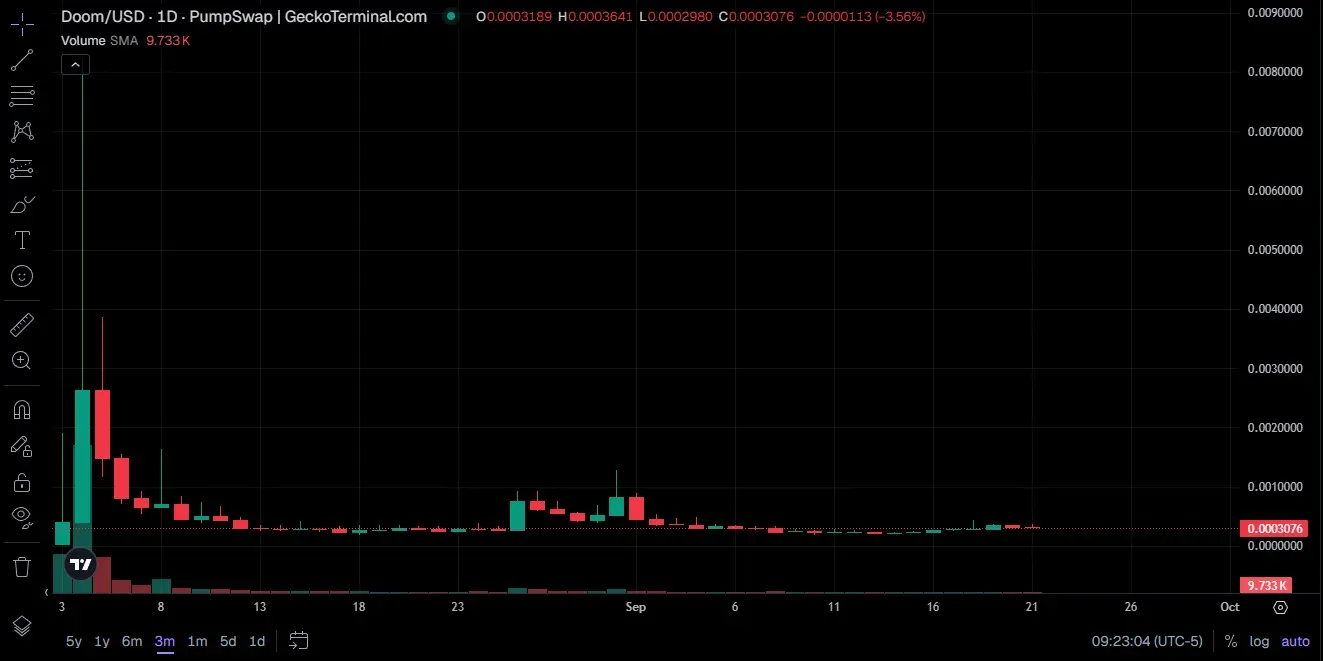
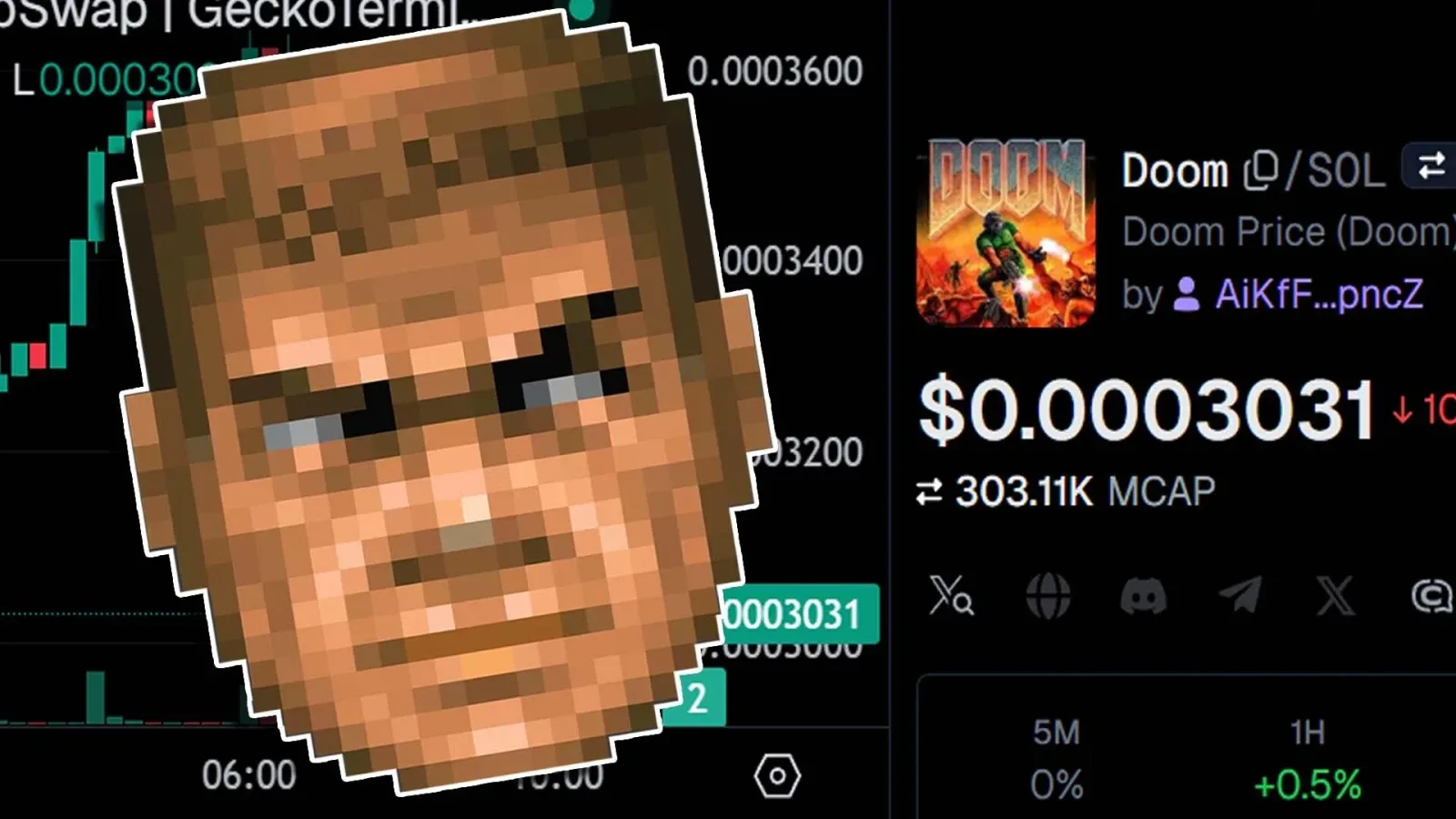
Shortly after the initial activity, the $DOOM token's value collapsed in what appeared to be a rug pull by whoever had created the coin. Petersen abruptly stopped discussing both Doomsol and $DOOM. He began mentioning them again near the end of August, during an apparent effort by several people claiming involvement with Doomsol to rebuild attention after the original creator had departed.
There was a brief increase in the token's value during that renewed push, but it did not return to its earlier levels. Both Sandy and Arthur Petersen soon stopped posting about the project again. At the time of the legal development, the Doomsol website and similar sites appeared to have been taken offline, although archived copies remained accessible.
Similar projects raise more unanswered questions
Doomsol was not the only site to surface using this basic format. Projects called Quakesol and Wolfensteinsol also appeared, with similarly styled websites and comparable crypto-oriented concepts. It is not known whether Petersen had any role in either of those projects.
The existence of those additional sites makes the matter broader than a single promotional campaign. Names such as Doom, Quake, and Wolfenstein carry substantial recognition among players, and each belongs to a history closely associated with id Software and, today, Bethesda. Even when older technology and code are available under open-source terms, the branding, assets, and commercial implications are separate considerations.
Petersen had argued that Doomsol was legally safe because of Doom's open license. Bethesda's response draws a distinction between open-source creativity and a commercial product built around the Doom identity. The company's stance is not that fans cannot create projects with Doom technology. Instead, it is objecting to the use of Doom materials and presentation in a way that could suggest an official connection while promoting a cryptocurrency.
What Doom's open-source legacy does and does not cover
Doom has one of the most important open-source legacies in video games. Its engine code has supported decades of ports, technical experiments, new games, source ports, mods, and unusual hardware demonstrations. That history has helped Doom endure far beyond its original release, and it remains an important part of why the series has such a dedicated development and modding community.
But access to engine code does not mean every part of the original game becomes free for commercial reuse. A project can build on the technical foundation in legitimate ways while still needing to avoid redistributing protected game content or presenting itself through protected branding. Bethesda specifically identified the Doom logo, used on the Doomsol site, as an example of an asset that cannot simply be repurposed for commercial gain.
This distinction matters because terms like "open source" can easily be misunderstood by people outside software development and game preservation circles. An open license can enable the creation of a new game, an educational project, or a port to new hardware. It does not automatically grant permission to package official artwork, logos, game data, and franchise identity into a monetized service or token promotion.
For Bethesda, the issue is also one of consumer protection. A browser game called Doomsol, combined with a token called $DOOM and promotional imagery that resembles official Doom material, could lead players to assume Bethesda or id Software approved of the project. That risk is heightened in cryptocurrency spaces, where recognizable names can influence interest and purchasing decisions.
Bethesda emphasizes clarity for players
In a statement, a Bethesda spokesperson said the strength of Doom comes from its passionate community and that players should be able to clearly identify what is and is not an official Doom experience. The company said it takes action when there is a risk that people may be confused about affiliation with, or endorsement by, Bethesda and id Software.
The statement also makes clear that Bethesda is not positioning this as a campaign against all fan creativity. Creative and academic projects involving the open-source engine remain distinct from a browser redistribution effort used to sell or support a memecoin. In other words, the publisher is drawing its line around commercial use, franchise assets, and implied official status rather than the mere act of making something inspired by Doom technology.
Neither Sandy Petersen nor Arthur Petersen had provided a response to questions about Doomsol and $DOOM before publication of the legal development. Their perspective on Bethesda's action, the fate of Doomsol, and the details of their involvement therefore remains unknown.
The episode is a reminder of how quickly a famous gaming name can become entangled in speculative online projects. Doom's community has spent decades turning the game into an engine for modding, preservation, and creative experimentation. Bethesda's action suggests that, while that tradition is still valued, using the franchise's identity to market a volatile cryptocurrency is a different matter entirely.
Community
Discussion
Start the conversation.
No comments have been posted yet.