

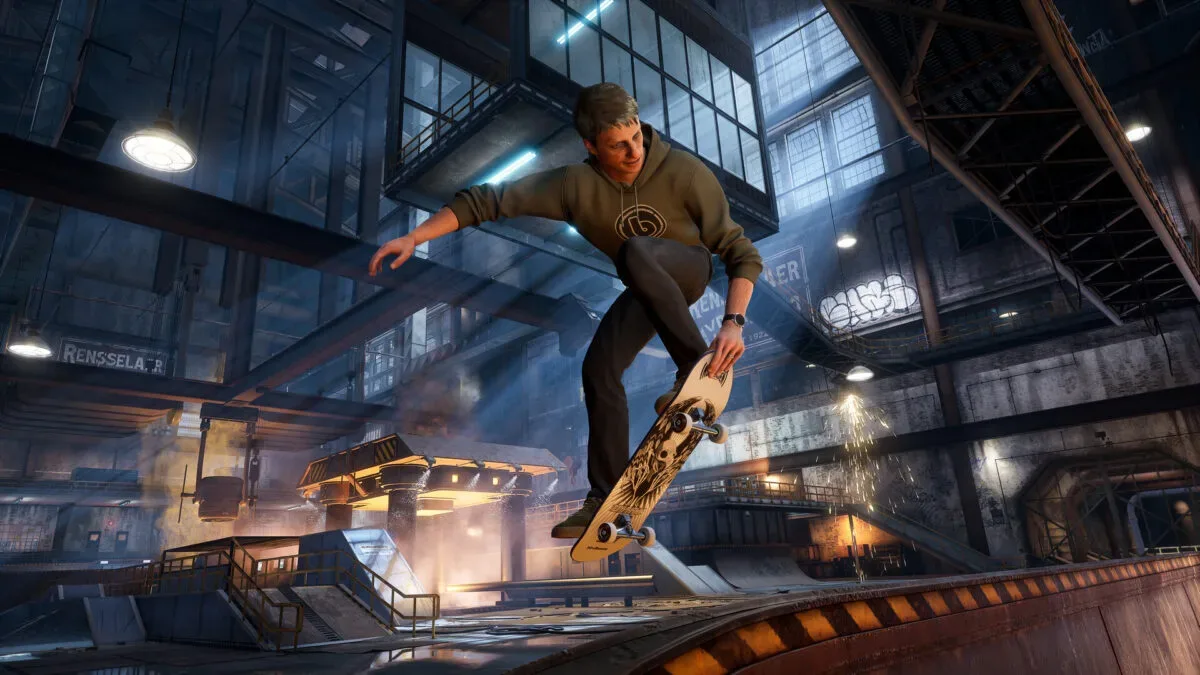
Tony Hawk's games have always made skateboarding locations feel larger than life. A school campus becomes an all-day trick playground. An airport turns into a place for impossible grinds. Los Angeles landmarks become digital skate spots that players can explore repeatedly, searching for every collectible, every gap, and every line that might improve a high score.
For the 25th anniversary of Tony Hawk's Pro Skater 3, Hawk decided to revisit one of those real-world inspirations himself. The plan was straightforward: return to Pershing Square in downtown Los Angeles, the location widely recognized as the basis for the game's Los Angeles level, and recreate some of its familiar visual moments. The result was appropriately strange for the history of skateboarding: one of the most recognizable skateboarders alive was asked to leave a place connected to one of his most celebrated games.
"Happy 25th THPS3!" Hawk wrote while sharing footage from the outing. He said that the group had been kicked out of Pershing Square while filming. In a follow-up, he described the encounter as far less dramatic than the phrase might suggest, saying security simply shooed the crew away and calling the conclusion "very anticlimactic."
A game location hiding in plain sight
Tony Hawk's Pro Skater 3 arrived in 2001, and its Los Angeles stage did not explicitly carry the Pershing Square name. Still, the connection has long been obvious to players familiar with the area. The square's distinctive features made it a natural point of reference for a skate game built around memorable, exaggerated-but-recognizable environments.
For useful background on this topic, read Petit Planet Is Headed to Nintendo Switch 2 in 2027.
Pershing Square sits in Los Angeles' financial district and is known for its striking redesign by architect Ricardo Legorreta. Its modernist visual identity includes curved stone seating and prominent red spherical forms, elements that translate unusually well into the bold geometry of an early-2000s skating game. The nearby car wash and its large blue obelisk also remain recognizable points of comparison for fans revisiting the virtual map.
That sense of recognition is central to why these locations matter. The Pro Skater series rarely aimed to duplicate a city block by block. Its stages instead distilled the character of real places into spaces designed for flow, tricks, secrets, and repeat runs. Players did not need an exact architectural replica to feel that a level belonged to Los Angeles. A few defining shapes, a familiar atmosphere, and the right sense of urban possibility could do the job.
Hawk's anniversary footage leaned into that shared memory. Set to the Ramones' "Blitzkrieg Bop," the clip shows him rolling through Pershing Square and revisiting visual cues associated with the old level. At one point, he also mimics the slightly wobbly idle posture of his in-game counterpart. It is a small joke, but one that lands especially well for longtime players who remember how much personality those older character animations conveyed.
For another perspective on this story, read Tony Hawk Escorted From Pershing Square During Pro Skater 3 Recreation.
An unexpectedly fitting ending
The filming session apparently did not last long enough for Hawk and his team to do everything they had planned. Security intervened, and the group departed. There was no major confrontation described, no extended dispute, and no big stunt required to end the day--just an awkward request to move along.
For a skating icon, getting removed from a skate-adjacent public space is almost too perfect. Skateboarding's relationship with public architecture, private security, and local rules has always been complicated. Benches, ledges, rails, stairs, plazas, and curbs can be seen as mundane city infrastructure by some people and creative terrain by skateboarders. That tension has shaped real skate culture for decades, long before the sport was a regular feature of blockbuster games and mainstream entertainment.
It also gives Hawk's brief anniversary trip an irony that could not have been scripted. Tony Hawk's Pro Skater 3 lets players use a stylized version of Los Angeles as an open trick course, free to chain combos through a digital environment. In real life, the person whose name is on the box had to stop filming at the very site that helped inspire that fantasy.
Rather than undercutting the tribute, the ejection may have made it more memorable. The whole scene feels aligned with the playful spirit of the series: a celebrated skater attempting to revisit a virtualized version of a real location, only for reality to interrupt the run before the line is complete.
Why Pro Skater 3 still carries so much weight
The timing of the visit matters because Tony Hawk's Pro Skater 3 remains one of the most revered releases in the franchise. It was the first entry in the series to launch on PlayStation 2, arriving at a moment when the games were becoming a defining part of the console's early identity. Its combination of responsive controls, intricate levels, licensed music, skater roster, unlocks, and score-chasing made it a landmark for both sports games and arcade-style action games.
The game is also tied with Grand Theft Auto 3 as the highest-rated PlayStation 2 title on Metacritic. That position reflects the enormous critical response it received, but its endurance is about more than review averages. For many players, Pro Skater 3 represents the point where the series' formula felt especially complete: accessible enough for someone to start landing basic tricks, while deep enough for veterans to build enormous combos and memorize the best routes through each level.
The arrival of the revert mechanic was a major part of that evolution. It expanded what was possible after landing from vert tricks and helped turn individual stunts into much longer sequences. The result was a game that encouraged players to look at entire stages as connected paths rather than isolated ramps and rails. Every surface became part of a potential run.
That approach is why a level inspired by Pershing Square can remain lodged in players' minds decades later. It was not merely scenery. It was part of a system that taught players to interpret the environment as opportunity. Curved benches, ledges, nearby streets, and decorative objects all carried the possibility of a new route or a better score.
The series' modern return
The anniversary arrives after the 2025 release of Tony Hawk's Pro Skater 3 + 4, the remake collection developed by Iron Galaxy. The bundle brought two more classic entries back for a new generation while revisiting a period of the series that remains especially meaningful to its audience.
Its reception was somewhat more mixed than the enthusiastic response that greeted the earlier remake collection. That reaction speaks to the difficult expectations surrounding legacy games. Players want the responsiveness, music, stages, and attitude they remember, but they also want modern features and thoughtful updates. Those goals can clash, particularly when a beloved game is associated with highly specific memories of how it looked, sounded, and felt.
Skateboarding-game fans have also spent years waiting for consistent, straightforward new entries across major series. The genre has a dedicated audience, but it has not always received the steady flow of big releases that its community would like. That makes every remake, revival, and nostalgic celebration carry additional pressure.
Hawk's Pershing Square video is a reminder that the attachment is not limited to mechanics or brand recognition. The old games connected players to music, places, fashion, professional skaters, and a particular idea of motion through the city. They made locations feel personal, even for people who had never visited Los Angeles.
A short visit with a long legacy
There is something charming about the modest scale of the whole event. Hawk did not announce a new game, unveil a major project, or stage an elaborate anniversary production. He went to a park linked to one of his most important video games, rolled around for a bit, recreated an old animation, and got asked to leave.
Yet that small moment neatly captures why Tony Hawk's Pro Skater 3 still matters 25 years later. The game's places remain vivid enough that fans immediately recognize them. Its design remains influential enough that players still talk about its levels with the familiarity usually reserved for real skate spots. And its namesake remains willing to revisit that history with a sense of humor.
Security may have brought the Pershing Square recreation to an early end, but it did not stop the anniversary from producing exactly the kind of story that the Pro Skater legacy tends to inspire: part skating, part gaming nostalgia, and part reminder that even Tony Hawk cannot always get one more run.
Community
Discussion
Start the conversation.
No comments have been posted yet.