

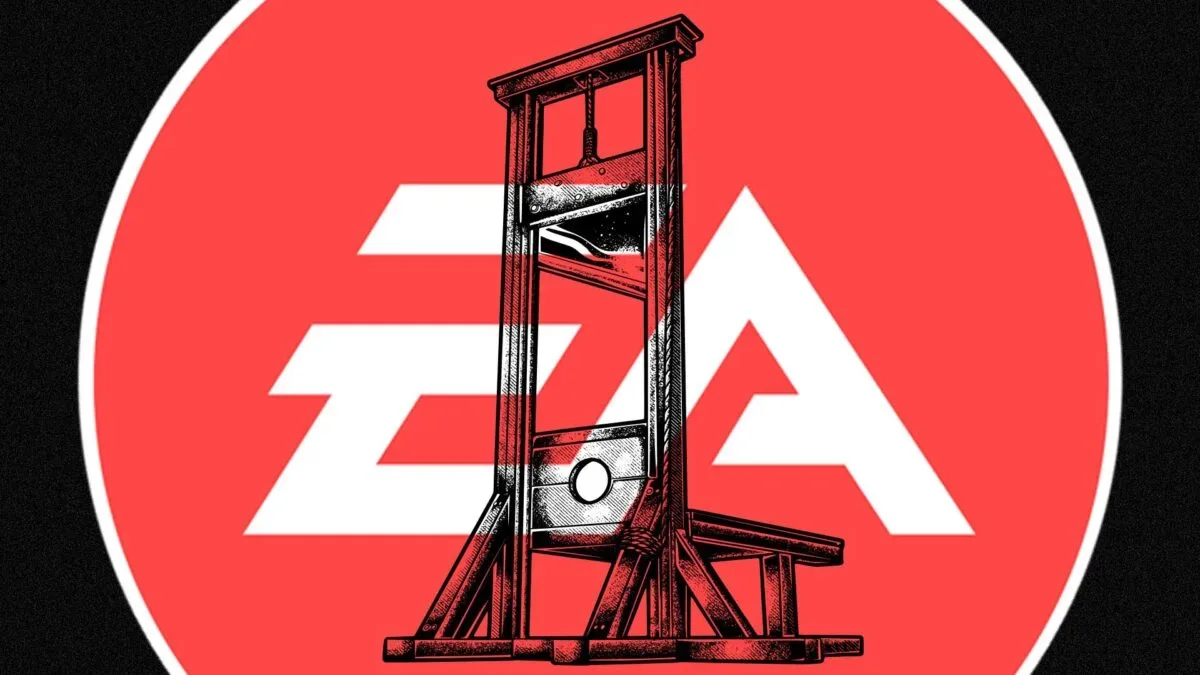
Electronic Arts' announcement that it is closing BioWare and canceling an in-development Mass Effect sequel has reopened one of the game industry's most persistent debates: what happens to creative studios after they are absorbed by a giant publisher.
For many players, BioWare is not simply another development team on an organizational chart. The studio's name is connected to landmark role-playing games including Baldur's Gate, Neverwinter Nights, Star Wars: Knights of the Old Republic, Mass Effect, and Dragon Age. Its closure therefore carries weight beyond one canceled project. It also places BioWare within a long, complicated timeline of teams acquired by EA that were later closed, merged into other operations, or reduced to a brand name rather than an independent studio.
EA acquired BioWare in 2007. Its reported closure in 2026 would come nearly two decades later, a much longer span than some other acquisitions in the company's history. Still, the result has fueled familiar criticism: that the publisher's acquisition strategy has repeatedly concentrated creative talent and intellectual property under its umbrella, only for individual studios to eventually disappear amid changing business plans, missed targets, restructurings, or shifting market priorities.
A pattern stretching back to the 1980s
Electronic Arts was founded in 1982, and its record of buying studios reaches back decades. One of the earliest examples was Batteries Included, which EA purchased in 1987 and closed that same year. The circumstances of individual closures vary substantially, and corporate histories can be difficult to categorize cleanly because game companies frequently change names, relocate staff, consolidate teams, or retain a label after the original operation is gone.
For useful background on this topic, read Modern Warfare 4's DMZ Intro Is Raising Concerns Over Its Treatment of Rex the Dog.
That complication matters. A studio may technically survive on paper while the people, leadership, location, mandate, and culture associated with it no longer exist. Conversely, some employees from a closed studio may continue working within a different EA division. To developers and players, however, a familiar name disappearing can represent the loss of a particular design philosophy, workplace identity, and connection to beloved games.
Over time, EA's list of acquired studios that later closed has become extensive. It includes Origin Systems, purchased in 1992 and closed in 2004; Bullfrog Productions, acquired in 1995 and closed in 2001; and Westwood Studios, acquired in 1998 and closed in 2003. Each studio left a distinct mark on PC gaming before it disappeared as a standalone entity.
Origin is remembered for games such as Ultima and Wing Commander. Bullfrog became synonymous with inventive management and strategy titles including Populous, Theme Park, and Dungeon Keeper. Westwood helped define the real-time strategy boom with Command & Conquer. Their closures remain prominent examples whenever players discuss the risks facing studios bought by large publishers.
For another perspective on this story, read EA's Reported BioWare closure Revives a Long, Complicated Record of Acquired Studios Disappearing.
Brands can remain while studios do not
Maxis illustrates why a simple list of "closed" companies does not always tell the whole story. EA acquired Maxis in 1997. The original Maxis studio was closed in 2015, yet EA continues to use the Maxis name for the team associated with The Sims. That distinction is meaningful: the brand persists, but the original studio that created SimCity and helped establish simulation games as a major commercial category did not remain intact.
There are other cases where an acquired developer was renamed or folded into a broader EA group. Hypnotix, for example, was acquired and shut down in 2005, with staff folded into EA Tiburon. J2MSoft was acquired in 2008 and integrated into EA Korea. In these situations, the formal end of one studio does not necessarily mean every employee immediately left EA, but it does mean the acquired company ceased to operate as it had before.
That corporate flexibility makes exact totals difficult. Depending on whether brand-only survivors, mergers, and renamed divisions are counted, EA's total number of acquired studios that later vanished can be framed differently. BioWare is widely being described as roughly the nineteenth acquired developer or publisher in that history to be shut down. The underlying conclusion is more important than any single tally: this is not an isolated event, and it is not a recent phenomenon.
Closures across changing eras of gaming
The chronology spans radically different periods in the business. In the late 1990s and early 2000s, EA expanded through purchases that included Kesmai, DreamWorks Interactive, Black Box Games, and NuFX. Kesmai, acquired in 1999, closed in 2001. DreamWorks Interactive was acquired in 2000, later operated as Danger Close Games, and closed in 2013. Black Box Games was acquired in 2002 and closed in 2013, while NuFX, later known as EA Chicago, was acquired in 2004 and closed in 2007.
These were not interchangeable teams. Their work covered online games, action titles, sports projects, racing games, and military shooters. The breadth of those closures is central to the criticism now facing EA. The issue is not that one genre became unprofitable or that one experimental project failed. Across many years, the company's acquisitions have involved developers with very different specialties and audiences.
EA's mid-2000s buying spree produced further examples. Mythic Entertainment was acquired in 2006 and closed in 2014. Phenomic Game Development was also acquired in 2006 and closed in 2013. Headgate Studios, later known as EA Salt Lake, was acquired in 2006 and closed in 2017. Pandemic Studios was acquired in 2007 and closed in 2009, only two years later.
For players, the names carry particular associations. Pandemic made Star Wars: Battlefront, Mercenaries, and The Saboteur. Mythic had a long legacy in online gaming and developed Dark Age of Camelot as well as Warhammer Online: Age of Reckoning. Their ends serve as reminders that a successful catalog and recognizable creative identity do not guarantee a studio's continued independence--or survival--within a major publisher.
The mobile era added more names to the list
The trend did not stop as the industry moved toward social and mobile games. EA acquired Playfish in 2009 and closed it in 2013. Chillingo was acquired in 2010; its wind-down began in 2017, with the business fully closed in 2023. Industrial Toys, acquired in 2018, was closed in 2023.
These cases show how quickly corporate priorities can change when the market shifts. A publisher may acquire a specialist to gain expertise in a fast-growing category, then later find that its structure, financial expectations, or broader strategy no longer supports that operation. From a business perspective, acquisitions can bring technology, staff, publishing capacity, and established franchises. From a creative perspective, the same process can leave teams vulnerable when executive leadership changes direction.
The loss of a studio is rarely just the loss of a logo. It can mean the dispersal of teams whose shared experience and internal trust took years to build.
That is why the BioWare news has landed so heavily. RPG development is especially dependent on continuity: writers, quest designers, technical specialists, artists, producers, and directors must coordinate over long production cycles. Even when former employees form new teams or join other developers, recreating a studio's accumulated working relationships is difficult.
BioWare's final context remains important
BioWare's later years were marked by intense pressure following uneven critical and commercial receptions for some releases, as well as high expectations surrounding its most valuable series. The cancellation of a new Mass Effect game means a major franchise has lost the team most closely associated with its identity. EA owns the property, so the decision does not necessarily establish what will happen to Mass Effect in the long term. No future game, developer, release window, or platform plan should be assumed from the cancellation alone.
Likewise, the closure does not erase BioWare's work or the communities built around it. The studio's games have influenced narrative design, cinematic presentation, companion characters, player choice systems, and the broader expectations audiences bring to RPGs on PC and console. Its legacy is likely to outlast the company structure that carried its name.
But legacy offers little reassurance to employees affected by a shutdown, or to fans watching another established team disappear. Studio closures involve real jobs, unfinished ideas, and uncertainty for workers who may have spent years building a project that will never be released.
An industry-wide warning, not only an EA story
EA's history is unusually visible because of the scale of its acquisitions and the fame of the studios involved. Yet the broader industry has endured a painful cycle of layoffs, closures, canceled projects, and consolidation. Large publishers and investors increasingly weigh escalating development costs against demanding revenue targets, while teams face longer production schedules and less tolerance for games that do not become durable, repeatable hits.
That does not make EA's record less worthy of scrutiny. Instead, it explains why BioWare's closure has become a flashpoint. It combines a celebrated studio, a canceled sequel in a major franchise, and a corporate history that has made many players skeptical when a publisher promises stability after an acquisition.
EA is entering its next chapter under new ownership, but its past will shape how fans and developers interpret what comes next. For critics, the disappearance of BioWare reinforces a grim lesson learned from Origin, Bullfrog, Westwood, Pandemic, Mythic, and many others: an acquisition can preserve a studio for a time, but it does not guarantee a lasting future.
Community
Discussion
Start the conversation.
No comments have been posted yet.