

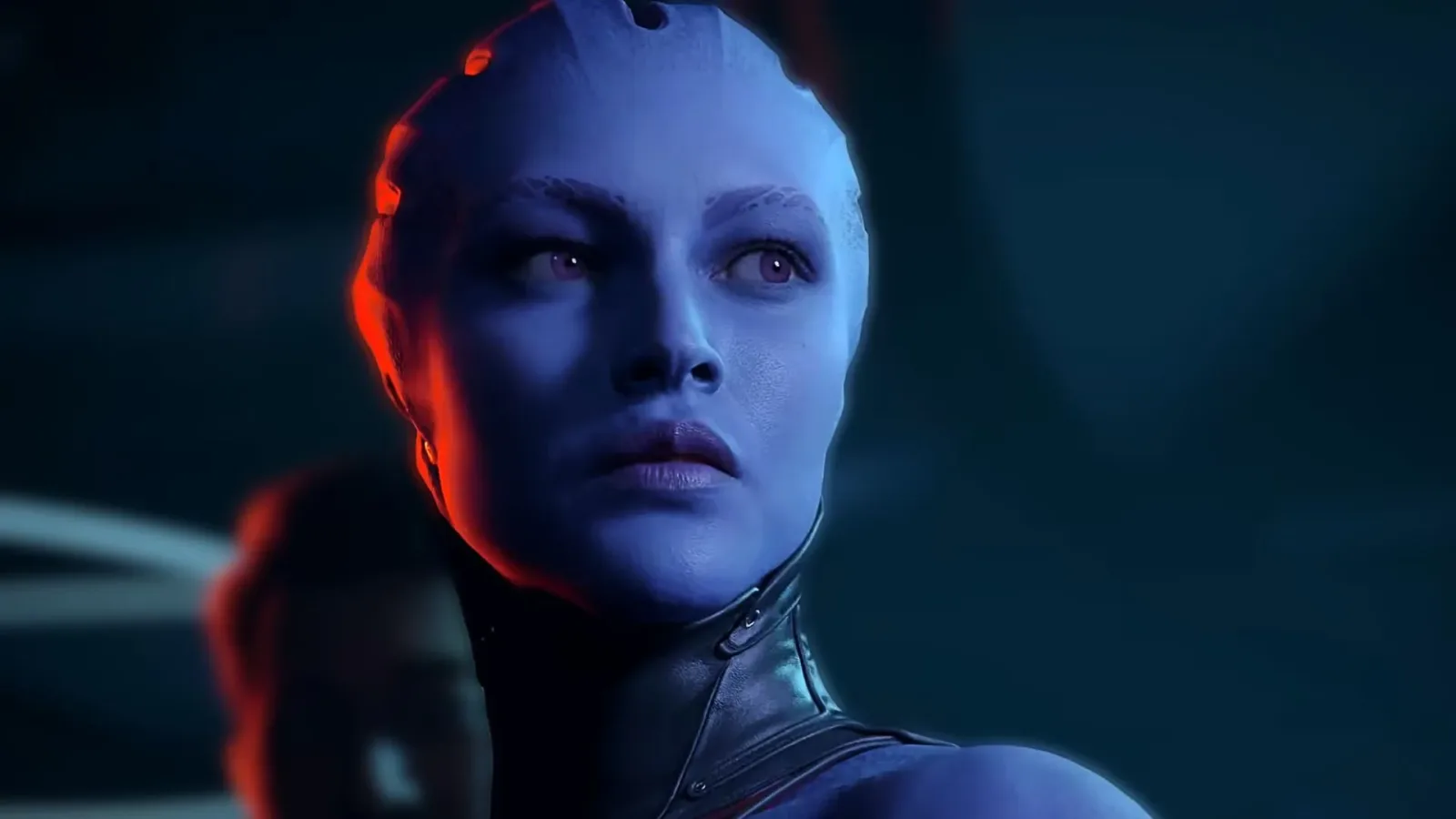
The campaign to revive Mass Effect 5 has gained a notable voice of support from BioWare co-founder Trent Oster. Following EA's closure of BioWare and the cancellation of the long-awaited sequel, fans have organized online under the #SaveMassEffect banner, calling for the series to receive another chance.
Oster responded positively to the energy behind that movement, saying it made him want to "get some of the original band back together." While that statement is not an announcement of a new studio, a revived project, or a change in ownership for the franchise, it has understandably captured the imagination of a community that has spent years waiting to see where BioWare's sci-fi universe would go next.
His comments also arrive at a particularly difficult moment for former BioWare staff and for fans of its role-playing games. The loss of jobs resulting from the studio closure remains the central human consequence of the decision. For players, though, the end of the studio also means uncertainty for two of gaming's most recognizable RPG properties, with Mass Effect 5 among the projects that will no longer move forward in its previously planned form.
Embedded X/Twitter post
A veteran voice joins the conversation
Oster is closely associated with BioWare's formative years. He was one of the key figures behind early role-playing games including Baldur's Gate and Neverwinter Nights, directing the latter. By the time the first Mass Effect launched in 2007, he was BioWare's director of technology. His background therefore spans both the studio's classic computer RPG roots and the period in which its games became enormous mainstream franchises.
For useful background on this topic, read Survey Finds Physical Copies Still Make Up Nearly a Third of Paid Console Game Ownership.
That history gives extra context to his response to #SaveMassEffect. Oster described the current enthusiasm around the campaign as encouraging and argued that there remains a strong business case for a well-funded developer capable of making and delivering a substantial RPG. It is an important distinction: he is not merely expressing nostalgia for an earlier era of BioWare, but arguing that the kind of ambitious role-playing game the studio was known for can still have a place in today's market.
"I love seeing all the energy around #SaveMassEffect," Oster wrote. "I think there is a still a great thesis for a well-funded RPG developer who can deliver. Makes me want to get some of the original band back together."
For fans, the wording naturally raises the prospect of former developers working together again. But any such possibility remains speculative. EA retains ownership of Mass Effect, and there has been no indication that the company plans to sell or license the property to another developer. A reunion of veteran talent would be exciting, but it would not by itself grant that group the ability to continue Shepard's universe or make an official new Mass Effect game.
The limits of a fan-led rescue effort
The Save Mass Effect movement has turned its disappointment into organized action. Its supporters have established a Change.org petition that is approaching 300,000 signatures. A separate petition from the same organizers, seeking acknowledgement from the Canadian government, has also reached a significant milestone.
Petitions do not automatically alter corporate plans, recover a cancelled game's development work, or restore a closed studio. Yet they can demonstrate sustained interest in a brand, create a focal point for communities, and make it harder for the public conversation to move on immediately after a cancellation. In this case, the campaign is also carrying a broader message: players do not see Mass Effect as a dormant legacy series with no future. They see it as a world worth preserving.
That feeling is understandable. The original trilogy combined party-driven storytelling, player choices, galaxy-spanning exploration, and a distinctly cinematic approach that helped define the Xbox 360 and PlayStation 3 era. Later entries prompted more divided responses, but the setting's major strengths have remained clear: alien civilizations with recognizable identities, political tensions that can shape personal relationships, and a universe broad enough to support stories beyond one protagonist or one conflict.
The 2020 reveal of a new Mass Effect project suggested that BioWare and EA believed the property still had value. Its cancellation does not erase that interest, but it does leave fans with unanswered questions about the direction the sequel might have taken and whether the franchise will ever receive another official installment.
Baldur's Gate 3 and the renewed RPG conversation
Oster's reaction was not limited to the immediate campaign. He also agreed with the idea that the RPG genre is experiencing a resurgence, pointing to the commercial impact of Baldur's Gate 3. In Oster's view, the game's sales performance may have affected how the industry views major role-playing games.
That observation carries weight coming from someone who helped shape the early Baldur's Gate lineage. Larian Studios' Baldur's Gate 3 demonstrated that a dense, choice-heavy RPG with a huge amount of authored content could reach far beyond the traditional audience for computer role-playing games. Its success did not make big-budget RPG development easy, cheap, or free of risk. It did, however, challenge the assumption that players only want streamlined experiences built around a narrower set of choices.
Modern blockbuster RPGs require vast teams, lengthy production timelines, expensive performance capture, technical expertise, testing across branching scenarios, and an ability to maintain quality across dozens or even hundreds of hours. Those realities explain why few studios attempt projects on the scale associated with BioWare's best-known work. They also make a cancelled project difficult to revive, especially once teams have been dissolved and priorities have shifted.
Still, the genre's recent successes offer a counterpoint to the idea that large RPGs no longer make sense. Players continue to respond to memorable companions, consequential decisions, detailed worlds, and stories that invite repeat playthroughs. The details vary between fantasy and science fiction, tactical combat and action systems, or established universes and new intellectual properties. The underlying appeal remains durable.
Why Mass Effect still matters
Within BioWare's catalogue, Mass Effect occupies a particularly unusual position. It is a science-fiction RPG with the recognizable scale of a space opera, but its most lasting qualities are often intimate: conversations aboard the Normandy, loyalty missions, friendships and romances, and decisions that turn a galactic crisis into something personal. Those elements make the series difficult to replace with a game that simply shares its setting or combat style.
Former BioWare voices have also argued that Mass Effect is more valuable than Dragon Age, largely because of its worldbuilding. That is not a simple measure of either series' quality or the devotion of their audiences. Instead, it reflects the particular flexibility of the Mass Effect universe. Its galaxy is built around interstellar travel, diverse species, military institutions, criminal networks, frontier colonies, ancient mysteries, and political alliances. There are many possible starting points for future stories if its owner ever chooses to return.
The strength of that foundation is one reason the Save Mass Effect campaign has found traction. Fans are not solely asking to see a previously announced sequel restored. Many are responding to the prospect that an entire setting, along with its unfinished possibilities, could be put on hold indefinitely.
Hope, but no confirmation
Oster's message is a welcome sign of solidarity for people supporting the campaign, and his belief in the continued viability of big RPGs provides a more optimistic framing than the circumstances surrounding BioWare's closure might suggest. It also reinforces a useful reality: talented developers and beloved genres do not vanish simply because a single project is cancelled.
However, the practical barriers remain substantial. EA owns the Mass Effect rights. There is no announced plan for the franchise to be transferred, revived by a newly assembled team, or developed by another studio. There is likewise no confirmation that Oster is actively forming a group to pursue an RPG project, whether connected to Mass Effect or otherwise.
For now, #SaveMassEffect is a visible expression of fan support rather than a confirmed route to a new game. The campaign's petitions and social-media activity show that the appetite for another large-scale sci-fi RPG has not disappeared. Oster's comments suggest that some of the people who helped build BioWare's reputation still believe the market can support games of that ambition.
Whether that belief eventually leads to a new official chapter for Mass Effect is unknown. But the conversation has moved beyond simple mourning for a cancelled sequel. It is now also about the future of blockbuster RPGs, the value of established worlds, and whether an industry that has repeatedly reinvented itself can still make space for the kind of expansive, character-driven adventures BioWare once specialized in.
Community
Discussion
Start the conversation.
No comments have been posted yet.