

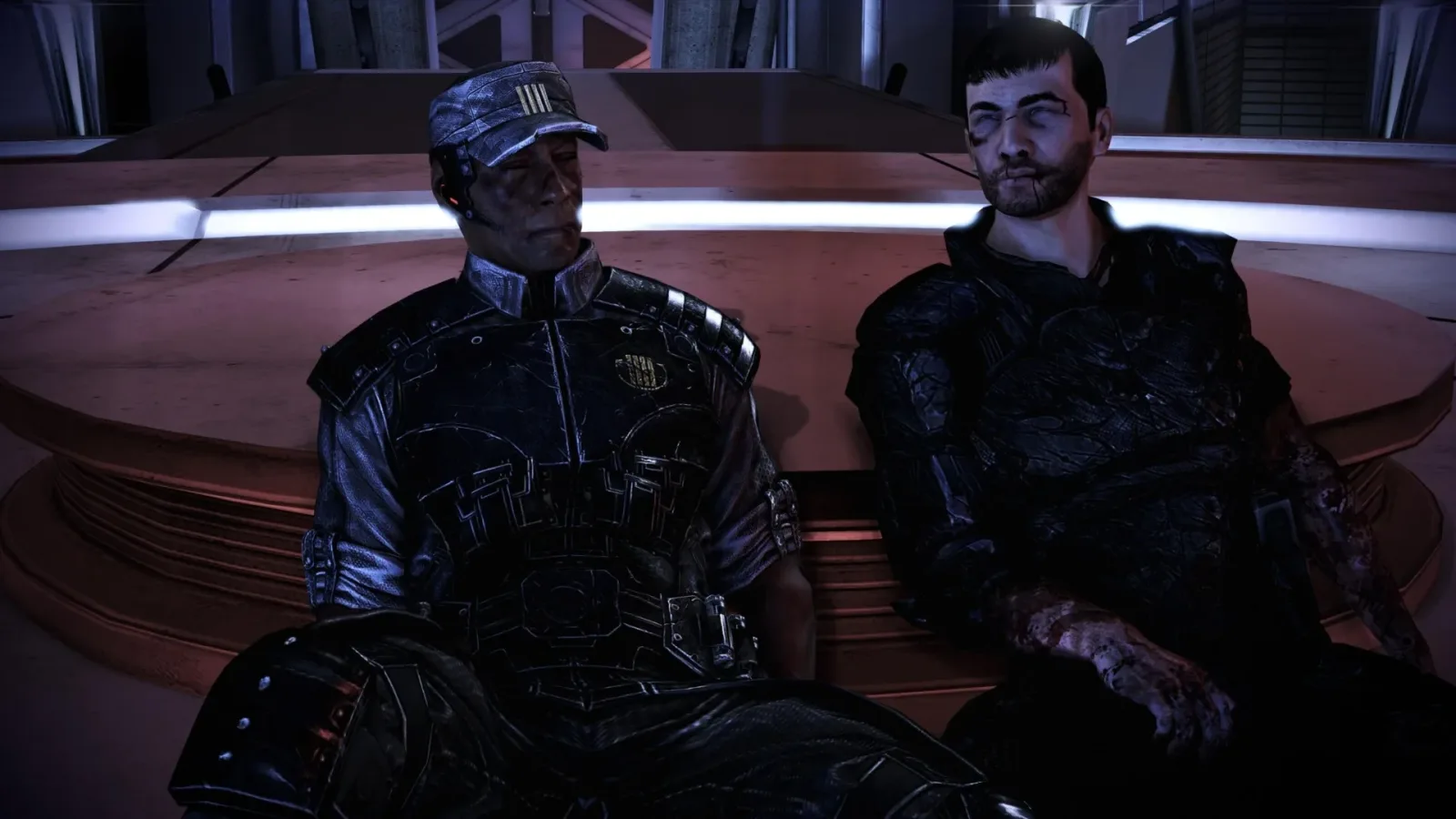
The reported closure of BioWare marks the end of one of the most consequential studios in modern role-playing games. For decades, the developer's name stood for sprawling character dramas, consequential choices, party members players could debate for years, and fictional universes that invited people to see themselves in stories often missing from blockbuster games. With the studio now gone and its next Mass Effect project apparently no longer moving forward, the loss extends far beyond one company's internal restructuring.
BioWare leaves behind two of the most recognizable western RPG series ever made: Mass Effect and Dragon Age. Both franchises established a template that countless games have borrowed from, combining cinematic presentation with player-defined protagonists, branching conversations, romances, moral choices, and the feeling that a party of digital characters could become a meaningful social circle. That formula was not always flawless, and BioWare's later years were defined as much by difficult pivots as celebrated releases. But its influence on the medium is undeniable.
The closure is especially painful because 2024's Dragon Age: The Veilguard, now positioned as BioWare's final release, appeared to suggest a path forward. The game was divisive among players, as virtually every major Dragon Age installment has been in one way or another. Yet it also represented a renewed commitment to the kind of character-led role-playing experience on which the studio built its reputation. For supporters, it looked like a developer rediscovering its strengths after years spent navigating conflicting expectations.
A studio built on players making a world their own
BioWare's greatest achievement was never simply the number of planets, kingdoms, codex entries, or dialogue branches it could put into a game. It was the personal connection its games encouraged. A Commander Shepard in Mass Effect was not merely the protagonist described by marketing materials. Shepard could be principled, ruthless, compassionate, reckless, romantic, pragmatic, angry, idealistic, or a mixture of all those qualities. The same was true of the Wardens, Hawkes, Inquisitors, Ryders, and Rooks who followed.
For useful background on this topic, read Final Fantasy XIV Players Push Back on Keybound Brawler's Keyboard Requirement and Gender-Locked Glamour.
Those player characters became time capsules. Someone returning to an old save could find a record of their younger self: the choices they made, the companions they trusted, the relationships they pursued, and the causes for which they were willing to sacrifice. That is a powerful quality in any role-playing game. BioWare made it central to its biggest series.
For many fans, those choices also created a point of entry into communities they may not otherwise have found. Discussions about Garrus, Liara, Morrigan, Varric, Tali, Dorian, Solas, and countless other companions were rarely just conversations about combat builds or lore. They were conversations about friendship, identity, grief, loyalty, attraction, and what people wanted from the stories they inhabited. The studio's games gave players a language for discussing those feelings, often while making room for forms of expression that big-budget games had historically ignored.
That legacy matters particularly to queer fans. BioWare's games were not perfect models of representation, and different entries offered different levels of freedom and inclusion. Still, the studio became a dependable creative space for people who wanted to play protagonists and pursue relationships that more conventional blockbuster games frequently treated as an afterthought. The disappearance of that space is not easily answered by the continued existence of its intellectual property.
The long struggle to find a stable direction
BioWare's final years were turbulent, and it would be too simple to place every difficulty at the feet of its parent company. Veterans have acknowledged internal leadership and production problems, while the increasing scale of AAA development made every project harder to build. The studio's games could be ambitious, messy, overextended, and subject to major shifts during development. Those problems were real.
Even so, BioWare's struggles unfolded amid a larger corporate push toward trends that often seemed fundamentally mismatched with what the developer did best. Open-world design, always-online systems, and live-service ambitions became increasingly important across the industry. BioWare was encouraged to adapt within that environment, even when the result pulled attention away from tightly authored role-playing campaigns.
Dragon Age: Inquisition arrived with a huge structure shaped by open-world expectations. Mass Effect: Andromeda sought to launch a new chapter for the space opera while facing a difficult development cycle and an uneven reception. Then came Anthem, the loot shooter that became the clearest example of BioWare trying to operate in a genre far removed from the narrative RPG identity many players associated with the studio. Each project had supporters and worthwhile ideas, but together they created an extended sense of a company searching for a direction it had once seemed to possess naturally.
That context makes the end feel less like an isolated business decision and more like the final outcome of years of instability. The studio had already endured layoffs as it was repositioned as a more agile team focused on one project at a time. The theory was that narrowing its scope could allow BioWare to concentrate on the next Mass Effect. Instead, the opportunity to see what that team could make has apparently been cut short.
The Mass Effect that will not arrive
A new Mass Effect carried an enormous burden. The series has been under intense scrutiny since the conclusion of the original trilogy, and Andromeda made clear how difficult it would be to create a successor capable of satisfying longtime players while welcoming a new audience. But that burden was also why the project mattered. BioWare had another chance to demonstrate that it could build a future for a franchise whose best moments still rank among the genre's most beloved.
There was reason for cautious optimism following The Veilguard. Its reception was far from universal, but it signaled that the studio understood what audiences expected from a BioWare game: a defined cast, interpersonal stakes, choices about the player character's values, and a world that could feel responsive even when its ultimate story remained authored. A future Mass Effect did not need to erase every disappointment of the past. It needed to show that BioWare could once again confidently make the kind of game only BioWare seemed positioned to make.
Now that possibility has been taken away before players can judge it on its own terms. The industry is full of canceled projects, and every cancellation has practical reasons attached to it: budgets, staffing, schedules, projections, shifting strategies, and executive priorities. Those explanations may clarify a corporate decision. They do not make the creative loss feel smaller.
Franchises can survive, but studios are not interchangeable
Electronic Arts still controls valuable names in Mass Effect and Dragon Age. It is possible that either series could return in another form under another team. But intellectual property is not the same as the people, institutional knowledge, creative habits, and hard-won collaboration that brought it to life. A logo can remain on a shelf for years. It cannot recreate the particular perspective of the developers who built the worlds behind it.
That distinction is central to why BioWare's closure resonates so strongly. The company was not just a holder of franchises. It was a studio whose work helped define an era of narrative-driven RPGs. Its strongest games convinced players that their decisions had emotional weight. Its characters felt like companions. Its settings were not merely places to visit, but worlds in which players could leave some version of themselves.
There will be other RPGs, other romances, other galaxy-spanning adventures, and other fantasy epics. New studios will take inspiration from BioWare's successes and, hopefully, learn from its missteps. Yet the end of BioWare is still a major cultural loss for games. It closes a chapter for a developer that helped prove blockbuster role-playing games could be intimate, inclusive, awkward, heartfelt, and deeply personal.
The final tragedy is that the story did not have to end at this point. After years of shifting mandates, setbacks, and attempts to chase a changing market, BioWare appeared to have an opportunity to build from firmer ground. Instead, its future has been removed, leaving fans with memories, unfinished hopes, and a pair of worlds whose next steps are now uncertain.
Community
Discussion
Start the conversation.
No comments have been posted yet.