

Original Nintendo 64 controllers have a feel that replacement pads, modern replicas, and all-in-one wireless solutions do not always recreate. Their unusual three-pronged shape, distinctive analog stick, and accessory slot are tied closely to the way many of the system's best-known games were designed. The drawback, decades later, is the cable. Sitting close to the console may have been normal in the 1990s, but it is less convenient with a modern living-room setup.
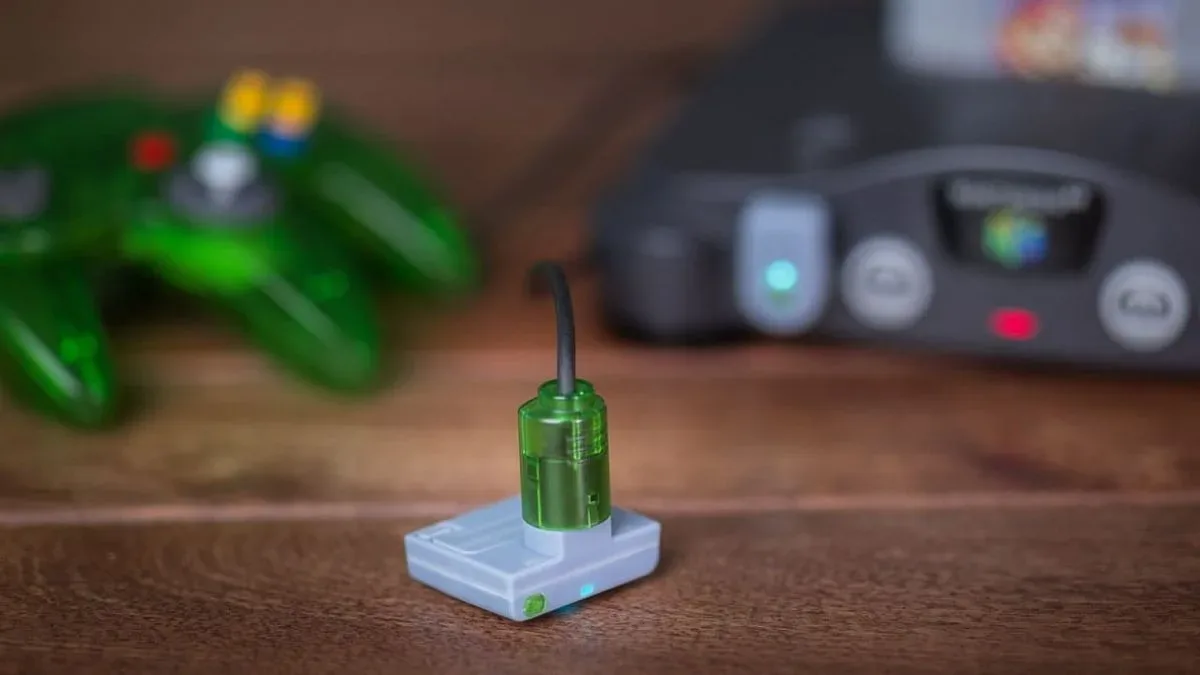
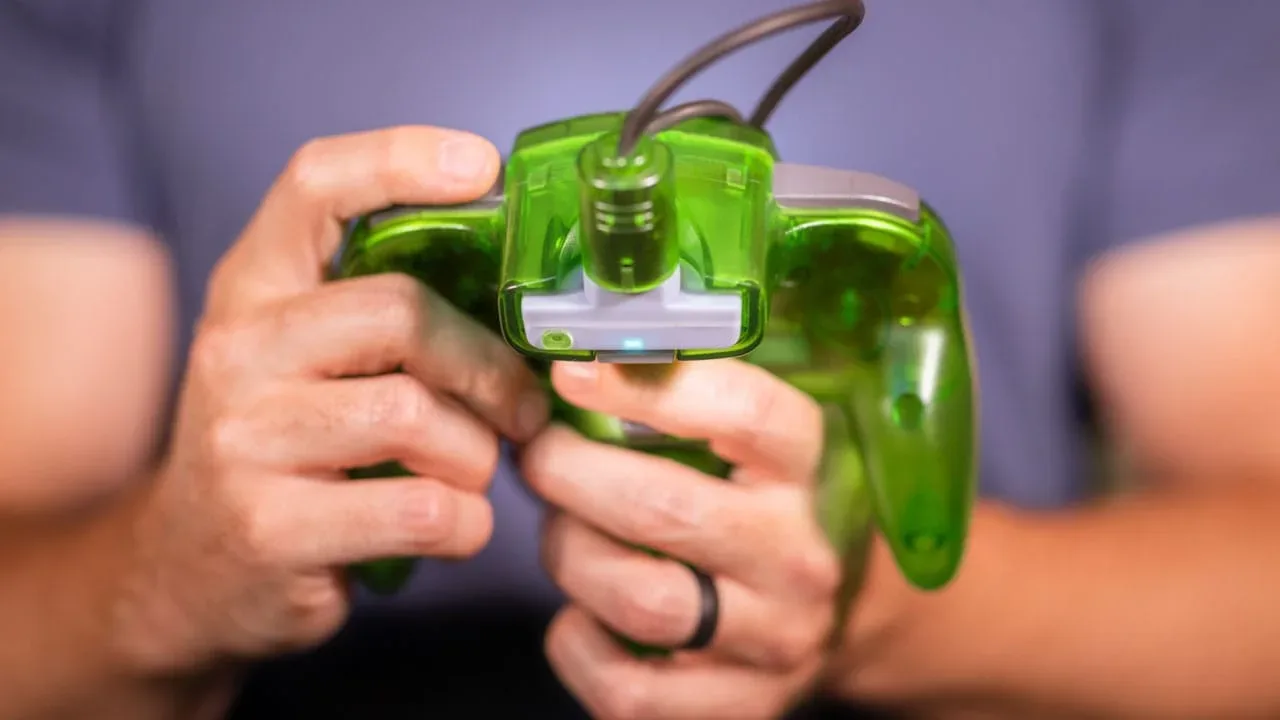
A forthcoming peripheral called Bridge is intended to solve that problem without asking players to permanently alter their existing controller. Rather than requiring a controller shell to be opened, a cable to be cut, or any soldering work, Bridge lets users connect a standard wired N64 controller to a small transmitting unit. A receiver dongle then plugs into the Nintendo 64, creating a wireless link between the original pad and the console.
The product is being developed by Alex, a solo developer based in Michigan. Its initial launch is planned for December 2026, with a small first run of 200 units in the United States. Bridge is expected to cost $39 at launch. International availability has not been confirmed, although Alex has indicated that wider shipping could follow if demand supports it.
Embedded Instagram post
Keeping the original controller intact
The central appeal of Bridge is that it does not turn an original N64 controller into a permanent modding project. Players plug the controller's existing cable into the accessory, and the cable and connector remain usable in their normal form. That means the same controller can still be plugged directly into an N64 whenever someone wants the completely traditional wired experience.
For useful background on this topic, read Mistfall Hunter Opens Steam Free Weekend Alongside Fiery Season 2 Update.
For collectors, this is a meaningful distinction. Original controllers can be increasingly valuable, especially when they are in clean condition or come in less common colors. Even for players who are comfortable with hardware modifications, cutting a controller cable or altering internal circuitry can be an intimidating decision. A removable adapter offers a less destructive route to wireless play.
Bridge is also designed around the N64 controller's accessory port. The transmitter can tuck into that port area when no other accessory is being used, keeping the setup relatively self-contained. Players who want to use an accessory in the port can instead place the Bridge unit on a nearby table or on the floor. The design therefore aims to accommodate different play styles rather than forcing users to choose between wireless convenience and classic N64 add-ons.
A dedicated 2.4 GHz connection
Bridge uses a dedicated 2.4 GHz wireless link built specifically for Nintendo 64 use. It is not a Bluetooth device. That matters because Bluetooth can introduce variable latency depending on the hardware and wireless environment, while a purpose-built connection can be tuned toward the demands of responsive game inputs.
The stated addition is under 3 milliseconds of latency compared with a wired controller. As with any controller accessory, individual setups and perceptions can vary, but that claimed figure is aimed at games where timing is particularly important. Fast menu navigation, precise platforming, aiming, camera control, and competitive multiplayer can all reveal controller delay more quickly than slower-paced games.
The N64 library has plenty of titles where players will want as little additional lag as possible. Super Smash Bros. is especially relevant, as rapid reactions and repeatable inputs are fundamental to matches. Games such as Super Mario 64 and The Legend of Zelda: Ocarina of Time also make extensive use of the original controller's analog stick, while Pokémon Snap depends on comfortable, controlled movement during its on-rails photography sessions.
Those four games are among the titles Alex has tested with Bridge, with the original Super Smash Bros. reportedly receiving the most use during development. They are not presented as an exhaustive compatibility list, but they cover several major types of N64 play: 3D platforming, action-adventure exploration, photography, and local multiplayer fighting.
Rumble and Memory Pak support are part of the plan
Wireless controller adapters can sometimes complicate the use of original accessories, which is why Bridge's support for Rumble Paks and Memory Paks is a notable part of its design. The N64's accessory port was essential to many games. A Memory Pak could hold save data for titles that did not rely solely on cartridge saves, while a Rumble Pak added force feedback to compatible releases.
Maintaining that functionality gives Bridge a different purpose from simply replacing an N64 controller with a modern wireless alternative. The goal is not just to send button presses without a cable; it is to retain as much of the original hardware experience as possible. Players can keep using the controller they know, along with the accessories that were designed for it.
That approach may be especially attractive for people who already own several first-party controllers, favorite third-party pads, or a collection of N64 accessories. Bridge is stated to work with both original Nintendo hardware and third-party consoles. It is still an N64-focused product, however, and should not be mistaken for a universal Bluetooth adapter intended for multiple console generations.
AAA power and estimated battery life
Bridge is powered by a single AAA battery. The projected active play time is around 10 hours per battery. A replaceable battery is a straightforward choice for retro setups, where players may prefer not to manage proprietary rechargeable packs or USB charging routines for every accessory in their entertainment center.
Ten hours will not eliminate the need to keep spare batteries around, particularly for lengthy multiplayer sessions, but it should cover several ordinary play periods. The use of one AAA cell also keeps the power arrangement familiar and easy to replace. Actual endurance may depend on factors such as accessory usage and the conditions of a particular wireless setup, but the stated target provides a useful expectation ahead of release.
There is also a practical advantage to a detachable wireless solution here. If the battery runs low, the controller itself has not become unusable or trapped behind a built-in battery system. The original cable remains available for a direct wired connection, preserving a fallback option that is built into the product's basic premise.
A niche solution with broad retro appeal
The N64 already has wireless options. Some modern controllers are compatible with the console, and third-party hardware makers have produced alternatives that connect without the original cable. Those products can be useful, particularly for players who want extra buttons, revised analog stick technology, or a controller shape closer to newer systems.
Bridge occupies a more specific niche: it is for players who want wireless freedom but do not want to give up their existing N64 pads. There is a certain appeal in using the same controller that has been part of a collection for years while finally sitting farther away from the television. For some, that means a more comfortable couch setup. For others, it means easier local multiplayer without multiple controller cables running across the room.
It also reflects the continuing interest in preserving rather than replacing retro hardware. The best accessories for older consoles are often those that remove a modern inconvenience while leaving the original machine's character intact. Bridge does not try to redesign the N64 controller, whose peculiar form remains divisive even now. Instead, it treats that controller as something worth keeping in service.
Limited initial release in December
Bridge has been in development for a long time. Alex began working on the peripheral roughly a decade ago, though family life delayed its path to release. That lengthy history helps explain why the product is arriving as a focused, small-batch launch rather than a mass-market accessory with broad retail distribution from day one.
The first December release will be limited to 200 units and restricted to the US. With a $39 retail price and an early production run this small, interested N64 owners may need to move quickly once ordering opens. No exact on-sale date beyond December 2026 has been announced, and there is no confirmed timetable for additional batches or overseas shipping.
For now, Bridge stands out as a promising option for players who value authenticity as much as convenience. If its low-latency claim, accessory support, and compatibility goals hold up across the N64 library, it could offer one of the cleanest ways to make a beloved wired controller feel more at home in a modern living room--without a soldering iron, a cut cable, or a permanent change to the hardware.
Community
Discussion
Start the conversation.
No comments have been posted yet.