

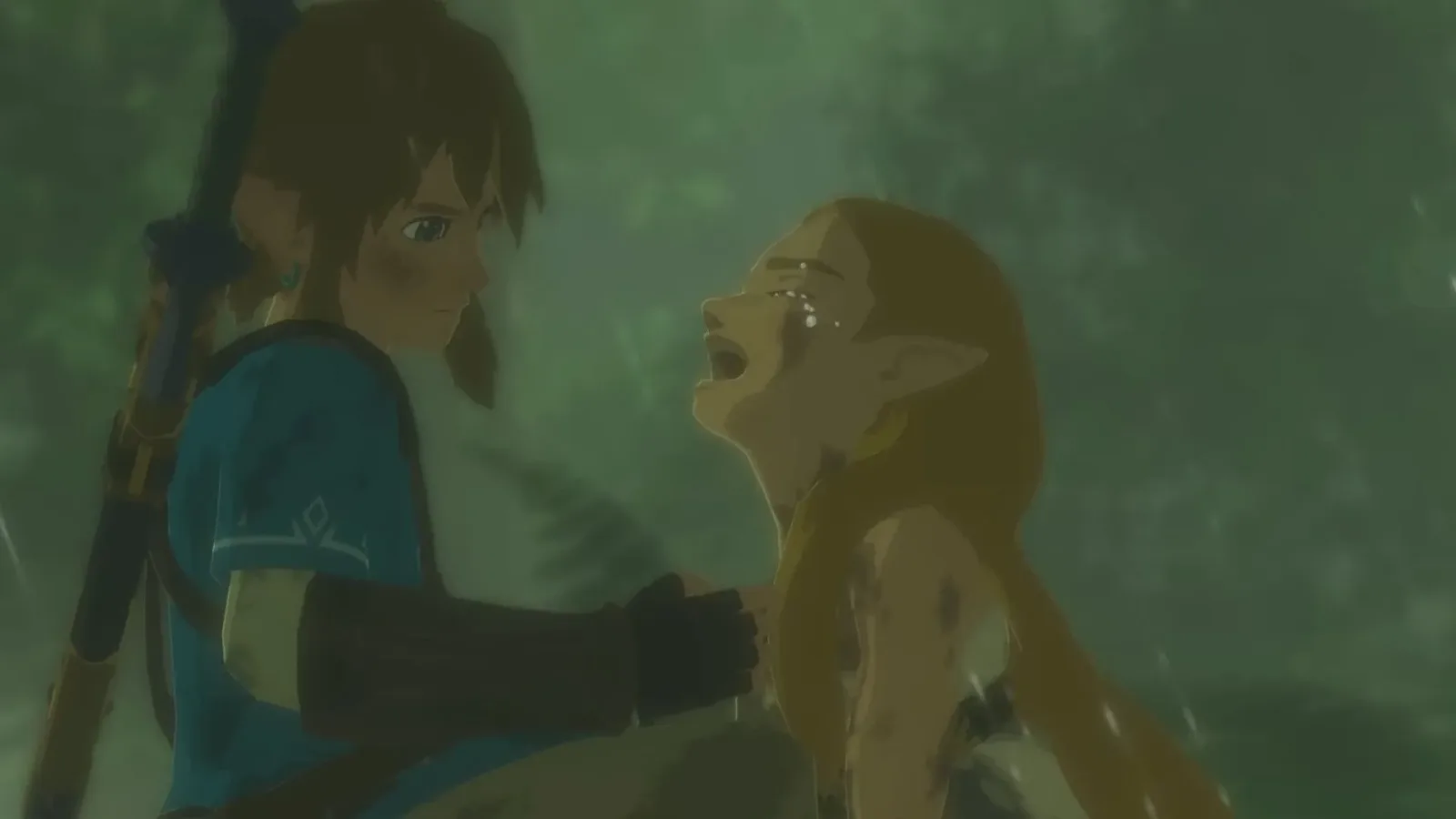
The Legend of Zelda is now one of Nintendo's most commercially powerful series, but former Nintendo of America marketing leaders Kit Ellis and Krysta Yang say that the franchise was struggling to broaden its audience before The Legend of Zelda: Breath of the Wild dramatically changed its direction.
In a recent discussion, Ellis and Yang reflected on the years leading up to the 2017 open-world adventure and pushed back on the belief that Nintendo abandoned the series' traditional structure while that format was still at the height of its popularity. Their recollections instead describe a period in which internal feedback indicated that the established Zelda audience was shrinking and that newer releases were not bringing enough new players into the series.
The conversation arrives at an interesting moment for Zelda. Nintendo recently released a Switch 2 remake of The Legend of Zelda: Ocarina of Time, and the remake has made an enormous early impression, selling 5.2 million copies during its first four days. That performance has naturally renewed discussion about whether Nintendo could return to a more conventional 3D Zelda formula alongside its large-scale open-world releases.
For Ellis and Yang, however, the success of a modernized Ocarina of Time does not erase the circumstances that led Nintendo to make such a bold change with Breath of the Wild. Instead, it may show that Zelda now has room to support multiple styles of adventure.
For useful background on this topic, read PS5 Jailbreak Developer Warns GTA 6 Game Dumps May Not Be Coming Soon.
A franchise in need of a new direction
Ellis previously served as Nintendo of America's director of social media marketing and original content, while Yang was the company's senior manager of creator relations and original content. During their discussion, they considered whether the strong reception to the new Ocarina of Time remake could encourage more classic-style Zelda projects in the future.
Ellis said he would particularly like to see a new, modern take on a classic Zelda design rather than a game that simply merges traditional dungeons into the broader open-world model established by Breath of the Wild and Tears of the Kingdom. But he also argued that conversations around the franchise can sometimes overlook how difficult things were before Nintendo's reinvention.
In his view, there is a tendency to treat the move away from the old formula as though Nintendo removed it at the peak of its commercial strength. Yang rejected that interpretation even more bluntly, describing the series as being in "dire straits" at the time and saying its games were selling very little.
Ellis recalled attending focus groups during that period and described the feedback as deeply concerning. The core message, he said, was that the existing fan base was dwindling and that Zelda was not attracting enough first-time players. He said Nintendo had substantial data pointing in the same direction: interest among the audience was becoming smaller with successive releases.
That context matters when looking at Breath of the Wild. Nintendo did not merely adjust familiar Zelda ideas; it rebuilt the experience around open-ended exploration, physics-driven systems, survival mechanics, player freedom, and an expansive world that could be approached in many different ways. Traditional item gating was greatly reduced, dungeon design was rethought, and players were given the ability to climb across much of the environment from the start.
Whether every longtime fan preferred that shift is a separate question. But the commercial outcome makes clear that Nintendo reached a much larger audience than it had before. Ellis's point is that such a radical decision was not made in a vacuum. From the perspective of the marketing feedback he remembers, the series needed a dramatic answer to its declining momentum.
Breath of the Wild transformed Zelda's commercial standing
The sales figures underline just how consequential that decision became. As of the end of September, Nintendo's data lists the Switch version of Breath of the Wild at 34.28 million copies sold. Its sequel, The Legend of Zelda: Tears of the Kingdom, has reached 22.9 million copies.
Those totals put both games among the defining Nintendo releases of their era. They also helped establish Zelda as a flagship series capable of drawing the kind of mainstream attention once reserved for Nintendo's very biggest brands. Breath of the Wild launched alongside Nintendo Switch in 2017 and became closely associated with the system's identity, while Tears of the Kingdom continued that momentum with an even more elaborate systems-driven sandbox.
The pair's impact is not solely a matter of sales. Both games reshaped expectations for open-world design, particularly in the ways they encourage experimentation rather than prescribe a single solution. Players can use environmental tools, traversal options, physics interactions, and their own curiosity to reach objectives. That flexibility became central to the modern Zelda identity.
Still, the acclaim surrounding those games has also created a recurring question: should every future mainline Zelda follow the same broad blueprint? The response from many players has been that the series is strongest when it embraces variety. Zelda has always changed considerably from one era to the next, moving between top-down adventures, more linear 3D quests, stylus-driven handheld games, multiplayer experiments, and now open-air worlds.
The new Ocarina of Time remake adds more fuel to that conversation. Its early sales suggest that there is major enthusiasm for a carefully structured adventure built around recognizable dungeon progression, memorable set-piece temples, gated exploration, and a more directed narrative path. A remake benefits from the reputation of one of the most celebrated games ever made, of course, but selling 5.2 million copies in four days is still a striking demonstration of interest.
Classic Zelda never disappeared
The debate is also complicated by the fact that Nintendo has not completely abandoned traditional Zelda design since Breath of the Wild. The company has continued to release projects that represent other branches of the franchise.
The remake of The Legend of Zelda: Link's Awakening brought a classic top-down adventure to Switch, while The Legend of Zelda: Echoes of Wisdom offered another new top-down entry with a different lead and its own puzzle-solving approach. Nintendo also released The Legend of Zelda: Skyward Sword HD, giving players access to a more linear 3D Zelda experience that predates the open-air era.
Those releases matter because they indicate that Nintendo does not see Zelda as a series limited to one structure. Yet remakes, remasters, and smaller-scale entries are not necessarily the same thing as a wholly new, large-budget 3D adventure built around the classic formula.
That is where Ellis's preference may resonate with many fans. Excluding remakes, remasters, and ports, 2011's Skyward Sword remains the last new 3D Zelda constructed around the older, more guided approach. Its dungeons, item progression, and story-forward pacing differ sharply from the player-led exploration of Breath of the Wild and Tears of the Kingdom.
It has therefore been a long time since Nintendo created a fresh 3D Zelda in that style. The appetite for the Ocarina of Time remake could be interpreted as evidence that a new entry with dense, distinctive dungeons and a more deliberate progression system might have an audience today.
Two Zelda paths can coexist
The most useful takeaway from the discussion may be that Zelda does not have to choose permanently between its past and its present. Breath of the Wild was a necessary and successful reinvention in response to the challenges Ellis and Yang describe. The result was not just a sales rebound, but a new creative foundation for the franchise.
At the same time, the response to Ocarina of Time shows that players have not lost their affection for the older model. A traditional structure can still feel exciting when it is presented with the scale, polish, and imagination expected from a modern Zelda release.
Nintendo has already demonstrated that it can alternate among different approaches in smaller and remade projects. The remaining question is whether the company will eventually commit that same level of ambition to a completely new classic-style 3D installment. For fans who miss intricately themed dungeons, tightly paced story progression, and the focused journey of earlier games, that prospect remains especially appealing.
For now, Zelda's recent history makes one thing clear: the open-world transformation was not simply a departure from a thriving status quo. It was a response to a franchise that, by these former Nintendo marketers' account, needed to reach beyond its narrowing base. The challenge ahead may be finding a way to preserve that expanded audience while allowing the series' older strengths to return in a genuinely new form.
Community
Discussion
Start the conversation.
No comments have been posted yet.