

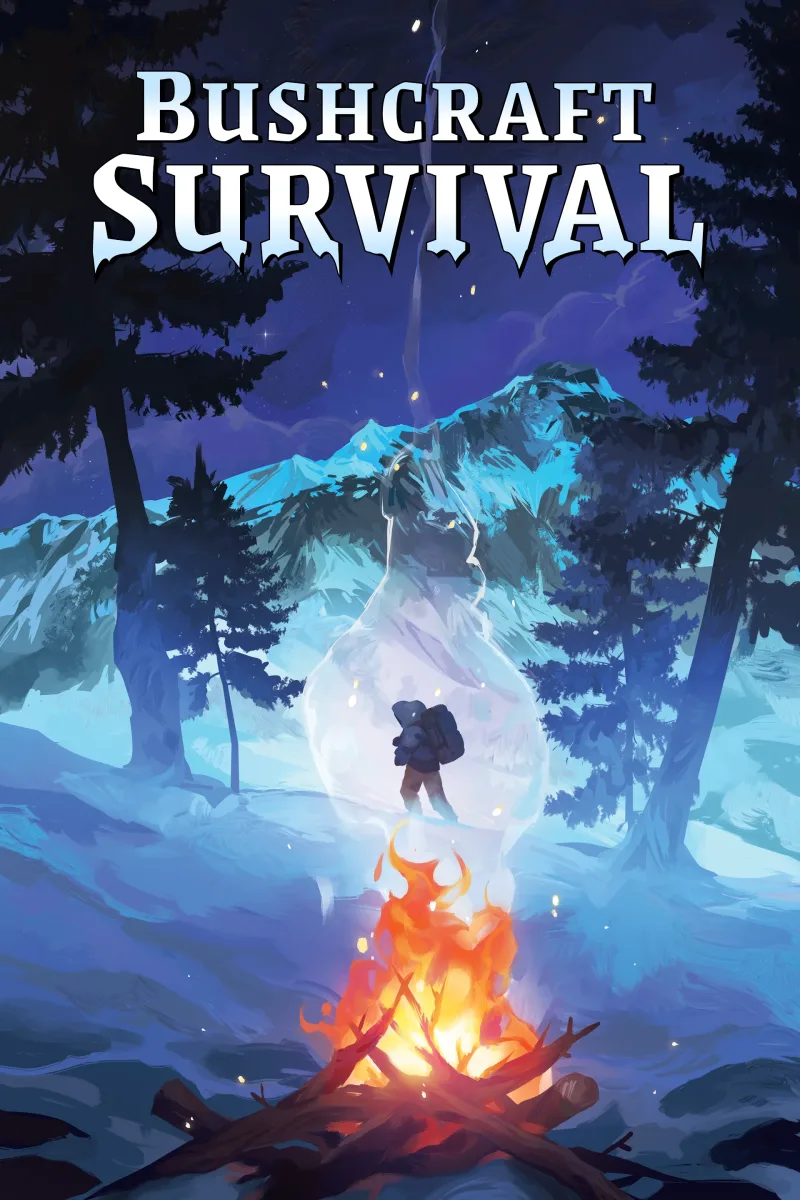
Bushcraft Survival is set to bring a deliberately hands-on approach to wilderness survival when it reaches Steam Early Access on PC in 2027. Published by Bonus Stage Publishing and developed by Michael Burt at Newfoundland, Canada-based Michael Jared Software, the game places players in the icy forests of Northern Canada with limited equipment, a challenging climate and no pre-made construction plans to follow.
The premise is immediately unforgiving. A helicopter leaves the player in the wilderness carrying a backpack and a small collection of tools, then departs. From there, survival depends on understanding the environment, gathering materials and making sensible decisions before cold, wet clothing, hunger, wildlife or an inadequate shelter turn a promising outing into a failed expedition.
For a genre filled with crafting menus and quickly assembled structures, Bushcraft Survival is positioning its core appeal around physical, step-by-step labor. Players will not simply select a blueprint, provide a stack of resources and watch a cabin appear. Instead, the announced systems ask them to work with trees and logs directly, shaping a shelter through manual placement and practical construction choices.
A survival game built around the work of the forest
The game's forestry mechanics are central to its identity. Players can fell spruce trees, remove their branches, position logs and fasten them together by hand. That process is intended to turn shelter construction into something more involved than a routine crafting task. A player will need to think about what they need, what materials are available and how to turn those materials into protection against the elements.
For useful background on this topic, read Gently Packed Begins Early Access on PC Storefronts.
The lack of blueprints is especially notable. Rather than pushing players toward a prescribed list of structures, Bushcraft Survival is designed to leave room for improvised building. That could mean making a basic shelter as quickly as possible after arriving in the forest, or investing additional time in a sturdier camp once immediate safety is established. The announcement does not detail every possible building type or material, but its emphasis on placing and tying down logs suggests that construction will be based on practical assembly rather than abstract recipe completion.
This approach also gives the game a potentially different rhythm from survival titles that accelerate rapidly from scavenging to industrial-scale production. The available details point to a smaller-scale experience where the forest itself remains the main resource, the campsite is important and progress is closely connected to everyday outdoor skills.
"Bushcrafters notice fast when a game gets the craft wrong. In Michael's game you take the branches off a spruce before you cut it down. That was when we knew," said Asmo Saloranta of Bonus Stage Publishing.
For another perspective on this story, read Bushcraft Survival Targets Steam Early Access in 2027.
That comment highlights the level of attention the team wants to bring to the activity of processing wood. It also signals that Bushcraft Survival is aiming for players who value the details of bushcraft and forestry, while still presenting those activities in a game format built around survival challenges.
Cold weather is as dangerous as the wilderness
Building a shelter is only one part of staying alive. Bushcraft Survival will make players manage their clothing and maintain a fire as they contend with Northern Canadian conditions. Keeping clothes dry matters, and so does preserving a reliable source of warmth. Those systems should make weather exposure an active concern instead of just a background visual effect.
That focus can create meaningful choices throughout a run. A player may need to decide whether to remain near camp and improve their shelter, venture out to gather food, search for better resources or prioritize fuel before night arrives. The exact depth of the game's temperature, wetness and weather simulation has not been outlined, but the announced design makes clear that warmth and dryness will be fundamental to the experience.
Wildlife will further complicate the challenge. Moose are specifically named among the animals players may encounter in the region. The announcement does not explain how every animal will behave, nor does it lay out a complete list of threats, but their inclusion reinforces the setting's sense of uncertainty. The forest is not merely a harvesting area; it is a living environment that players will need to navigate carefully.
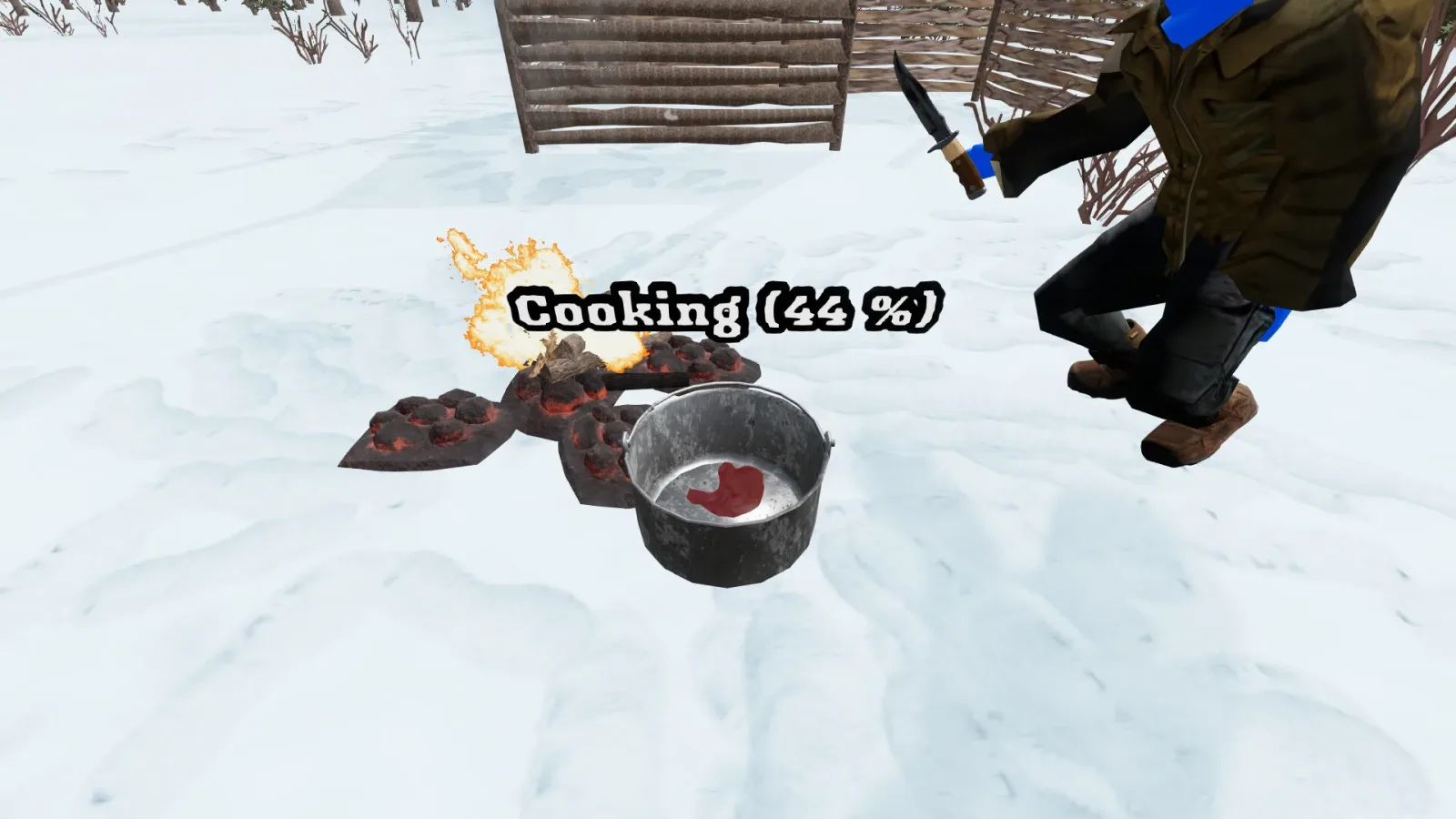
Food acquisition will include several familiar but fitting wilderness activities. Players can ice fish, set traps and hunt, then cook their catches or game over an open fire. These tasks should connect the game's outdoor survival loop from gathering and exploring to preparing meals and sustaining a camp. Cooking over a fire also fits naturally with the need to keep that fire alive for warmth, giving one system multiple uses rather than separating food preparation from shelter management.
Starting each run from a ski lodge
Before heading into the wild, players will begin their runs at a ski lodge. The lodge acts as a starting point where new tools await for the next outing. This setup suggests a run-based structure in which a trip into the forest is not necessarily the entire game on its own, and where the tools available before departure can matter to the next attempt.
The announcement does not specify how tools are unlocked, whether they are earned through successful survival, or what happens after a run ends. Still, the ski lodge gives Bushcraft Survival a distinct framing device. It provides a contrast to the isolation of the forest and could offer a sense of continuity between expeditions, especially for players who want to gradually become more prepared for harsh conditions.
There is an appealing tension in that concept. Better tools may help players tackle tougher situations, but the central premise remains grounded in arriving in a cold forest with limited supplies. Even when an expedition starts with improved options, players will still need to make a shelter, gather fuel and find a way to eat. The game's intended challenge appears to be less about acquiring vast quantities of gear and more about using the equipment at hand intelligently.
Survival and Sandbox modes are planned
Bushcraft Survival is planned to include both Survival Mode and Sandbox Mode. Survival Mode is likely to be the more structured expression of the game's core premise, built around enduring the weather, handling resources and responding to the dangers of the wilderness. Sandbox Mode should offer a more open setting for players who want to focus on construction, experimentation and life in the forest without approaching every session in quite the same way.
Specific rule differences between the modes have not been announced. However, including both is a sensible fit for a game with tactile building systems. Some players will be drawn to the pressure of an exposed arrival in the woods, while others may want time to test shelter designs, learn the wood-processing process or create an elaborate camp at their own pace.
The game will support single-player play and online co-op for up to four people. Co-op could be particularly well suited to the systems described so far. One player might focus on gathering or processing lumber while another maintains the fire, checks traps, prepares food or starts arranging a shelter. The announcement does not describe shared progression, friendly-fire rules, dedicated servers or other multiplayer details, so those aspects remain to be clarified as development continues.
Even so, four-player cooperation has the potential to change the character of a wilderness run. A task that is laborious alone may become manageable as a group, but a larger team may also need more food, more sleeping space and greater coordination. If the game's hands-on emphasis carries through to co-op, successful groups may need to organize their work rather than simply splitting up to collect generic materials.
Steam Early Access is targeted for 2027
Bonus Stage Publishing has announced that Bushcraft Survival is coming to Steam Early Access in 2027. No more precise launch window has been provided. As an Early Access project, the game may evolve substantially as development continues, and prospective players should expect further information on its systems, content scope and development plans closer to release.
A free demo is already available on Steam, giving interested players a way to sample the game ahead of its planned Early Access debut. For a project centered on the feel of manual forestry and survival routines, a demo may be especially useful: the appeal will depend not only on the list of activities, but on whether cutting, stripping, carrying, arranging and tying materials together feels satisfying in play.
Bushcraft Survival has a clear premise in a crowded genre. Its developers are not presenting survival as a rapid march through technology tiers or a shortcut-filled crafting system. The focus, instead, is on the difficult and often methodical work required to turn a cold stretch of forest into somewhere livable. With ice fishing, trapping, hunting, open-fire cooking, build-it-yourself shelters and support for solo or four-player sessions, the game is aiming to make basic outdoor skills the center of its survival story.
There is still much to learn before 2027, including the breadth of the wilderness, the details of its progression and how its two modes will differ. But the announced foundation is straightforward: arrive with little, respect the cold, use the trees carefully and make the shelter that keeps the next night from becoming the last one.




Community
Discussion
Start the conversation.
No comments have been posted yet.