

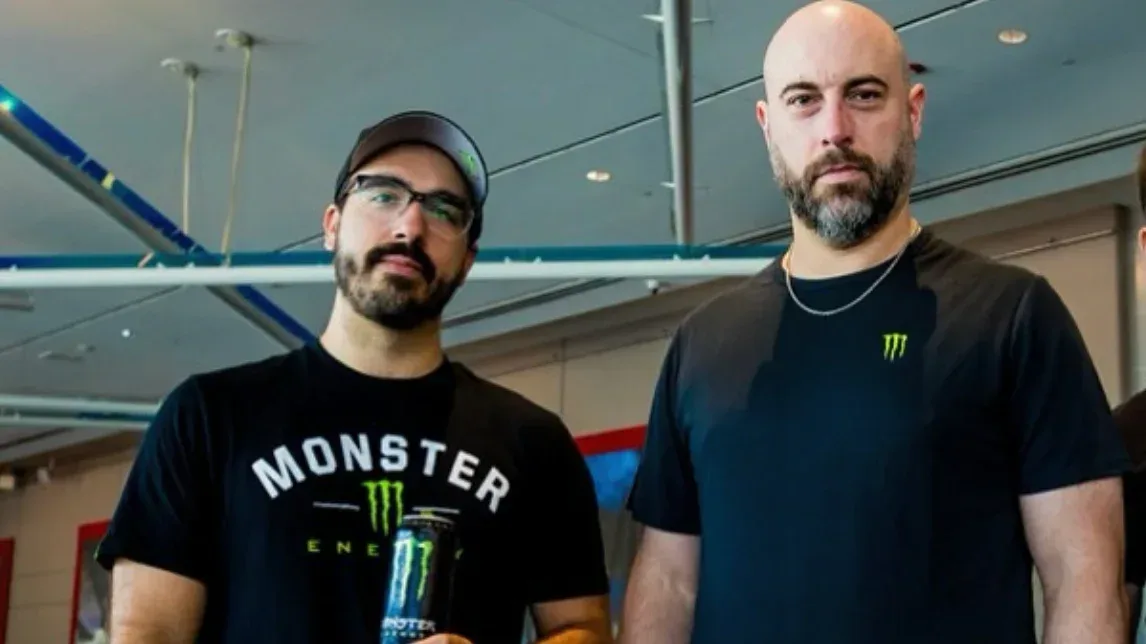
Longtime Call of Duty commentator Clint "Maven" Evans has said he is stepping away from Call of Duty shoutcasting for "the foreseeable future" after publicly confirming that he is in a relationship with Maurisa, the ex-wife of his longtime broadcast partner Joseph "MerK" DeLuca.
Evans addressed the situation in a social-media post, describing the relationship as unconventional and taboo while asking viewers to continue supporting both the Call of Duty League and DeLuca. His statement did not clarify whether the decision followed a request from the league or whether he chose to remove himself independently. It also left the door open to a possible return, while making clear that a comeback is far from guaranteed.
The news has rapidly become one of the most discussed off-stage stories in competitive Call of Duty. Maven and MerK spent years as a prominent commentary duo, calling major matches and helping define the presentation of the esport for a large part of its modern era. That long professional association has made the personal revelation especially striking for fans who followed their broadcasts closely.
Embedded X/Twitter post
Embedded X/Twitter post
Embedded X/Twitter post
Maven confirms he is leaving the broadcast scene
In his post, Evans acknowledged the difficult nature of the situation and said he had known the family before DeLuca's divorce. He explained that the relationship later developed into something more. While he did not provide a detailed timeline or discuss private circumstances surrounding the divorce, he confirmed that he and Maurisa are now together.
For useful background on this topic, read Unity Spark's Space Corridor Trailer Has Become a Showcase for AI Game-Making Skepticism.
Evans also framed his departure as a move away from Call of Duty casting rather than a definitive end to his connection with the game or its community. The wording "for the foreseeable future" matters because it signals uncertainty instead of a permanent retirement announcement. For now, though, it means the Call of Duty broadcast talent pool could be losing one of its most recognizable voices during a period when experienced on-air personalities remain important to the league's identity.
He urged fans to support the Call of Duty League and MerK, a request that recognizes how quickly public attention can shift away from the competition itself and toward personal controversy. No official statement from the league was included in Evans' announcement, and there is no confirmation that the broadcaster was removed from his role by organizers.
A defining commentary partnership in competitive Call of Duty
Maven and MerK were familiar figures to fans of professional Call of Duty well before the current controversy. Their work together spanned years of tournament coverage, and their contrasting styles helped make their desk and match commentary memorable. Maven became particularly known for energetic play-by-play calls, while MerK brought the perspective of a former professional player to analysis of strategy, momentum, and individual decisions.
That combination is a conventional formula in esports broadcasting, but chemistry is much harder to create than it is to plan. A veteran caster and an experienced former competitor can provide useful information; a duo that can react naturally during high-pressure rounds, adapt to unexpected game swings, and maintain a rhythm over a long season is considerably rarer.
For Call of Duty audiences, the pair represented continuity across changing game releases, formats, franchises, and competitive structures. Fans have watched the scene move through multiple eras, from earlier tournament circuits to the franchised Call of Duty League model. Familiar commentators often become an anchor through those transitions, creating a sense of history even as rosters, maps, rules, and title sponsors change.
That history also explains why reactions have been so intense. The story is not simply about a broadcaster changing jobs. It involves a public-facing professional partnership that viewers had associated with friendship and trust for years.
MerK has not publicly addressed the matter
DeLuca does not appear to have made a public statement about Evans' relationship announcement. His social-media accounts have nevertheless attracted substantial attention, including messages offering support as well as the predictable wave of jokes, speculation, and invasive commentary that often follows a high-profile personal dispute online.
That response is a reminder of the uncomfortable divide between public careers and private lives in esports. Commentators and players build their reputations in front of audiences who may hear them weekly, follow their posts daily, and feel closely familiar with their personalities. But professional visibility does not turn every personal issue into entertainment or give viewers complete knowledge of the circumstances involved.
Much of the online conversation has focused on old clips, past interactions, and moments from Maven and MerK broadcasts. Viewers have revisited footage through the lens of information that was not public at the time. Those retrospective interpretations may fuel social-media discussion, but they do not establish the broader details of anyone's personal life. The confirmed facts remain limited to Evans' statement that he is in a relationship with Maurisa and that he plans to step away from Call of Duty shoutcasting for now.
What Maven's absence could mean for the Call of Duty League
From a production standpoint, the league has other capable analysts, hosts, and commentators who can cover events. Esports broadcasts are collaborative productions, and no show depends on a single person alone. Still, replacing a recognizable voice is not merely a scheduling issue. Commentary teams develop shorthand over time, including the timing of handoffs, how they balance excitement with explanation, and which moments need extra tactical context.
Call of Duty's pace makes those skills especially visible. A match can turn in seconds through a break of a hardpoint, a decisive Search and Destroy pick, a Control round comeback, or one player finding a multi-kill at precisely the right time. Play-by-play talent must identify the moment, communicate its stakes, and leave room for analysis without losing the energy of the action.
When a regular caster leaves, the league will need to decide whether to establish a new permanent partnership or rotate talent around existing broadcast teams. Either route can work. A stable duo provides familiarity for viewers, while rotating combinations can reveal unexpectedly strong chemistry and offer room for new voices.
The larger challenge may be emotional rather than technical. Maven and MerK's work together was associated with a particular period of Call of Duty competition. A different pairing can deliver excellent broadcasts, but it will not replicate the exact history that the former duo brought to the booth.
A personal story that has become a public esports moment
The speed at which the story spread reflects the way esports communities operate. Fans do not only follow results; they follow personalities, friendships, rivalries, roster changes, streams, podcasts, and social posts. That ecosystem can create a highly engaged audience, but it also means personal developments can become a major topic almost instantly.
There is a clear difference between discussing a public announcement and treating the people involved as characters in a continuing drama. Evans chose to confirm the relationship and announce his professional plans publicly. DeLuca has not shared his own response. Without further statements, speculation about motives, timelines, professional decisions, or private conversations remains speculation.
For viewers, the immediate practical outcome is straightforward: Maven says he will not be calling Call of Duty matches for the foreseeable future. Whether that decision becomes a short break, a longer departure, or the end of his time in the scene is unknown. It is also unclear who will take on future broadcasting duties or how the league will address its commentary lineup.
For the people directly involved, the situation is plainly more personal than any broadcast change. For the Call of Duty community, it marks an abrupt and unexpected disruption to one of the scene's best-known commentator partnerships. The league will continue, matches will continue, and new broadcast combinations will emerge. But Maven and MerK's long-running pairing will now be viewed through a very different lens.
Community
Discussion
Start the conversation.
No comments have been posted yet.