

There is always room in a gaming library for the enormous, all-consuming release: the kind of game that can dominate conversations, social feeds, and everyone's free time at once. But a crowded blockbuster season can also be the ideal moment to seek out something smaller, stranger, more focused, or simply more personal. Recent indie releases have delivered exactly that, with games about excavating peculiar dinosaur skeletons, coordinating platforming challenges with a room full of friends, steering a fortress across a battlefield, and making a dress one careful stitch at a time.
The eight games below do not have much in common on the surface. Their genres range from cooperative puzzlers and action roguelikes to retro-inspired role-playing games and detailed crafting simulations. What connects them is a clear point of view. Each takes a familiar activity or genre and gives it a memorable twist, whether that means tying players together in a frantic Sonic-themed obstacle course or turning a giant egg into the center of a bizarre cooperative mystery.
Dig Dig Dino turns a simple excavation into an obsession
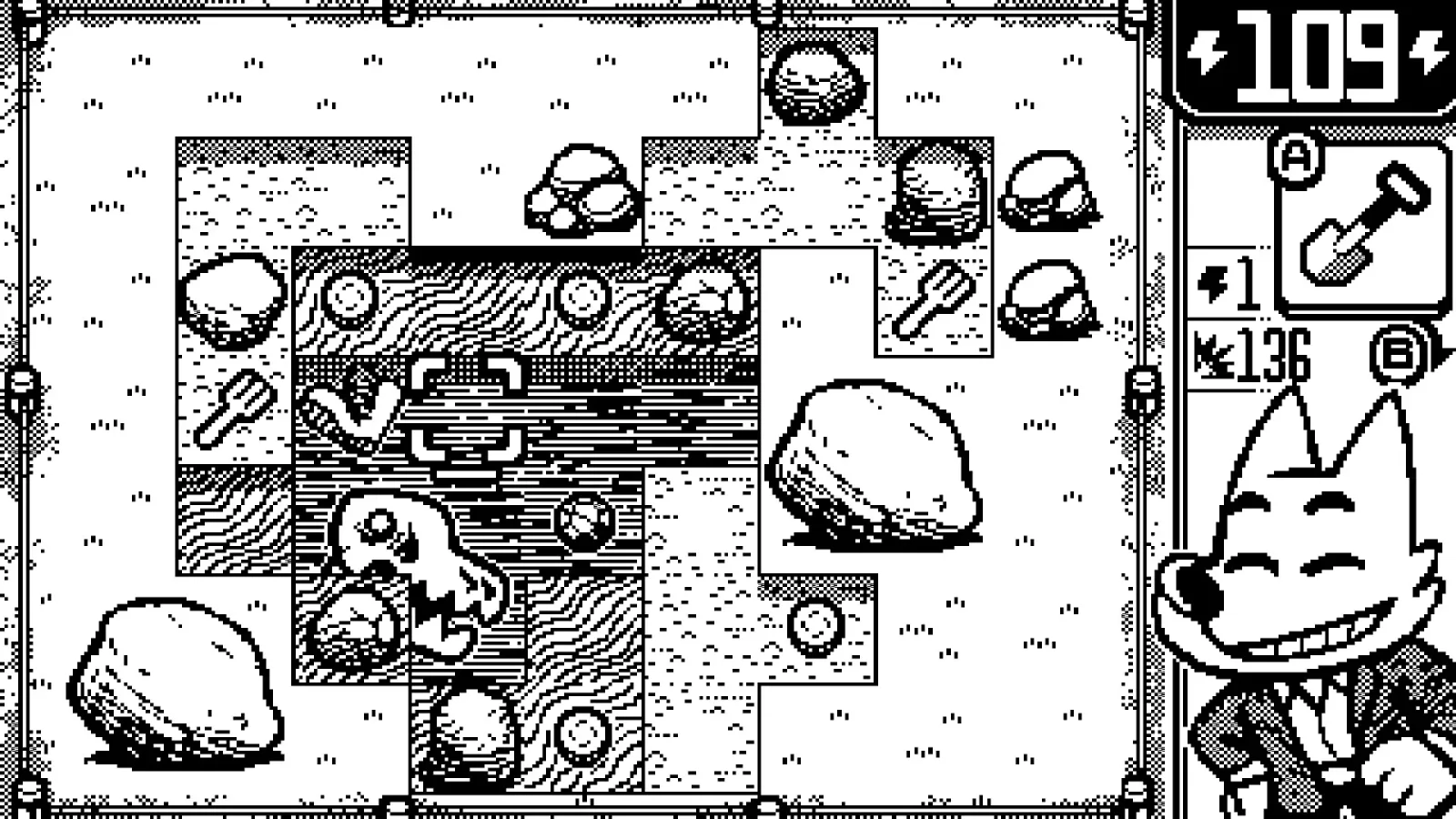
Dig Dig Dino began life on Playdate and has now arrived on Steam. Made by the team behind the acclaimed western action game Arco, it takes a much more compact and cheerful approach than that earlier project. Players step into the boots of a paleontology intern whose work consists of digging through soil and stone in pursuit of fossilized dinosaur bones.
Its core loop is immediately understandable. A limited pool of stamina restricts how much can be excavated in a day, so every trip underground involves decisions about where to dig and when to stop. Treasures recovered from the earth can be traded for money, which then feeds back into the next expedition through stamina increases, tool improvements, and useful additions to the kit. One especially charming upgrade is a dog capable of sniffing out bones.
For useful background on this topic, read Eldritch Empathy Brings Cosmic Horror, Moral Choices and Roguelike Investigation to PC in 2027.
That structure may sound modest, but incremental digging games can be powerful when they make the next discovery feel close at hand. Different sites ask for different equipment and offer different valuables, while the skeletons themselves are apparently far stranger than conventional museum exhibits. The game also hints that there may be more to its world than an endless sequence of fossil collections. For anyone who enjoys a relaxing routine with a little mystery underneath it, Dig Dig Dino looks like an easy recommendation.
Sonic Pico Park is chaos that requires actual cooperation
Sonic Pico Park merges the cooperative puzzle-platforming format of TECOPARK's Pico Park with characters and style from the Sonic the Hedgehog universe. The result is not a solo speedrun showcase. It is a game built around communication, shared problem-solving, and the very real possibility that a group of friends will become loudly frustrated before finally figuring out what needs to be done.
Up to eight players can participate, taking control of Sonic, Shadow, and other familiar faces. The challenges ask the whole group to coordinate movement and timing, including situations where players are tied together or must negotiate loop-de-loops without leaving someone behind. That makes every successful solution a small team victory, and every mistake something the entire party sees immediately.
Cooperative games are often at their best when they create stories players remember after the session is over. Sonic Pico Park appears designed for exactly that kind of night: a mix of shouting, laughing, blaming the person who jumped too early, and eventually locking in as a team. It is likely best played with people who can handle a little chaos and still want to queue up another round afterward.
Queen's Domain embraces a harsher old-school fantasy adventure
Queen's Domain heads in a completely different direction. This first-person RPG deliberately channels the look and feel of classic PlayStation-era fantasy games, pairing angular retro presentation with a medieval island full of magic, monsters, secrets, and danger. Its premise is straightforward enough: the protagonist is searching for their father. Reaching that goal, however, is meant to involve uncertainty and self-directed discovery.
At the beginning, the player is weak, enemies are threatening, and the game offers relatively little hand-holding. Progress depends on experimentation, observation, and the willingness to keep trying when an encounter or route does not work the first time. Its combat is intentionally clunky in the way older first-person RPGs could be, but its movement and menus aim to feel smoother and more usable than the games that inspired it.
That combination will not appeal to everyone, and that is part of Queen's Domain's appeal. It is positioned for players who miss the tension of venturing into a hostile world with incomplete information. There is also talk of a substantial mid-game turn that recontextualizes the adventure, though that is best left unspoiled. Fans of games such as King's Field, Dark Souls, Elden Ring, or open-ended fantasy RPGs may find an intriguing new rabbit hole here.
Tanuki: Pon's Summer makes mail delivery delightfully active
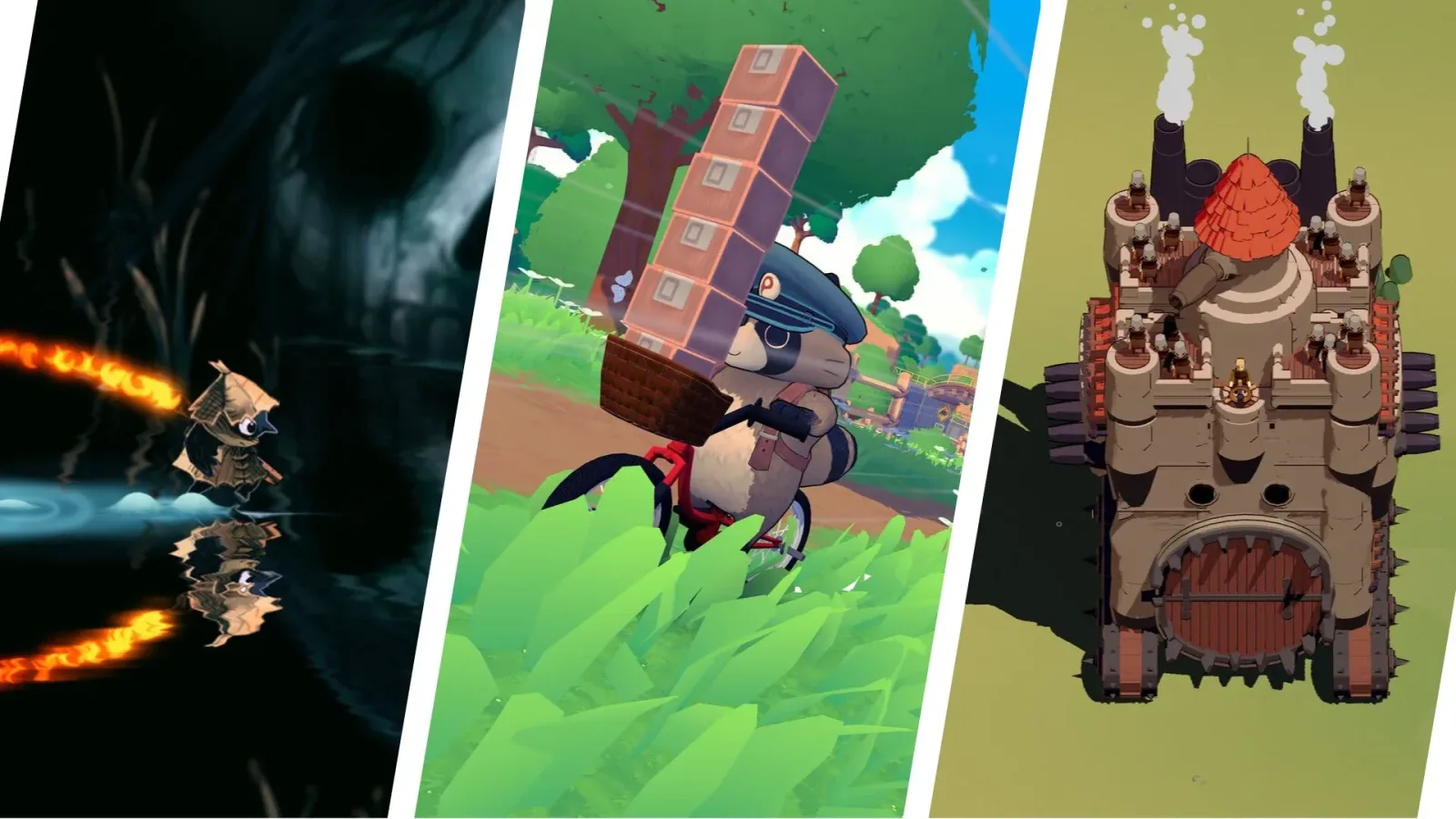
Tanuki: Pon's Summer is a cheerful blend of skateboarding-style trick systems, delivery work, open-world exploration, and cozy village life. Players control an adorable tanuki traveling across a village and surrounding forest, with a BMX bike serving as both a practical means of getting around and a tool for pulling off stylish tricks.
Delivering packages brings the tanuki into contact with local residents and gradually reveals more about them. These encounters can lead into a collection of activities that is much broader than simple courier work. Players may end up sumo wrestling, tending bar, chopping wood, or taking on other small tasks for the community. The game's structure gives it the feeling of spending a summer in a place where there is always one more corner to explore and one more neighbor to meet.
The Tony Hawk comparison fits the trick-focused movement, but Tanuki: Pon's Summer is not only chasing high scores. Its colorful setting and slice-of-life interactions make the world itself a major draw. It sounds suited to players who want a low-pressure game with plenty of motion and personality, rather than a pure management sim or a purely technical sports game.
Wanderburg lets a fortress become the hero
Wanderburg answers a question few games have asked: what if the star of a bullet-heaven action roguelike were a medieval fortress rolling across the countryside? The game is currently in Early Access on Steam, and its basic image is wonderfully direct. Players guide a castle on wheels as armies clash, territories change hands, and swarms of enemies close in.
Its foundations should be recognizable to anyone who has spent time with run-based auto-shooters. Like Vampire Survivors, the appeal lies in surviving escalating waves while building toward increasingly powerful combinations. Wanderburg adds its own flavor through a mobile fortress concept that recalls the living architecture of Howl's Moving Castle, plus a layer of medieval conquest and strategy. It has also been compared to TerraTech Legion, another game that puts vehicles at the center of the auto-shooter format.
The promise is a satisfying collision of arcade action and battlefield fantasy. Rather than controlling a lone warrior, players are the armored stronghold at the center of the conflict. For those who enjoy short, repeatable runs and the escalating spectacle of an overpowered build, Wanderburg offers an imaginative alternative to more familiar sci-fi or fantasy protagonists.
CRACK finds comedy and menace inside a giant egg
CRACK is an incremental cooperative comedy adventure set in a mysterious laboratory. At the center of that lab sits a giant egg, and players are tasked with breaking pieces from it, cashing those fragments in, and buying upgrades that help them crack off larger and more valuable chunks. The escalating-number structure is easy to understand, but the egg is not an inert resource.
It is alive, and it becomes increasingly angry as players chip away at it. Eventually, that frustration erupts into hazardous, chaotic events. This adds a social layer to what might otherwise be a straightforward progression game: players must deal with the unpredictable consequences of their own greedy efficiency.
The laboratory setting and larger mystery invite comparisons to Portal, though CRACK's focus is on cooperative mayhem and the absurdity of repeatedly attacking an enormous living egg for profit. It is the sort of premise that sounds silly until the mechanical loop takes hold. The combination of upgrades, escalating danger, and environmental questions could make it a strong choice for groups looking for a lighter, stranger shared experience.
Well Dweller offers a breezier metroidvania journey
Well Dweller is the fourth metroidvania from developer Kyle Thompson. It follows a bird carrying a matchstick, a seemingly humble tool that becomes the foundation for combat, movement, and a set of whimsical traversal abilities. The game may evoke Hollow Knight in its atmosphere and side-scrolling exploration, but it is also part of Thompson's continuing effort to shape a distinct, more compact take on the genre.
The emphasis here is on enjoyable movement and accessible action rather than extreme mechanical complexity. That makes Well Dweller particularly appealing for players who want the satisfaction of opening paths, discovering routes, and gaining new ways to move through an interconnected world without committing to the most demanding possible version of the formula.
There is no shortage of metroidvanias, especially after the long cultural shadow cast by Hollow Knight and its follow-up Silksong. Well Dweller earns attention by acknowledging those influences while keeping its own ambitions clear: a shorter, calmer adventure with a charming central image and traversal that feels good in the hands.
Dressmaker celebrates the craft behind the finished outfit
Dressmaker does not treat fashion as a simple menu of colors and preset outfits. It puts players into the process itself. Dresses are made piece by piece: selecting fabrics, choosing decorations, cutting patterns on the bias, stitching materials together, adding lace, and working toward either a customer request or a personal design.
The level of detail is the attraction. Unlocks expand the available dressmaking possibilities over time, encouraging players to experiment with increasingly ambitious creations. Some players will likely approach it with an eye for authentic technique and striking design, while others will delight in assembling something gloriously impractical. Both approaches seem entirely valid.
In a medium full of crafting systems, Dressmaker stands out by focusing closely on a craft that games often reduce to a cosmetic afterthought. It makes the construction of clothing the game, and that specificity is what gives it its charm. Whether the result is elegant, eccentric, or an absolute disaster of clashing fabric, every finished dress carries the sense that it was actually made rather than merely selected.
A varied indie slate is worth exploring
These games are not interchangeable, and that is the point. Dig Dig Dino offers quiet excavation and progression. Sonic Pico Park is a loud cooperative test. Queen's Domain asks players to get lost in a dangerous fantasy world, while Tanuki: Pon's Summer makes a small community feel inviting. Wanderburg turns a castle into an action-roguelike machine, CRACK turns an egg into a communal problem, Well Dweller keeps metroidvania exploration approachable, and Dressmaker gives patient creativity center stage.
For players looking beyond the largest releases, that variety is a reminder of why the indie space remains so valuable. There is always another unusual idea waiting to become the next game that unexpectedly takes over a weekend.
Community
Discussion
Start the conversation.
No comments have been posted yet.