

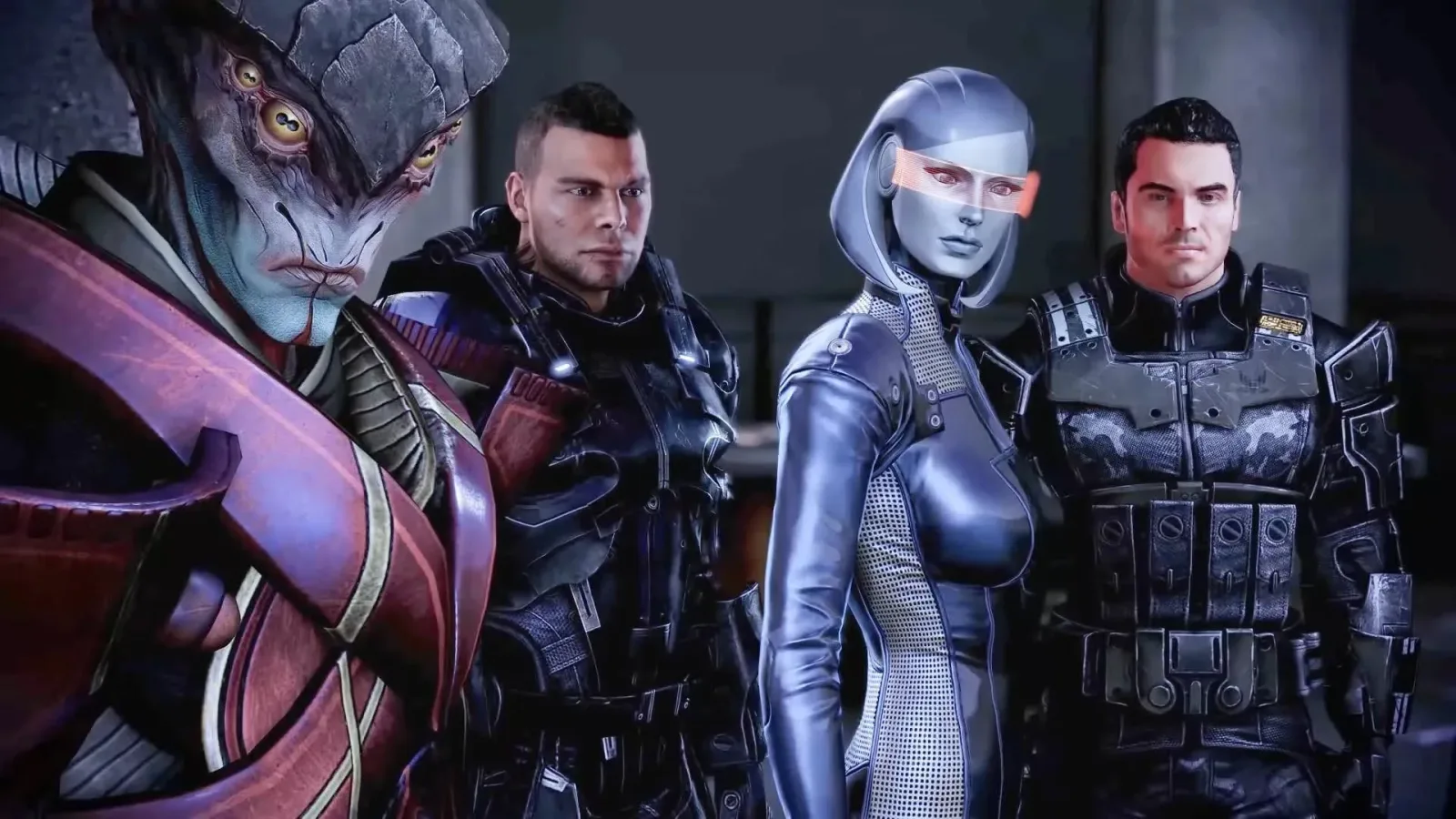
Mass Effect: Universe may never reach players, but new comments from writer Catherynne M. Valente offer a clearer look at the ambitious continuity work planned for the canceled project. The next Mass Effect game was reportedly still in early concept development when it was canceled last month, yet its writing team had already begun grappling with one of the series' biggest narrative challenges: how to move the universe forward roughly 600 years while honoring the choices, characters, and radically different conclusions of the original trilogy.
For fans, the most immediate question is naturally what would have become of Commander Shepard's former squadmates. The series has always encouraged unusually personal attachments to its crew, from Liara T'Soni and Garrus Vakarian to Tali'Zorah, Grunt, EDI, and many more. A six-century jump would make direct reunions impossible for many characters, but several species and artificial beings in Mass Effect have lifespans--or circumstances--that could potentially bridge that distance. Valente says the team did not ignore those possibilities.
A 600-Year Leap Did Not Mean Forgetting the Trilogy
Valente, who also wrote the novel Mass Effect Andromeda: Annihilation, discussed her time on Universe during a fan question-and-answer session. She remains under a nondisclosure agreement and cannot provide full details, but her answers indicate that the writing staff carefully examined the survival prospects and potential later lives of characters from Shepard's era.
When asked about returning figures who could physically still be alive by the time of the new game, Valente explained that the team considered the matter on a character-by-character basis. Her wording stops short of confirming appearances for particular squadmates beyond Liara, but it makes clear that potential survivors were not merely background lore questions. Decisions were being made about them as part of the game's development.
For useful background on this topic, read PlayStation Signs Marketing Partnership for The Witcher 4.
That distinction matters because Mass Effect continuity is particularly complicated. The ending of Mass Effect 3 can leave the galaxy in dramatically different states, especially in relation to synthetic life, the Reapers, and Shepard's ultimate fate. Any sequel set hundreds of years later would have had to decide how it acknowledged those outcomes without invalidating the player investment behind them.
Liara was already confirmed to appear in Universe, making her a logical connection between the older games and a distant future. As an asari, she has a lifespan far beyond that of most species in the setting. Her survival is also generally more secure than that of many companions, except under one of the trilogy's worst possible conclusions. Her role could have made her a living witness to the aftermath of Shepard's era while also helping establish the new setting.
But Liara was apparently not the only legacy character the writers considered. Grunt, the krogan squadmate introduced in Mass Effect 2, is another obvious candidate due to krogan longevity. EDI presents a different kind of continuity puzzle: as an advanced artificial intelligence, she could conceivably persist for centuries, though her fate is tied more directly to the player's final decision in Mass Effect 3. The fact that the team was evaluating such cases suggests that Universe intended to engage with more than just a handful of familiar names.
Valente Says Character Fates Were Part of Her Assignment
The most revealing comments concern how much of this work had progressed before the project ended. Valente said that players would have been able to discover what happened to original-trilogy squadmates over the 600 years separating the Reaper War from Universe. More significantly, she described writing those fates and their possible variations as one of her jobs on the project.
That is a meaningful detail. It indicates that the proposed game was not simply planning a broad historical summary declaring what became of everyone after Shepard's story. Instead, the writers were developing versions of those outcomes that could account for the franchise's existing branches. Those drafts were discussed by the larger team and sent upward for approval.
Not every proposed fate had been approved when Valente went on hiatus, and she cannot say which ideas might have ultimately been changed or rejected. However, she said that many had received approval. This leaves an important limit on what can be concluded: the work was real, but it was still part of a game that remained in concept stages and was canceled before completion. Fans should not treat any speculative list of individual outcomes as established canon.
Still, Valente's description conveys the care placed on the assignment. She compared the responsibility of writing these outcomes to adding a delicate border to something sacred, emphasizing her affection for the cast and her desire to do right by Shepard's companions. For a fanbase that has spent years debating the implications of the trilogy's endings, that attitude may be reassuring even if the finished material will not be released in its intended form.
The Challenge of Branching Mass Effect History
Mass Effect has never had an easy relationship with sequel continuity. The original trilogy carried decisions across three games, including major choices over who lived, who died, who became a leader, who found a new purpose, and who remained loyal to Shepard. Some squadmates could die much earlier than the end of the story, while others had outcomes shaped by specific missions, romances, or choices made in downloadable content.
A future-set game therefore has to balance several competing goals. It needs to feel responsive to past decisions. It needs a coherent enough history that new players can understand the setting. And it needs to avoid making the galaxy feel trapped by nostalgia, especially after a leap of six centuries. Universe seemingly aimed to address this by allowing players to learn about the intervening years rather than expecting every beloved character to stand in the room again.
That approach could have made old squadmates part of the game's emotional texture even where they were no longer physically present. Records, stories, memorials, family lines, cultural changes, political consequences, and discoveries made during the centuries after the Reaper War could all potentially reveal their legacies. For characters with the right biology or technological circumstances, a direct role may have remained possible. Valente's comments do not reveal which route the team chose in each case, but they show that the question was actively being answered.
The original trilogy's multiple endings would still have been the largest obstacle. EDI is an especially clear example: her continued existence depends on the conclusion selected in Mass Effect 3. Other characters may be alive in one player's save and absent in another. A writing team preparing "possible variations" would need to decide when a difference should be acknowledged directly, when it could be reflected in optional lore, and when the passage of time could allow separate choices to converge into a shared future.
New Aliens Were Also Being Considered
Universe was not intended to be solely an exercise in looking back. Valente also mentioned that new alien races were being developed for the canceled game. That prospect is notable in light of Mass Effect: Andromeda, which introduced the angara as its major new intelligent species. The Milky Way setting already contains a broad range of cultures, but a game set 600 years beyond the original trilogy had room to show how known societies had changed and to introduce civilizations players had never encountered.
New species could have helped Universe establish its own identity while Liara and the history of Shepard's crew provided an emotional bridge. It is an appealing combination: a familiar galaxy transformed by time, with reminders that past sacrifices still mattered. Unfortunately, concept-stage plans are not the same as a completed game, and it is unknown how far any of these alien designs, stories, or gameplay ideas advanced before the cancellation.
What Remains After Universe's Cancellation
The cancellation means players will not see the approved versions of the squadmate fates Valente was preparing for Universe. Because she is still bound by an NDA, she cannot simply reveal the material that was discussed internally, and she has been careful not to promise appearances or outcomes that never became final. That restraint is important: the project's unrealized plans should not be confused with definitive Mass Effect canon.
Even so, the comments offer a valuable glimpse at the priorities behind the project. The developers were not treating the original trilogy as a disposable prologue to a distant-future reboot. They were considering the people players traveled with, fought beside, argued with, and mourned. They were also considering how the varied endings of Shepard's journey might echo across centuries.
For now, Mass Effect fans are left with the existing games, novels, and the knowledge that Universe once had a plan to make the past feel present without simply repeating it. The exact answers may remain unseen, but the work described by Valente suggests the old crew was meant to matter--whether through direct survival, a carefully written legacy, or the long shadow their choices cast across the galaxy.
Community
Discussion
Start the conversation.
No comments have been posted yet.