

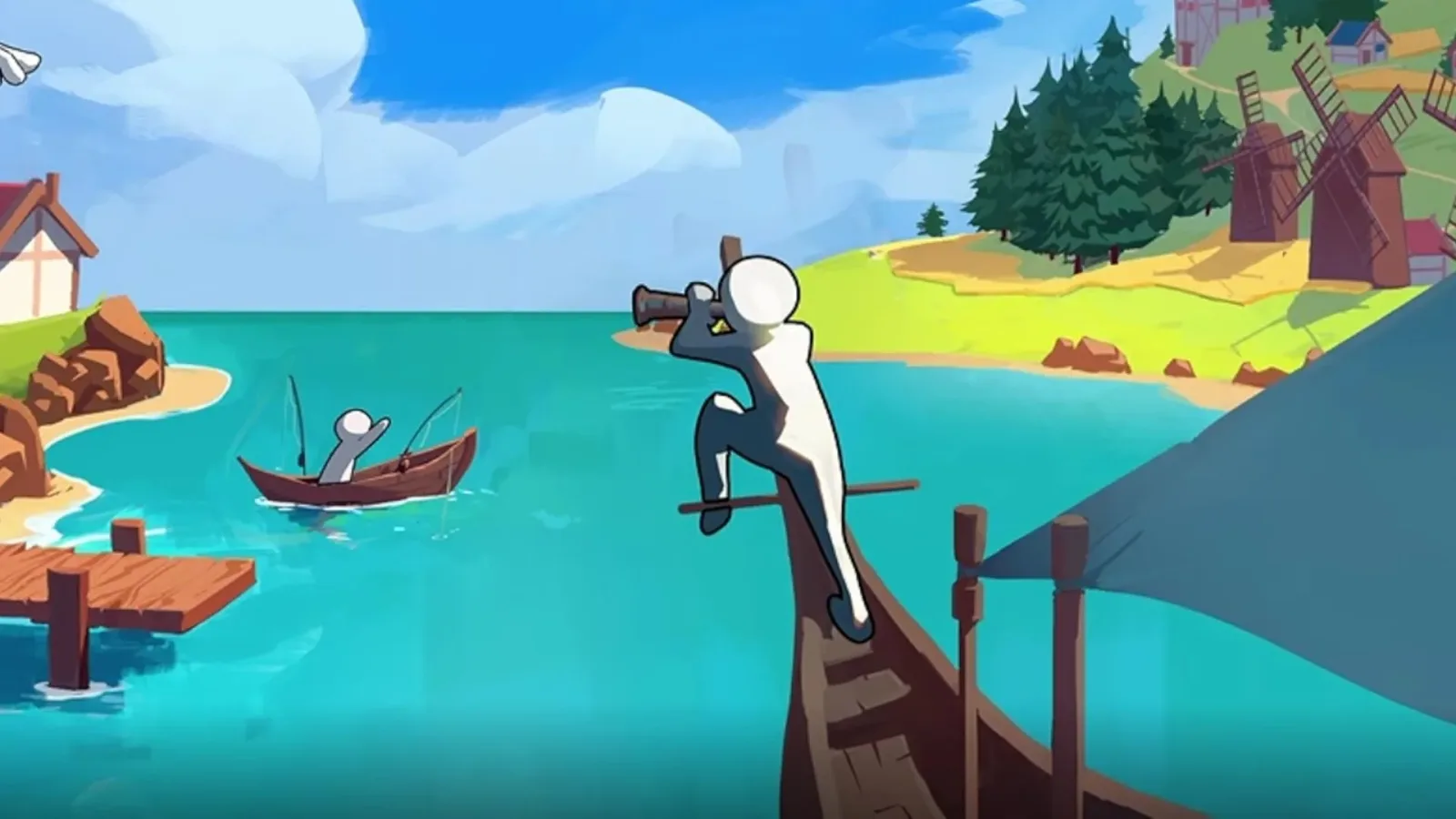
Clicky Islands, the compact island-building and idle-game hybrid published by Pocketpair, has made a notably strong start following its release earlier in November. John "Bucky" Buckley, Pocketpair's head of publishing and communications, said the game had "smashed every target" just 10 days after launch, while praising the two-person Polish team at developer Karrot Games.
The update is a meaningful early milestone for both Clicky Islands and Pocketpair's expanding publishing operation. Pocketpair is best known for Palworld, its monster-collecting survival adventure, but Clicky Islands represents a different kind of project: a small-scale, deliberately focused game built around the satisfying loop of making numbers rise, unlocking upgrades, and gradually transforming a remote island into a more livable settlement.
Buckley described himself as proud to support what he called "a real gem," directing particular praise toward the developers behind Karrot Games. While no specific sales total, player count, revenue figure, or breakdown of the targets was provided, the language indicates that Clicky Islands has exceeded Pocketpair's expectations during its opening stretch.
Embedded X/Twitter post
A small island builder with an idle-game pulse
Clicky Islands takes familiar city-building ideas and strips them down to their most immediately gratifying parts. Players arrive on an isolated island and work toward making it suitable for a growing population. Rather than demanding the close management, deep supply chains, or sprawling layouts often associated with larger strategy games, its approach is more streamlined. Players click, build, accumulate resources, and continue expanding.
For useful background on this topic, read Moonlighter 2: The Endless Vault Physical Editions Arrive for Switch 2, PS5 and PC.
That structure places the game somewhere between a settlement builder and an idle game. The central appeal is not simply constructing a town efficiently; it is watching a modest starting point become something bigger through a repeated cycle of small actions and steady progress. Resource totals increase, new opportunities open up, and the island's development continues to gather momentum.
It is a format that draws on the same basic satisfaction that made clicker games such as Cookie Clicker so enduring. There is a particular appeal to low-friction progress: players make an input, receive a reward, make the next improvement, and see their previous work turn into further growth. A game does not need an enormous mechanical footprint to create a powerful sense of momentum, especially when its feedback is clear and its goals arrive at a consistent pace.
For players who enjoy strategy games but do not always want the pressure of complex optimization, Clicky Islands' more approachable structure may be a major part of its appeal. Island builders can often become dense affairs filled with production bottlenecks, placement puzzles, maintenance concerns, and long-term planning. Clicky Islands instead foregrounds the pleasure of incremental construction. That does not make the genre's larger systems disappear, but it changes the emphasis from exhaustive management to relaxed, visible advancement.
Pocketpair's publishing ambitions take shape
The strong early performance also gives Pocketpair another encouraging result as it develops its role as a publisher. Palworld's continuing growth has given the company a larger profile, and that visibility can create opportunities for smaller teams whose games may otherwise struggle to reach a broad audience.
Karrot Games is a creative duo, making Clicky Islands precisely the sort of project that can benefit from publishing support without losing the identity that comes from a small development team. A compact game with a clear hook can have difficulty breaking through on its own, particularly during busy release periods. Publishing assistance can provide additional reach, communications support, and the ability to put an unusual game in front of players who may not have encountered it otherwise.
That is an important distinction in an industry where the term "indie" is often used broadly enough to cover very different business arrangements. A small team can receive marketing, funding, or publishing assistance and still retain the creative character people commonly associate with independent development. The scale of the studio, the nature of the project, and the amount of creative control involved all matter more than a simplistic assumption that any outside support removes an indie game from the category.
Pocketpair has previously been part of that wider discussion. Buckley has argued that the definition of an indie studio has become blurred, particularly when people try to draw a hard line around developers that receive some kind of external help. Clicky Islands offers a practical example of why those debates can be more nuanced than they first appear: it is a game created by two developers, but one supported by a publisher with far greater reach.
For Pocketpair, that support can also be an opportunity to build a publishing catalogue that does not merely repeat the company's own biggest success. Palworld is a large-scale survival adventure with creature collecting at its center. Clicky Islands is a smaller, calmer project focused on building an island through satisfying incremental actions. The two games are very different, and that difference may be a strength for a publisher looking to show that it can champion varied ideas rather than only games that resemble its flagship title.
Launching amid a crowded games conversation
Clicky Islands arrived in a period dominated by discussion around a major Rockstar release. That kind of timing can make visibility especially difficult for a smaller game. When the games conversation is centered on one enormous launch, independent and lower-profile releases can be pushed to the edges of social feeds, storefront discovery, and general player attention.
Against that backdrop, Pocketpair's claim that Clicky Islands beat every target carries additional weight. It suggests the game found an audience despite being released during an unusually noisy window. Of course, without the underlying targets and supporting figures, it is not possible to measure exactly how large the overperformance was. Internal goals can vary considerably depending on a project's budget, scale, audience expectations, and marketing plan.
Still, an early success does not need to be defined only by blockbuster-sized numbers. For a two-person team, reaching the right audience, building positive momentum, and establishing a sustainable path for the game can matter far more than competing directly with the sales totals or public visibility of the industry's largest releases. A title like Clicky Islands is built around a distinct audience proposition, and its early results indicate that proposition has connected.
There is also a useful reminder here for players who tend to focus only on the biggest launches. The calendar is never truly empty, even when a single release commands much of the attention. Small strategy games, experimental hybrids, and projects from tiny teams continue to arrive alongside the headliners. Some will be overlooked; others will find traction because they offer an experience that the biggest games are not trying to provide.
Why the clicker-builder combination can work
Clicky Islands' premise is well suited to players who appreciate games that fit into short sessions while still offering a sense of persistence. Idle mechanics make progress feel accessible, while city-building presentation gives that progress a visible home. Instead of only seeing an abstract counter increase, players can connect their resource accumulation to an island changing over time.
This combination can create a useful balance. Pure clickers can be wonderfully compulsive but visually or strategically minimal, while traditional builders may ask for more concentration and longer play sessions. A game positioned between those extremes can satisfy the desire for growth without requiring players to study a complicated simulation before they begin having fun.
The challenge for any game in this space is ensuring that simplicity does not become repetition without purpose. The most satisfying idle games continually introduce fresh goals, upgrades, and decisions that make previous progress feel meaningful. Likewise, builders benefit when expansion changes not only the scale of the player's settlement but also the possibilities available to them. Clicky Islands' early reception suggests its core loop has enough charm to make that gradual expansion compelling.
More Pocketpair news is still on the horizon
Clicky Islands' momentum comes as Pocketpair continues to work across multiple fronts. Buckley has also been teasing more information on Palfarm and the much-anticipated Palworld 1.1 update. Specific details on those announcements have not been confirmed, but their presence alongside the Clicky Islands update underlines how much activity is currently surrounding the company.
For now, Clicky Islands is the immediate success story. Its opening 10 days have apparently exceeded Pocketpair's internal expectations, its developers have received public recognition from their publisher, and the game has offered a promising early example of what Pocketpair's publishing arm can do for very small teams with distinctive ideas.
Whether that momentum continues over the longer term will depend on how players respond beyond the launch window. But the initial message is clear: even in a release period crowded by major games, a modest island builder from a two-person studio can break through when its premise is focused, its progression loop is satisfying, and it receives the right support to reach its audience.
Community
Discussion
Start the conversation.
No comments have been posted yet.