

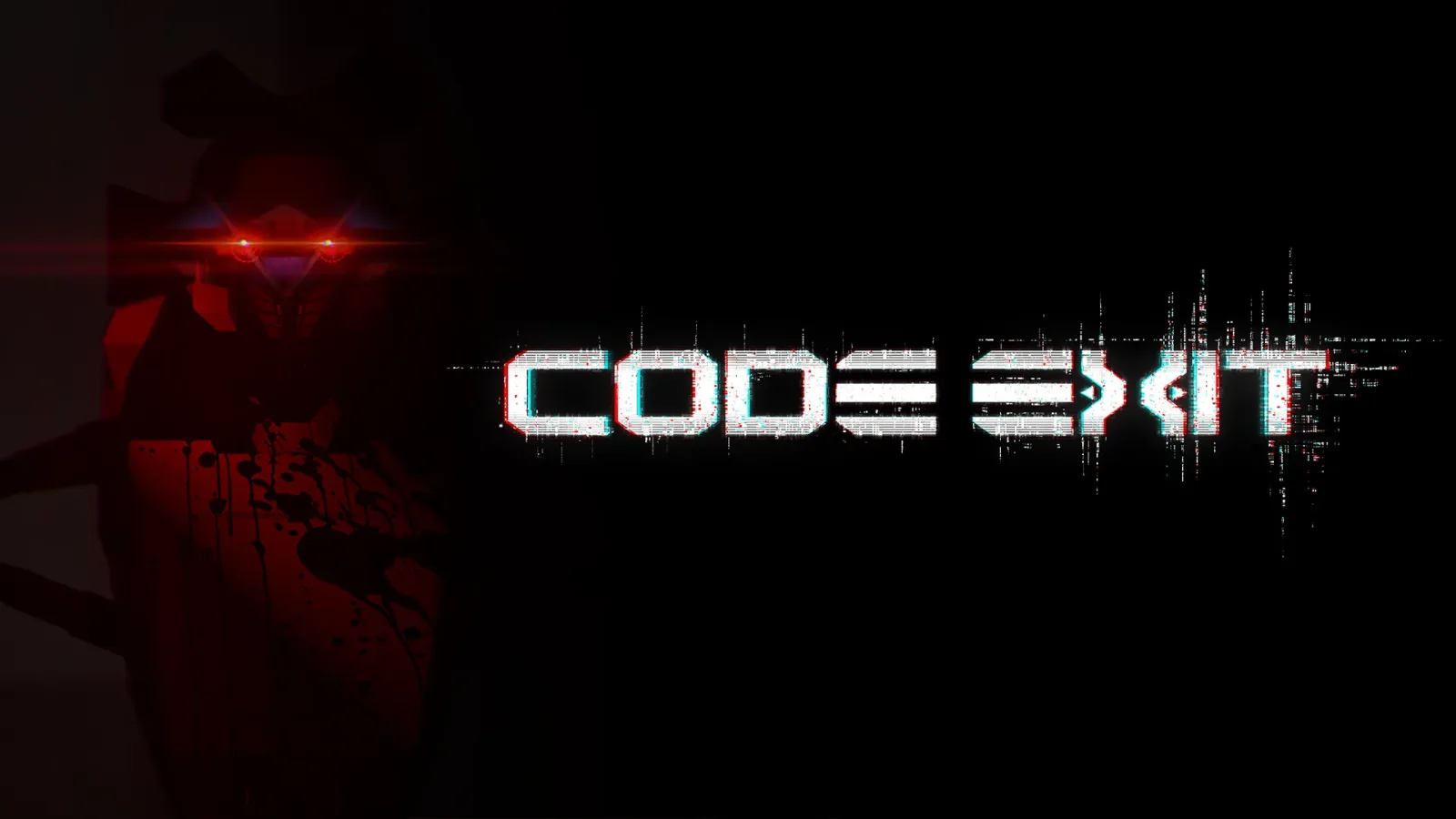
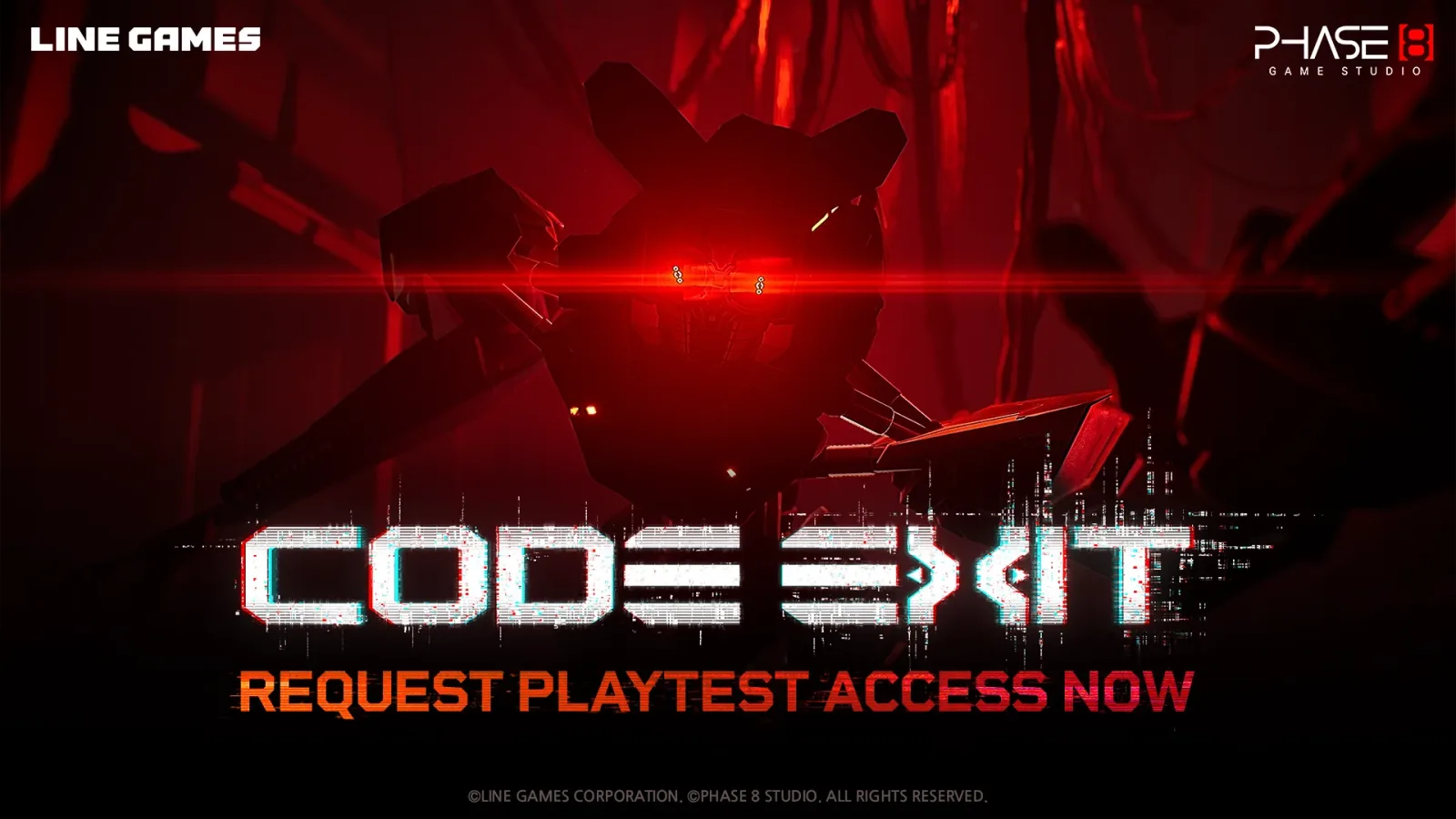
CODE EXIT is preparing for another descent into the ruined city of Pantheon. Phase 8 Studio and LINE Games have opened registration for a new playtest that will run from September 28 through October 19, 2026. The upcoming test includes newly added content, while a newly released trailer sets the mood for the dangerous recovery operation waiting inside the city.
Built as a one-to-four-player sci-fi co-op survival horror game, CODE EXIT places players in the role of Hermes operatives dispatched into a hostile urban ruin. Their assignment sounds direct on paper: locate pieces of the scattered C.O.D.E., bring them back to base, and get out alive. In practice, every stage of that objective takes place in spaces designed to obscure threats, divide a team's attention, and turn even a familiar route into a potential disaster.
The new test follows a demo released in July as well as hands-on appearances at BIC 2026 and GXG 2026. Registration is now available for prospective participants, and players interested in the game are also encouraged to wishlist it on Steam.
A recovery mission in the fallen city of Pantheon
Pantheon is the central setting for CODE EXIT's missions: a collapsed city filled with isolated facilities, sealed paths, and fragments of whatever happened before Hermes sent its personnel in. The game's premise emphasizes recovery and extraction rather than simple combat or a rush to an end point. Teams must enter dangerous locations, explore with a purpose, secure what they need, and then survive the return journey.
For useful background on this topic, read Lawn Mowing Simulator 2 Launch Trailer Cuts Through Ahead of September 23 Release.
That final step matters. The operatives are not merely expected to find C.O.D.E. fragments; they need to get those items safely back to base and escape the area. This structure gives the game a mission-oriented rhythm where progress can be lost if a team fails to plan the exit as carefully as the initial search.
Players will explore facilities that are deliberately cut off from the wider world, completing tactical exploration missions and searching for secrets along the way. The available details suggest that success will depend on moving through these locations efficiently while deciding how much time can safely be spent hunting for resources or hidden information. A detour may uncover a useful tool or valuable secret, but it may also create the opening Pantheon's most dangerous presence needs.
Minerva is designed to learn from player behavior
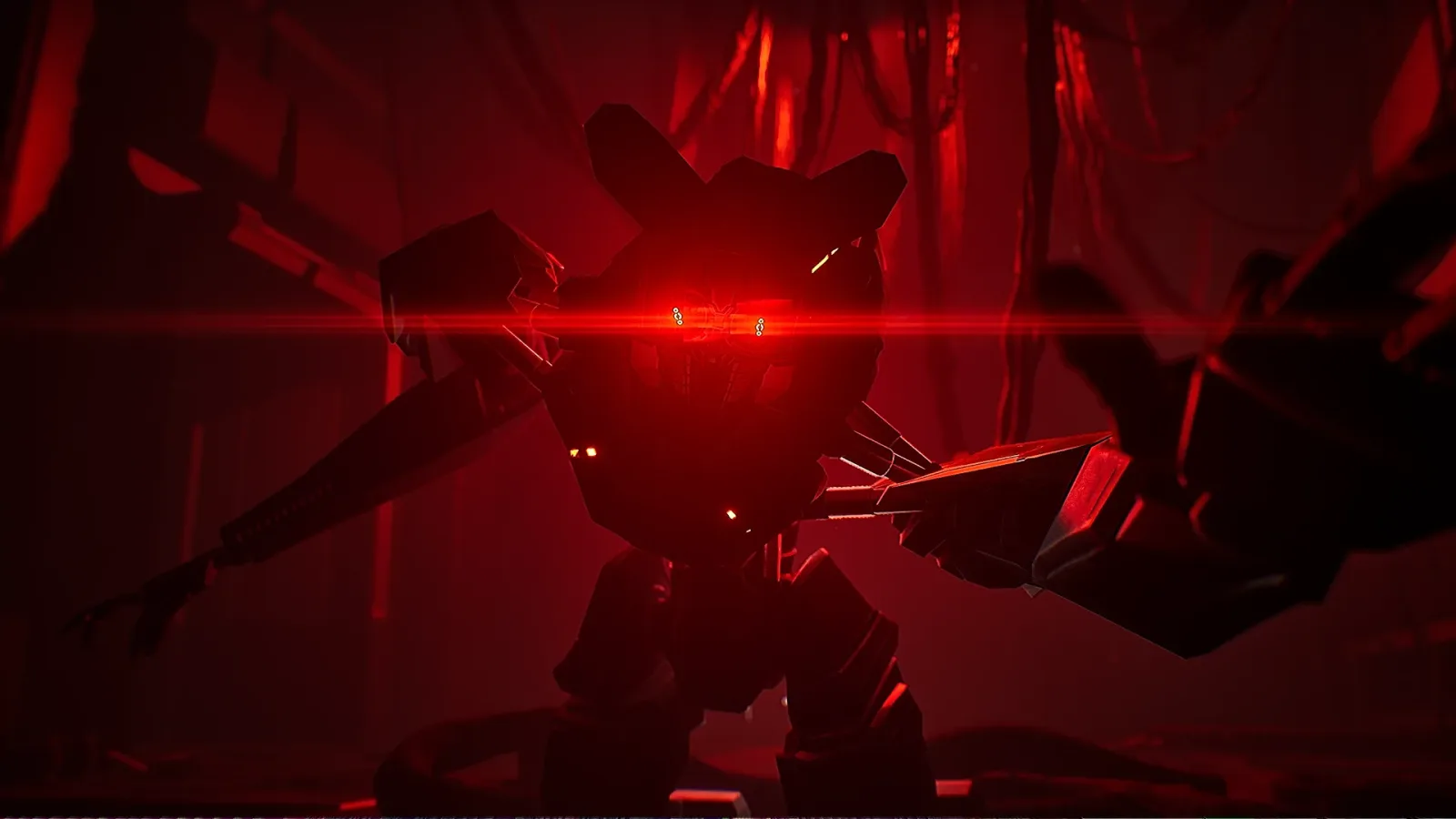
CODE EXIT's primary pursuer is Minerva, a rogue artificial intelligence that watches Hermes operatives and adapts its hunt. Rather than functioning as a fixed enemy with entirely predictable patrols, Minerva is described as an adaptive chaser that remembers repeated player behavior and adjusts its approach accordingly.
That concept has major implications for both solo runs and group play. A strategy that works once may become less reliable if it is repeated too often. Regularly using the same escape route, relying on the same hiding approach, or returning to a familiar pattern could encourage Minerva to change the way it pursues the team. The intended effect is a horror experience that keeps players from feeling fully secure, even after they learn a map or successfully finish an earlier mission.
Adaptive enemies can be especially effective in co-op horror because players naturally create routines together. One person may always lead, another may handle objectives, and the group may settle on a preferred order of rooms to check. CODE EXIT's Minerva is positioned to challenge those habits. Teams may need to revise their plans as the AI's behavior shifts, creating tension not only when it appears but also in the quieter moments when players are trying to determine whether their usual approach is still safe.
The game also leans on limited visibility and tense sound design to make that uncertainty more immediate. Corridors are not just routes between objectives; they are potential traps where a noise, movement, or change in the atmosphere can force a rapid decision. In a survival horror game, not knowing exactly where danger is can be as important as the danger itself, and CODE EXIT appears to build that uncertainty into the act of navigating Pantheon.
Co-op that can scale from solo survival to four-person planning
Although CODE EXIT supports up to four players, it is also designed to be played alone. Its scalable intensity is intended to support the full range from solo survival horror to tactical co-op sessions with a complete squad. That flexibility could make the playtest useful for different types of participants: players who want to test their nerves without a team, pairs looking for a coordinated horror experience, and larger groups interested in assigning specialized roles.
In multiplayer, the core objective naturally encourages division of labor. Teams will need to activate terminals, bypass sealed doors, search for useful equipment, and manage the collection of mission-critical pieces of the C.O.D.E. While one operative works on an interaction, others may need to watch nearby paths, search for supplies, or prepare an exit route.
Those responsibilities create opportunities for coordination, but they also create pressure. Splitting up may let a squad cover ground more quickly, yet it can leave individual players exposed. Staying together may offer more safety, but it can slow the completion of tasks and make it harder to respond when multiple objectives require attention. CODE EXIT's tactical structure seems built around these kinds of tradeoffs rather than treating cooperation as simply having more players in the same room.
Scavenged tools will be another part of that decision-making process. Resources found within Pantheon could change how a team handles a sealed door, a terminal, or a risky section of a facility. Since extraction is a central goal, players will likely need to consider not just whether a tool helps in the moment, but whether using it now leaves them less equipped for what comes later. The strongest plan may not always be the fastest plan.
New content arrives after the July demo
The September 28 to October 19 playtest is described as including newly added content, giving returning demo players a reason to revisit Pantheon while giving newcomers a fuller look at the game's direction. Specific additions have not been detailed, so participants will need to discover how the latest build expands on the version shown in July.
What is clear is that the test arrives after several opportunities for players to see CODE EXIT in action. The July demo established the game's blend of co-op exploration, extraction stakes, and an AI-driven pursuer. Its appearances at BIC 2026 and GXG 2026 then put the game in front of additional hands-on audiences. This next playtest broadens the invitation for players who want to experience that foundation directly and see how the project is evolving.
Playtests are particularly important for a game whose appeal depends heavily on tension, player behavior, and group coordination. An adaptive threat such as Minerva needs varied player responses to demonstrate whether its changing hunting patterns remain surprising and fair. Likewise, systems built around tactical teamwork can feel very different in a real session than they do in a trailer. The forthcoming run should give participants a chance to test how exploration, resource scavenging, terminal objectives, and extraction pressure connect over the course of a mission.
How to prepare for the CODE EXIT test
Interested players can register now for the CODE EXIT playtest ahead of its September 28 start date. The test is scheduled to remain active until October 19, 2026. Steam users can also add the game to their wishlist to keep track of future updates.
For players considering a session with friends, the game's one-to-four-player format makes it worth deciding in advance what kind of experience they want from Pantheon. A full group can explore the role-sharing possibilities at the heart of the co-op design, while a smaller group may face sharper choices about when to stay together and when to separate. Solo players, meanwhile, will confront the same recovery-and-escape loop without teammates to cover blind spots.
Regardless of squad size, the basic lesson from CODE EXIT's premise is simple: retrieve the C.O.D.E., make the return trip, and do not let Minerva learn enough to turn a successful route into a fatal habit. The next playtest will offer the latest opportunity to find out whether a team can adapt quickly enough to escape Pantheon before its rogue AI closes in.




Community
Discussion
Start the conversation.
No comments have been posted yet.