

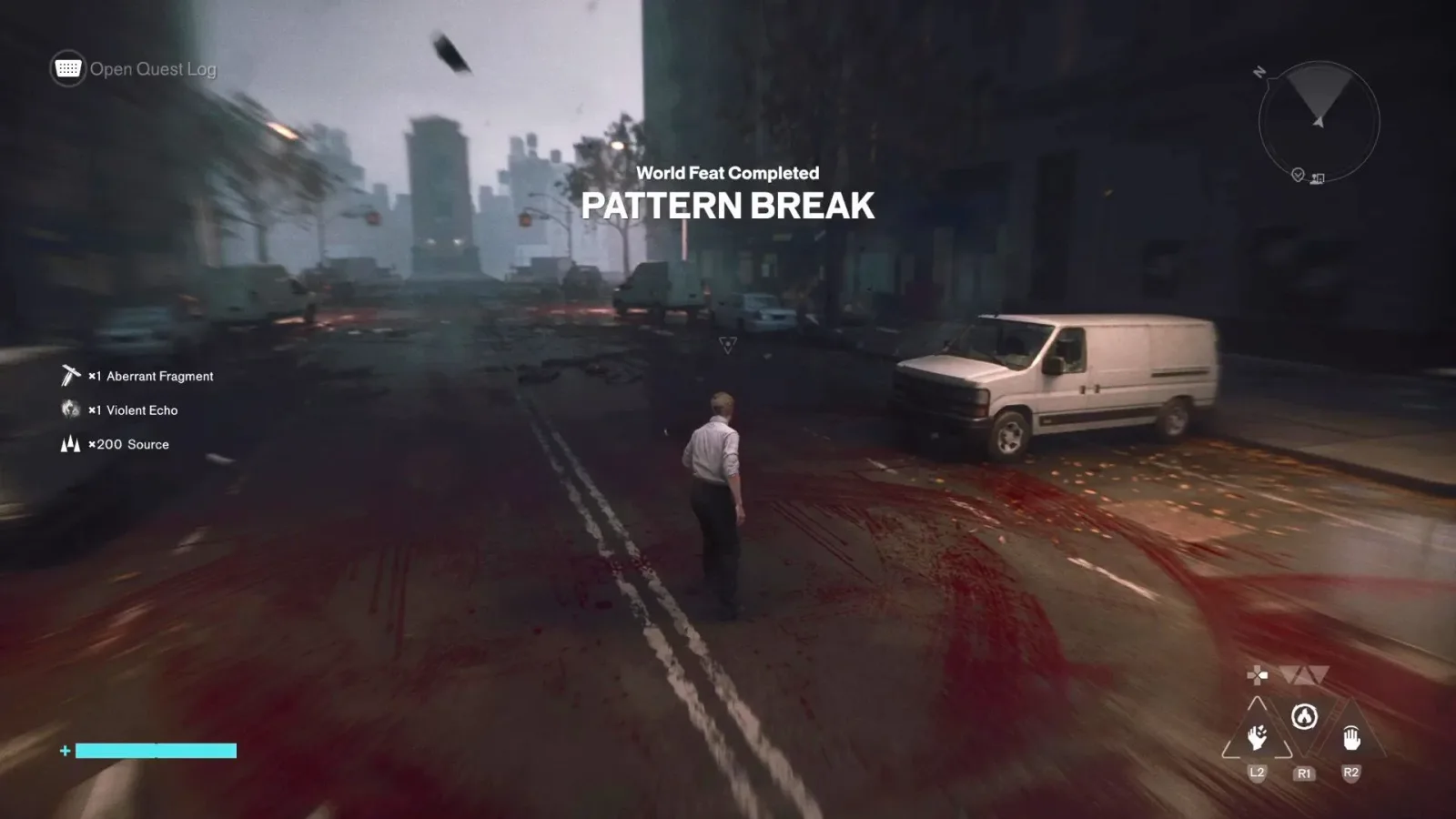
Pattern Break World Feats in Control Resonant can initially look more complicated than they are. The scene fills with objects rising off the ground, the player is encouraged to "break the patterning," and attacking the wrong target can trigger a shockwave that knocks them back. It is an unusual presentation for what is ultimately a straightforward observation challenge.
The important thing to understand is that Pattern Break is not about destroying every object in the area, finding a hidden switch, or surviving a combat encounter. It is essentially a visual spot-the-difference puzzle. Among the objects levitating around the location, one is behaving differently from the rest. Find that object, hit it, then repeat the process until the World Feat ends.
How Pattern Break World Feats work
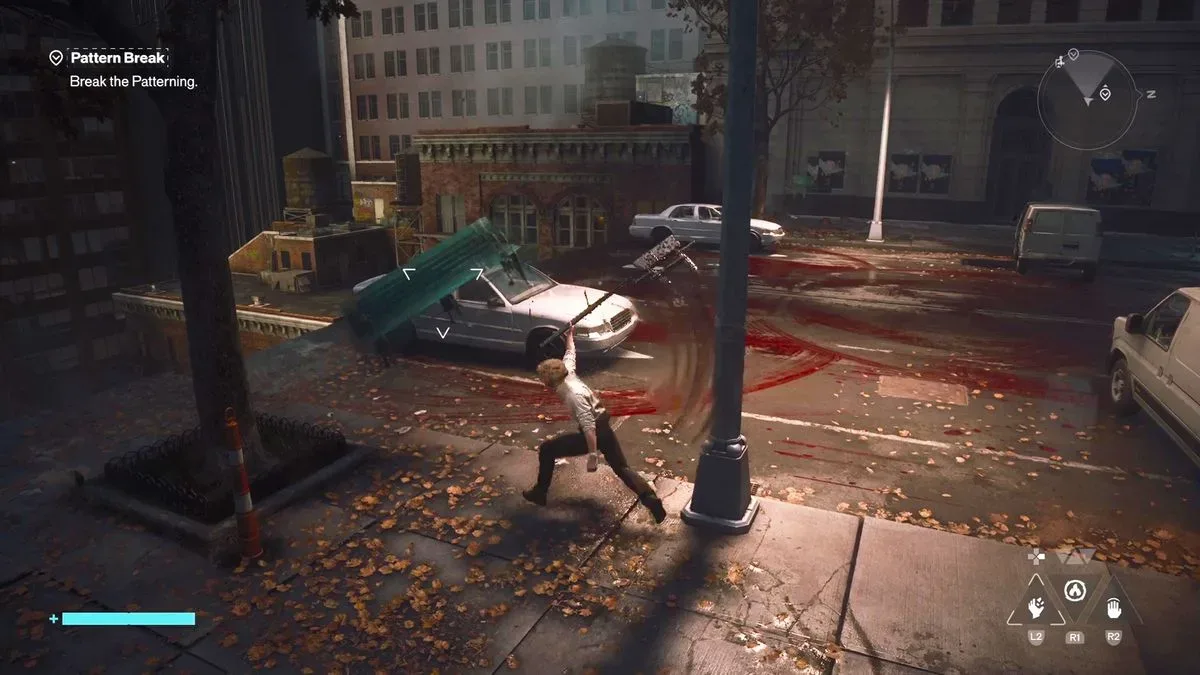
When a Pattern Break appears, numerous nearby objects begin to float in the air. Most of them move in a relatively measured, stable way. They may sway, drift, or hover as part of the strange scene, but their motion is broadly consistent with the surrounding objects.
One object does not fit that pattern. The correct target moves far more erratically than the others. It can jerk suddenly, twitch in place, or shift with noticeably more agitation than the otherwise calm floating items. That unstable object is the one players need to strike.
For useful background on this topic, read Control Resonant Map Guide: All Seven Zones and How to Reveal Them.
After hitting the mismatched object, the puzzle resets rather than ending immediately. The collection of levitating objects changes again, and another random item becomes the abnormal one. Players must locate the new erratic target and attack it as well. Continue identifying and hitting the object that is moving incorrectly until the Pattern Break World Feat is complete.
In short, the loop is simple:
- Look over the floating objects instead of attacking at random.
- Find the item with the most visibly erratic movement.
- Strike that item.
- Wait for the pattern to reset.
- Repeat until the World Feat finishes and rewards are awarded.
What "break the patterning" means
The wording around Pattern Break can make the objective sound abstract, especially in a game built around strange phenomena and shifting environments. In practical terms, "break the patterning" means identifying the element that does not belong.
Most objects are there to create a visual pattern: they float slowly and predictably. The one that breaks that visual rhythm is the puzzle's answer. Rather than looking for a particular object type, color, or fixed position, pay attention to movement. The correct target is defined by how it behaves, not by what it is.
This also means there is no single memorized solution for every Pattern Break. Since a new random object becomes the odd one out after each successful hit, a player cannot simply keep aiming at the same location. Each stage requires another quick scan of the area.
How to identify the correct floating object
The best approach is to briefly stop and observe before committing to an attack. The stable objects are generally slow and controlled. The target stands out because its movements are sharper and less natural by comparison.
Look for sudden jerks, rapid shifts, or an object that appears to be twitching while the rest hover placidly. It may be tempting to immediately fire at the first thing that rises into view, but Pattern Break rewards patience more than aggression. A moment spent comparing movement can prevent a mistake and the resulting knockback.
It can help to scan the scene in sections rather than trying to process every floating object at once. Check the objects closest to the player, then sweep outward or across the room. Once the erratic motion becomes familiar, the odd object should be easier to recognize in later rounds.
Movement is more important than appearance
Do not rely on the object's shape alone. A chair, container, sign, piece of debris, or another ordinary item may be selected as the unstable target. The puzzle does not depend on a special model that always marks the answer. The key clue is the object's animated behavior.
Likewise, do not assume the largest item or the one positioned highest in the air is automatically correct. A conspicuous object may simply be part of the normal hovering pattern. The one that is truly out of place is the item whose motion is much more frantic than everything around it.
What happens if you hit the wrong object?
Striking floating objects will usually produce a shockwave that pushes the player back. That reaction can make an incorrect attempt feel like a punishment, and it is a clear reason not to treat the World Feat as a destroy-everything challenge.
The knockback is also useful feedback. If a hit does not advance the puzzle as expected and instead sends the player away, return to observation mode. Reassess the objects currently in the air and focus on the one with the strongest irregular movement.
Because the activity is based on noticing the mismatch, random attacks are inefficient. They can interrupt positioning, obscure the scene, and make it harder to track the object that actually needs to be hit. Deliberate targeting is the more reliable strategy.
Why Pattern Breaks are worth completing
Completing a Pattern Break generally grants a combination of Source, mid-tier crafting materials, and Region Level progress for the area where the feat was completed. The individual rewards are not necessarily among the game's most dramatic finds, but the activity's low difficulty makes it a worthwhile detour.
Once its rule is understood, Pattern Break is among the easiest World Feats to clear. There is no indication that players need a lengthy combat build-up, an elaborate item requirement, or a large multi-step route through the region. The primary challenge is reading the visual clue correctly and repeating the action a few times.
That makes these events useful for players who want to collect materials and build regional progression without committing to a more demanding objective. If a Pattern Break appears during exploration, it is usually worth taking the short time needed to finish it.
Quick Pattern Break checklist
- Do not attack every floating item. The objective is selective, not destructive.
- Watch for unstable motion. The correct target jerks and moves much more erratically than the others.
- Hit the odd object once you identify it. A successful strike advances the sequence.
- Expect another round. The puzzle resets and assigns a new random object as the mismatch.
- Repeat the observation process. Keep finding the new abnormal object until the feat is complete.
- Use the reward opportunity. Completion can provide Source, mid-tier crafting materials, and Region Level progression.
A simple World Feat once the rule clicks
Pattern Break is designed to create a brief moment of uncertainty: a room full of rising objects, a cryptic instruction, and an apparent risk in attacking the wrong thing. But its solution is consistent. Find the object that fails to match the group's movement, strike it, and then do the same thing again after the reset.
The most useful habit is to slow down just enough to watch the animation of each object. The answer is not hidden behind a complicated sequence. It is visible in the scene, provided players focus on the object that moves with the most obvious instability.
With that in mind, Pattern Break World Feats become quick stops during exploration rather than confusing interruptions. Spot the twitching object, break the pattern, collect the materials and Region Level progress, and move on.
Community
Discussion
Start the conversation.
No comments have been posted yet.