

Control Resonant reportedly takes Remedy Entertainment's paranormal action series out of the Federal Bureau of Control's famously impossible headquarters and into a distorted version of Manhattan. It is an ambitious change on paper: after one game spent largely inside a single brutalist office building, a city should offer a much larger canvas for the series' strange architecture, reality-bending phenomena, and bureaucratic nightmares.
Yet that shift may also be the sequel's central obstacle. Early impressions describe Resonant as a game with memorable, deeply weird material in its latter half, but one that spends too much of its opening stretch making players traverse an unconvincing city. The result is said to be a more sprawling and messier experience than 2019's Control: eventually rewarding, but less immediately assured.
The issue is not simply that the new setting is different. A sequel needs to find new ways to express its world. Rather, the concern is that Manhattan lacks the concentrated identity of the Oldest House, the location that made the original game's mysteries feel inseparable from its spaces. In Control, setting was not background decoration. It was the machine that made every strange encounter, every hostile office worker, and every impossible hallway feel coherent.
The Oldest House made the ordinary feel alien
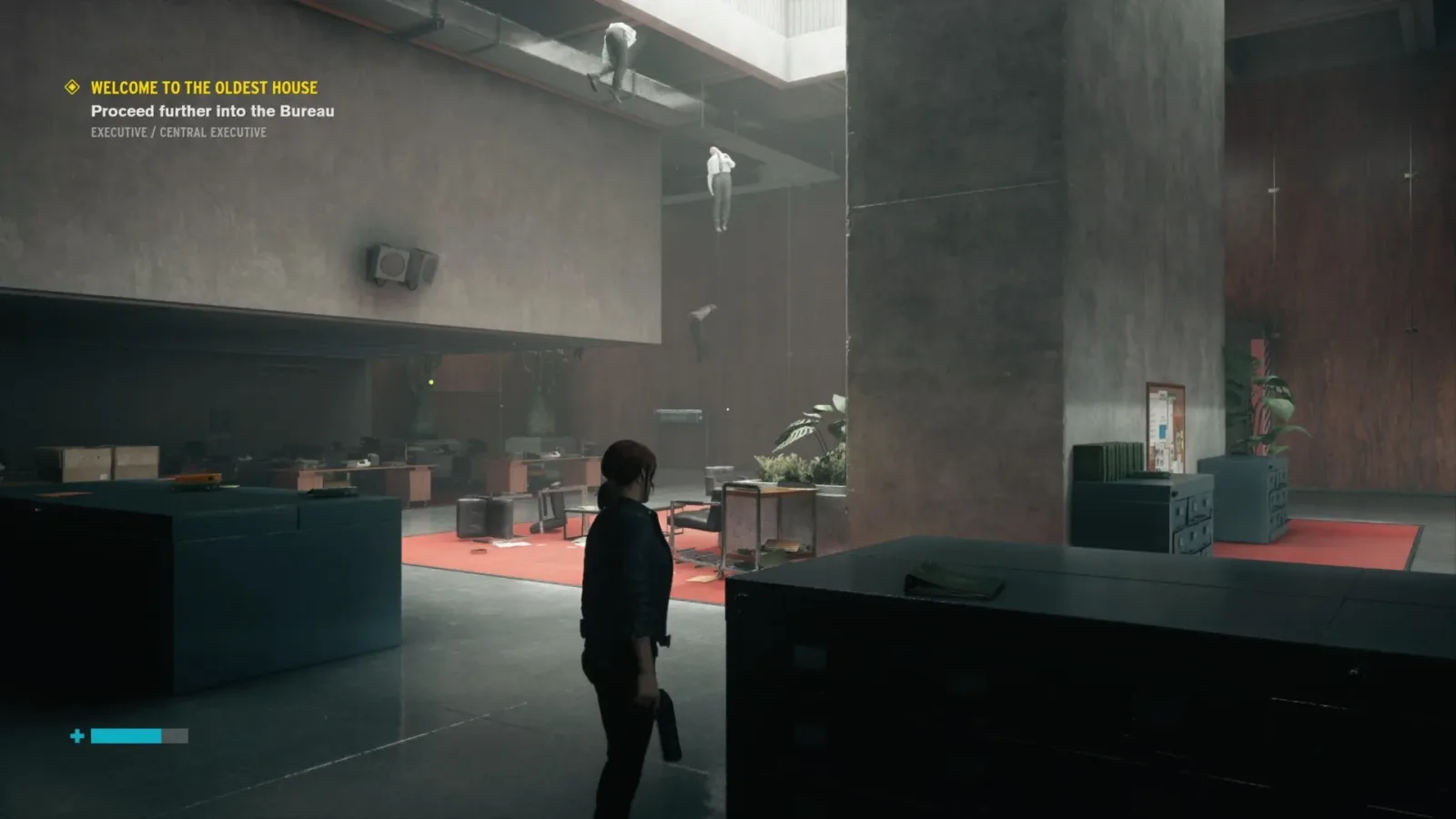
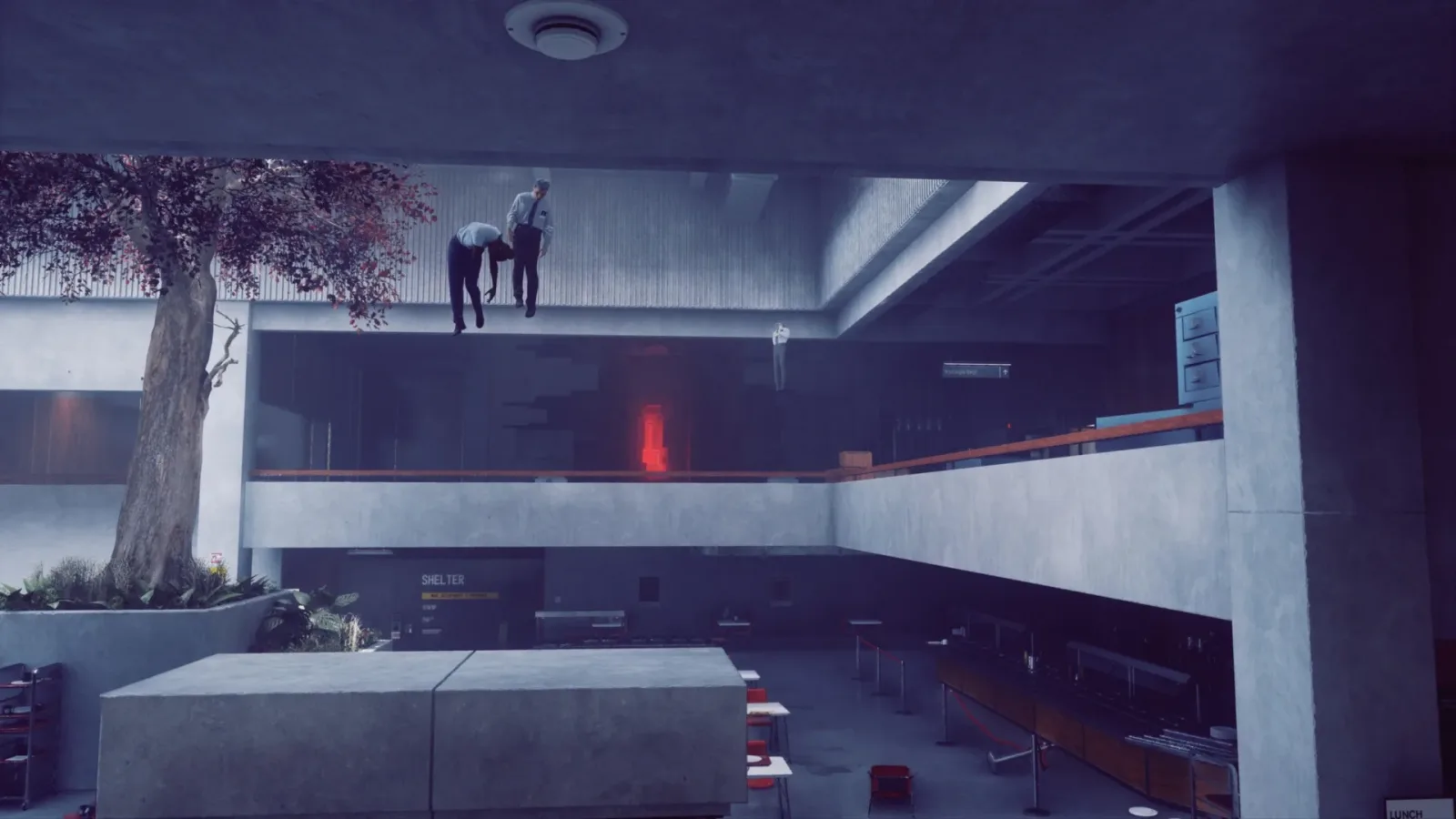
The original Control began in a place players could recognize even if they had never set foot inside an imposing government building. The Federal Bureau of Control headquarters was filled with concrete, muted palettes, generic desks, ugly lighting, dull meeting rooms, and long corridors that suggested endless paperwork and equally endless institutional routines. Its brutalist design evoked the heavy civic and federal structures built across the United States during the 1960s and 1970s.
For useful background on this topic, read DEPERSON Brings Hand-Drawn Psychological Horror to a Dystopian Nation.
That mundane baseline was crucial. The Oldest House worked because its supernatural transformations had something deliberately bland to push against. An office lobby becomes alarming when employees in formal work clothes hang silently in the air. A hallway becomes disturbing when a wash of red light turns it hostile. A conference room becomes uncanny when its walls no longer agree on where they should be.
Instead of introducing its oddest concepts all at once, Control gradually let unreality seep into an aggressively familiar environment. The deeper protagonist Jesse Faden went, the less stable the Bureau's headquarters became. Rooms bent and folded into impossible layouts, but they still retained traces of offices, maintenance corridors, filing systems, and institutional purpose. The game's escalating action and its escalating environmental strangeness reinforced one another.
That approach gave the Oldest House an unusual degree of presence. It was both a setting and a narrative device, a place that could make routine administrative space feel like an existential trap. The contrast also connected the game to the modern idea of liminal horror: dread born from environments that are recognizable, empty, and subtly wrong before they become overtly surreal.
A wider world creates a weaker first impression
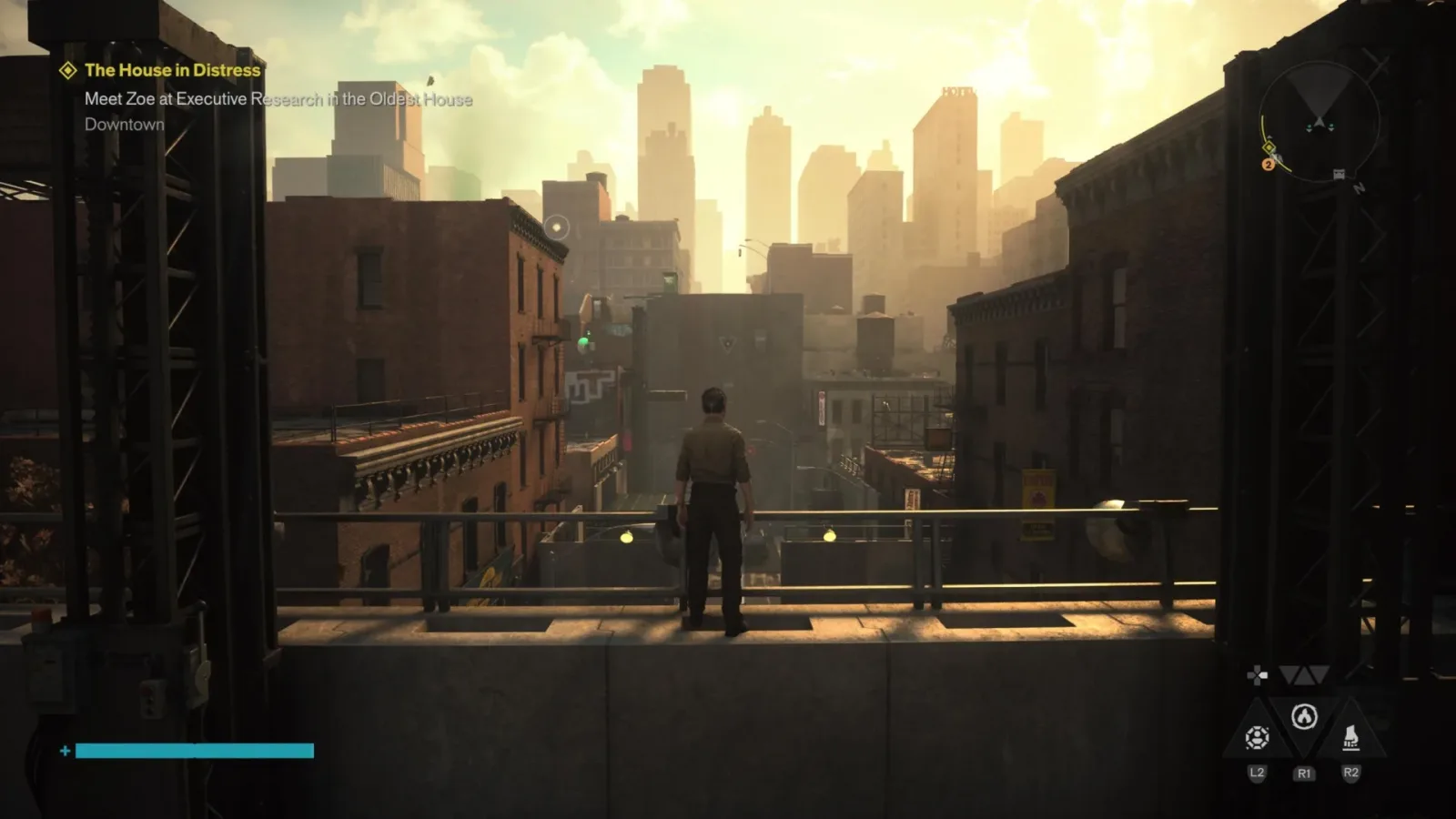
Control Resonant reportedly begins with a return to the Oldest House, including the familiar spaces associated with the opening of the first game. It soon moves outdoors, however, swapping the contained interior for Manhattan rather than sending players primarily into the Astral Plane and its otherworldly realm.
At first glance, this should be an effective escalation. New York is one of the world's most visually legible urban spaces, and a warped Manhattan could theoretically turn landmarks, subway routes, crowded blocks, and towering architecture into a huge supernatural puzzle. A city altered by the forces surrounding the Bureau could be unnerving in a different way than the Oldest House: familiar on a larger scale, but drained of the life and logic that normally make it function.
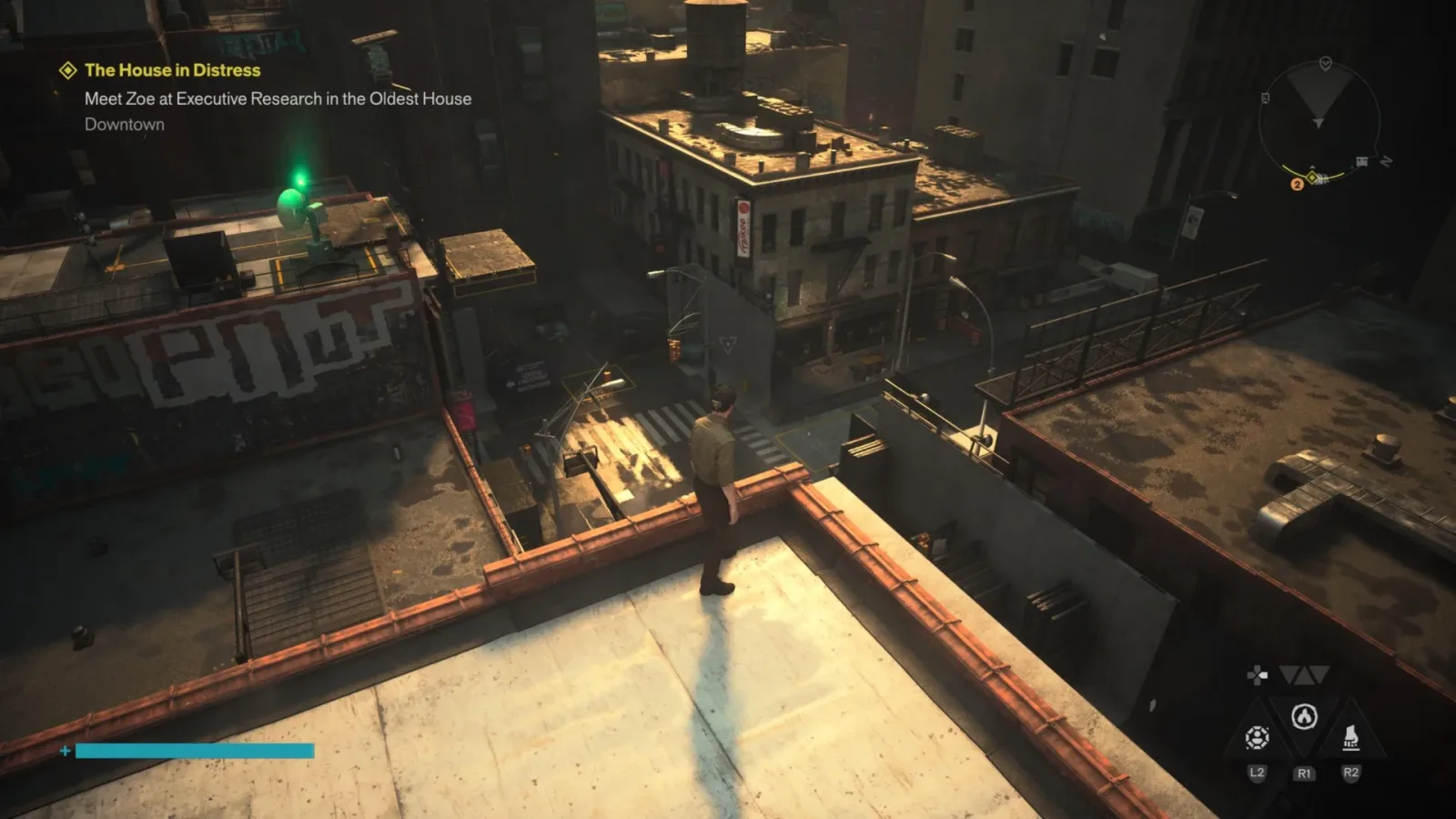
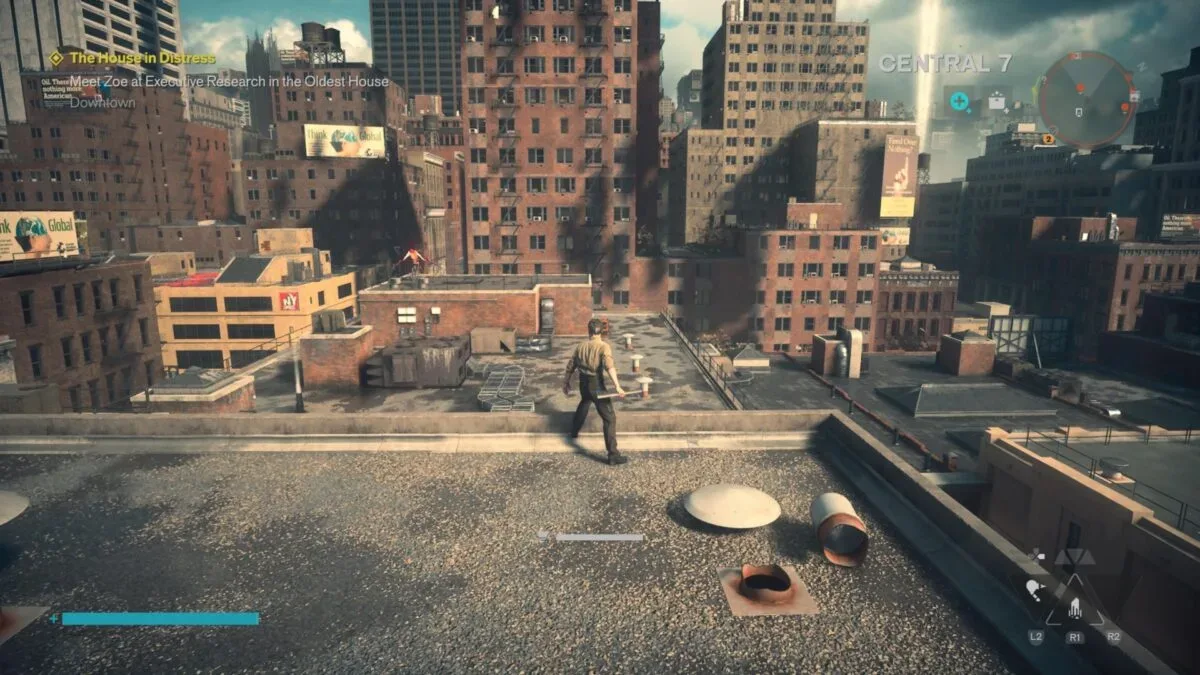
The reported problem is that Resonant does not initially establish a strong enough version of that city. Its streets are described as repetitive and visually anonymous, with storefront signage, building shapes, and commercial spaces recurring often enough to blur together. Rather than feeling distinctly like Manhattan, the environment is said to resemble the generic open-world cityscapes that games have relied on for decades.
That sameness might conceivably be part of the intended unease. An emptied-out city with copied signs and recurring structures could reflect the artificial, broken quality of a reality under supernatural pressure. It could also suggest the eerie quiet of urban spaces disrupted by a crisis. But intentionality does not automatically make a place compelling to navigate. If players cannot easily distinguish one block from another, travel can become labor rather than discovery.
For a game built around a location as strong as the Oldest House, that is a sharp contrast. The first game often made players feel lost in an exciting way: unsure what physical rule had changed, but confident that the next room might reveal another carefully chosen visual idea. The city in Resonant, by comparison, is said to produce a more conventional kind of disorientation, where rooftops and streets blend together and objective markers sit across terrain that does not invite curiosity.
Scale can work against Control's strengths
Open environments are not inherently a mismatch for Control. The series has always involved exploration, locked doors, hidden paths, documents, side missions, and spaces that change as new abilities are acquired. The original's interconnected headquarters even had some of the pleasures associated with wider exploratory games. But it contained those ideas within an authored, highly specific building.
That containment mattered. It meant the player was not just moving between objectives; they were learning the peculiar logic of one extraordinary place. A quarry, a research sector, a maintenance area, and an executive floor could all feel different while still belonging to the same unsettling institution. The Oldest House's repetition was bureaucratic repetition, made meaningful by the way it established a standard that the paranormal could violate.
The early city travel in Resonant is described as closer to open-world busywork. Players are apparently asked to move back and forth through a setting that feels sparse and insufficiently distinctive, turning what could have been tense exploration into a prolonged commute. That pacing issue is especially important because this is the portion of a game that forms its largest initial impression. A slow burn can be powerful; a slow start that feels routine can make it harder to trust that the game is building toward something worthwhile.
There is a tension here between scale and density. Manhattan offers more physical room than the Oldest House, but greater space does not necessarily translate into greater imaginative range. The original showed how much variety could come from a single building when each area served a clear atmospheric and narrative purpose. A city needs equally deliberate landmarks, routes, and transformations to avoid becoming a collection of interchangeable blocks.
The stranger second half may justify the journey
Despite the criticism of its opening and much of its first half, Control Resonant is not characterized as a complete disappointment. Its later material is said to become as bizarre and memorable as the best stretches of the original. That suggests Remedy has not abandoned the qualities that made Control stand out: reality that buckles in unsettling ways, environments that become impossible without losing their emotional texture, and a willingness to commit to ideas stranger than most big-budget action games attempt.
The concern is the cost of reaching those moments. When a game's strongest material is gated behind lengthy stretches of repetitive traversal, players are effectively asked to persist through the least compelling expression of its premise before seeing the payoff. Some will gladly do so, especially those invested in the world and Remedy's particular blend of supernatural fiction, action, and mystery. Others may decide the route to the memorable material is too long.
That makes Resonant sound less like a straightforward improvement on its predecessor and more like a riskier follow-up. It expands the world, changes the setting, and eventually finds compelling forms of weirdness, but it may sacrifice the earlier game's structural clarity and instant sense of place in the process.
A sequel searching for its own architecture
Remedy's games are often defined by a pronounced creative identity. Their influences can be easy to spot, but their worlds rarely feel interchangeable. The first Control had that identity from the moment players entered the Oldest House. Its oppressive concrete halls, cryptic bureaucracy, and increasing architectural impossibility made the game feel singular.
Control Resonant appears to be searching for an equivalent identity in a much bigger space. Its warped Manhattan may eventually become a fitting stage for the series' best ideas, but the early reports suggest it takes too long to move beyond a bland, copied, and oddly lifeless cityscape. The sequel's highest points may still be special. The question is whether players will find enough texture, tension, and surprise in the journey to want to reach them.

Community
Discussion
Start the conversation.
No comments have been posted yet.