

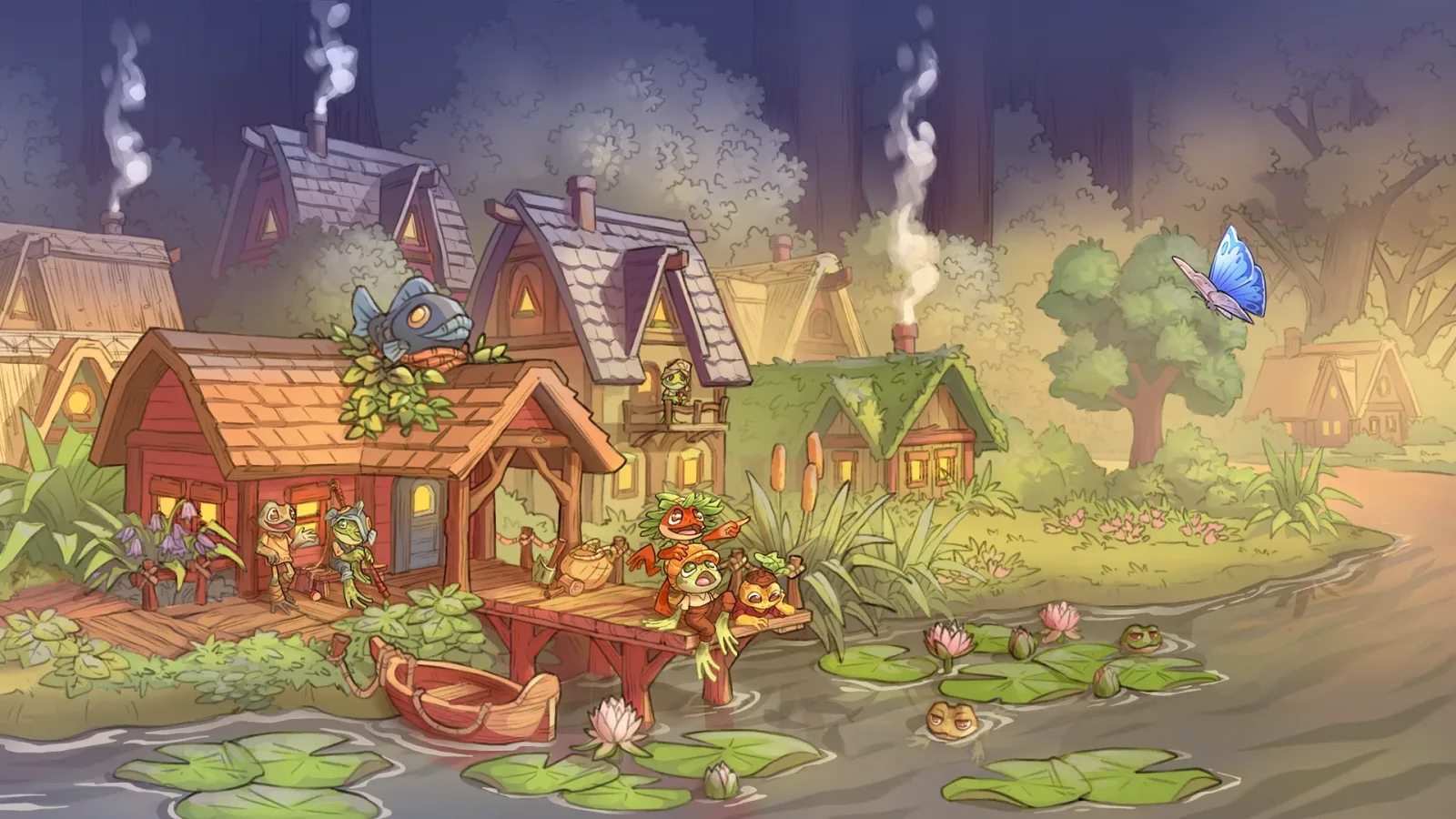
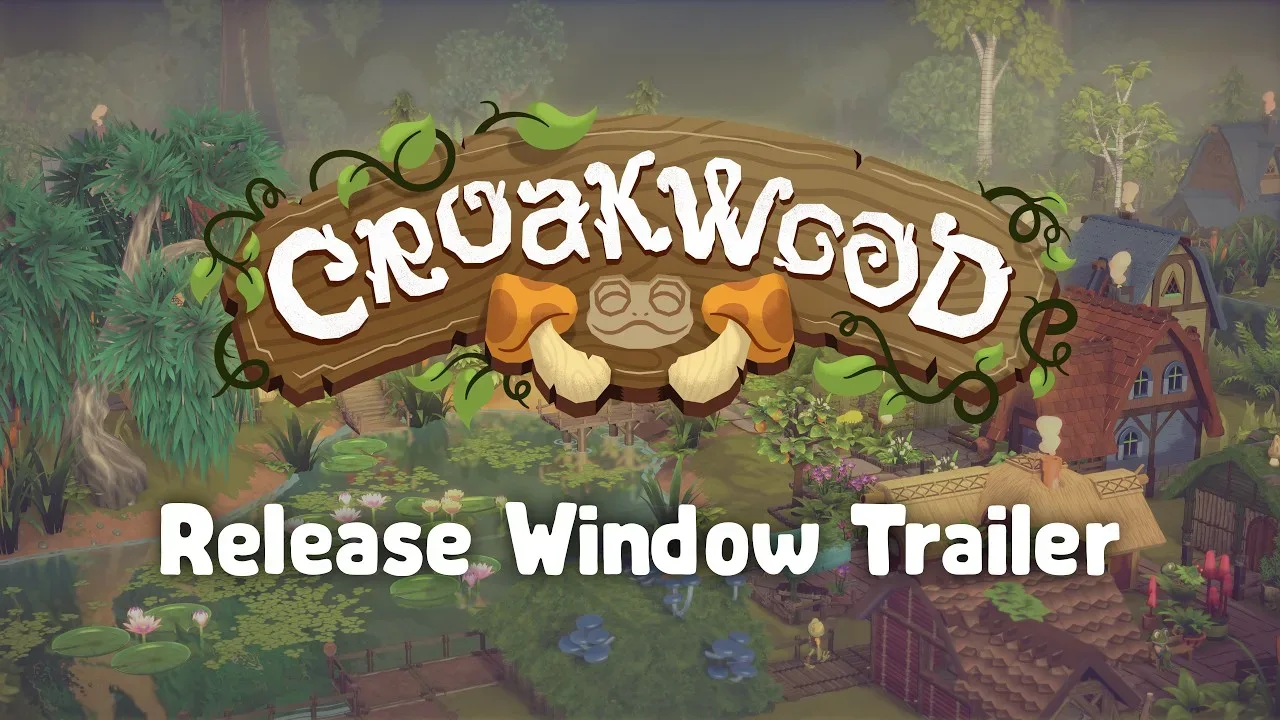
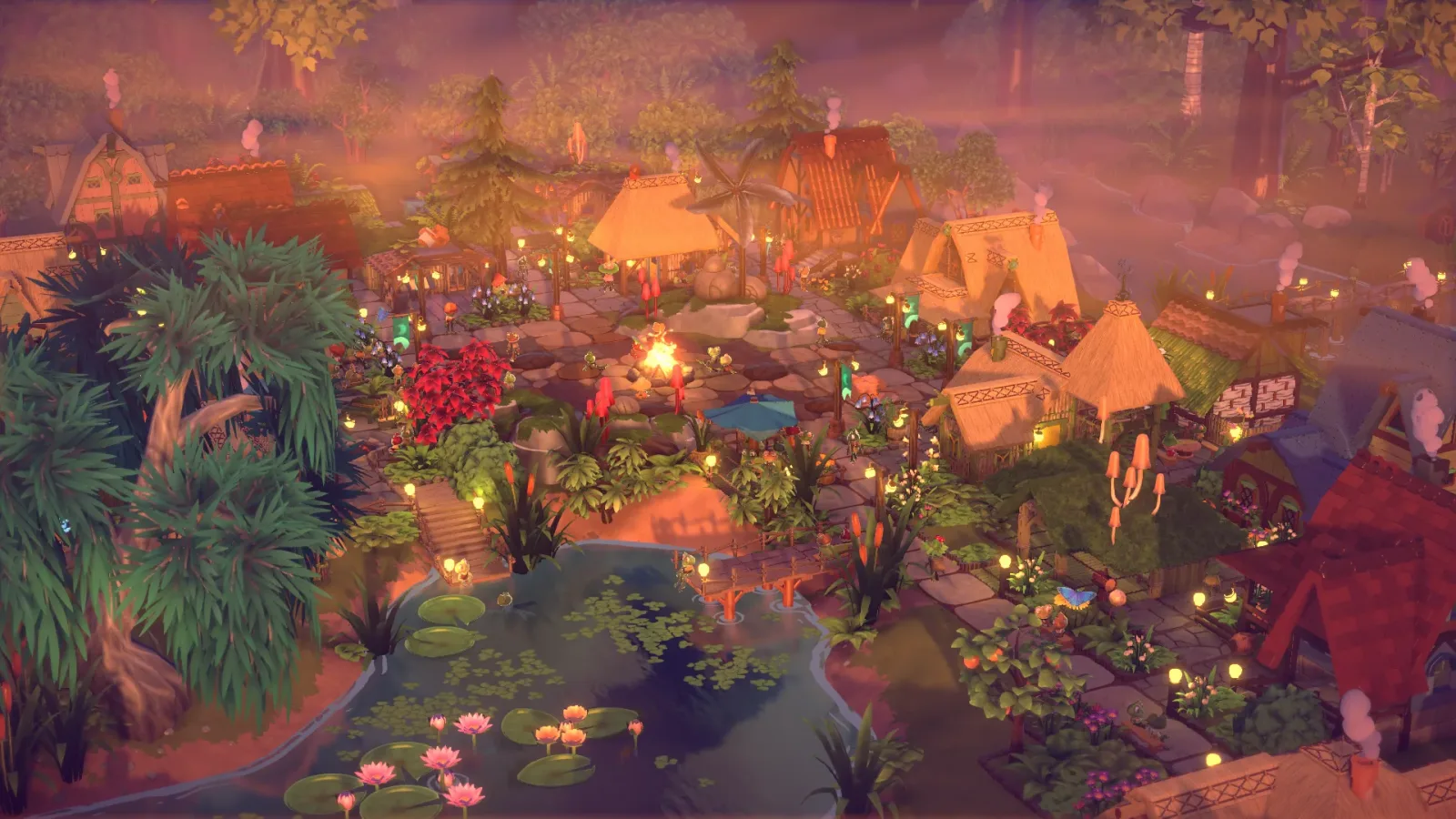
Texel Raptor has released a new trailer for Croakwood, offering a closer look at the relaxed town-building game's central progression: taking a small camp of frog settlers and developing it into a lively settlement within the Croakwood Forest.
Announced on October 7, 2026, the trailer focuses on the building, management and exploration systems that shape the game's amphibian community. Players will direct frog settlers as they collect resources, create supplies, construct homes and facilities, and welcome new residents as their forest town becomes larger and more capable.
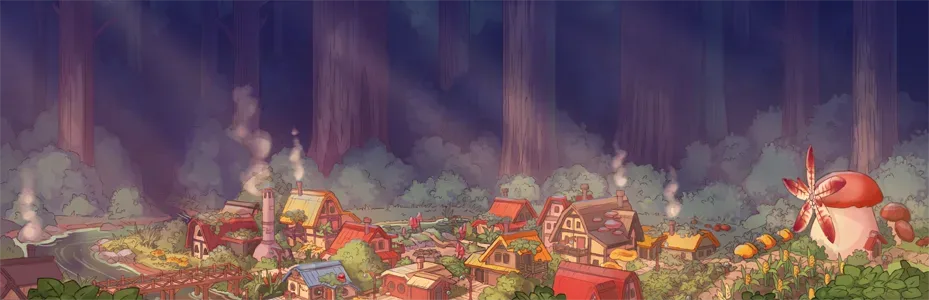
Croakwood is framed as a town-builder with light management-simulation elements rather than an aggressively demanding city-management experience. Its premise centers on steady expansion and the satisfaction of seeing a modest settlement become a functioning home for a growing frog population. The newly released footage is intended to show that transformation in motion, from the earliest stages of a camp through to a more established town.
A forest town built one piece at a time
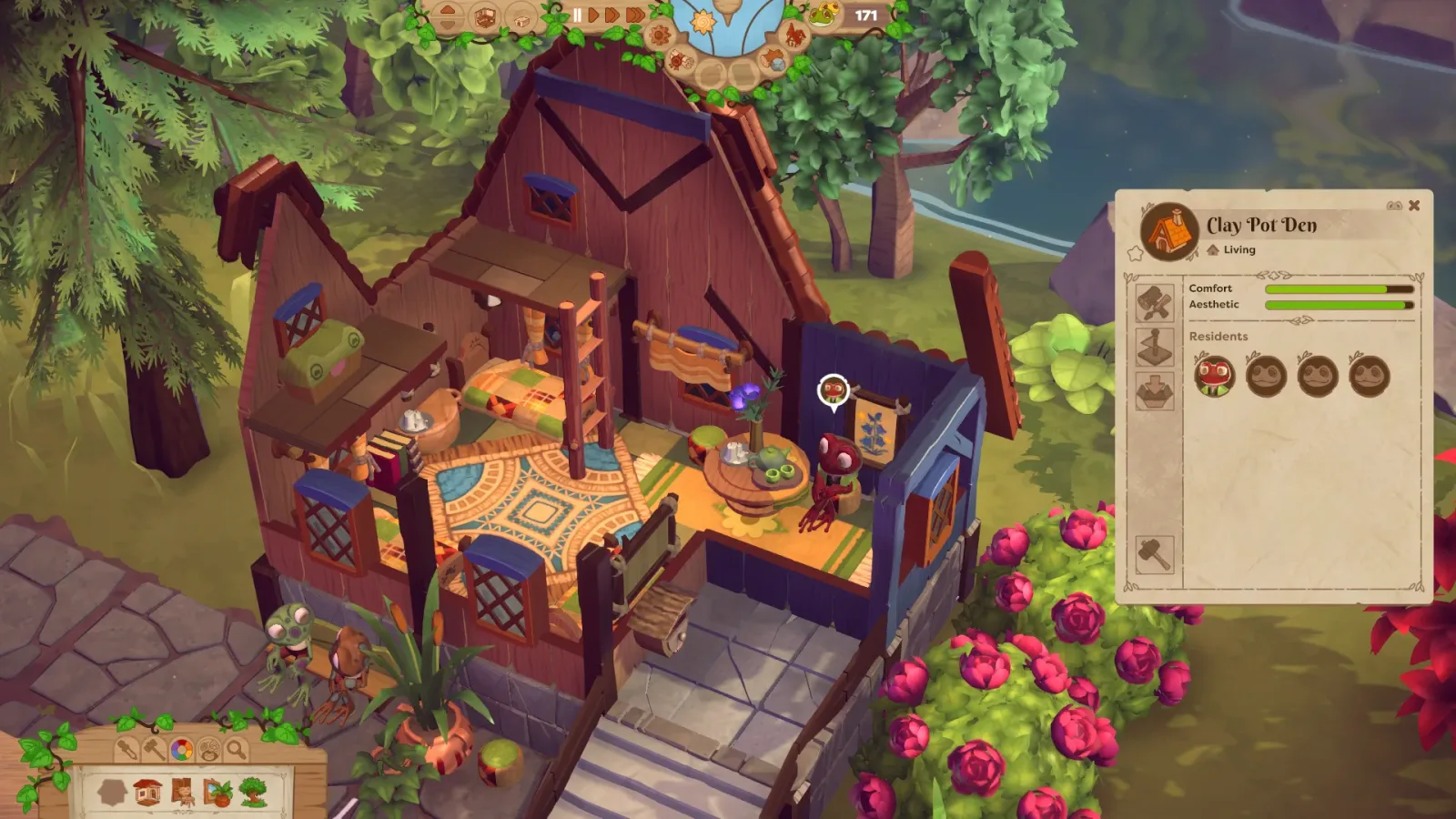
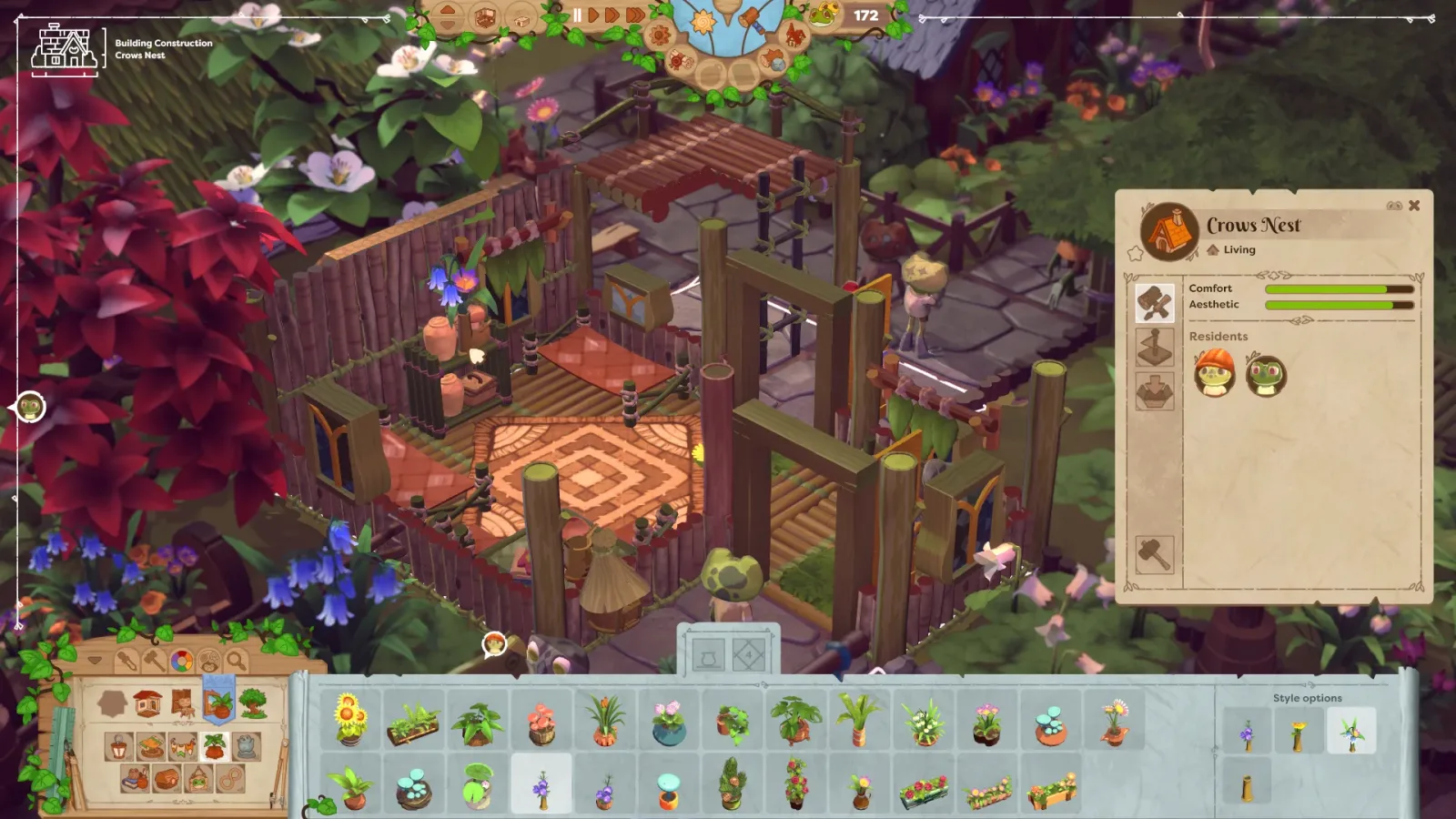
One of the major features highlighted for Croakwood is its flexible, piece-based construction system. Rather than presenting building purely as a fixed selection of pre-made structures, the game will let players assemble and customize their settlement using individual building pieces. That approach could give each player's town a distinct look while also allowing its layout to respond to the needs of its inhabitants.
For useful background on this topic, read Stupid Never Dies Puts Its Neo Pop Punk Sound at the Center of Its Zombie Action.
The announcement specifically emphasizes customization options alongside the modular building system. In practical terms, the focus is not simply on placing a town hall and a few houses on a map, but on shaping a settlement that feels personally arranged. As the community expands, players will be able to continue adding to and adjusting the town's built environment.
That construction loop sits at the center of Croakwood's broader rhythm. Frog settlers gather the materials needed to support development, those resources are turned into useful supplies, and the resulting structures allow the settlement to expand. More growth then creates room for additional inhabitants, reinforcing the sense that the town is developing through the collective work of its residents.
It is a familiar foundation for the town-builder genre, but the game's frog-focused setting and comparatively calm presentation establish a more gentle tone. The stated goal is not merely to optimize a settlement on a spreadsheet-like level. It is also to watch a small group of settlers become a visible, active community in an ancient woodland setting.
For another perspective on this story, read Croakwood Trailer Shows a Frog Camp Growing Into an Amphibian Town.
Frog settlers have roles and routines
Building is only one side of the equation. Croakwood's townsfolk are designed to have roles and daily routines, making the settlement feel active as its population grows. Players manage these frog residents while they take on the work that keeps the community moving, including collecting resources and contributing to the creation of supplies.
The trailer's focus on the town coming to life is important here. A management game can make growth easy to measure through stockpiles, structures and population counts, but routines give that expansion a more human--or, in this case, amphibian--dimension. The frogs are not positioned solely as counters assigned to abstract jobs. Their daily activity is part of the visual identity of the settlement.
Texel Raptor has not detailed every possible role, production chain or management constraint in this announcement, so players should not assume a specific level of simulation complexity beyond what has been confirmed. What is clear is that the game will ask players to oversee settlers with defined functions and observable routines, linking the management layer to the town's moment-to-moment atmosphere.
For fans of lighter settlement games, that may be a particularly appealing balance. The management elements give town growth structure, while the relaxed framing suggests the experience is intended to leave room for creativity, observation and exploration rather than putting constant pressure on the player.
The Croakwood Forest offers more than a backdrop
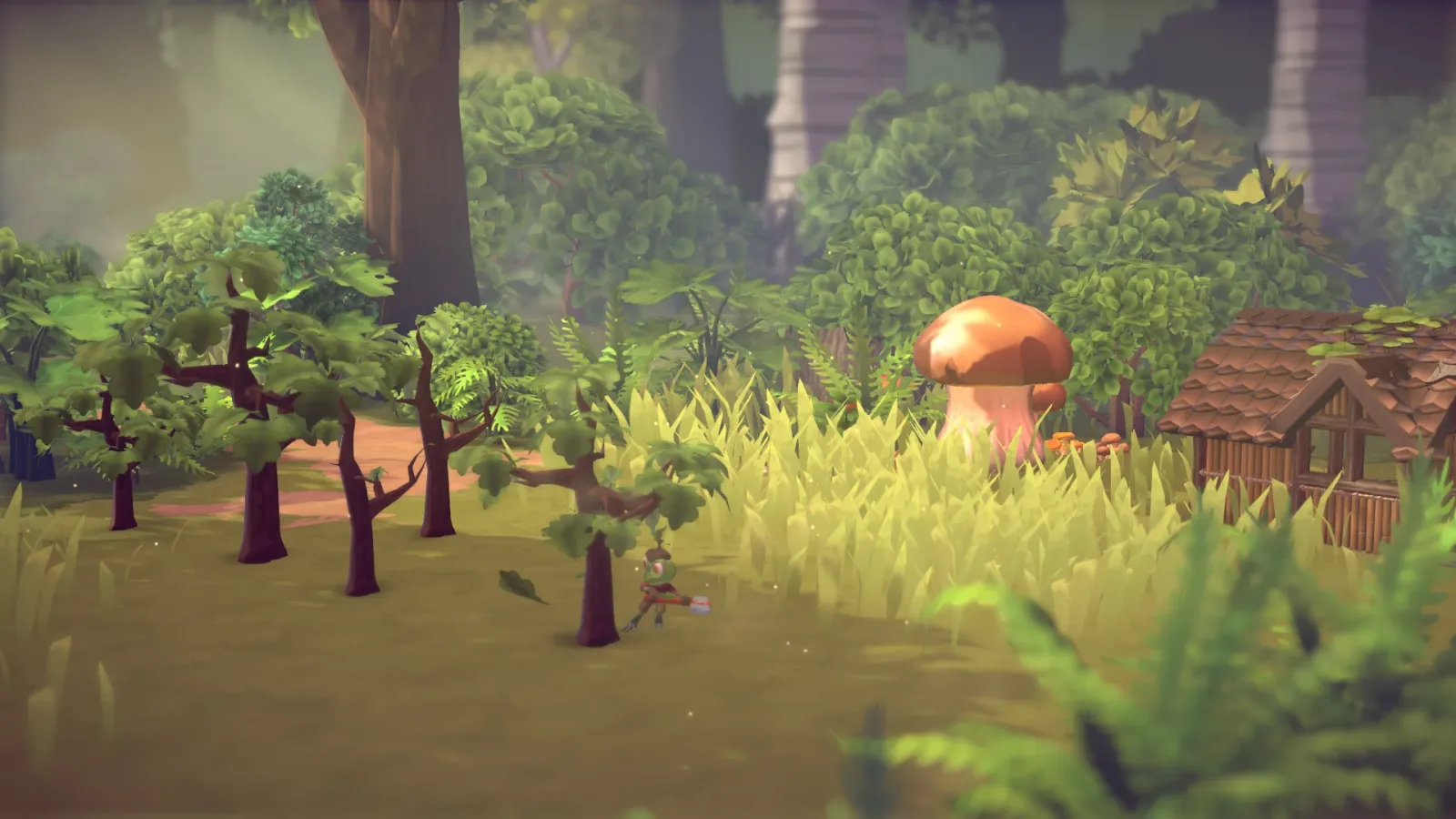
The settlement is located in the Croakwood Forest, an ancient environment that players will be able to explore as they build. This forest is not presented as a static map surrounding the town. It contains hidden secrets and additional areas that can be unlocked, giving expansion a sense of discovery beyond the boundaries of the initial camp.
That exploration component has the potential to make the act of growing the town feel tied to the wider world. Instead of every improvement occurring inside a single established plot, progress can also lead outward, opening up fresh parts of the forest and revealing what has been concealed within it.
The announcement does not specify what form those secrets take, how unlocking new areas works, or whether exploration introduces new materials, residents or challenges. Those details remain unconfirmed. Still, the presence of hidden locations suggests that Croakwood's progression will involve both developing a home base and investigating the woodland around it.
This combination of domestic town-building and forest discovery fits the game's core image: a community of frogs making a home in a natural, old-growth setting. The settlement's future is connected not only to how efficiently it is managed, but also to what players uncover beyond the structures they have already built.
A trailer focused on gradual growth
The new video's central message is the scale of the journey from humble beginnings to a flourishing amphibian town. That kind of before-and-after progression is a powerful draw for building games, where the most rewarding moments often come from looking back at a sparse starting area and recognizing how much has changed.
In Croakwood, the change is defined by several connected systems: settlers collect what the town needs, crafted supplies support construction, customized structures reshape the settlement, and more inhabitants arrive as the community becomes established. The forest then offers further space and secrets to pursue, extending that cycle of growth.
There is also a clear emphasis on the town itself being alive, not just completed. The frog citizens' routines help communicate that the player is nurturing a place with activity and identity. A successful settlement is therefore expected to be more than a dense cluster of buildings; it is a place where its amphibian residents have work to do and a daily life to follow.
For players who enjoy watching systems gradually interlock, the trailer presents Croakwood as a game built around visible development. The camp becomes a town, the population expands, and the surrounding forest becomes increasingly accessible. The result is meant to be a slow, satisfying evolution rather than a single dramatic leap forward.
Steam and Epic Games Store platforms
Croakwood is listed for PC storefronts Steam and the Epic Games Store. The announcement notes that players can wishlist the game on Steam. No release date, price, early-access plan or additional platform release has been announced in the information accompanying the trailer.
Texel Raptor is also maintaining a Discord community for continuing updates on the project. For now, the latest trailer serves as the clearest overview of what the developer is prioritizing: customizable construction, frog residents with day-to-day responsibilities, a resource-and-crafting loop, and an ancient forest with new territory to uncover.
Town-builders frequently live or die on whether their systems make growth feel meaningful, and Croakwood's pitch is straightforward in that regard. Begin with a few frogs and a simple camp, give them the resources and structures they need, then see the result become a personalized woodland town. With its calm management focus and amphibian cast, it is aiming to make that familiar genre loop feel comfortably distinct.
Community
Discussion
Start the conversation.
No comments have been posted yet.