

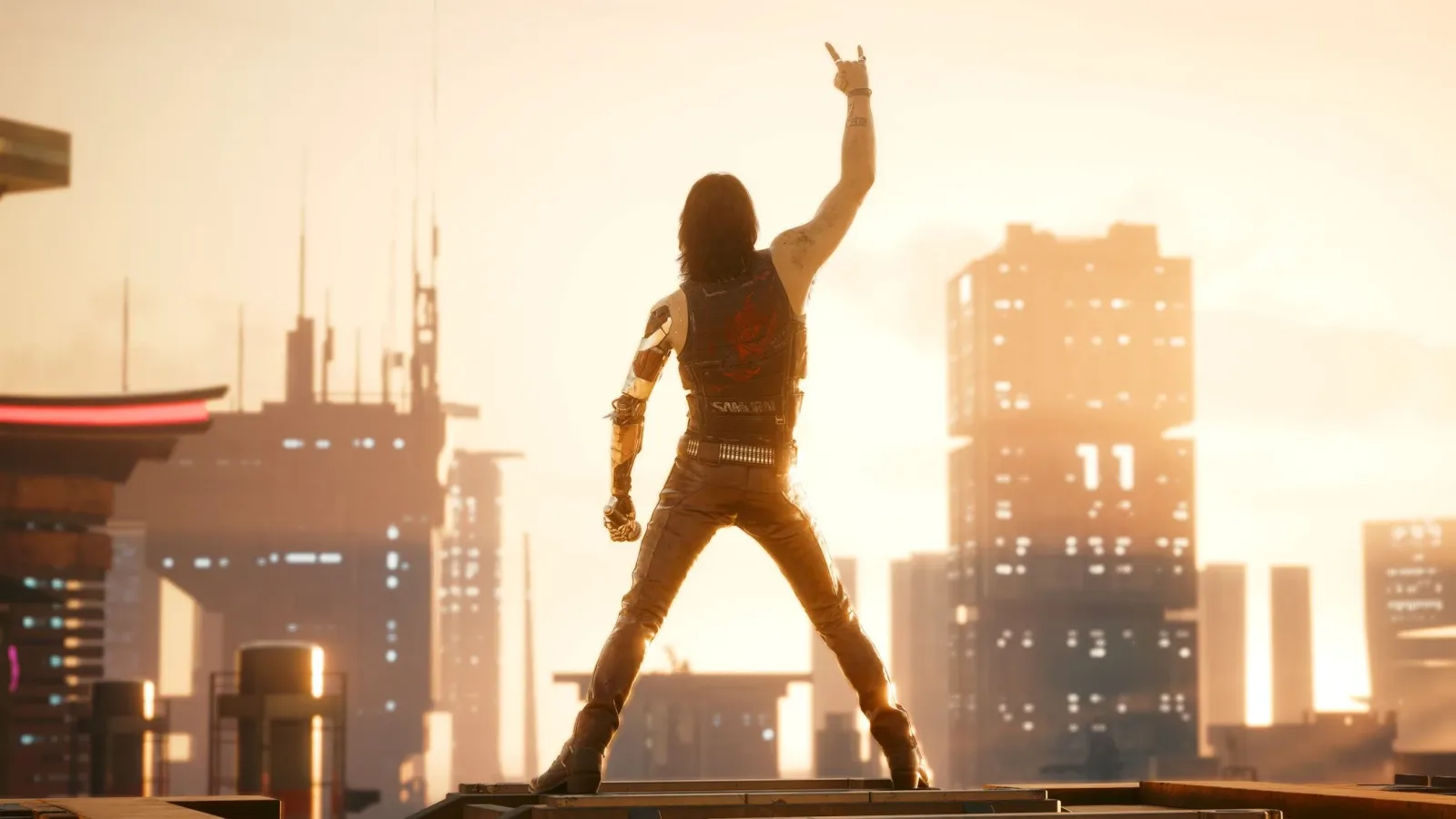
Cyberpunk 2 is still a long way from release, but its director Gabe Amatangelo has offered a revealing look at how CD Projekt Red is approaching the follow-up to Cyberpunk 2077. Rather than protecting one fixed concept from the earliest days of planning, Amatangelo says the project has already changed as more developers have joined the conversation.
That is not being framed as a loss of direction. In Amatangelo's view, the evolution is an intended part of building a major role-playing game. He remains responsible for leading the project, but he does not want every creative choice to wait on a single person's approval. The goal is to give individual developers and teams room to contribute, allowing the game to become something broader than one person's first outline.
"I had the idea of Cyberpunk 2 in the beginning, but it evolves as I involve more people," Amatangelo said. "And it evolves as I empower the team and individuals within them to contribute. It becomes something else, right? It becomes this thing that I've shepherded, but it's ultimately a reflection of the team's hearts and souls. And I look forward to sharing that."
For a sequel carrying the weight of Cyberpunk 2077's history, that approach may be especially significant. The first game ultimately earned a much stronger reputation after substantial updates and the Phantom Liberty expansion, but its original launch was marked by serious technical problems and disappointment surrounding its condition on some platforms. The next game has not been given a release date, and CD Projekt Red has not detailed its launch platforms, leaving the studio with time to establish the project carefully rather than rushing toward a public finish line.
For useful background on this topic, read Resident Evil Veronica Remake: Release Window, Platforms, Story and Gameplay Details.
A sequel built through collaboration
Amatangelo's comments describe a leadership philosophy centered on avoiding creative bottlenecks. Large games require countless decisions across writing, quest design, combat, art, animation, systems, audio, technology, and production. A director must provide an overall direction, but a structure where every decision requires direct approval can slow development and limit the expertise of the people doing the work.
Cyberpunk 2 appears to be leaning toward a more distributed process. The director's original idea acts as a starting point and a guiding force, while the team's input changes the shape of the result. That distinction matters. A project can remain coherent without being rigid, particularly when the people closest to a particular discipline are trusted to improve, challenge, or expand on the initial plan.
There is no indication yet of exactly how this will affect Cyberpunk 2's setting, characters, RPG systems, or story structure. CD Projekt Red has not revealed those details. Still, Amatangelo's language suggests that the studio is treating the sequel as an opportunity to reassess the series rather than simply reproduce Cyberpunk 2077 with a new plot.
The process also reflects the scale of the current development effort. More than 180 developers are said to be working on Cyberpunk 2. That is a meaningful number for a project that remains without a launch window, even as the studio's other major productions continue to demand attention. A team of that size naturally brings a broad set of creative perspectives, and Amatangelo appears to see that variety as an asset rather than a complication to be minimized.
What does cyberpunk mean?
One of the most interesting parts of Amatangelo's discussion is his focus on the cyberpunk genre itself. Cyberpunk has always been a flexible label, spanning literature, film, tabletop games, animation, fashion, music, and video games. Its familiar imagery is easy to identify: dazzling neon, giant cities, invasive technology, corporate power, artificial bodies, underground scenes, and social decay. But those visual markers are only part of the picture.
For Amatangelo, cyberpunk has a personal connection. He describes it as tied to his childhood and to a formative habit of questioning things. His experience as a screamer in a hardcore punk band also informs how he thinks about the genre's energy and confrontational spirit. In his description, the "cyber" side can be an exaggerated, expressive space of neon lighting and intense sound, while the genre's deeper concerns involve examining dehumanization at its most extreme.
That perspective places the emphasis less on surface-level futurism and more on questions about people living within powerful systems. Who benefits from technology? Who is left behind? What is lost when human identity, labor, memory, or even the body itself becomes a product? Those are foundational concerns for cyberpunk, and they are also ideas that fit naturally with the world established in Cyberpunk 2077.
Yet Amatangelo is not presenting his definition as the only acceptable one. In fact, he says internal discussions have involved many competing descriptions of what cyberpunk is supposed to mean. His response is that those contributors can be correct and incorrect at the same time, because punk can mean different things to different people. The important common ground is the willingness to challenge assumptions and ask why things are the way they are.
"Punk means different things to different people, but the core is the ability to pose questions -- to ask why," Amatangelo said.
That openness could prove valuable for a series set in a genre with such a long and contested history. Cyberpunk can easily become a collection of recognizable aesthetics: rain-soaked streets, glowing advertisements, augmented limbs, and towering skylines. Those images remain compelling, but a new game will need more than familiar visual shorthand to feel relevant. A creative team that is actively debating the genre's meaning has a chance to find fresher angles within it.
Questions may be central to the next game
The comments do not confirm Cyberpunk 2's plot or themes, but they offer a useful lens for considering what the sequel could prioritize. If questioning entrenched systems is at the center of the project's understanding of cyberpunk, the next game may look beyond technological spectacle and focus on the consequences of life inside a deeply unequal future.
Cyberpunk 2077 already explored those tensions through its corporate conflict, its treatment of digital identity, and its portrayal of Night City as both seductive and exploitative. Cyberpunk 2 has the opportunity to push those ideas in different directions, whether that means examining new social structures, new forms of technology, or new interpretations of resistance. For now, though, those possibilities remain speculative. The studio has not provided a setting, protagonist, or concrete story premise for the sequel.
What is clearer is that the project is not being developed around the belief that cyberpunk has one simple, fixed definition. The differing views within the team are being used to generate ideas and identify the next creative step. That can be difficult in practice, because debate needs to lead to decisions eventually. But for a genre rooted in tension, contradiction, and skepticism toward easy answers, that friction may be productive.
CD Projekt Red's crowded future
Cyberpunk 2 is one part of a larger slate at CD Projekt Red. The studio is also working on The Witcher 4, which appears to be a major current priority. In addition, the company has discussed Project Hadar, an entirely new property described by CD Projekt Red leadership as the studio's biggest undertaking to date. The worldbuilding work for Project Hadar has now been completed, but it remains a separate and likely long-term effort.
That broader portfolio makes it understandable that Cyberpunk 2 is still in a comparatively early public-facing phase. The studio has confirmed its existence and assembled a substantial team, yet has avoided committing to a release date or making promises about features that may change over the course of development. Given the lessons of Cyberpunk 2077's launch, restraint may be the sensible path.
For players waiting to return to the franchise, Amatangelo's comments are not a replacement for gameplay footage or a release window. They do, however, provide an early indication of the values guiding the project. Cyberpunk 2 is being treated as a collaborative work in progress, shaped by developers with different ideas about cyberpunk, punk, technology, and the human cost of a dystopian future.
That makes the sequel's eventual form difficult to predict. It also makes it more interesting. If CD Projekt Red can turn those internal arguments into a clear creative identity, Cyberpunk 2 could become more than a larger return to familiar neon streets. It could be a new attempt to ask the difficult questions that made cyberpunk matter in the first place.
Community
Discussion
Start the conversation.
No comments have been posted yet.