

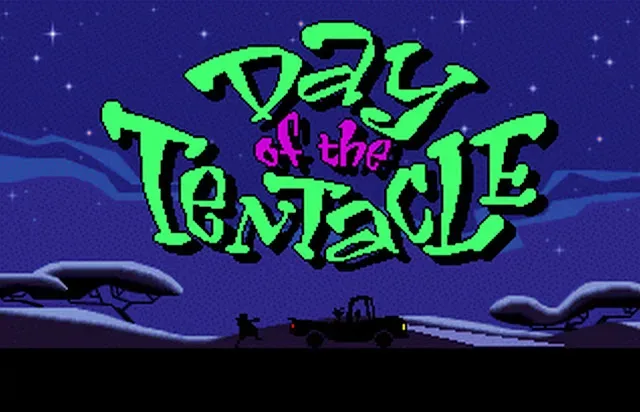
Day of the Tentacle, LucasArts' celebrated 1993 time-travel adventure, has received a new native Amiga conversion project from Darasco. The release is notable not simply because the game is finally reaching the platform in another form, but because it has been tailored for several distinct configurations of classic Amiga hardware: a lower-spec 32-colour edition, a more demanding 256-colour edition for the Amiga 1200, and a standalone version for the Amiga CD32.
The work has been brought to attention by Amiga France, with early discussion among users of the English Amiga Board forums indicating a largely enthusiastic response to the port's performance and presentation. The conversion has been described as AI-assisted, a detail that will inevitably prompt interest and questions from preservation-minded Amiga fans. What is immediately clear, though, is that the project is aiming to make one of the most beloved point-and-click adventures of the 1990s work across hardware with sharply different capabilities.
A classic adventure finally gets broader Amiga treatment
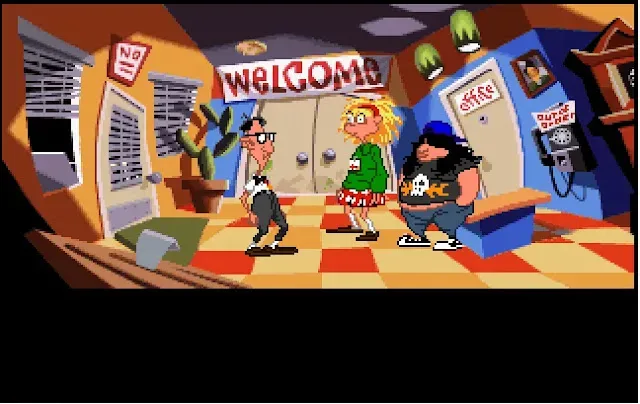
Originally launched by LucasArts in 1993, Day of the Tentacle is the sequel to Ron Gilbert's groundbreaking Maniac Mansion. It follows Bernard Bernoulli, Hoagie and Laverne, three very different friends drawn into a crisis involving Purple Tentacle, a mutated and increasingly ambitious villain with plans to conquer the world.
The game's central hook is time travel. The trio are split between different eras, and players must move between those periods to solve puzzles whose consequences can stretch across centuries. An object altered in the distant past can create an opportunity in the present or future, while a character's actions in one period can reshape what is possible for another. That structure, paired with LucasArts' cartoon animation, dense comic writing and intentionally strange puzzle logic, turned the game into an enduring genre landmark.
For useful background on this topic, read WendyQuest Brings a Pixel-Art Turn-Based RPG to Steam.
Despite its reputation, the game did not receive an official Amiga release during its original era. That absence has long stood out because the Amiga had a substantial audience for graphic adventures and because LucasArts' earlier games had a relationship with the machine. Unofficial efforts have previously made the game playable on Amiga systems, including an Amiga AGA version circulated by fans. This new release is separate from those earlier unofficial options and is positioned as a native port designed around the strengths and limits of actual Amiga hardware.
Two visual targets for different Amiga owners
The port is being offered in two principal computer versions, each targeting a different level of machine. The 32-colour build is intended for comparatively modest hardware, requiring a Motorola 68000 processor, 512KB of Chip RAM and 4MB of Fast RAM. That makes it the edition of greatest interest to owners of earlier Amiga configurations who want an experience built around the original system rather than an accelerated setup.
Meanwhile, the 256-colour build is aimed at a stock Amiga 1200. The A1200's AGA chipset makes it the natural home for the more colourful version, and the project seeks to deliver the game in full 256-colour presentation on that hardware. However, the heavier edition has a correspondingly larger workload. Players have reported better results when booting without a startup-sequence or when additional Fast RAM is available.
That distinction matters in the Amiga scene, where a machine's real-world performance can depend on more than its base model. Memory expansions, startup configuration, installed utilities and storage arrangements can all affect how much room a demanding program has to operate. The port's split approach recognizes that reality instead of forcing every owner into a single version with a single set of compromises.
- 32-colour Amiga version: Designed for a 68000 CPU, 512KB Chip RAM and 4MB Fast RAM.
- 256-colour Amiga version: Built for stock Amiga 1200 hardware, with additional Fast RAM or a stripped-back boot configuration potentially improving performance.
- CD32 version: A standalone console release in 256 colours that runs on stock CD32 hardware.
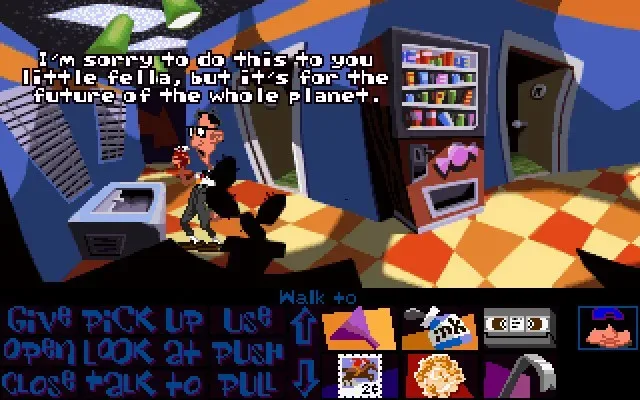
The 32-colour version has attracted particularly positive comments in early community testing. One reaction highlighted how convincingly the visuals create the impression of substantially greater colour depth than the technical specification suggests. That is a meaningful compliment for an adaptation of a game remembered for its expressive, animation-like artwork. Reducing colour capability is not just a technical issue in this kind of conversion; it can affect character readability, backgrounds, comedic timing and the overall feel of the visual gags.
Roland MT-32 support is part of the package
Both Amiga computer editions include support for Roland MT-32 sound. For retro PC and Amiga enthusiasts, that is an especially welcome feature. The MT-32 is closely associated with the era's premium adventure-game audio, and its presence gives players with compatible equipment another way to experience the score and sound design.
Audio options are often a major part of the appeal of classic-machine ports. The technical story is not only about whether a game can run, but how successfully a version captures the audiovisual identity people associate with it. An MT-32-capable setup is not required for everyone, but including the option shows that the project is considering enthusiasts who enjoy building period-appropriate or expanded hardware configurations.
The CD32 version does not include MT-32 support. Instead, it is designed to operate smoothly on unmodified CD32 console hardware while retaining the 256-colour visual mode. That trade-off makes practical sense for a console-focused release: the CD32 edition is intended to be self-contained rather than dependent on external MIDI hardware. Owners can therefore approach it as a direct way to play the port on Commodore's CD-based console.
AI assistance and the preservation conversation
Darasco's use of AI assistance is likely to be among the most discussed aspects of the project. AI-supported techniques have become increasingly visible in retro development, restoration and conversion work, particularly when teams need to process large volumes of visual or audio material. In this case, the stated result is a port that can scale from a 32-colour configuration to a 256-colour AGA and CD32 presentation.
For players, the important questions will remain practical ones: how well the artwork translates, whether the animation feels faithful, how stable the game is across supported machines, and whether the conversion preserves the humour and puzzle-driven rhythm that define Day of the Tentacle. The early comments from EAB forum users are encouraging, especially from people running the OCS and AGA versions with Fast RAM installed. Reports characterize both versions as running very well under those conditions.
At the same time, the project is a reminder that retro computing is not a fixed target. "Amiga" can mean anything from a lean 68000 system to an A1200 with expansions, an optical-disc console, or a carefully configured machine with external sound modules. Supporting that range is difficult, but it is also what gives a release like this its appeal. It allows owners to choose an edition that suits the system they actually use rather than treating one preferred configuration as the only valid way to revisit a classic.
Why this port matters to adventure fans
There is no shortage of ways to remember Day of the Tentacle, but a native classic-hardware port offers a different kind of value. It is not merely about accessing the game; it is about experiencing it through the machines that shaped the era around it. The Amiga's history is deeply tied to pixel art, sampled audio, mouse-driven interfaces and home-computer experimentation, making it a fitting platform for a game built around clicking through absurd rooms, collecting improbable objects and manipulating history for comic effect.
The absence of an official Amiga edition in the 1990s has also made the game something of a recurring "what if" for the platform's community. This project does not erase that history, but it gives enthusiasts a new answer to it. With separate colour modes, hardware-conscious requirements, MT-32 support on computer versions and a CD32 option, the release is designed as more than a one-size-fits-all technical demonstration.
For now, early community impressions suggest that Darasco's AI-assisted conversion is landing well, particularly when provided with Fast RAM and an appropriate configuration. The 32-colour edition appears to be one of the most intriguing parts of the package, demonstrating that careful conversion work can make a visually ambitious 1990s cartoon adventure feel at home on less powerful Amiga systems. The 256-colour A1200 and CD32 editions, meanwhile, offer a fuller-colour route for users of Commodore's later hardware.
More than three decades after Purple Tentacle first threatened the world, Day of the Tentacle is gaining another unexpected chapter in its long retro afterlife--this time on the family of machines that never received the official release many fans once hoped for.
Community
Discussion
Start the conversation.
No comments have been posted yet.