

Two of the most recognisable games of the early arcade era are getting a fresh life on Commodore Amiga computers. Developer TjLaZer has created Amiga conversions of Namco's Dig Dug and Nintendo's Mario Bros., using modern AI tools as part of the development process. Both projects aim to preserve the feel of their respective coin-op originals while taking the realities of Amiga display standards and hardware configurations into account.
The releases are notable not simply because they revisit two games from 1982 and 1983, but because they target the broad and still-active Amiga retro-computing audience. Dig Dug is designed for OCS/ECS or AGA machines with 512K of chip RAM, while the Mario Bros. conversion is presented as an Amiga OCS port. In each case, the developer's focus is on the essentials that defined the arcade games: readable action, responsive movement, memorable sound, and gameplay systems that remain immediately understandable decades later.
Dig Dug returns to the underground
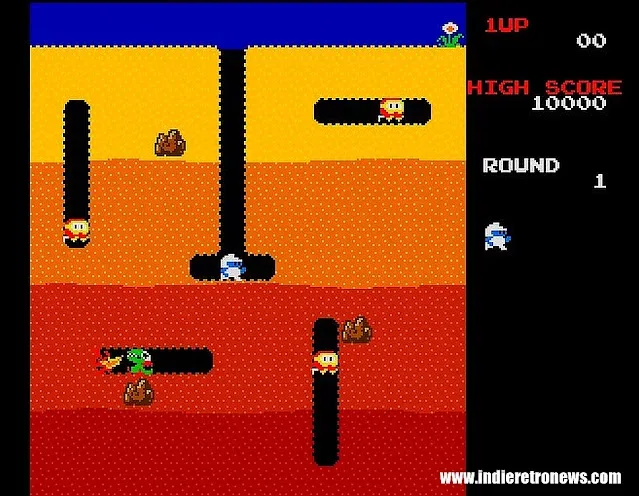
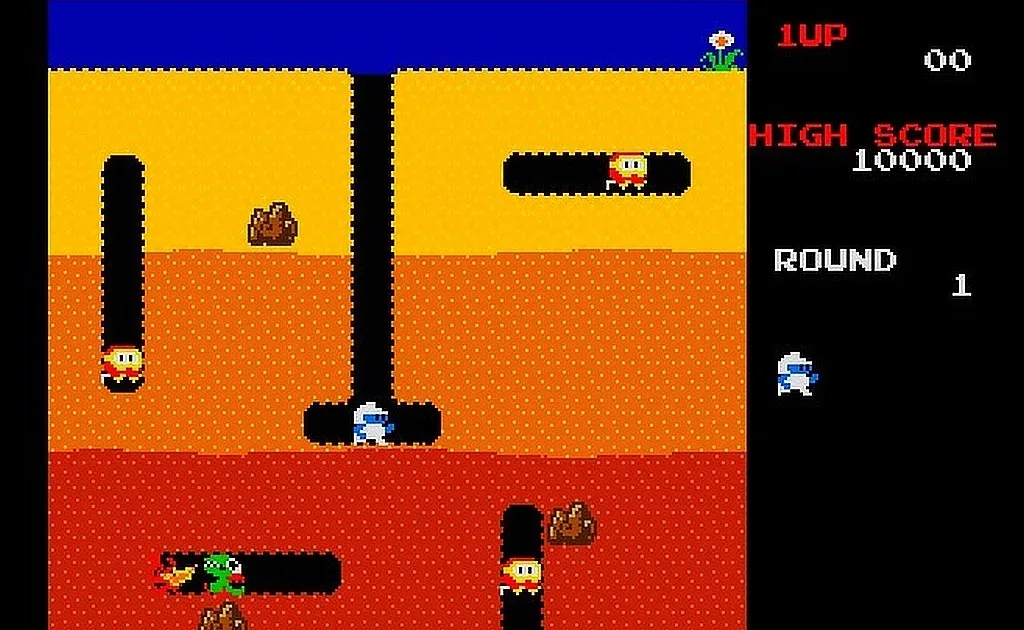
Originally released in arcades by Namco in 1982, Dig Dug makes a simple premise remarkably tense. Players carve tunnels through layers of earth, pursue enemies through an increasingly open maze, and decide whether to defeat those enemies directly or use the environment against them. Its hero, Taizo Hori, can inflate adversaries with an air pump until they burst, or drop rocks at carefully chosen moments for more dramatic eliminations.
TjLaZer's Amiga version retains the elements players would expect from that formula. The conversion includes the familiar enemy behaviour, including foes that can phase through the ground and emerge where they are least welcome. Fygar, the green dragon-like enemy, still brings its fire-breathing threat to the underground stages. Falling rocks remain a vital risk-and-reward tool, capable of dispatching enemies but also requiring the player to be mindful of timing and positioning.
For useful background on this topic, read Richard 'Levelord' Gray, Influential Duke Nukem 3D and Quake Level Designer, Dies at 68.
Visual fidelity is a central goal of the project. The port uses original graphics and recreates the arcade game's round layouts, rather than treating the concept as a loose reinterpretation. That matters for a game such as Dig Dug, where the placement of tunnels, rocks and enemies determines the pace of every round. The recognizable arcade sound effects are also included, helping preserve the distinctive character of Namco's original.
A top-five high-score table gives the conversion an appropriate arcade-style competitive hook. High-score chasing has always been a natural part of Dig Dug: playing safely can keep a run alive, but securing rock drops, quickly handling enemies and pushing through rounds efficiently are the kinds of choices that separate a respectable score from a standout one. A local score table is therefore more than a decorative addition; it fits the game's original appeal.
PAL and NTSC differences addressed
One of the more technically interesting features in the Amiga Dig Dug port is its automatic handling of PAL and NTSC systems. The two display standards have long created practical differences for developers and players on classic hardware. PAL systems commonly operate at 50Hz, while NTSC systems commonly operate at 60Hz. A game originally built around arcade timing can feel noticeably different if its movement and animation are simply tied to a display rate without further adjustment.
This conversion is intended to retain the arcade game's authentic 60Hz gameplay speed on both formats. On PAL systems, it uses a side-panel score presentation. On NTSC systems, the score display scrolls instead. These are pragmatic layout choices that accommodate different screen characteristics while keeping the central gameplay area and motion as close as possible to the desired arcade feel.
For retro players, this attention to timing is meaningful. It is easy to think of old games as static software that can be moved from one system to another without complication, but action games are deeply tied to their original hardware assumptions. Enemy movement, input response, animation cadence and the rhythm of a player's decisions all change when speed is altered. Maintaining 60Hz action across PAL and NTSC setups gives the Amiga port a stronger claim to being an arcade-minded conversion rather than merely a version that looks the part.
Mario Bros. brings co-op sewer action to Amiga
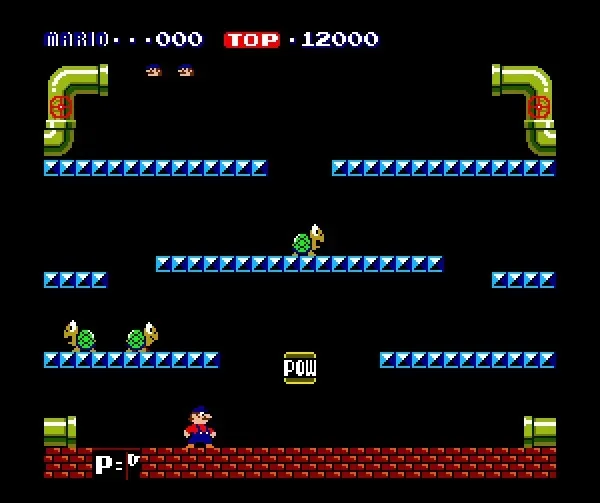
The second project tackles Mario Bros., Nintendo's 1983 arcade game and an important chapter in Mario's history. This is the pre-Super Mario Bros. version of the character: a single-screen arcade platform game set around pipes and platforms, where Mario and Luigi work to clear enemies from the stage. The objective is not to race to a flagpole or explore a scrolling world. Instead, players flip enemies from below, then run over them before they recover.
That concise design makes Mario Bros. especially suited to a classic home-computer conversion. Stages are compact, the rules are easy to grasp, and the difficulty comes from the escalating mix of enemies, movement patterns and hazards. Shellcreepers, Sidesteppers and other threats demand increasing awareness as they begin moving faster and becoming harder to manage. The POW block, which temporarily flips enemies across the screen, is one of the game's defining tactical tools.
The Amiga OCS version uses a 32-color low-resolution palette intended to capture the look of the arcade original. Its visual approach emphasizes the chunky, colourful clarity associated with early-1980s arcade hardware. Smooth sprite animation is part of the stated target, as is the signature screen shake triggered by the POW block. That effect is a small but important touch: it conveys the impact of the move and contributes to the physical, playful feel that has always set Mario Bros. apart.
Performance is another major ambition. TjLaZer hopes the game will run at 60 frames per second on both PAL and NTSC Amiga machines. Players can manually toggle the display rate with the F5 key, offering a direct way to change the display behaviour. As with Dig Dug, the effort reflects an awareness that Amiga owners may be using different video standards and setups, while still wanting brisk arcade responsiveness.
Two-player support is central to Mario Bros.
The Mario Bros. port also supports simultaneous two-player cooperative play through dual joysticks. That feature is essential to the arcade game's identity. Although players can work together to clear stages efficiently, the format naturally creates frantic moments of accidental interference, contested points and last-second rescues. One player may flip an enemy only for the other to collect the points; another may inadvertently create a dangerous route by striking a platform at the wrong time.
That mixture of cooperation and friendly competition is precisely why the original remains enjoyable in local multiplayer. It is not a game that needs extensive progression systems or online infrastructure to create stories. A single screen can produce quick reversals, narrow escapes and arguments over who was responsible for an enemy returning to its feet. Bringing dual-joystick support to the Amiga version allows that original social dynamic to remain intact.
AI-assisted development and retro preservation
Both conversions were developed with assistance from modern AI tools. That detail will likely prompt discussion within retro communities, where fans often value hand-crafted technical work and detailed knowledge of older systems. But the practical outcome remains the most important measure for players: whether these ports successfully reproduce the games' mechanics, presentation and performance on the target hardware.
The stated features suggest an approach built around preservation as much as novelty. Dig Dug keeps its specific round structure, enemy traits, sound effects and score-driven design. Mario Bros. retains its constrained single-screen action, arcade-like palette, POW effect and two-player format. Neither game needs extensive reinvention. Their enduring strength lies in mechanics that are immediately legible yet difficult to master.
There is also a broader appeal in seeing these games tailored for original Amiga hardware rather than only being experienced through modern emulation or contemporary compilations. The Amiga has a long history of arcade conversions, including ambitious attempts to bring coin-op experiences home despite memory, colour and display limitations. New projects continue that tradition, while modern development tools make some previously difficult tasks more accessible.
For Amiga enthusiasts, these releases offer two distinct but complementary slices of arcade history. Dig Dug rewards planning, precision and opportunistic use of the terrain. Mario Bros. thrives on immediate reactions and shared-screen chaos. Both are compact games with designs robust enough to survive countless re-releases, hardware changes and generations of players.
With PAL and NTSC considerations addressed, classic audiovisual details targeted, and local multiplayer included where it matters most, TjLaZer's pair of AI-assisted Amiga projects gives retro fans another way to revisit two arcade landmarks on period hardware.
Community
Discussion
Start the conversation.
No comments have been posted yet.