

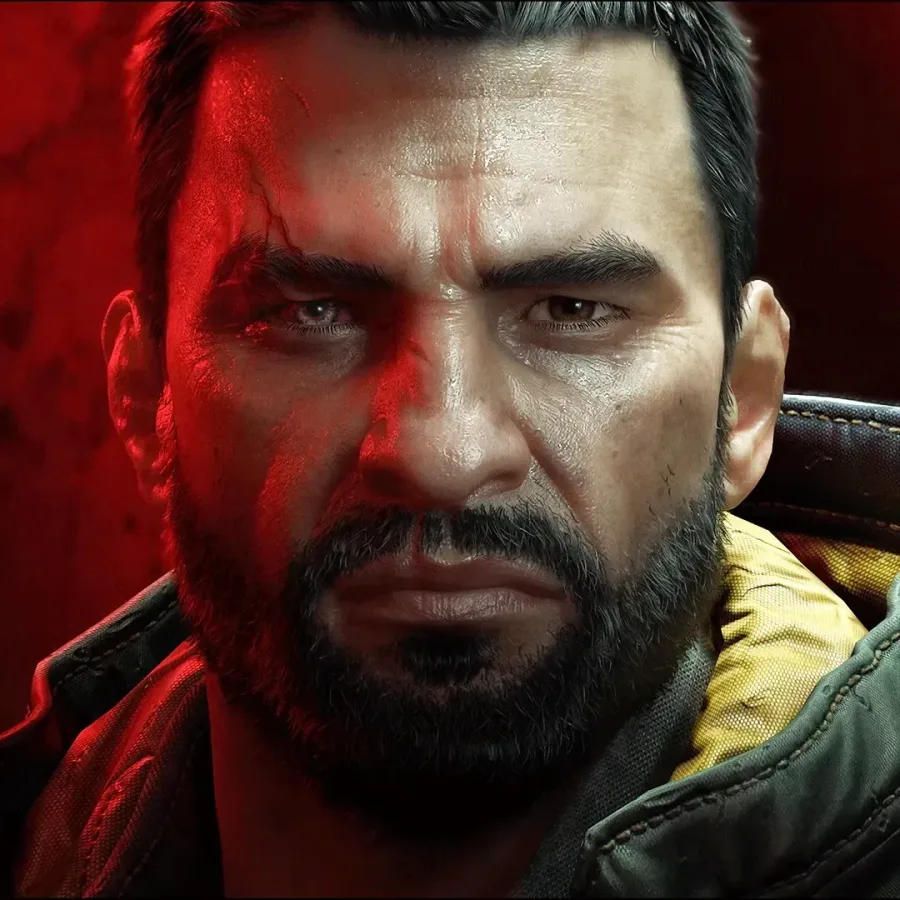
Techland has drawn a line under substantial post-launch content for Dying Light: The Beast. During a Discord AMA, founder and CEO Pawel Marchewka explained that the standalone zombie action game was always intended to be a finished, self-contained release rather than a title built around years of major additions.
The decision follows roughly a year of free updates, including the recent Restored Land update. That update gave players a way to clear zombies from areas of the world and begin restoring a sense of civilization to the setting, making it one of the game's more consequential additions. Techland also released new weapons and other updates after launch. But the studio is not planning substantial new content for The Beast from this point forward.
That does not mean the game has been abandoned in the broadest possible sense, nor does it erase the updates that have already arrived. Instead, it establishes a clearer expectation for players: The Beast is meant to be approached as a complete game. Marchewka compared that intended status to the way the original Dying Light stands today--a full experience rather than a live title awaiting a continuous pipeline of major expansions.
A Standalone Game That Changed Course Before Launch
The Beast has had an unusual path. It was initially positioned as an expansion connected to Dying Light 2, but it ultimately arrived last year as a standalone release. That change naturally created questions about what its long-term future might look like. A game separated from its original expansion role can seem like a candidate for an extended support plan, especially in a series with a history of updates and player-driven interest in new modes, weapons, activities, and events.
For useful background on this topic, read Cyberpunk 2077 update 2.5 Will Add Edgerunners 2 Content and Dual-Wielding.
Techland's leadership is now making clear that this was not the underlying plan. Marchewka described The Beast as something conceived from the beginning as a complete, contained product. In that context, the post-launch work delivered over the past year appears to have gone beyond a strict minimum rather than representing the opening stage of a multi-year roadmap.
That distinction matters. Modern players often evaluate an online-capable action game not only by what is available at launch, but also by what may arrive over the following months or years. Regular updates have become a standard expectation across large releases, especially games with co-op elements, open worlds, seasonal hooks, or an established audience. Yet Techland's comments emphasize that not every release can--or should--be shaped around that same perpetual model.
"Dying Light: The Beast is a complete game, and that's how players should approach it -- much like Dying Light 1 is today," Marchewka said. "We're not planning substantial new content for it."
For existing players, the immediate practical message is straightforward: The content currently available, including Restored Land and the weapons added after launch, is expected to represent the core final form of the game. Players waiting for a major story continuation, a significant new region, or another large-scale content phase should not assume one is on the way.
Why the Five-Year Support Model Has Become a Concern
Marchewka also used the discussion to outline the production realities behind Techland's choice. He said the company's five-year support approach has not worked as well as it had hoped. That is a notable admission from a major studio in an era when long-tail engagement is often treated as an automatic goal.
Long-term support can offer clear benefits. It can maintain a community, improve a game in response to feedback, and allow developers to build on systems that players already understand. For fans, it can make a purchase feel like an evolving relationship with a game rather than a single finished playthrough. But those advantages come with a cost: people, time, testing, coordination, and attention all remain tied to older projects.
Techland's CEO argued that supporting several games for years with smaller teams can significantly interfere with work on newer projects. The problem is not simply that resources are finite. Smaller support teams can still face high expectations from audiences who want updates to be frequent, meaningful, polished, and often free. Meeting those demands can create a difficult situation in which a studio both slows the production of future work and risks disappointing the audience of its current game.
"Supporting existing games for years with smaller teams can seriously disrupt work on new projects," Marchewka said. "At the same time, players expect frequent, substantial, high-quality updates -- sometimes several times a month, and usually for free."
It is an explanation that reflects a wider tension within AAA development. Players have good reason to value post-launch support, particularly when a game launches with rough edges or has the potential to expand in interesting ways. Developers, meanwhile, must decide where support genuinely improves a game and where it begins to dilute the team's ability to make the next one. There is no universal answer, and the ideal balance differs between projects.
For Techland, The Beast appears to be the example of a game where the studio wants to prioritize a defined endpoint. The company has already delivered a notable period of free additions, but it does not see an indefinite schedule of major updates as the best way to serve either the game or its future slate.
Dying Light 2 Remains the Ongoing Priority
The end of major content plans for The Beast does not apply to the entire franchise. Techland will continue supporting Dying Light 2, which still has a larger team assigned to updates than the first Dying Light ever did.
That detail helps explain the studio's allocation of effort. Rather than attempting to operate several large, long-running support tracks at the same intensity, Techland is concentrating ongoing work where it has the broader infrastructure and team capacity to do so. It also means fans of the series should distinguish between the status of the two games: The Beast is being framed as a completed standalone experience, while Dying Light 2 remains an actively supported project.
There is an important difference between ending plans for "substantial" new content and making broad promises about every form of future maintenance. Marchewka's comments specifically address major additions. Players should therefore avoid reading more into the announcement than has been stated. The central point is that Techland is no longer planning another significant content cycle for The Beast, not that it has provided a detailed public breakdown of every possible technical or operational decision.
The shift may be disappointing for players who hoped the standalone game would grow for years. At the same time, the explicit messaging removes uncertainty. Those considering The Beast can assess it based on the package that exists now, rather than buying in anticipation of an unannounced future expansion plan.
Questions Around Techland's Next Project
What Techland will make next remains unknown. The studio had been developing a fantasy RPG, but that project was canceled last year. With major The Beast additions no longer planned and Dying Light 2 continuing under a dedicated support team, attention naturally turns to what form Techland's next new game could take.
There is no announced answer yet. The company has not identified its next project, its setting, its release window, or the platforms it may target. Any assumption that a new game will be another Dying Light entry, a return to fantasy development, or something entirely different would be speculation.
There has also been a platform-related change affecting The Beast itself. The Xbox One and PlayStation 4 versions were canceled earlier this year. That cancellation remains separate from the newly clarified approach to major content support, but together the two developments underline how Techland has narrowed the game's path forward: legacy console editions are no longer coming, and substantial new content is no longer on the roadmap.
A Clearer Definition of What The Beast Is
In the end, Techland's announcement is less about an abrupt reversal and more about defining the role Dying Light: The Beast was meant to fill. The game evolved from an expansion concept into a standalone release, received a year of free updates, and now reaches the point where the studio considers its primary creative work complete.
For players, that may be an adjustment after years in which long-running content plans have become common. But a self-contained game can still be a valuable proposition, especially when the developer has continued refining and adding to it after release. Restored Land, weapons, and the other free updates remain part of The Beast's final package.
Techland is effectively choosing focus over an open-ended promise. Dying Light 2 will continue to receive attention, while The Beast now stands as a finished chapter for the studio's parkour-driven zombie series. The next chapter for Techland itself, however, has yet to be revealed.
Community
Discussion
Start the conversation.
No comments have been posted yet.