

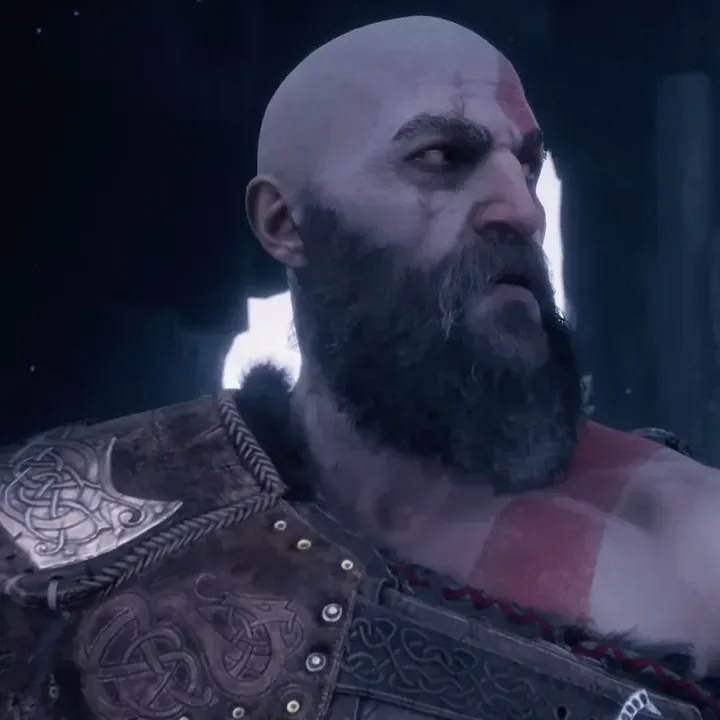
God of War's Kratos was almost known by a very different name. Before the ash-covered Spartan became one of PlayStation's most recognizable heroes, the character was reportedly called Dominus during the development of the first game. The name was intended to communicate power and dominance, but it could not survive a steady stream of pizza-related jokes from the team at Santa Monica Studio.
David Jaffe, director of the original God of War trilogy, recently revisited the naming process in a video discussion. His account adds more detail to a piece of PlayStation history that has been mentioned before: Dominus was not discarded through a grand mythology debate or a major narrative rewrite. It was worn down by the reality of a development team repeatedly turning the name into a gag.
Once the association took hold, it apparently became impossible to ignore. Jaffe recalled that whenever somebody said Dominus, another person would respond with a line referencing a pizza delivery chain. Among the recurring jokes were variations on "30 minutes or free" and "Get the door, it's Dominus." The humor may have been silly, but its effect on the project was serious. After hearing it enough times, Jaffe said the team knew it needed another name for its hero.
"After about the 50th time, the writing was on the wall," Jaffe said. "Dominus was dead and we needed a new name for our hero."
For useful background on this topic, read Dying Light: The Beast Ends Major Update Support as Techland Shifts Focus.
Why Dominus sounded right at first
Dominus was not selected at random. Jaffe said he initially liked it because it suggested a character who was powerful, commanding, and formidable. Those qualities fit the early version of the protagonist and, in broad terms, still fit the Kratos players met in 2005. The original God of War established its lead as a Spartan warrior consumed by rage, guilt, and a desire for vengeance against Ares.
On paper, Dominus has the imposing quality that a mythological action game might want. It is short, forceful, and built around an idea of authority. Yet names have to work beyond a design document. They are spoken constantly in meetings, recordings, marketing conversations, and eventually in front of an audience. If the people creating a game cannot say a character's name without laughing, that is a difficult foundation for a grim revenge story.
The incident is also a reminder that game development often involves countless practical decisions that do not look important until years later. Players tend to encounter a finished protagonist as though every part of that identity was inevitable: the appearance, voice, weapons, story, and name all seem inseparable. In reality, even an element as central as Kratos' name came down to a process of trial, discussion, and an accidental cultural association nobody could shake.
A list of Greek names led to the answer
With Dominus out, the team turned toward a more directly Greek-inspired approach. Jaffe said somebody at the studio printed a large list of Ancient Greek baby names. He went through it with a yellow highlighter, marking possibilities that stood out. The rediscovered sheet offers an amusing snapshot of how uncertain the search remained at the time.
Jaffe pointed to names including Julius, Parthenius, and Maksym as examples of the options he highlighted. Looking back, he was not especially impressed by his selections. None of them seemed to capture exactly what the character needed. That uncertainty makes sense in the context of the original game, which was building a new action-series identity rather than adapting a pre-existing protagonist with an established public image.
The final answer came from Susan Panico, who was the studio's marketing lead. Jaffe said Panico proposed Kratos, and the team immediately responded positively. The name stuck.
"Eventually, our marketing lead, Susan Panico, was the one who came up with the name Kratos," Jaffe said. "She pitched it and we loved it, and it stuck."
In retrospect, Kratos feels like a remarkably clean fit. It is concise, memorable, and carries a classical sound without being cumbersome. More importantly, it became inseparable from the character over the two decades that followed. Kratos is now tied to the Blades of Chaos, the destruction of Olympus, the later Norse saga, fatherhood, grief, and the evolving relationship with Atreus. It is difficult to imagine that entire legacy carrying another name, even though the alternative was once the working choice.
The overlooked name was already on the page
The story became even stranger when Jaffe found the old design documents last year. Among the baby-name list and his own highlighted candidates was Kratos itself. It was present on the page, but it had not been highlighted. In other words, the eventual name of one of Sony's defining characters had been sitting in front of the team before Panico's suggestion gave it the attention it deserved.
Jaffe described the rediscovery as a lesson in how unpredictable creative success can be. A team can prepare lists, weigh options, and spend days refining an idea, only for the best choice to emerge from another person's perspective at the right moment. In this case, marketing did more than reject a potentially distracting name. Panico helped identify the label that would endure across generations of games.
That contribution matters because the distinction between Dominus and Kratos is not merely cosmetic. The name Kratos became part of the franchise's mythic vocabulary. It has the kind of directness that works equally well on a PlayStation 2 box, in a cinematic reveal trailer, and in emotional scenes from the modern games. Dominus may have projected strength, but it came with baggage the team could hear every time the name was spoken aloud.
From a 2005 PS2 hit to a major PlayStation series
The original God of War launched for PlayStation 2 in 2005 and quickly became a major success. Its blend of cinematic presentation, brutal combat, puzzle solving, platforming, and Greek mythology gave PlayStation a new action icon. Kratos' journey began as a focused tale of vengeance, but the series expanded dramatically over time, producing sequels, prequels, side stories, and a reinvention set within Norse mythology.
The early games are especially important to this naming anecdote because they established the version of Kratos that defined the franchise for years: furious, relentless, and openly hostile to gods who tried to control his fate. A name like Kratos could support that larger-than-life persona while remaining distinctive enough to function as a brand in its own right.
The more recent entries demonstrated that the character could develop without losing the identity attached to him. The later story shifted toward a more reflective Kratos, one still capable of overwhelming violence but increasingly concerned with breaking cycles of cruelty and protecting his son. That evolution is one reason the name has remained effective. It was not locked to a single joke, emotion, or period in the series; it grew with the character.
God of War's future is already taking shape
The franchise is set to continue. God of War: Laufey is due to arrive on PlayStation 5 in February 2027. Separately, Santa Monica Studio head of creative Cory Barlog has confirmed that another untitled God of War project is in development and that Kratos will return as its protagonist.
Those projects ensure that the character's story will move forward, even as developers and fans continue to look back at how the series began. The Dominus story is particularly memorable because it reveals how close such a famous name came to being something else entirely. The team did not abandon it due to a complicated legal conflict or a dramatic executive order. The recurring pizza jokes simply made the issue obvious.
For a character now synonymous with PlayStation, the path to "Kratos" was surprisingly ordinary: a discarded working name, a printed list, a handful of questionable highlighted candidates, and a successful suggestion from marketing. It is the kind of creative near-miss that makes a long-running franchise feel more human. Even the most imposing gods of video games sometimes need a better name because the room will not stop making delivery jokes.
Community
Discussion
Start the conversation.
No comments have been posted yet.