

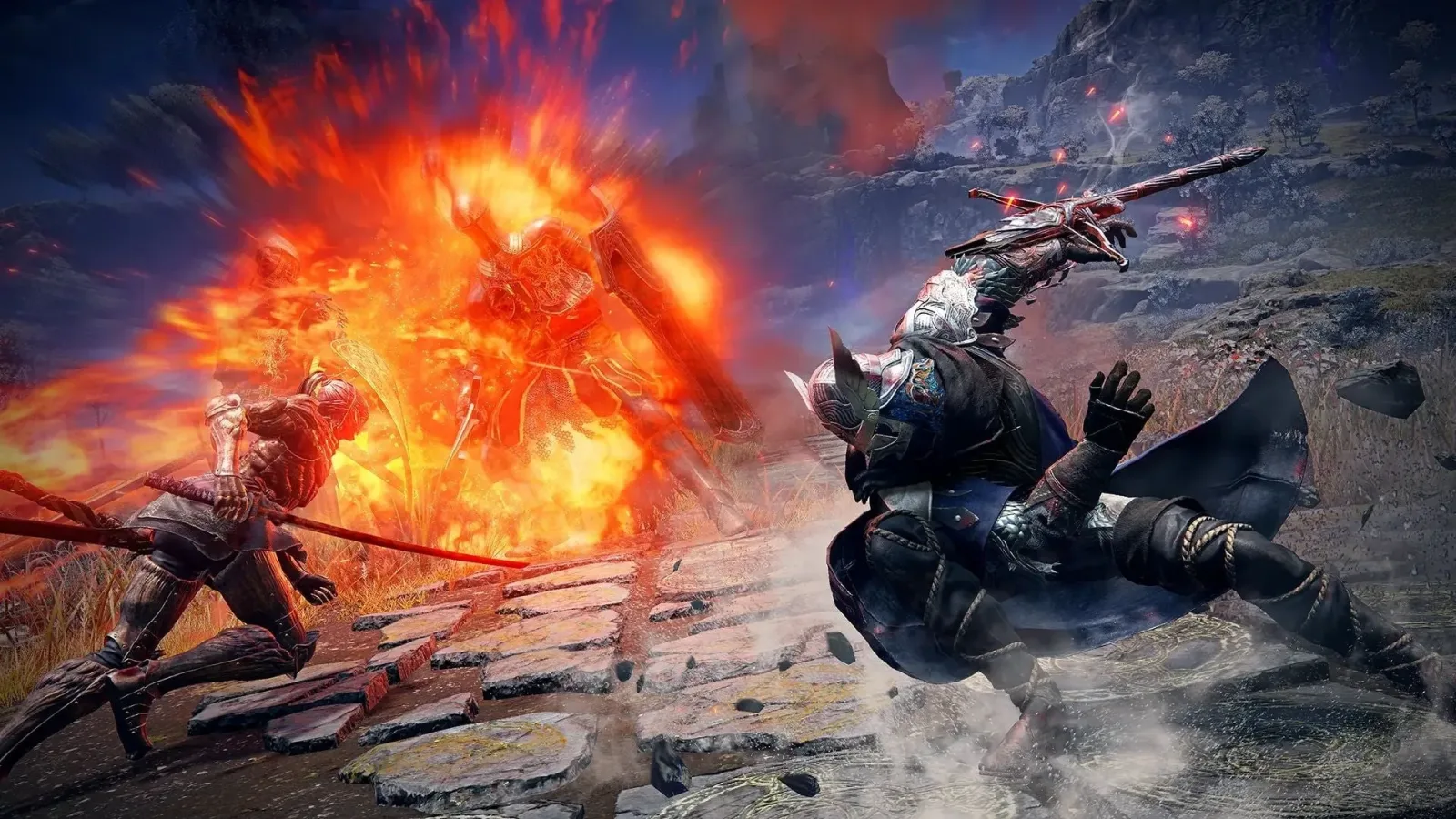
Co-op games ask a lot of players. They ask for time, coordination, patience, a willingness to learn boss patterns, and often the humility to accept that someone else may need to revive you after a bad dodge. Elden Ring Nightreign asks for all of that at speed. Its runs are structured around a clock, its enemies hit hard, and every interruption can snowball into a disaster for an entire three-person group.
That is why repeated connection drops can feel far worse in Nightreign than they do in a more forgiving multiplayer game. A disconnect is not merely an inconvenience followed by a quick return to the action. It can mean lost time, a lost level, separated teammates, misplaced runes, or a boss fight that abruptly becomes a near-impossible solo assignment for the one player who remained connected.
For one Xbox co-op group that had spent more than 150 hours battling Night Bosses, the answer to months of frustrating disconnects appeared to be an obscure networking status: NAT Type. The experience is a reminder that even in 2026, online console gaming can still demand troubleshooting knowledge that many players should never have needed to learn just to join friends for a few matches.
Nightreign makes every second of a disconnect hurt
The group had progressed slowly through nearly every standard Night Boss, with only the DLC's Dreglord still unbeaten. Their time investment was shaped partly by real-life schedules, long gaps between sessions, and the natural struggle of taking on difficult FromSoftware-style encounters. One player regularly used Recluse and Scholar, while a reliable Guardian player helped keep the team alive and ready for revives.
For useful background on this topic, read Undertale Determination Symphony Earns Praise, but Its Missing Songs Spark Debate.
But skill level and scheduling were not the whole story. For several months, one or both players in the group repeatedly disconnected during matches. The pattern was especially painful because it did not always begin with an immediate boot to the title screen. There could first be roughly 20 seconds in which a character was still present in the world but unable to meaningfully interact with it: moving around, but unable to deal damage or affect the match.
Then came the disconnection itself, followed by the slow process of returning through menus and loading back into the game. In an ordinary online game, a minute spent reconnecting may be irritating. In Nightreign, a minute can decide a run. The game's structure does not stop for network trouble, and teammates cannot pause the enemy pressure while somebody works through loading screens.
When a disconnected player returned, the consequences could vary. They might reappear in a rough approximation of their earlier location, while their runes and a full lost level were left somewhere else on the map. Recovering them meant spending still more time traveling away from objectives. At the end of a night, the situation could be even harsher: the returning player might come back dead, forcing the still-connected teammate to survive an ongoing boss battle while trying to reach and revive them.
That turns a technical issue into a social burden. Nobody wants to be the person whose unstable connection repeatedly leaves friends shorthanded. Even when a group is patient and supportive, frequent drops can make a player feel like they are compromising every run before the boss has even had the chance to do it.
The usual fixes were not enough
Repeated disconnections naturally lead players through the standard checklist. Check the connection. Restart the router. Use a wired connection instead of Wi-Fi. Change the lobby host. Explore in-game and console settings. Try again. Then try again after the next unexplained disconnect.
Those steps were all attempted here, without a lasting solution. The group had strong internet connections and had already covered the common first-line remedies. Yet Nightreign sessions continued to fail with alarming regularity.
The eventual breakthrough came after more focused research pointed to NAT Type. On Xbox, NAT Type is presented as a relatively simple status, typically described with labels such as Open, Moderate, or Strict. Behind that short label is a complicated set of rules about how a home network and router communicate with the wider internet and with other players.
That complexity is part of the problem. A person can be perfectly capable of using online services, downloading games, streaming video, and playing most multiplayer titles without ever encountering NAT terminology. Then one game starts dropping connections, and suddenly the player is confronted by router configuration, UPnP, IPv6, port-related discussions, and a forest of acronyms that feel wholly disconnected from the actual goal: play a co-op game without abandoning friends in the middle of a fight.
Open, Moderate, and the mystery behind the label
In this case, both affected Xbox systems showed a Moderate NAT Type. Moderate is not necessarily a guarantee that every multiplayer game will fail, and different games can react differently to network conditions. But it can create compatibility problems when games need players to establish or maintain connections with one another, especially in peer-to-peer elements or services that are sensitive to connection quality and matchmaking compatibility.
After checking the setting, the players used Xbox's Test NAT function repeatedly until the status changed to Open. It was not a satisfying technical explanation, nor was it a permanent-seeming solution at first. Hours later, one player's status remained Open, while the other had reverted to Moderate. They ran the test again, got Open to appear again, and subsequently experienced uninterrupted Nightreign matches.
That does not make a universal diagnosis for every Elden Ring Nightreign connection problem. Online instability can have many causes, including local network hardware, Wi-Fi interference, service issues, ISP routing, platform services, game updates, or problems affecting a particular lobby. It also does not mean that repeatedly pressing Test NAT is the best long-term solution for every Xbox owner.
Still, for players dealing with a specific pattern of frequent drops despite stable internet and the usual troubleshooting, NAT status is clearly worth investigating. The difference between Moderate and Open may be invisible during a casual settings check, but it can become extremely visible when a Nightreign boss is attacking two teammates because the third is trapped in a reconnection screen.
Why this is an unreasonable amount of homework
The frustrating part is not that network technology exists or that home routers need configuration options. It is that the player-facing experience offers so little clarity before things go wrong. A console can report a NAT Type, but that does not necessarily explain what caused it, why it changed, what practical impact it will have in a specific game, or what a player should safely do next.
Asking people to adjust router settings can also be intimidating for good reasons. Home networks may be shared with family, roommates, remote workers, smart-home devices, or security systems. Changing settings without understanding them can create new problems. Not every player has access to the router administration tools in the first place, and some internet setups have limitations that cannot be fixed through a single console menu.
Players should not have to become amateur network administrators to enjoy a normal three-player session. They should be able to launch a game, invite friends, and reasonably expect that a reliable home connection will support the advertised online experience. When that does not happen, games and platforms need clearer diagnostics, plain-language explanations, and more direct guidance than a vague connectivity label.
Nightreign intensifies the issue because its design leaves very little room for recovery. The game is intentionally tense, demanding, and built around adapting to chaos. But technical failure is a kind of chaos that players cannot outplay. There is no build choice, relic combination, or perfectly timed dodge that compensates for a teammate vanishing just as the final encounter starts.
What Nightreign players can take from the experience
If Elden Ring Nightreign sessions are suffering from recurring disconnects, especially after basic connection checks have not helped, checking NAT Type is a reasonable additional step. Xbox users can find network diagnostics in their console settings, where the current NAT status and the Test NAT tool are available.
An Open result may help some groups avoid compatibility issues, but players should approach deeper router changes carefully. If the status repeatedly returns to Moderate, or if the network setup is more complicated than a standard home router, it may be worth consulting the router manufacturer's support information, an internet provider, or someone who manages the household network. The important point is not that every player must memorize the meaning of UPnP or IPv6. It is that NAT Type can be one meaningful clue when co-op play is failing without an obvious explanation.
For the group facing Dreglord, the immediate result was much simpler than the underlying technology: uninterrupted matches and less needless frustration. That is the outcome online games should deliver by default. Players can accept losing to a fearsome death-soaked monster in a giant arena. They can accept a missed heal, an unfortunate build, or a teammate who needs a rescue. What is much harder to accept is losing a run because a hidden network setting decided to become the most dangerous boss in the game.
Community
Discussion
Start the conversation.
No comments have been posted yet.