

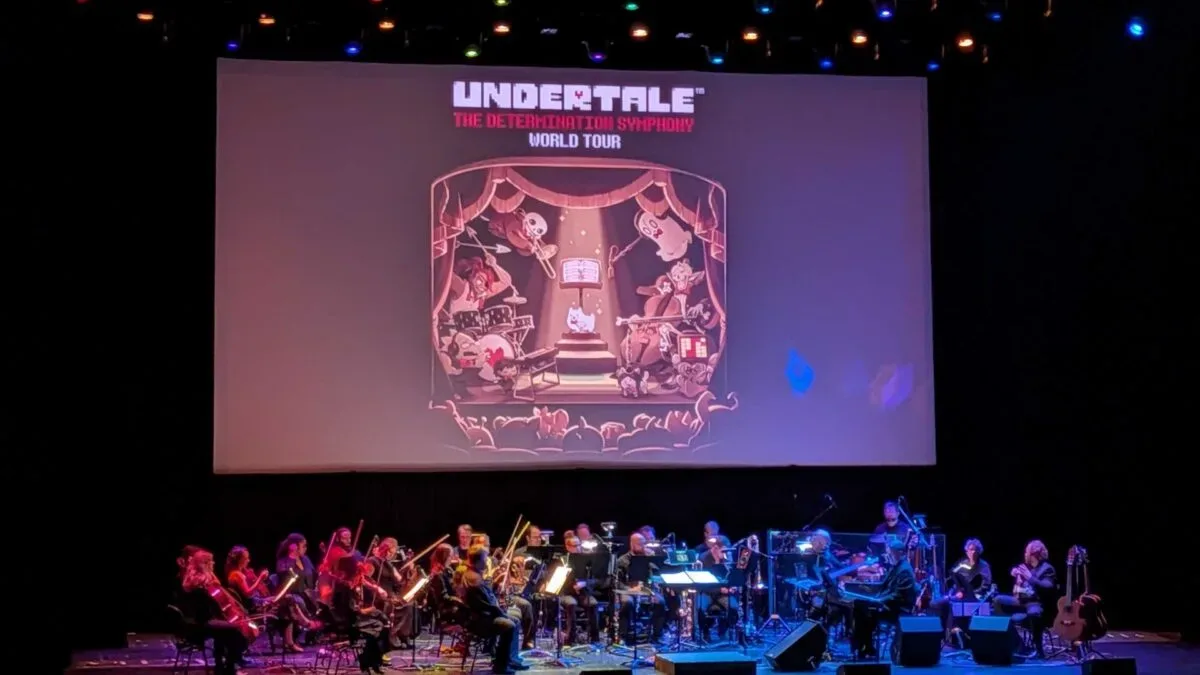
Undertale: The Determination Symphony brought Toby Fox's beloved game soundtrack to the Kauffman Center in Kansas City, delivering an evening that was reportedly warm, enthusiastic, and largely successful as a live orchestral event. Cosplayers filled the venue, the audience responded with appropriate energy, and the arrangements were said to be enjoyable and well performed.
But a positive concert experience has not stopped a substantial question from emerging around the program: how did an Undertale symphony leave out so many major pieces of Undertale music?
The complaint is not that every track from the famously extensive soundtrack needed to be represented. A complete run would make for an impractically long concert, and a symphony program needs pacing, contrast, and a strong close to each act. Instead, the discussion centers on the particular decisions made when choosing what to include. Several songs with major narrative, geographic, or gameplay importance were skipped, while smaller novelty tracks and even a song not used in the game itself reportedly received orchestral treatment.
A Strong Concert With a Puzzling Set List
By most accounts, the Determination Symphony began in a familiar and sensible fashion. Early selections moved through the opening stretches of Undertale in something close to the game's progression, including Once Upon a Time, Your Best Friend, Fallen Down, Ruins, Home, Heartache, sans, and Snowy.
For useful background on this topic, read Xbox Cloud Gaming Will Add Monthly Hour Caps to Game Pass Plans in November.
From there, however, the sequence became less tied to Undertale's journey through the Underground. Material associated with Papyrus was reportedly bypassed before the program moved into Snowdin Town, Waterfall, and Memory. The performance did include a particularly strong rendition of Bird That Carries You Over A Disproportionately Small Gap, followed by Dummy!, but then pivoted to Temmie Village and Spooktune.
Those are amusing, recognizable pieces, but they are also among the choices that have left fans scratching their heads. An orchestra can certainly have fun with Undertale's stranger corners, yet including them comes at the expense of tracks that represent major locations, core combat encounters, and emotional milestones.
The set list did return to key Undyne material with NGAHHH!!! and Spear of Justice. It then reportedly jumped across Hotland and the CORE, moving through Spider Dance and It's Raining Somewhere Else before reaching an Act 1 closer built around Undertale, Small Shock, Bergentrückung, and ASGORE.
That final decision is easier to defend. ASGORE has the scale, drama, and immediacy needed to send an audience into intermission. Undertale's chronological soundtrack does not naturally offer an obvious Act 1 finale, so reshuffling the game's musical order makes practical concert sense. The issue is less the non-linear structure than the feeling that important themes fell through the cracks while the program was being rearranged.
The Biggest Omissions From the Underground
The most surprising absence is arguably Enemy Approaching. This is Undertale's standard battle theme: one of the most frequently heard pieces in the game and an immediate musical shorthand for its turn-based encounters. It is hard to imagine a concert designed as a broad celebration of Undertale omitting such a central composition.
There are other battle tracks that could reasonably be cut because they are tied to optional routes, brief sections, or highly specific characters. Enemy Approaching, though, is foundational. Its exclusion is especially notable alongside the inclusion of Song That Might Play When You Fight Sans, an unused composition whose title is itself a joke.
Another Medium is similarly difficult to overlook. As the theme for Hotland, it represents a huge portion of Undertale's adventure and one of the soundtrack's most celebrated location pieces. Hotland is not a minor detour; it contains pivotal plot turns, characters, boss battles, and the approach to the game's endgame. Skipping its principal area theme creates a noticeable gap in any attempt to musically trace the player's path.
Here We Are, the eerie theme associated with the True Lab, is another omission that seems tailor-made for orchestral interpretation. Its uneasy atmosphere could have offered a tonal change from the soundtrack's more playful and triumphant material. Pairing it with Amalgam could have made for one of the concert's most unsettling and memorable sequences, while also giving the True Pacifist route more musical space.
Then there is Battle Against a True Hero. The track is inseparable from Undyne's most dramatic confrontation and is widely regarded as one of Undertale's great action themes. Although the concert featured Undyne music through NGAHHH!!! and Spear of Justice, leaving out her climactic battle theme has been interpreted as a major missed opportunity. An encore pairing Battle Against a True Hero with Megalovania would have delivered two of the soundtrack's fiercest pieces back-to-back.
Quiet Moments Matter, Too
Not every questionable omission is a giant boss theme. Quiet Water lasts only around half a minute, making its absence particularly curious. It could have functioned as an atmospheric bridge after Waterfall or between Bird That Carries You Over A Disproportionately Small Gap and Dummy!. Small connective tracks can be valuable in a concert, especially one adapting a soundtrack whose emotional power often comes from abrupt shifts between humor, melancholy, danger, and calm.
Can You Really Call This A Hotel, I Didn't Receive A Mint On My Pillow Or Anything is another track that could have added color. Its melody is closely related to Undertale's main theme, which may explain why it was passed over, but its jazzy character would still have given the orchestra a distinct texture.
Stronger Monsters, the Hard Mode battle music, is less essential to the game's overall story. Even so, it is lively enough to have worked as a compact battle-focused interlude, possibly alongside Enemy Approaching. Likewise, An Ending is not an indispensable standalone inclusion, but its piano-led variation on Ruins could have been a graceful transition toward the concert's conclusion.
The Case for a Different Finale
The show did end with Megalovania, an outcome that is difficult to dispute. The track has become far larger than Undertale itself in popular culture, and it is an obvious crowd-pleasing orchestral closer. The conductor reportedly embraced it with visible enthusiasm despite apparently not having prior experience with the game.
Still, some of the strongest criticism concerns what happened around the ending rather than the final selection itself. A more complete True Pacifist finale could have threaded together Hopes and Dreams, SAVE the World, His Theme, Reunited, Bring It In, Guys!, and Last Goodbye. That sequence would have captured Undertale's emotional resolution, its reunion of characters, and its credits-driven sense of farewell.
Reunited may have been removed because it is one of the soundtrack's longer tracks. Concerts have to make difficult time-management calls, and that is a reasonable explanation. Yet its gentle release after the intensity of the final battles is precisely what gives the original ending much of its weight.
The credits selections, Bring It In, Guys! and Last Goodbye, may have presented a staging problem. A concert presentation could avoid showing game credits, Kickstarter backers, or other material that does not naturally fit a live event. But the music can stand apart from those visuals, and the absence of Last Goodbye is felt all the more because of its intimate piano passage, famously performed live by Fox in the game version.
Even the menu music had a possible role to play. An Act 2 opening built from Start Menu and Menu (Full), gradually adding sections of the orchestra as the arrangement grew, could have made an elegant reset after intermission while evoking the game's central motif of choice and return.
An Adaptation Can't Include Everything
Ultimately, the Determination Symphony appears to have succeeded where it mattered most: it gave an appreciative crowd the chance to hear Undertale's music performed live on an orchestral scale. The musicians, arrangements, cosplay, and audience atmosphere created a celebratory event, even if some rehearsal-related roughness was reportedly audible in places.
But Undertale's soundtrack is unusually dense with fan-favorite material, and each song carries a powerful association with a character, place, route, joke, or emotional revelation. That makes programming a symphonic adaptation exceptionally difficult. There may be no definitive set list, but a future revision would benefit from giving more room to Hotland, the True Lab, Undyne's defining battle, the standard combat theme, and the game's closing emotional arc.
Megalovania may be the inevitable final word for a live Undertale concert. Before getting there, though, many fans would clearly like to hear more of the music that made the journey to that final confrontation matter.
Community
Discussion
Start the conversation.
No comments have been posted yet.