

One of PC gaming's more unusual early mascots has reappeared in a modern dispute over ownership, authorship, and the difficult reality of reviving a character made decades ago. Cliff Bleszinski, the veteran designer associated with Gears of War and Unreal Tournament, has said Epic Games claims it fully owns the rights to Jazz Jackrabbit, the fast-moving green rabbit he created as a teenager.
The disagreement comes after Bleszinski pursued a potential return for Jazz and sought to establish the character's rights through legal channels. He says that effort did not produce the outcome he wanted. In public comments, Bleszinski characterized the situation as "rights hell," saying any project he might make that carries the spirit of Jazz would now need to be approached as a spiritual successor rather than an official continuation.
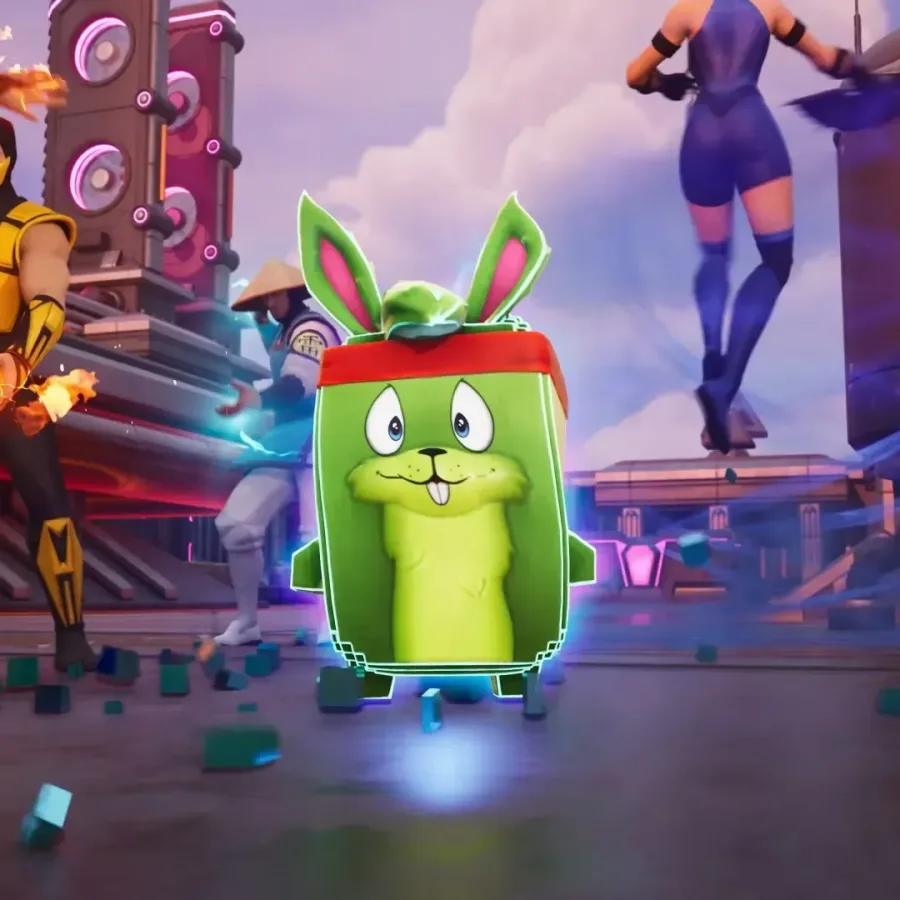
Epic has recently put Jazz back in front of a large audience, adding the character to Fortnite as a Sprite during Chapter 7, Season 4. That appearance appears to have sharpened attention around a property that has been largely quiet for years, while also underlining the central issue: Epic and Bleszinski have very different practical positions in relation to the character's future.
A character born before Epic became a giant
Bleszinski says he designed Jazz when he was roughly 17 years old, sketching the character during his high-school years. He joined Epic in 1992, and Jazz Jackrabbit was developed and released in 1994. At the time, Jazz became Epic's biggest hit.
For useful background on this topic, read World of Warcraft: Forever Makes the Long Road Feel Like the Point.
That history matters because the original game belongs to a very different era of the company. Epic is now one of the most influential businesses in games, with Fortnite serving as a sprawling platform for its own characters, crossover partners, cosmetics, events, and legacy references. But in the 1990s, Jazz was part of a smaller company's effort to create memorable original games for the PC market.
The first Jazz Jackrabbit was known for its energetic side-scrolling action, cartoon-style attitude, colorful science-fiction worlds, and a lead character designed to move with speed. Its visual identity made Jazz an immediately recognizable figure for players who encountered the game during the shareware-heavy PC landscape of the time. The rabbit was not simply a minor one-off; for an earlier generation of Epic fans, he was one of the company's most visible original creations.
Yet creating a character and controlling that character decades later are not necessarily the same thing. Ownership can depend on employment agreements, publishing arrangements, assignment clauses, compensation terms, and documents that may be difficult to locate after more than 30 years. Bleszinski has said the paperwork from the period has effectively been lost over time, leaving an incomplete record available to him.
Bleszinski says Epic will not relinquish its claim
In his public statement, Bleszinski said Epic's position is that it owns the rights to Jazz in full and is not willing to back down. He also said neither side appears to have paperwork readily available that definitively settles the matter in public view.
At the same time, Bleszinski pointed to continued royalty payments connected to sales of Jazz Jackrabbit on GOG. He said he still receives occasional payments that Epic honors, which he believes suggests relevant contractual paperwork exists somewhere. The payments are meaningful to him both financially and historically: they acknowledge work he completed more than three decades ago.
However, ongoing payments do not necessarily answer every ownership question on their own. Royalty arrangements and intellectual-property ownership can be separate matters, particularly with older games whose original agreements may have included residual compensation while assigning broader control to a company. The details of any agreement have not been publicly presented, so the full legal basis for either position remains unclear.
"Jazz was my first hit and will always have a spot in my heart," Bleszinski said in a statement. He added that he had hoped to pursue a proper revival himself or alongside a trusted partner, but said the legal process ended without a path forward.
His comments frame the dispute less as an attempt to erase Epic's role in Jazz's history and more as a failed effort to find a route to a new official project. Bleszinski said he followed the appropriate legal process, only to reach what he called a dead end.
For fans, that distinction is important. An official Jazz Jackrabbit revival would require the owner of the property to authorize it. A spiritual successor, by contrast, can chase a similar game-design ambition without using the protected name, character, setting, or specific creative elements associated with Jazz.
Fortnite makes the legacy character newly visible
Jazz's inclusion as a Sprite in Fortnite Chapter 7, Season 4 is a reminder that older Epic characters can still have value inside the company's current ecosystem. Even a small appearance can introduce a decades-old figure to players who may have no connection to the original 1994 game.
That kind of use can be bittersweet for an original creator who wants to oversee a full comeback. Bleszinski said Jazz has appeared in occasional backpack cameos in Fortnite, but that he wanted to explore a more substantial revival. The difference between a collectible or cosmetic reference and an entirely new game is considerable. One preserves a recognizable design as part of a larger product; the other asks what the character and series could be in the modern market.
Epic's position, as described by Bleszinski, means the company retains the ability to decide whether such an official revival happens and who would make it. No newly announced Jazz Jackrabbit game, remake, remaster, or other full project has been confirmed.
That leaves the current situation in a familiar state for dormant game properties: the recognizable name remains active enough to appear in contemporary media, but there is no announced plan to bring back the kind of game that made the character notable in the first place.
The spiritual-successor path could fit Bleszinski's stated ambition
Bleszinski has already identified the broad direction he would consider if he returns to this design space. He said he remains convinced that nobody has fully solved "arcadey" first-person platforming. That comment points toward something potentially distinct from the original 2D side-scrolling Jazz Jackrabbit formula, while preserving the qualities he sees as worth revisiting: speed, momentum, arcade clarity, platforming skill, and personality.
A spiritual successor would not be an official Jazz game, and it would need to establish its own protagonist, title, world, visual identity, and mechanics. But it could pursue the same larger creative question: how can a modern game make traversal and first-person platforming feel immediate, playful, and expressive rather than merely functional?
That is a challenging proposition. First-person platformers must communicate distance, momentum, landing space, hazards, and player control without the broad viewpoint available in third-person games. A successful arcade-focused take would need to make movement readable at high speed while retaining the snap and excitement that Bleszinski associates with the genre.
There is no confirmation that Bleszinski is currently developing such a game. His comments describe a possible route rather than an announced project. Still, the prospect offers a way for him to revisit ideas tied to one of his earliest creations without continuing the ownership conflict around the Jazz name itself.
A notable moment in a year of returning Bleszinski creations
The Jazz rights issue arrives as another major franchise associated with Bleszinski has returned to the spotlight. Gears of War: E-Day, a prequel to the 2006 original Gears of War, arrived on Xbox consoles last month. It is the first new Gears release since 2019's Gears 5.
The contrast is striking. Gears is an active, major console series with a new entry and a large institutional framework behind it. Jazz, meanwhile, occupies a more complicated position: a foundational character from Bleszinski's career, recently visible through Fortnite, but without an announced standalone future and with its original creator saying he cannot secure the official rights for a revival.
For now, Jazz remains an Epic-owned legacy character in Bleszinski's account of the dispute. His continued GOG payments preserve at least one connection to the work he did in the 1990s, but they have not provided the creative control he wanted. Unless Epic's position changes or an agreement is reached, an official revival led by Bleszinski appears unlikely.
That does not close the book on the ideas behind Jazz Jackrabbit. It instead changes the likely form of any return. If Bleszinski does make another fast, character-driven platformer inspired by that early period of his career, it will apparently need to stand on its own--connected by creative DNA, but not by the rabbit's name.
Community
Discussion
Start the conversation.
No comments have been posted yet.