

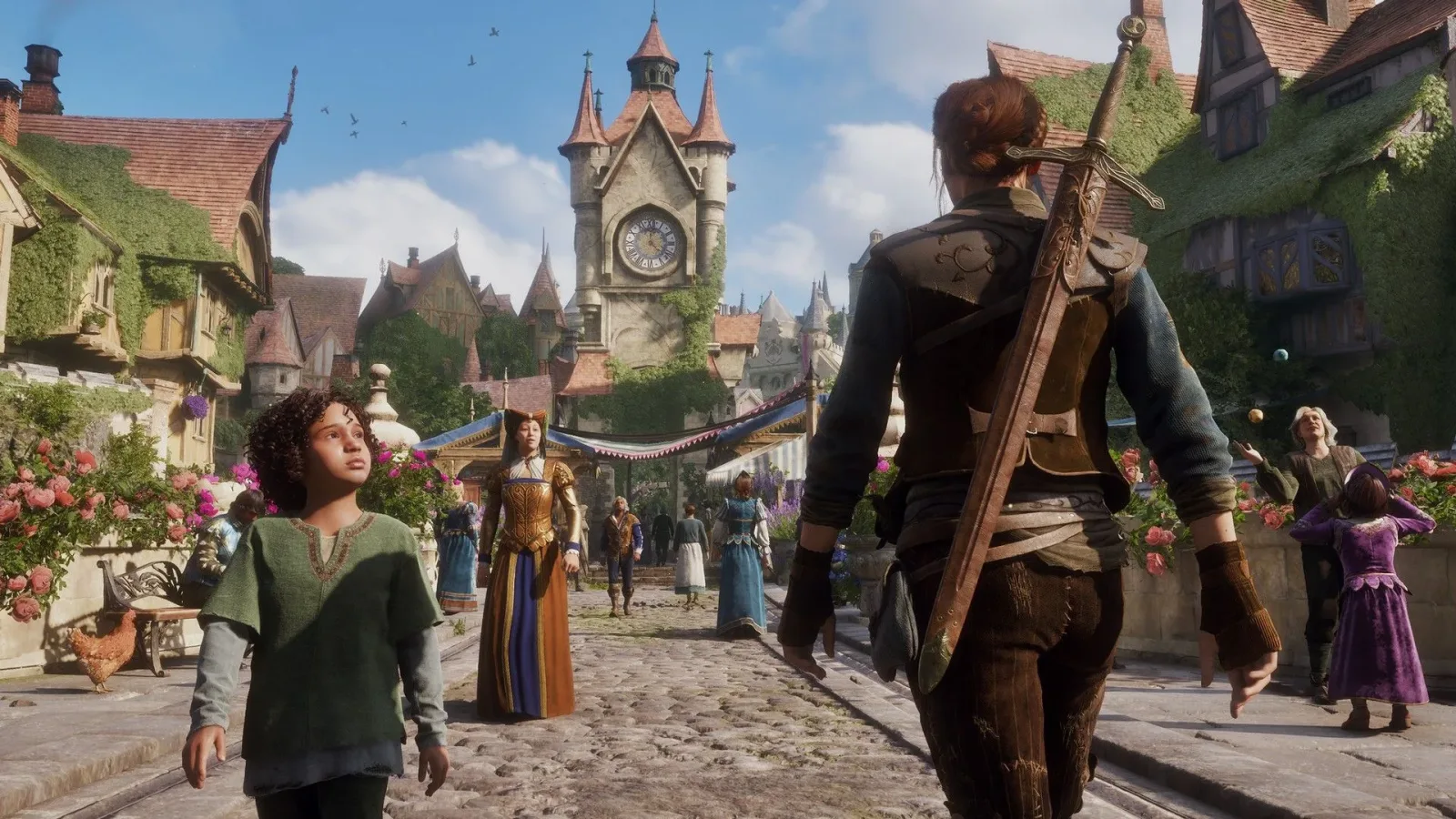
Fable is still several months away from its February 23, 2027 launch, but Playground Games has revealed a substantial look at one of Albion's most intriguing systems: the ability to make money, buy property, employ townspeople, and alter lives through business decisions. Players will not simply earn gold through quests and combat. They can also pursue the life of a landlord or entrepreneur, with consequences that reach well beyond a larger bank balance.
Game director Ralph Fulton has described an economic simulation built around businesses, worker personalities, pay, productivity, and public perception. It sounds as though players chasing a grand estate will have a great many ways to get there. Just as importantly, the route they choose may determine whether Albion sees their Hero as generous, charming, greedy, cruel, or an unusually contradictory combination of all of the above.
The new Fable is being developed by Playground Games and published by Xbox Game Studios for PC, PlayStation 5, and Xbox Series X. While its action and fantasy adventure remain central, the latest details suggest that the day-to-day lives of Albion's population will be a major part of the role-playing experience.
A Business System Built Around Experimentation
Fulton characterizes running a business as manipulating a connected set of variables rather than simply collecting a fixed income from a purchased building. Players will be able to invest in establishments including tailors, bookshops, barbers, pubs, tattoo parlors, bakeries, and farms. Each venture presents an opportunity to improve revenue, but no single management decision is presented as an automatic success.
For useful background on this topic, read Control Resonant's Mold-Soaked Manhattan Could Be Its Most Unsettling Weapon.
A bakery offers a straightforward example. A player can increase an employee's wages, potentially making that person happier and more favorable toward the owner. That improved relationship might also result in better performance and a higher yield for the bakery. But Fulton stresses that it is not guaranteed; paying more could simply cut into profit without producing enough additional output to justify the expense.
Lowering wages creates the opposite scenario. It should make the employee less happy and more likely to regard their employer as greedy, which could reduce their performance. Yet that outcome is not entirely predetermined either. The system is intended to leave room for players to test decisions, observe what changes, and decide which risks are worthwhile for their preferred style of business ownership.
That uncertainty is important. Rather than offering a simple upgrade menu where every costly choice leads to a predictable boost, Fable appears to ask players to assess the individual behind the counter or in the field. A wage cut that works for one employee may cause trouble with another. A well-paid worker may thrive in one business while proving poorly suited to a different role.
Hard-Working NPCs Could Be the Key to Serious Profit
The clearest early tip for aspiring property moguls concerns NPC traits. Fulton says that an employee's characteristics can materially help or harm a business, and he specifically identifies hard-working as a highly valuable quality. An NPC with that trait can increase profits by 20 percent immediately.
For players interested in maximizing returns, Fulton's preferred investment is farming. Farms can support up to six workers, creating an opportunity to stack the benefits of multiple productive employees. If a player finds six hard-working NPCs and assigns all of them to the same farm, those profit bonuses accumulate. The result could turn a rural property into one of the strongest money-making operations in the game.
Fulton notes that the farm strategy was pointed out to him by a member of the level design team, making it a particularly notable piece of pre-release advice for anyone already plotting an Albion real-estate empire. The useful traits do not stop with hard-working, either. Helpful is another trait that can aid a player's business efforts, reinforcing the idea that staffing choices are as meaningful as the purchase itself.
There is a harsher route to optimization as well. Fulton says players can judge whether a worker is contributing enough to earnings and dismiss them if they are not. In that sense, Fable will allow a Hero to become an exacting, relentlessly efficiency-focused employer. The game does not appear to stop players from repeatedly replacing staff in search of the best possible trait combination.
Of course, that freedom brings a role-playing question: is the player building a flourishing enterprise, or merely extracting every possible coin from Albion's workforce? Fable has historically enjoyed letting players occupy morally uncomfortable territory with a layer of wit, and its business mechanics seem positioned to continue that tradition.
Albion's Citizens Are Individually Designed
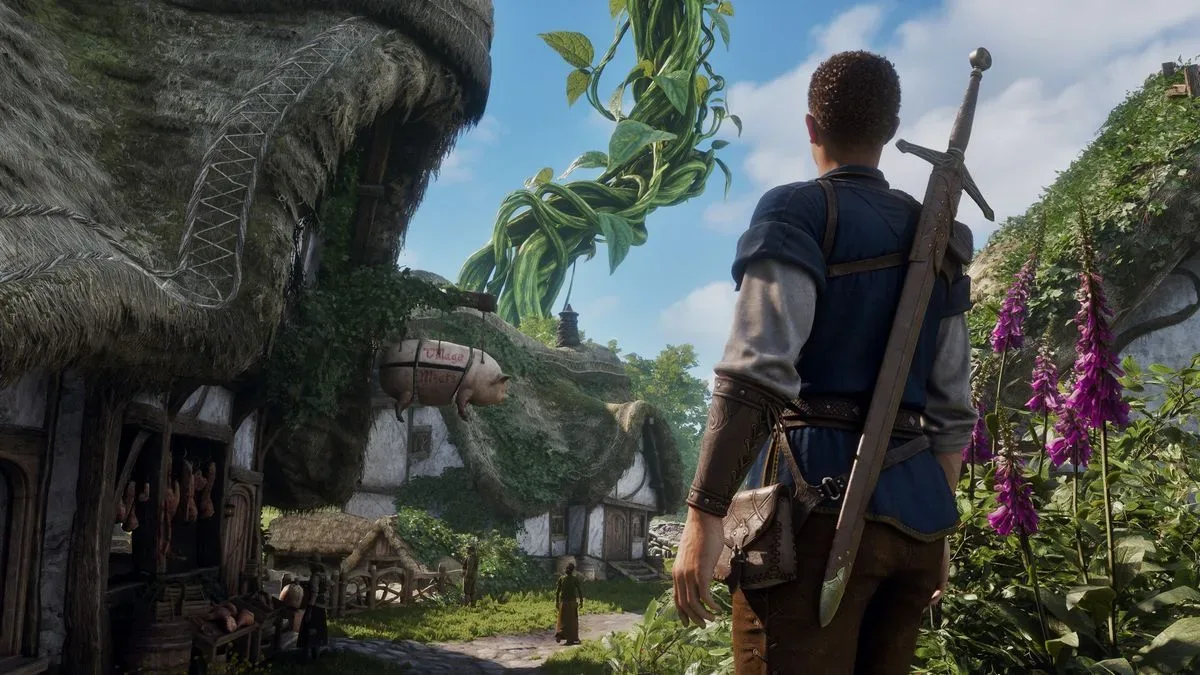
The complexity of the economy rests on the NPCs inhabiting it. Fulton says Playground Games chose not to rely on a random-generation tool for the traits and defining details of its citizens. Instead, the team individually selected the characteristics of every NPC so each person would feel coherent in their role, appearance, routine, preferences, and personality.
That is a substantial undertaking. Bowerstone alone contains roughly 400 NPCs, each with routines, likes, dislikes, and behavioral details. Extending that authored approach throughout Albion represents a considerable amount of design work, but the developers found that procedural randomization produced combinations that did not feel convincing.
The examples explain the concern. A randomly generated hairdresser might have an unremarkable bob that does little to sell their profession. A weaponsmith could be a pacifist. A butcher could be vegan. Those combinations might occasionally be amusing, but if they appear too often they can undermine the sense that a town's residents are actual people with readable identities.
By hand-picking those details, Playground Games is attempting to make each interaction more legible. When players hire someone, befriend them, underpay them, or remove them from a job, they should have a clearer sense of who that person is and why a decision has had a particular effect. It also makes searching for a workforce full of desirable traits feel less like rolling dice and more like learning the social fabric of the world.
Your Reputation Will Not Fit on One Morality Meter
Fable's choices will also feed into a reputation system that is more nuanced than a single good-versus-evil bar. The game will represent what people think about the Hero through adjectives displayed as a word cloud beside the character. Those labels can conflict with each other, reflecting the different kinds of actions players take across Albion.
Cutting salaries to protect profits may increase wealth, but employees can resent the player and spread that reputation through their community. A Hero could become known as selfish, cruel, or miserly. Yet that same character might also be charismatic and socially generous in other situations.
Fulton offers an especially telling example: it is possible to be kind and generous while also killing people. In practical terms, a player could develop a reputation that pairs friendly qualities with murderous behavior. The contradiction is deliberate rather than a flaw. Fulton sees it as a closer representation of what a player has done, and what Albion's people know about them, than a character moving up or down one universal morality scale.
This could make Fable's economy more than a detached minigame. Choosing to operate a business ruthlessly may be profitable, but it can become part of a broader public identity. Players may decide the rewards justify the social cost, or they may attempt to balance hard-headed management with generosity elsewhere. Either approach has the potential to produce a distinctly personal version of the Hero.
From Hedge Mazes to Family Routines
For players who do accumulate a fortune, Manor Fields on the outskirts of Bowerstone will be a desirable destination. The area includes imposing stately homes, with some properties even featuring their own hedge mazes. It sounds like an appropriate end goal for the farm-owning entrepreneur who has mastered staffing, property, and profit.
But Fable will also support more modest domestic ambitions. A player may prefer a smaller home and a family, and the household will not exist merely as a static reward for returning from quests. Fulton says spouses and children have their own routines, like other NPCs in the world. They can go into town, run errands, and continue living their lives while the Hero is off exploring Albion.
Implementing that living-world ambition has brought technical challenges. Fulton describes an earlier playtest issue in which an in-game wife could teleport around at unusual hours to hand out birthday presents. That particular problem has been fixed, with spouses now expected to wait until morning rather than interrupting the night with celebrations. It is a small anecdote, but it illustrates how many interlocking systems must work correctly when every important person has a schedule and player actions can affect communities economically and socially.
Fable's promise, then, is not merely that players can own a bakery, farm, or mansion. It is that ownership is tied to people: workers with traits, residents with memories, families with routines, and towns that react to the way a Hero handles power. Whether players become beloved local benefactors, ruthless landlords, charming killers, or wealthy agricultural masterminds, Albion appears ready to keep track.


Community
Discussion
Start the conversation.
No comments have been posted yet.