

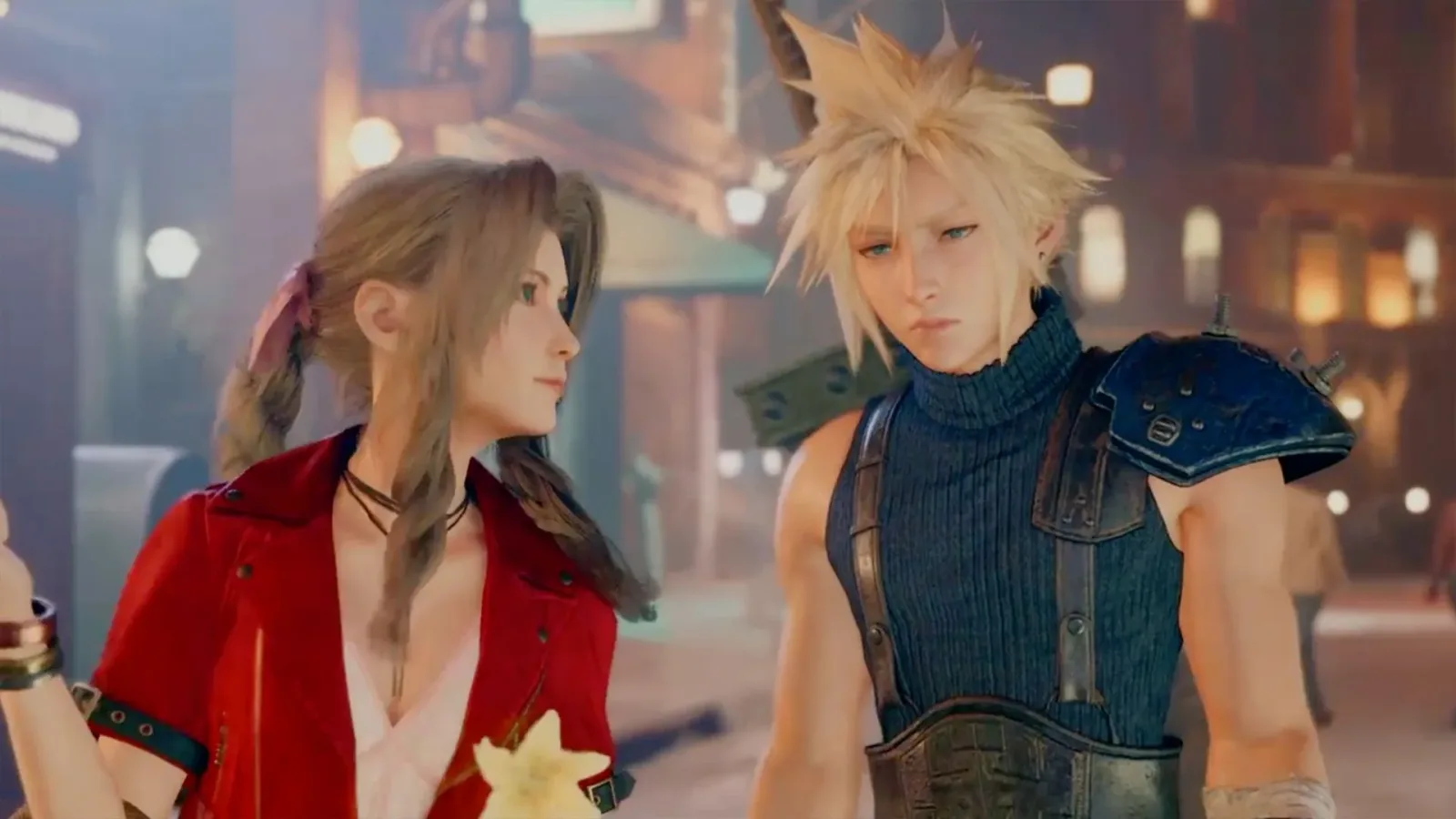
Final Fantasy 7 Remake may not be the largest chapter in Square Enix's remake trilogy, but trilogy lead Naoki Hamaguchi considers it the project's most difficult installment to create. While the upcoming Final Fantasy 7 Revelation is positioned as an even bigger and bolder finale, Hamaguchi says the original remake faced the uniquely daunting task of defining virtually every major creative and technical pillar for the games that followed.
Speaking in an interview with French content creator mistermv, Hamaguchi was asked about the greatest development challenge across the three-part project. His answer pointed back to the beginning: Remake was made under considerably different circumstances than its successors, beginning with a much smaller team and an enormous set of expectations surrounding one of the most beloved role-playing games ever made.
The first game did not simply need to retell part of the 1997 original in modern form. It also had to determine what the entire remake project would look like, how it would feel to play, and how far its reinterpretation of Final Fantasy 7 could go. Decisions made during that process would inform both Final Fantasy 7 Rebirth and Revelation.
A Small Team Faced an Enormous Legacy
Hamaguchi explained that the team at the start of development numbered only around 30 people. That early staffing level stands in sharp contrast to the scale suggested by the finished game's credits, as the project ultimately grew into a substantial production involving many more developers and contributors.
For useful background on this topic, read Stardew Valley 1.7 Could Be Its Biggest Update Yet, With a 2027 Release Target.
Building a modern Final Fantasy game is already a complex undertaking. Building one around characters, locations, music, and story moments that have remained deeply familiar to players for decades adds another layer of pressure. The developers were not working with a new world whose rules could be introduced without comparison; they were reimagining Midgar and its cast for an audience that arrived with detailed memories and exceptionally high standards.
That challenge extended beyond recreating recognizable scenes. The team needed to settle on the trilogy's visual identity and baseline graphical quality from the outset. Character models, environmental detail, cinematic presentation, combat readability, world design, and the balance between nostalgia and surprise all had to be considered in a way that could support a multi-game plan.
In other words, Remake had to serve as both a complete game and a framework. It needed to give players a satisfying return to Final Fantasy 7 while establishing a foundation sturdy enough for the project's expanding scope. Hamaguchi's comments suggest that this foundational work, rather than raw map size or content volume alone, was what made the first installment particularly demanding.
Rebirth and Revelation Inherit the Foundation
Rebirth and Revelation may have broader ambitions, but they are benefiting from choices already made during Remake's development. Hamaguchi described the later games as having a base from which to proceed. The staff also expanded and evolved over time, giving the team more experience with the trilogy's technology, production demands, and creative direction.
That does not mean the newer entries have been easy. Rebirth significantly widened the journey beyond Midgar, and Revelation is expected to bring the trilogy to its conclusion on an even larger scale. A finale must carry the narrative weight of everything before it, resolve major character arcs, and satisfy players who have followed both the original game and this newer interpretation.
Still, the work differs from the uncertainty surrounding Remake. The first game had to prove that the broader concept could work. Its development involved setting standards that would not only make sense in a single release, but also remain useful as the story moved from Midgar into a much wider world. Once those standards were established, the team could devote more energy to expanding and refining them.
That progression reflects one of the potential advantages of the trilogy format. Rather than attempting to ship the entire reinterpretation as a single enormous release, the developers have been able to carry knowledge from one chapter into the next. Systems can be reconsidered, player reactions can be evaluated, and production practices can mature between installments.
Player Feedback Can Shape Later Chapters
Hamaguchi and other leaders on the Final Fantasy 7 project have previously discussed how the multi-part structure gives the development team room to respond to feedback. Each release becomes an opportunity to learn what players enjoyed, what they found frustrating, and where future chapters might need clearer direction.
One area under discussion is the scale of optional activities in Rebirth. The game offered a substantial amount of material outside its main story, from exploration-focused objectives to minigames and character-related content. For many players, that abundance was part of its appeal. For others, the sheer amount of available content could feel overwhelming, particularly when it was not immediately obvious which activities were most relevant to a player's preferred rewards or progression goals.
Revelation will probably contain even more content than Rebirth, Hamaguchi has indicated. However, the intention is not simply to add more tasks without considering how players navigate them. The team has reportedly made changes to the way side content communicates its rewards, making it easier to identify what a particular optional activity provides and decide whether it is worth pursuing.
That may sound like a modest interface or structure adjustment, but it could have a meaningful impact on how players experience a game of Revelation's expected scope. Clear reward signposting helps different types of players approach an open or content-rich RPG in their own way. Completionists can prioritize specific objectives, story-focused players can avoid distractions more confidently, and those looking for certain upgrades can make better-informed choices.
The goal appears to be player agency rather than reducing ambition. Revelation can offer a large volume of things to do while giving people more control over how much of that material they engage with and why.
Hard Mode Will Return, But Not Unchanged
Hamaguchi has also confirmed that Revelation will include a hard difficulty option that can be selected from the beginning. That is a notable change in access compared with the approach used in Remake and Rebirth, where hard mode was associated with progressing beyond an initial playthrough.
Players should not assume the option will operate exactly as it did in either previous game, however. Hamaguchi has stressed that Revelation's hard mode will not function in precisely the same way as the versions seen in Remake and Rebirth. Specific details about the differences have not been outlined, leaving open questions about combat restrictions, resource management, encounter tuning, progression, or any potential rewards connected to the mode.
Making a tougher setting available from the start could be welcome news for veteran players who already understand the trilogy's combat systems and want a more demanding first run. At the same time, the promise of a different structure suggests the team is considering how difficulty design should evolve for the final chapter rather than treating it as a feature that can simply be copied over.
The Burden of Beginning a Trilogy
Remake's status as the hardest installment to make offers a useful perspective on the development journey behind the trilogy. Revelation may be the culmination, with a larger team, a broader base of experience, and potentially the greatest amount of content. Yet a finale is able to capitalize on many answers that the first game had to discover through experimentation and difficult decisions.
The original Remake had to earn player confidence while taking a highly familiar story in a new direction. It had to establish a modern combat language for Cloud and his allies, bring Midgar to life at a dramatically expanded level of detail, and signal what a serialized reimagining of Final Fantasy 7 could become. Every decision was subject to scrutiny from fans who cared intensely about the original game's world and characters.
Rebirth then demonstrated how that foundation could be extended beyond Midgar, while Revelation now carries the opportunity--and the pressure--of delivering the trilogy's final statement. Hamaguchi's remarks make clear that bigger does not always mean harder. Sometimes the most difficult stage is the one where a team has to build the road before it can begin traveling down it.
For Final Fantasy 7 fans, Revelation's eventual arrival will be judged on its own ability to conclude the journey. But its development is inseparable from the choices made years earlier, when a smaller team began the formidable work of deciding how one of gaming's most enduring RPGs could be remade for a new era.
Community
Discussion
Start the conversation.
No comments have been posted yet.