

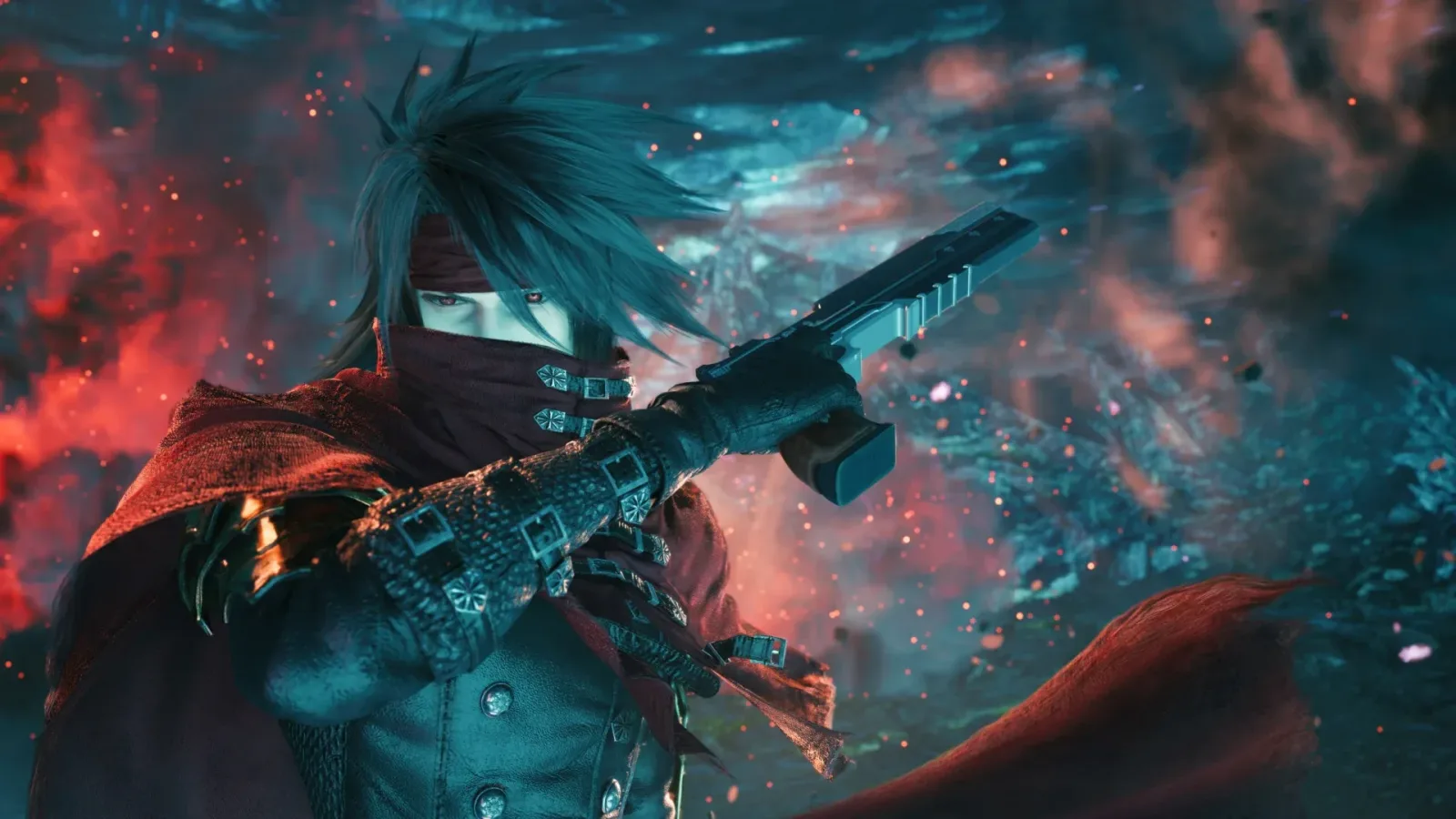
Final Fantasy VII Revelation director Naoki Hamaguchi has outlined an ambitious view of what the long-running series can become, arguing that the Final Fantasy VII Remake trilogy has been designed to demonstrate the franchise's range rather than replace its past. Speaking during Gamescom 2026, Hamaguchi said his aim was to show that Final Fantasy can operate as a large-scale, globally competitive action RPG and open-world-style experience while still respecting the qualities that defined its traditional role-playing history.
The comments arrive during a period of continued debate over the identity of Final Fantasy. The original Final Fantasy VII helped establish turn-based Japanese role-playing games as major mainstream releases nearly three decades ago. But the genre and the broader games market have changed substantially since then. Big-budget action games, real-time combat systems, sprawling exploration, and cinematic presentation have become defining features of many blockbuster releases. Square Enix's recent Final Fantasy projects have responded to that environment in different ways, and the Final Fantasy VII remake project has become one of the company's clearest examples of balancing older ideas with contemporary design priorities.
Hamaguchi described the trilogy's evolution across Final Fantasy VII Remake, Final Fantasy VII Rebirth, and Final Fantasy VII Revelation as a deliberate attempt to broaden expectations around the series. His position is not that traditional JRPGs lack value. Instead, he believes Final Fantasy should be able to select the gameplay structure that best serves each individual project.
A case for a broader Final Fantasy
For Hamaguchi, the label "JRPG" can accurately identify many of the qualities fans associate with Final Fantasy: character-focused stories, structured progression, battle systems, and often more linear narrative journeys. Those strengths remain meaningful, and he made clear that he is not dismissing the genre or its traditions.
For useful background on this topic, read Alleged Project Dream SNES Prototype Surfaces Online, Offering a New Look at Rare's Lost RPG.
At the same time, he sees a risk in treating Final Fantasy as though it has only one acceptable form. He said the Remake trilogy was intended to establish that the franchise can reach beyond a narrowly defined category and take on the expectations surrounding modern action RPGs. In that view, the series can stand alongside other major global properties by pursuing larger environments, real-time action, and systems designed around contemporary blockbuster audiences.
Hamaguchi said he wanted the trilogy to establish Final Fantasy's potential as something broader and larger than a single style, while preserving the ability to return to a more traditional approach whenever that is the best match for a future game.
That distinction is central to his argument. A Final Fantasy title being a traditional JRPG should be a creative decision, not a limitation imposed by the franchise's history. Likewise, a real-time action RPG should not automatically be regarded as a rejection of the series' legacy. The appropriate direction, in Hamaguchi's view, depends on what a particular game needs to accomplish.
This is an especially notable statement because Final Fantasy has repeatedly reinvented itself across its long history. Even before the recent shift toward more action-oriented combat, entries regularly changed their battle mechanics, settings, progression systems, visual style, and narrative structure. Yet the franchise's broad experimentation has also created friction whenever a new installment moves too far from the version of Final Fantasy that individual players value most.
The Remake trilogy's balancing act
The Final Fantasy VII remake project has been navigating that tension from the beginning. It revisits one of the most celebrated games in the medium while changing both its storytelling structure and its combat. Rather than replicate the original's strictly turn-based system, the trilogy combines real-time attacks and movement with command selection through the Active Time Battle framework. Players can control party members directly, slow the pace to issue abilities and spells, and build strategies around stagger systems, materia, party composition, and resource management.
That hybrid approach has allowed the games to retain recognizable role-playing components while making battles more immediate and visually kinetic. It also reflects the broader purpose Hamaguchi described: showing that Final Fantasy can use action-led design without discarding tactical decision-making.
Final Fantasy VII Rebirth expanded the formula further with large regions, exploration activities, optional challenges, minigames, side content, and broader party interaction. Those additions moved the remake project closer to the open-world-style experiences Hamaguchi referenced, even if its structure remains shaped by a story-driven campaign rather than a completely unrestricted world.
Revelation now carries the weight of concluding that larger experiment. Hamaguchi's comments suggest he views the three-game arc not just as a retelling of Final Fantasy VII, but as a demonstration of a possible production model for certain Final Fantasy projects. That does not mean every future entry must copy it. In fact, he explicitly rejected the idea of one mandatory formula.
The turn-based conversation has not gone away
Debate over Final Fantasy's combat has become more intense following the success of Clair Obscur: Expedition 33. Its battle system is fundamentally turn-based while also incorporating reactive elements such as dodges and parries. The game's reception has encouraged renewed calls from some players for Final Fantasy to embrace an older-style command-driven format again.
Those requests exist alongside the reaction to Final Fantasy XVI, which adopted a more arcade-like real-time combat model with elements that invited comparisons to Devil May Cry. While the game found plenty of supporters, some fans objected to its departure from party-centered systems and more conventional turn-based RPG structure. The response illustrated how differently players can define the essential ingredients of Final Fantasy.
Hamaguchi's answer does not present the series' future as a choice between two opposing camps. He emphasized that traditional JRPGs are worthwhile and that Final Fantasy remains capable of making them. The key, he said, is allowing the needs of a project to dictate its genre expression and combat style.
- Traditional design remains valid: Linear storytelling, party-based systems, and turn-based mechanics still have a place within Final Fantasy.
- Action RPG design has a place too: The Remake trilogy is meant to prove the series can compete in an action-focused, large-scale space.
- No single template should rule every game: Future projects should choose the structure that supports their own goals.
- The franchise can draw on both histories: Final Fantasy's identity can include classic role-playing traditions and modern action systems.
What this could mean for the series
Hamaguchi did not announce a specific gameplay direction for the next numbered Final Fantasy or any other future project. His comments should not be read as confirmation that Square Enix has selected either a turn-based or action-first path for the franchise at large. Instead, they clarify his perspective on the work accomplished through the Final Fantasy VII remake series.
That perspective leaves room for substantial variety. A future Final Fantasy could choose a highly tactical, command-based battle system if its characters, pacing, and world call for it. Another could focus more heavily on action, spectacle, exploration, or a different mixture of those elements. The franchise has always changed from entry to entry, but Hamaguchi's framing places that flexibility at the center of Final Fantasy's future rather than treating it as a temporary deviation.
It also helps explain why the remake trilogy has expanded beyond a simple modernization of the 1997 game. Rebuilding Final Fantasy VII with modern production values could have meant preserving every major structural convention as closely as possible. Instead, the project has used the original as a foundation for new combat systems, revised story developments, larger spaces, and a far more expansive scope. Whether every fan prefers those decisions is another matter, but Hamaguchi considers that evolution part of the trilogy's purpose.
A franchise defined by choice, not restriction
Hamaguchi's larger message is that Final Fantasy should not be confined by the assumptions attached to the JRPG label. He is not arguing that the label is wrong, nor suggesting that classic-style games are obsolete. His argument is that the series should be free to pursue that style when it fits, rather than because it is believed to be the only legitimate expression of Final Fantasy.
For fans hoping for a return to a more traditional turn-based entry, there is a meaningful point in that position: Hamaguchi has not ruled out that possibility. For players who have embraced the action-heavy direction of the recent remake games, his comments also affirm that their preferred style is not being treated as an aberration. Both approaches can exist under the Final Fantasy name.
With Revelation positioned as the final part of the Final Fantasy VII remake trilogy, the project will inevitably be judged on how successfully it brings its reinterpretation to a close. But Hamaguchi appears satisfied that the series has already achieved one of its broader goals. It has made the case that Final Fantasy can retain its storytelling ambitions and role-playing foundations while reaching into bigger, more action-driven, open-world-style territory. What comes next may look different again--and that, in his view, is exactly the point.
Community
Discussion
Start the conversation.
No comments have been posted yet.