

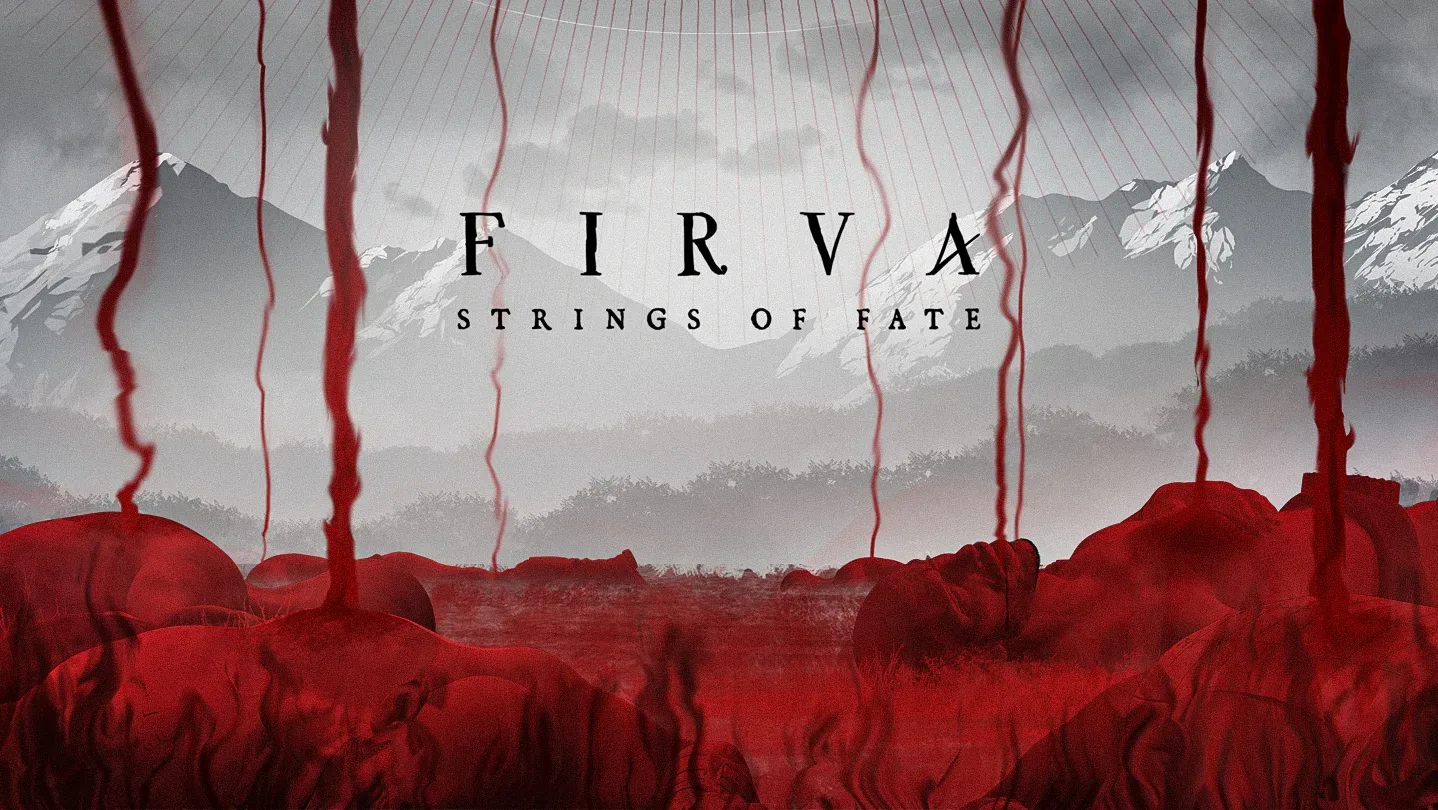
Firva: Strings of Fate (Part 1), a story-focused dark fantasy action-adventure for PC, is set to receive a new trailer and a playable demo in October ahead of Steam Next Fest. The project comes from Lxip games AB, an independent five-person studio that has spent two years developing a cinematic adventure with a production budget under $200,000.
That combination of scope and budget is an important part of the game's pitch. Rather than trying to match the size of blockbuster action games, Firva is being designed around carefully selected, player-facing priorities: directed cameras, authored set pieces, atmospheric environments, traversal challenges, puzzles, hidden routes, and combat encounters that reward timing and positioning.
The result is intended to be a more concentrated kind of action-adventure. Firva: Strings of Fate (Part 1) will not be judged by how much map space it can offer, but by whether its individual areas, story beats and encounters can create the dramatic momentum of a cinematic dark fantasy quest. Steam Next Fest will give PC players their first chance to see how successfully that approach translates into a playable experience.
A revenge mission opens the path to a larger mystery
The game follows Firva, who has spent 20 years carrying the weight of her parents' murder. Her search eventually leads her to Ratiar the Butcher, the figure she believes responsible. What appears to be the end of her long pursuit instead becomes the beginning of a far stranger journey.
For useful background on this topic, read Stupid Never Dies Details Its Rapid Run-to-Run Growth Ahead of October Launch.
Firva finds something on Ratiar's body that points toward the legendary Strings of Fate. This mythical string is said to possess the power to restore the dead to life, immediately raising the stakes beyond a straightforward revenge narrative. For a protagonist defined by a devastating loss, a relic tied to resurrection has obvious emotional significance, while also creating room for difficult choices about what should and should not be brought back.
To use the Strings of Fate, Firva must acquire the antler of Goldie, a deer she grew up alongside in the Silent Forest. But she is not the only one seeking the power connected to the string. Rajoo has sent hunters after it, setting up a race that pushes Firva back toward a deeply personal place and relationship from her past.
The broader conflict also invokes the Weavers of Fate, an ominous force or group connected to the destiny awaiting Firva. Whether the game treats fate as something fixed, manipulated or resisted remains to be seen, but its premise frames the adventure around more than finding an artifact before rival hunters do. Firva must confront the future that has been woven for her while pursuing the possibility of changing what death has taken away.
For another perspective on this story, read Firva: Strings of Fate Brings a Dark Fantasy Revenge Quest to Steam Next Fest.
Built around cinematic presentation, not blockbuster scale
Firva: Strings of Fate (Part 1) is explicitly pursuing a cinematic format. The development team has prioritized directed camera work and story-led set pieces to give key moments visual intention and pacing. This can make a major difference for a smaller production, where deliberate framing, animation, sound and level staging can often give locations and confrontations a stronger identity than sheer environmental size would.
The game is also said to include roughly 40 minutes of cinematic sequences. That is a substantial commitment for a small team and suggests that narrative scenes will be central to the experience rather than occasional interludes between combat areas. The title's "Part 1" designation further indicates that this chapter is being conceived as the opening portion of a wider story, although no details have been announced about subsequent installments.
Dark fantasy action-adventures frequently have to balance story momentum with player agency. Firva's approach appears to be giving players authored spaces to investigate between its directed story moments. Environments are meant to support movement, problem-solving and discovery, rather than functioning solely as backdrops for cutscenes. The demo should offer the clearest early indication of how those elements are distributed.
Exploration and puzzle-solving are part of the journey
While Firva's central premise is driven by revenge and supernatural mythology, its gameplay ambitions extend beyond combat. The adventure combines exploration, environmental puzzles and platforming with its narrative progression. Atmospheric levels will contain traversal routes and concealed paths, encouraging players to look beyond the most obvious route forward.
That design direction suits the Silent Forest and the game's other dark fantasy settings. A forest tied to Firva's childhood and to Goldie can work as more than a plot destination when it is built around layered paths, visual clues and environmental obstacles. Hidden routes can reward attention, while platforming can turn an environment into a physical space that players must understand rather than simply pass through.
Environmental puzzles are another useful way to preserve the pace of a cinematic adventure. Instead of relying exclusively on extended combat stretches, puzzle sequences can make players pause, inspect their surroundings and engage with a location's architecture or mythology. The balance will matter: frequent interruptions could weaken urgency, but well-placed puzzles can help build tension and make the world feel more tangible.
The planned demo will be particularly useful in showing how the game communicates these challenges. In an action-adventure, players need enough visual and mechanical guidance to read routes and puzzle logic without feeling that every answer is immediately signposted. How Firva handles that balance will be one of the most meaningful things to watch during Steam Next Fest.
Timing, parries and positioning shape the combat
Combat in Firva: Strings of Fate (Part 1) is described as timing-based melee action built around dodging, parrying and positioning. That puts the focus on reading opponents and reacting decisively, rather than merely overwhelming them through repeated attacks. In theory, each encounter should ask players to pay attention to enemy movement, find safe space, evade danger and choose the moment to answer back.
Parrying is especially significant in a game with cinematic ambitions. A successful defensive response can make an encounter feel dramatic and controlled, but it requires clear feedback and consistent timing. Players need to understand why a parry worked or failed, while enemy attacks must be readable enough that success feels earned rather than accidental.
Positioning adds another layer beyond reflexes. It can mean managing distance, avoiding being surrounded, using terrain effectively or finding an opening in an enemy's pattern. When paired with dodges and parries, it can make even compact encounters feel tactical. That may be a practical strength for a smaller project: a limited number of well-made enemies and confrontations can remain engaging if their behaviors create meaningful decisions.
Combat is also being positioned as part of the narrative progression rather than a separate feature. That suggests encounters may be placed to reinforce story developments and the dangerous nature of Firva's pursuit, whether she is facing Rajoo's hunters or other threats connected to the Strings of Fate and the Weavers.
Steam Next Fest will be the first major player test
The October trailer and playable demo represent an important milestone for the project. Steam Next Fest provides an opportunity for players to evaluate the game's core loop directly: moving through its environments, solving challenges, experiencing its presentation and learning the rhythm of its melee combat.
For Firva: Strings of Fate (Part 1), the demo will need to introduce a world with considerable narrative weight while still giving players enough freedom to understand its action-adventure identity. It will also be an early test of the team's concentrated production strategy. The game has been built by five developers with a budget below $200,000, but its goals include handcrafted cinematic sequences, authored locations and timing-driven combat systems that can demand a great deal of polish.
There is no announced release date in the current information, and PC is the only confirmed platform. Still, the October demo should offer a useful first look at a project whose ambitions are firmly focused on mood, character and intentional design. Firva's search for the Strings of Fate begins with an old wound, but the game's supernatural promise suggests that its real question is not simply whether she can reach Goldie before the hunters. It is what she will do when fate, grief and the power to challenge death finally come together.
Community
Discussion
Start the conversation.
No comments have been posted yet.