

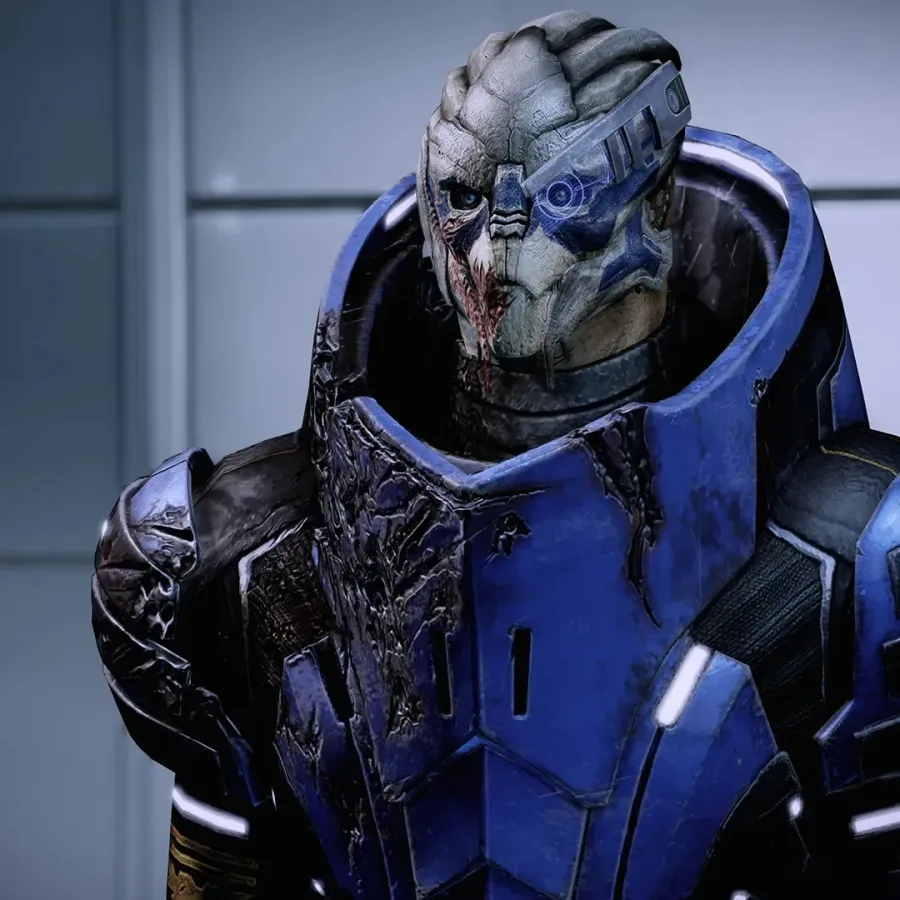
The canceled next Mass Effect game was reportedly being built around a major ambition: to deliver a degree of player freedom and consequential decision-making that could stand beside the biggest modern role-playing games. Tony de Waal, a former BioWare cinematic supervisor who was laid off amid the studio's closure, has described an internal effort to move the long-running sci-fi series forward without abandoning the identity that made its original trilogy so beloved.
In a LinkedIn post shared after EA announced that BioWare would close and that development on the new Mass Effect had ended, de Waal said the team had been watching the work of RPG leaders Larian Studios and CD Projekt closely. He characterized the project as an attempt to take the franchise "to the next level" while remaining faithful to the trilogy's foundations.
That is a tantalizing, if necessarily incomplete, glimpse at a game players will never get to see. BioWare had spent years signaling a return to the universe, teasing its setting and broader story direction without revealing the full structure of the game. Now, comments from former team members suggest that the project's aspirations centered on a familiar BioWare strength: giving players ownership over the shape of their journey.
Aiming for autonomy without losing Mass Effect's identity
De Waal said the canceled game would have been "something special," and claimed it was intended to provide players with a level of autonomy and choice beyond what other games had managed. That is an enormous standard for any RPG, especially when the genre has recently produced games celebrated precisely for the depth of their branching scenarios, reactive worlds, and player-led problem solving.
For useful background on this topic, read LEGO Confirms Daft Punk Set Inspired by the Alive 2007 Stage.
The former cinematic supervisor did not provide specific examples of systems, story branches, companion mechanics, or mission structures from the project. As a result, it is impossible to know how BioWare planned to realize that goal in practice. It could have involved wider dialogue consequences, more flexible ways to resolve quests, decisions that substantially altered the state of the world, or a combination of those ideas. None of those details have been confirmed.
What de Waal did make clear is that the studio wanted to balance evolution with continuity. Mass Effect became a defining RPG series through its cinematic presentation, squad relationships, conversation choices, and the long-running consequences carried across Commander Shepard's trilogy. The challenge for any successor was never simply to become bigger. It was to make the player's role feel meaningful while preserving the focused, character-driven space opera that distinguished the series.
That balance is especially important because the next game was not positioned as a direct continuation of Shepard's immediate era. BioWare had confirmed that it would take place centuries after Mass Effect 3, returning the action to the Milky Way long after the defeat of the Reapers. The setting therefore offered room to explore the aftermath of the trilogy's universe-shaping events while establishing a new cast, conflict, and player perspective.
The modern RPG bar has risen sharply
De Waal's references to Larian and CD Projekt point to the competitive landscape BioWare was navigating. Both studios have helped reshape audience expectations for role-playing games, though they have done so through different styles of design.
Larian's Divinity: Original Sin games earned widespread praise before Baldur's Gate 3 became a major critical and commercial success in 2023. The latter is particularly notable for how frequently it accounts for unexpected player actions. Encounters can be approached through combat, stealth, persuasion, magical experimentation, environmental manipulation, and decisions that cause characters or entire plotlines to change dramatically. Its appeal is not merely that it contains choices, but that it often acknowledges choices players may not have expected the game to support.
CD Projekt, meanwhile, set a different benchmark through The Witcher 3: Wild Hunt, which is widely regarded as one of the most accomplished fantasy RPGs ever made. Its stories are known for difficult decisions without clean moral answers, richly constructed quests, and consequences that can unfold over many hours. Cyberpunk 2077 endured a deeply troubled launch, but its later reputation changed substantially after continued work and updates, with many now viewing it as one of the strongest sci-fi RPGs available.
For BioWare, the comparison was both natural and demanding. The studio's legacy includes landmark RPGs, but the broader genre has changed dramatically since the original Mass Effect trilogy concluded. Players now expect compelling companions and cinematic storytelling, but increasingly also expect dense reactivity, systemic flexibility, and choices that remain visible long after they are made.
De Waal's comments suggest the team understood that reality. Rather than treating the success of Larian and CD Projekt as something outside BioWare's lane, the developer described an effort to meet that moment head-on. The painful part is that there is no finished game to examine, no gameplay demonstration to assess, and no way to determine whether those ambitions would have translated into a cohesive final experience.
BioWare's difficult road to the cancellation
The shutdown brings an abrupt end to a studio with one of the most influential histories in the RPG genre. BioWare's games helped popularize a particular kind of cinematic, companion-focused role-playing experience, and Mass Effect was central to that legacy. Yet the company's recent years were marked by projects that struggled to match expectations.
After the franchise-best sales performance of Dragon Age: Inquisition, BioWare pursued live-service success with Anthem. The game failed to establish the long-term momentum hoped for by EA. The studio then spent much of the following decade developing Dragon Age: The Veilguard, another release that ultimately underperformed relative to EA's expectations.
Mass Effect itself has had an uneven modern history. Mass Effect: Andromeda disappointed many fans after its launch, becoming a difficult chapter for a series that had previously been one of gaming's most visible sci-fi properties. By contrast, the Mass Effect Legendary Edition remaster was received far more warmly, underlining the continued affection players have for the original trilogy and its world.
That combination of enduring goodwill and recent uncertainty made the new project unusually important. It was an opportunity for BioWare to demonstrate that the series still had a clear future, particularly after years of teasers and speculation. Instead, the cancellation means the next chapter will remain a collection of concepts, internal work, and memories held by the people who made it.
Former team members mourn what players will not see
De Waal's post also focused on the developers who remained on the project through its final period. He praised the smaller team's talent and said they were working beyond their weight to create something meaningful. Reports indicated that roughly 50 people were working on the game before development was terminated.
His message was echoed by author Catherynne M. Valente, who had worked on the project. Responding online to frustration over the loss of a potential new Mass Effect, Valente said, "We did figure it out. We were working on a great game." Like de Waal's remarks, her statement offers no concrete breakdown of the game's content. It does, however, communicate confidence from someone with direct knowledge of the work.
These reactions are understandably colored by loss. Developers who spend years contributing to a game rarely get the chance to show players the work in progress, and a cancellation prevents the team from receiving the final judgment that comes with release. For fans, the absence of detail can make the situation even more frustrating: the prospect of a Milky Way-set return, a renewed emphasis on choice, and a response to today's most ambitious RPGs is easy to imagine, but impossible to play.
What the cancellation means for Mass Effect
There is currently no public indication of whether Mass Effect will return under a different team or at a later date. The franchise remains a major name with a substantial audience, and its universe has enough history to support future stories. But the closure of BioWare and the end of this project leave its immediate future uncertain.
For now, the clearest picture of the canceled game comes from its former developers: a project meant to revisit the Milky Way far beyond the original trilogy, preserve the spirit of classic Mass Effect, and raise the ceiling on agency and consequence. Whether it could truly have matched the bold claim of unprecedented autonomy cannot be known.
Still, the goal itself says a great deal about what BioWare believed a new Mass Effect needed to be. In an era defined by Baldur's Gate 3, The Witcher 3, and the revitalized Cyberpunk 2077, simply returning to the stars would not have been enough. The team wanted to make players feel that their decisions mattered in ways the series had not previously attempted. That unfinished ambition is now one of the most significant lost what-ifs in modern RPG development.
Community
Discussion
Start the conversation.
No comments have been posted yet.