

Kojima Productions' 10th-anniversary exhibition in Tokyo has provided one of the most substantial looks yet at the studio's past work and future ambitions. The limited-time event, which runs through December 20, combines a retrospective on the creation of Death Stranding with carefully controlled previews of the company's next major projects: the espionage-focused Physint-role-a-big-deal-after-growing-up-with-metal-gear-solid/">Physint and Xbox-partnered horror title OD: Knock.
The showcase is not a traditional game reveal event. Much of what appeared there consisted of concept art, scripts, planning material, development prototypes, scans, and production tools rather than long gameplay demonstrations. Even so, the material offers meaningful hints about both projects. It also illustrates how the studio has broadened its identity over the past decade, placing games alongside film, animation, fashion, music, merchandise, and experimental technology.
Physint points toward a "Next Cold War"
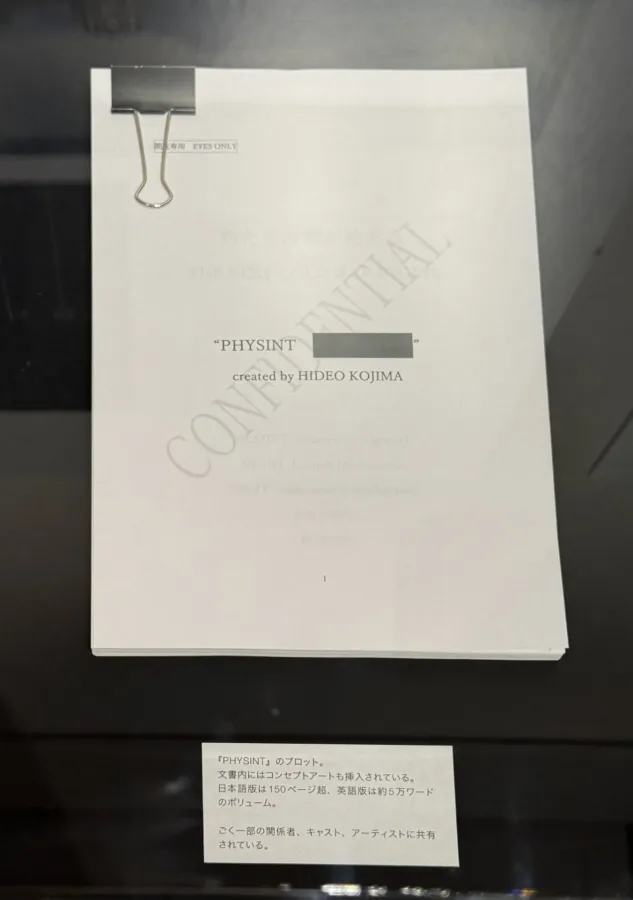
The clearest new detail about Physint came from a display copy of the game's script. Although much of the document remained inaccessible behind glass, visible text indicated that its story takes place during a conflict described as "The Next Cold War."
Embedded X/Twitter post
Embedded X/Twitter post
Embedded X/Twitter post
That setting is framed around three intelligence concepts: HUMINT, meaning human intelligence; SIGINT, generally referring to signals intelligence; and OSINT, or open-source intelligence. Their inclusion suggests a story concerned with surveillance, communications, information gathering, and people operating within a modern geopolitical struggle. It also raises an apparent connection to the title itself. "PHYSINT" may refer to physical intelligence, though the exhibition did not confirm an official definition.
For useful background on this topic, read Mass Effect 2's 18-Month Development Offers a Sharp Lesson for Modern AAA Games.
There may be more to the name as well. The script cover appeared to show additional text following Physint, with that portion obscured. For now, it remains unclear whether the game's public name is incomplete, a subtitle is being withheld, or the visible document represents an internal naming convention.
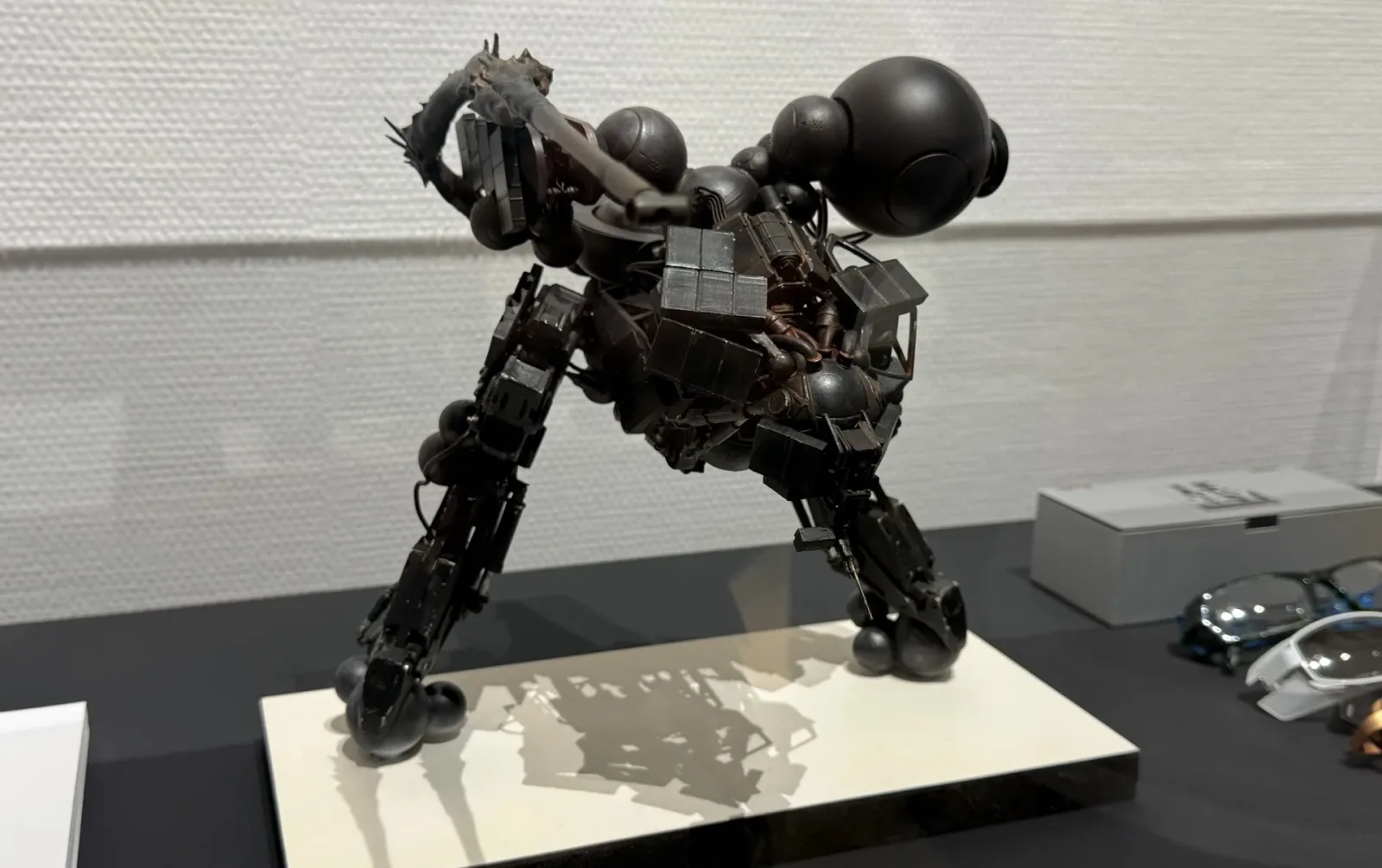
Models displayed near the script included mechanized designs that carry a familiar silhouette for fans of Hideo Kojima's earlier stealth work. Their resemblance to large military machines is notable given that Physint has previously been positioned as an action-espionage game. Still, neither the appearance of the models nor the Cold War terminology confirms the precise gameplay structure, setting, or role these machines will play.
Information on Physint was comparatively limited at the exhibition, particularly following a turbulent period in which its publishing arrangement shifted from Sony to Xbox. The displayed material establishes a direction rather than a full pitch: a new intelligence conflict, a potentially larger title still concealed in part, and imagery that invokes the kind of tactical tension associated with Kojima's earlier work.
For another perspective on this story, read Physint's 'Next Cold War' and OD: Knock Scanning Work Revealed at Kojima Productions Exhibition.
OD: Knock uses real spaces to shape its first-person horror
OD: Knock received a more technical showcase, though photography was prohibited in its presentation area. The game appears to continue Kojima Productions' interest in blending game technology with methods more commonly associated with live-action production.
To refine the game's first-person viewpoint, the development team recorded a real-world walkthrough with GoPro cameras. The resulting footage was used as reference for recreating its framing and fisheye-like visual perspective inside the game engine. One displayed comparison reportedly placed a dual-camera image of a grimy kitchen counter and a window looking onto a wet British street beside an in-engine recreation of a similar scene.
This approach is particularly revealing because first-person horror is often driven by composition as much as environment design. Camera height, lens distortion, peripheral vision, the distance between a player and an object, and what remains just outside the frame can all affect the feeling of unease. Rather than merely approximating that language digitally, the team has apparently studied it through physical camera movement and real-world spaces.
The studio's scanning work goes well beyond performers. For OD: Knock, Kojima Productions digitized vintage furniture, including aged dressers, to capture the visual texture of objects that have been used and worn over time. It also collaborated with the 2024 TBS television drama Sayonara, Maestro! to scan sets used for a family home. The drama itself concerns a conductor named Natsume, played by Hidetoshi Nishijima, returning to Japan and attempting to repair his relationship with his daughter.
That domestic setting is an intriguing source for a horror game, but its specific function in OD: Knock has not been revealed. The scans may be used directly as a home environment, serve as reference material, or support scenes that have yet to be announced. What is clear is that the studio is seeking a high degree of lived-in realism for interiors that could be central to the project's atmosphere.
The exhibition also featured a custom RIMOWA case created to hold a statue of the game's protagonist. The case included an HK luggage tag surrounded by crow imagery, another example of how the studio is connecting game projects to physical objects and brand collaborations.
Death Stranding's early prototypes show a familiar idea taking shape
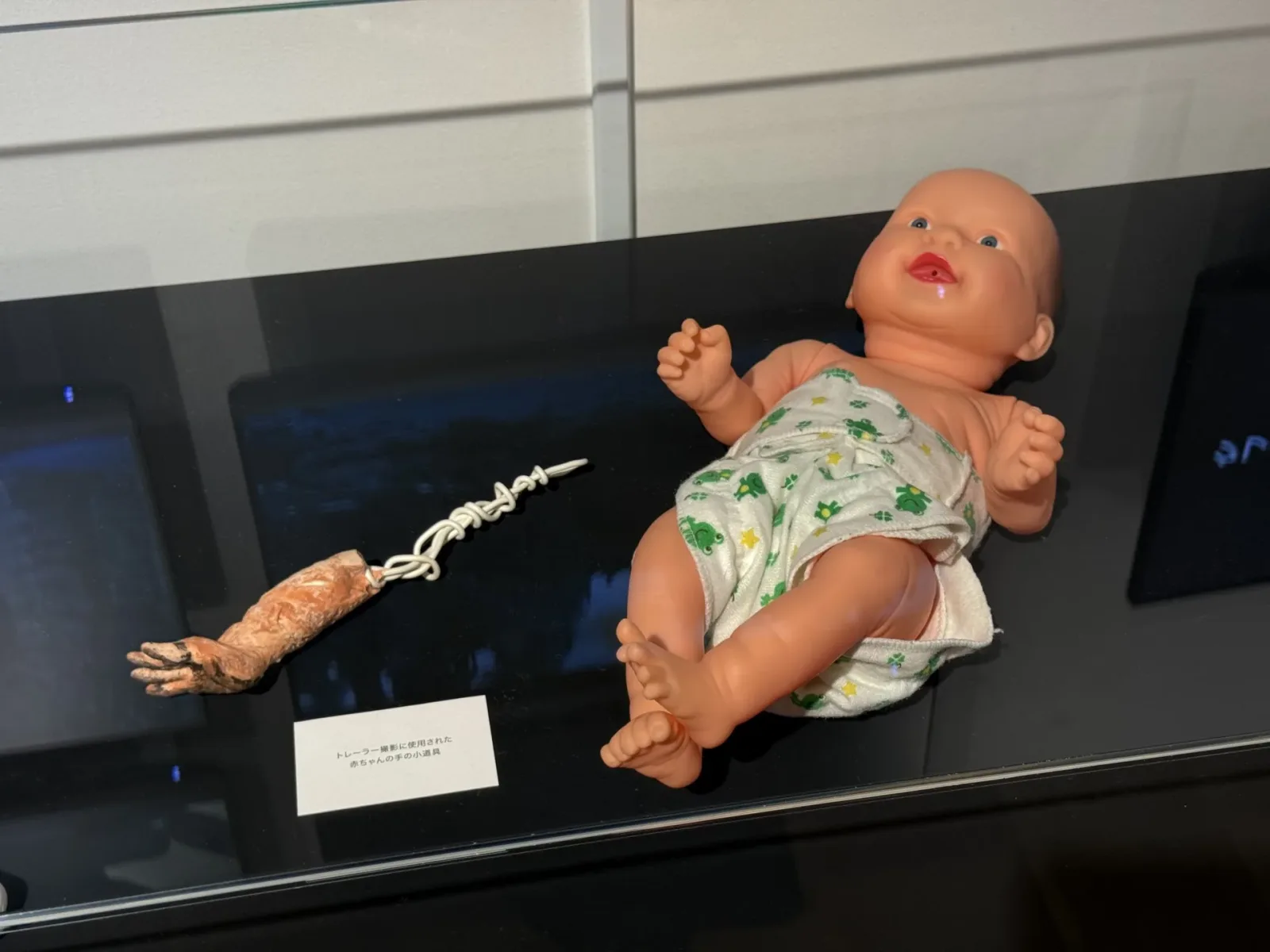
Much of the anniversary exhibition focused on Death Stranding, including early gameplay footage, character art, production records, motion-capture material, and planning documents. A prototype video showed that the game's foundational idea emerged relatively early: a character carrying cargo through open, mountainous terrain.
Even in rough form, the prototype featured traversal, package collection, and a sparse landscape reminiscent of the finished game. Other early footage showed the supernatural BT enemies behaving more aggressively than they do in the final release. That suggests the balance between avoiding threats and confronting them was still being worked out, with the finished game ultimately placing its strongest emphasis on travel, preparation, and indirect player cooperation.
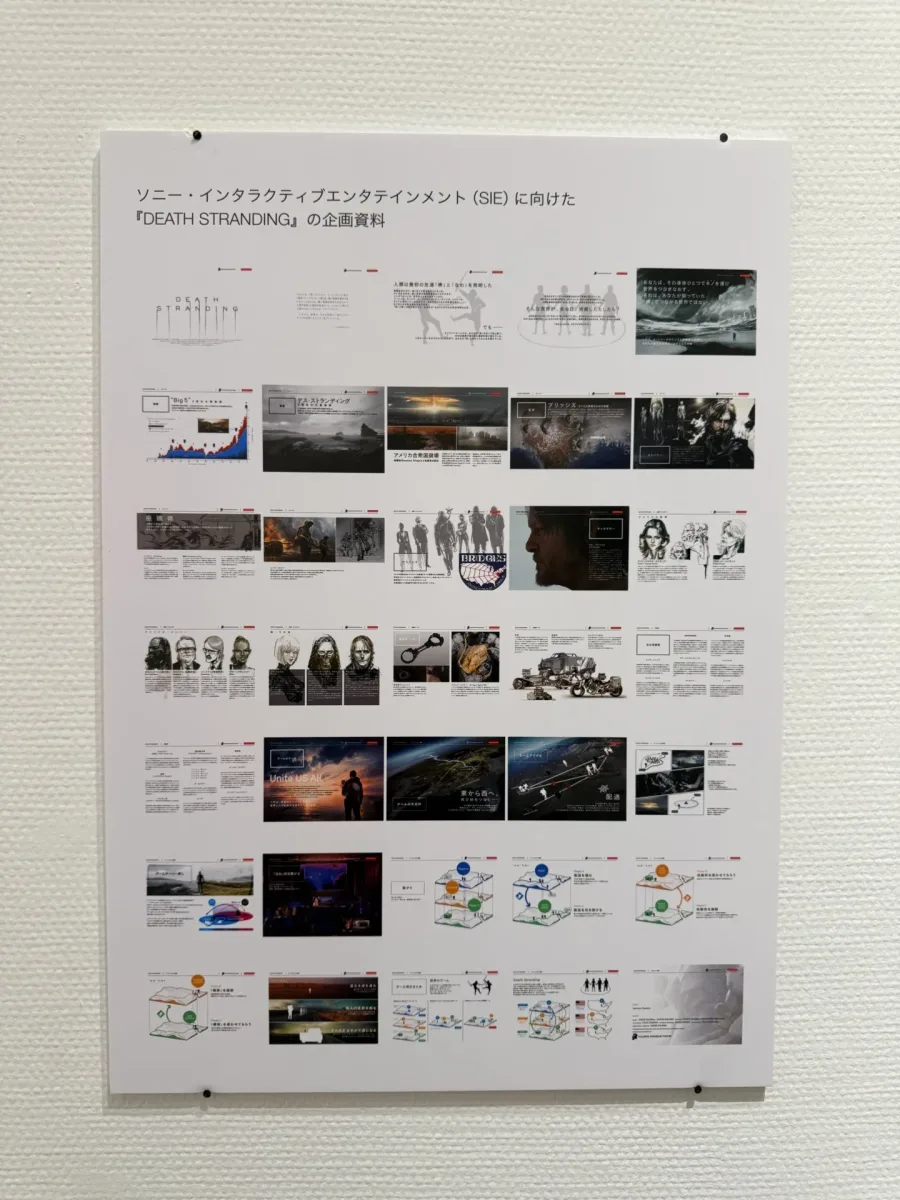
Planning material created while the original game was being pitched described the concept of "Strand" gameplay as a form of shared interaction in which players influence one another without necessarily occupying the same space at the same time. The documents presented connection as the game's central goal: individual actions would help unite players as they crossed a fractured United States.
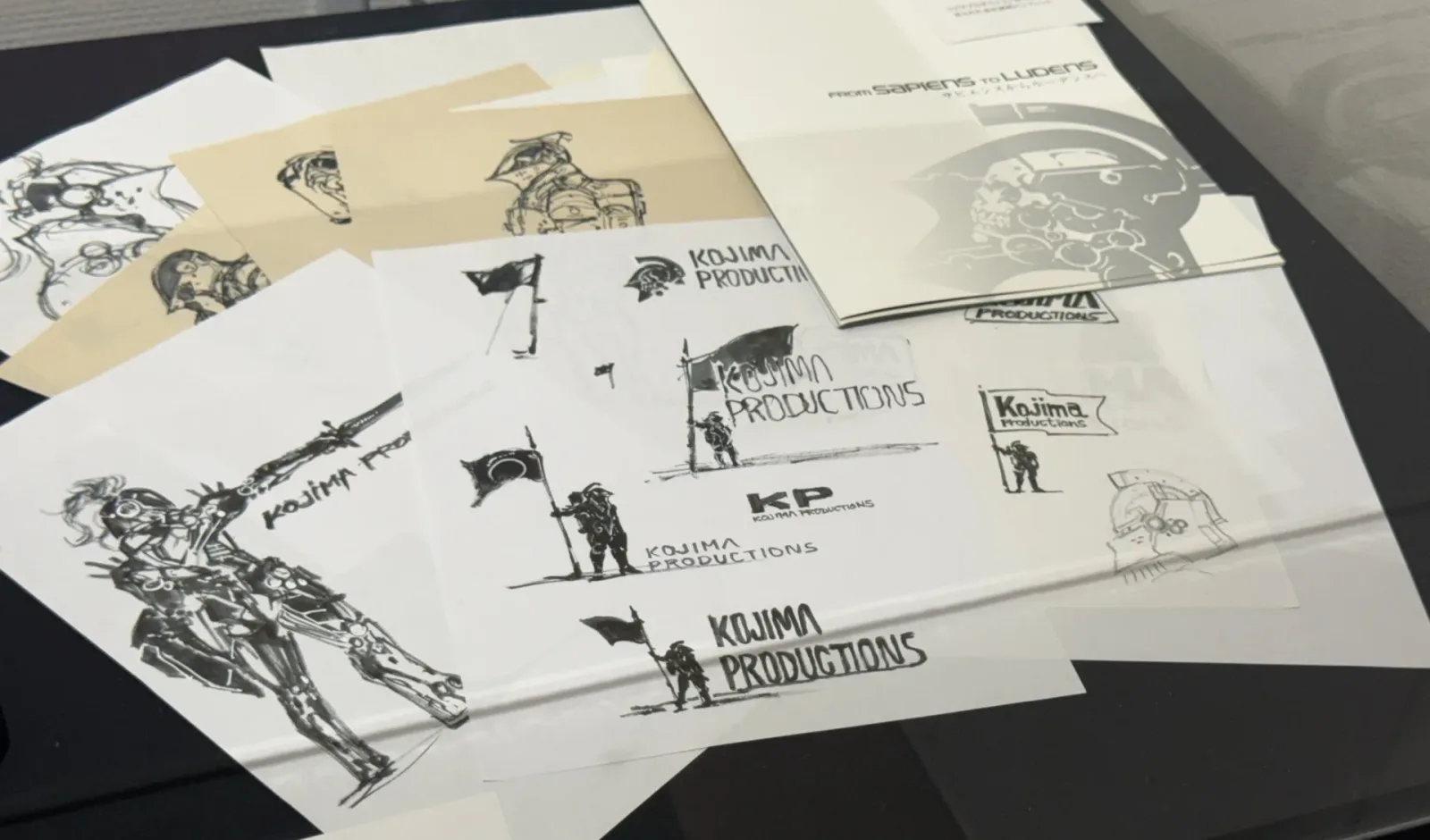
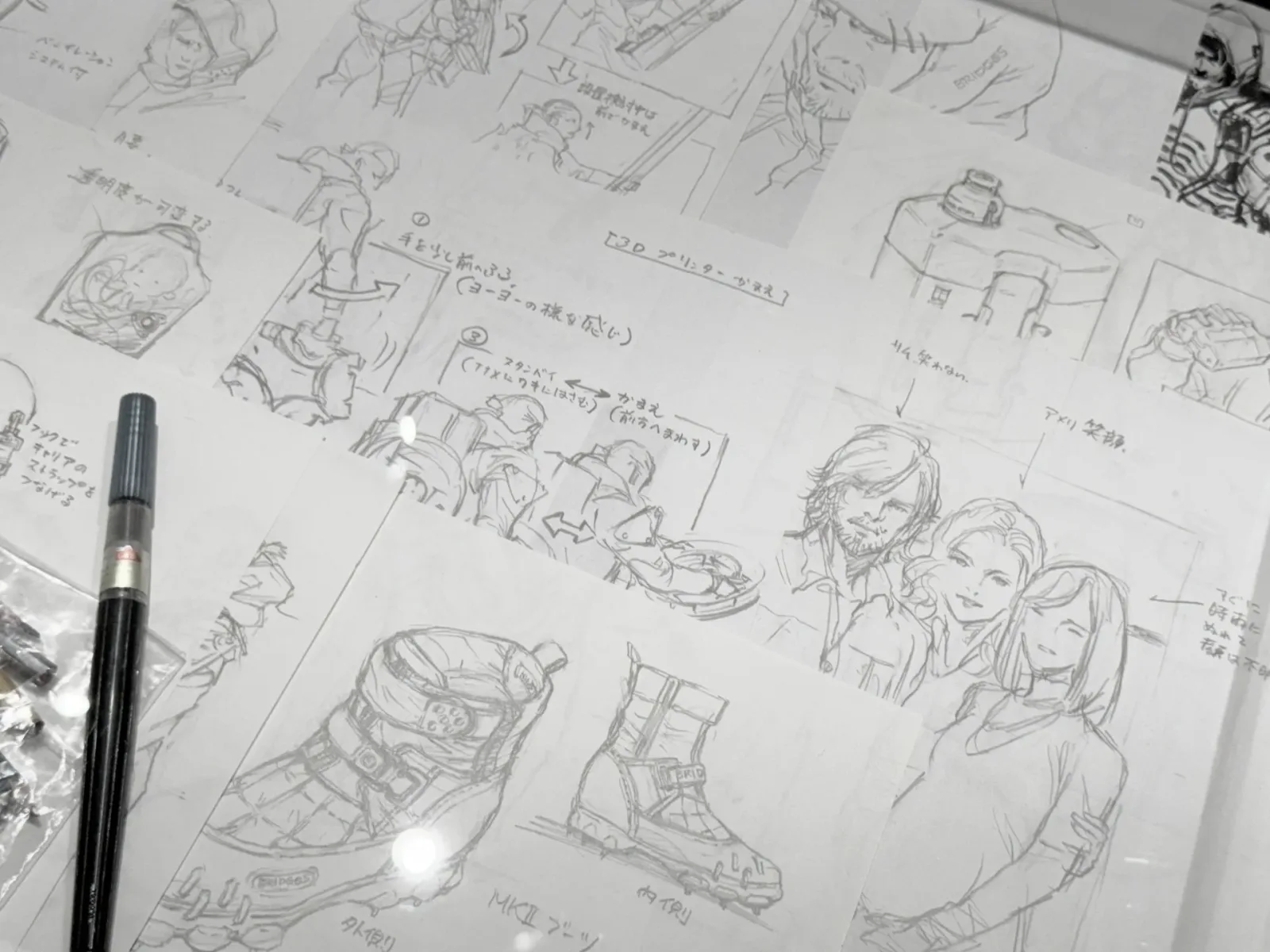
Visitors could also see early logo attempts, sketches by designer Yoji Shinkawa, motion-capture footage, scene documents marked with Kojima's handwritten notes, and prototypes for the BB pod equipment. Some early character concepts differed significantly from their eventual versions, including a markedly altered take on Fragile. Together, the archival material showed the amount of iteration behind even the game's most recognizable imagery.
Death Stranding 2 was reshaped during the pandemic
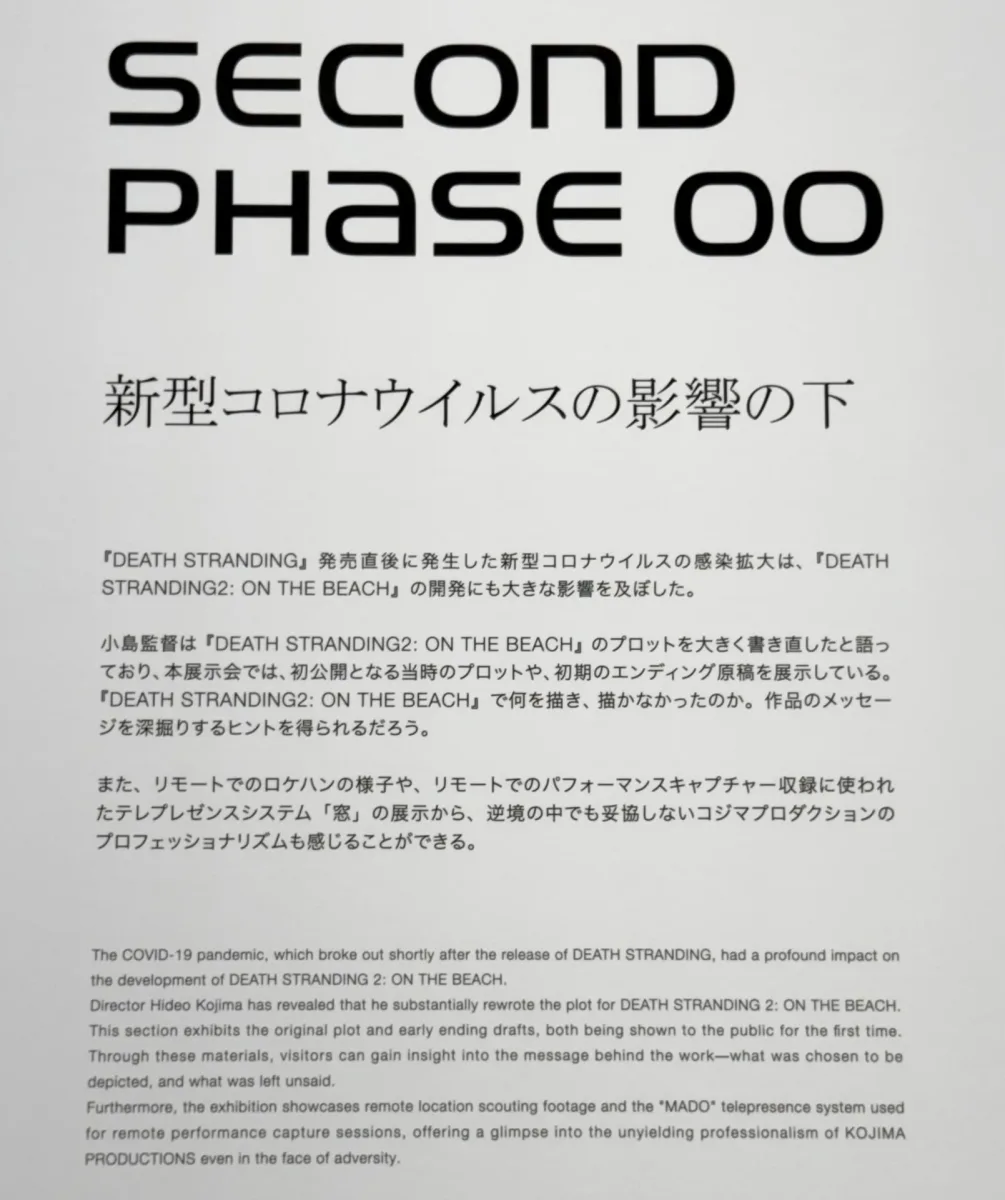
Documents at the exhibition indicated that concepts for Death Stranding 2 date back to 2017, near the end of development on the first game. The early version already retained the broad theme of reconnecting the world, and it apparently considered underground areas as a way to offer more variety in traversal.
However, the story changed substantially after the Covid-19 pandemic altered everyday life around the globe. The first Death Stranding has often been discussed through the lens of the pandemic because of its focus on isolation, delivery work, and maintaining human bonds at a distance. In this case, the later game's narrative was reportedly reworked in response to the new reality.
The earliest displayed ending was notably more optimistic than the version ultimately used. It included Fragile surviving and leading a delivery group, while Rainy and Tomorrow raised a child together. The planning material also referenced Elle Fanning for Tomorrow at an early stage, suggesting she had been considered for the role long before the final story was settled.
Remote production technology became part of the studio's workflow
Border closures and remote work during the pandemic presented major complications for a studio that relies heavily on actor scanning and performance capture. Kojima Productions addressed some of those issues with Mado, a communication system created by MUSVI Corporation. The Japanese word "mado" means window, fitting the system's purpose of giving distant collaborators a more immersive connection than a standard video call.
The technology enabled the studio to work with motion-capture facilities in Los Angeles while directing sessions from elsewhere. At the exhibition, Mado was used as a live link to the Kojima Productions office. Visitors could see different parts of the workspace in real time, including an area used for 3D scanning. Staff appearances were unscheduled, and Kojima himself briefly spoke with attendees in Japanese and English during one early visit.
A mobile AR prototype extends the Strand concept into the real world
Attendees were also able to try Death Stranding: Odradek (Tokyo Prototype), an early augmented-reality mobile experiment made with Niantic Spatial. Using technology associated with location-based AR experiences, the prototype turns real-world movement into delivery activity.
Its available deliveries are currently limited to the Azabudai area surrounding the exhibition, making this a tightly scripted demonstration rather than a confirmed broad release. Players use a phone camera to examine their surroundings, locate signs and guidance left by others, care for a BB, and potentially encounter BTs. Helpful markers can receive likes, carrying the series' asynchronous social systems into a physical environment.
There is no announced release plan or wider availability for the prototype. Its significance lies in the experiment itself: the core idea of making paths safer and more legible for other players can function outside a conventional console or PC game.
Ten years later, Kojima Productions is selling an ecosystem, not only games
The exhibition makes a strong case that Kojima Productions now sees itself as an entertainment brand with game development at its center rather than its sole activity. Displays covered animation projects, including Death Stranding Isolations, musical partnerships, clothing collaborations, collectibles, and even branded credit cards issued with Japanese bank MUFG. New merchandise at the event includes apparel made with F.C. Real Bristol and a plush version of Kojima.
That expansion reflects the growing scale and cost of high-budget development. Major games remain the centerpiece, but they can be supported by media adaptations, partnerships, physical products, and recognizable iconography. The studio's skull-in-a-spacesuit logo, known as Ludens, has been integral to that strategy from the start. Early logo designs on display showed an even broader range of ideas, including full-body versions of the mascot carrying a flag and a knight-like figure.
For players, the most immediate takeaways are the new hints surrounding Physint and the production methods behind OD: Knock. Yet the larger message of the Tokyo exhibition is equally important. Kojima Productions is continuing to make ambitious games, but it is also building a wider world around them--one where scanned rooms, camera experiments, anime plans, live-action projects, fashion, music, and even AR deliveries all belong to the same evolving creative identity.
Community
Discussion
Start the conversation.
No comments have been posted yet.