

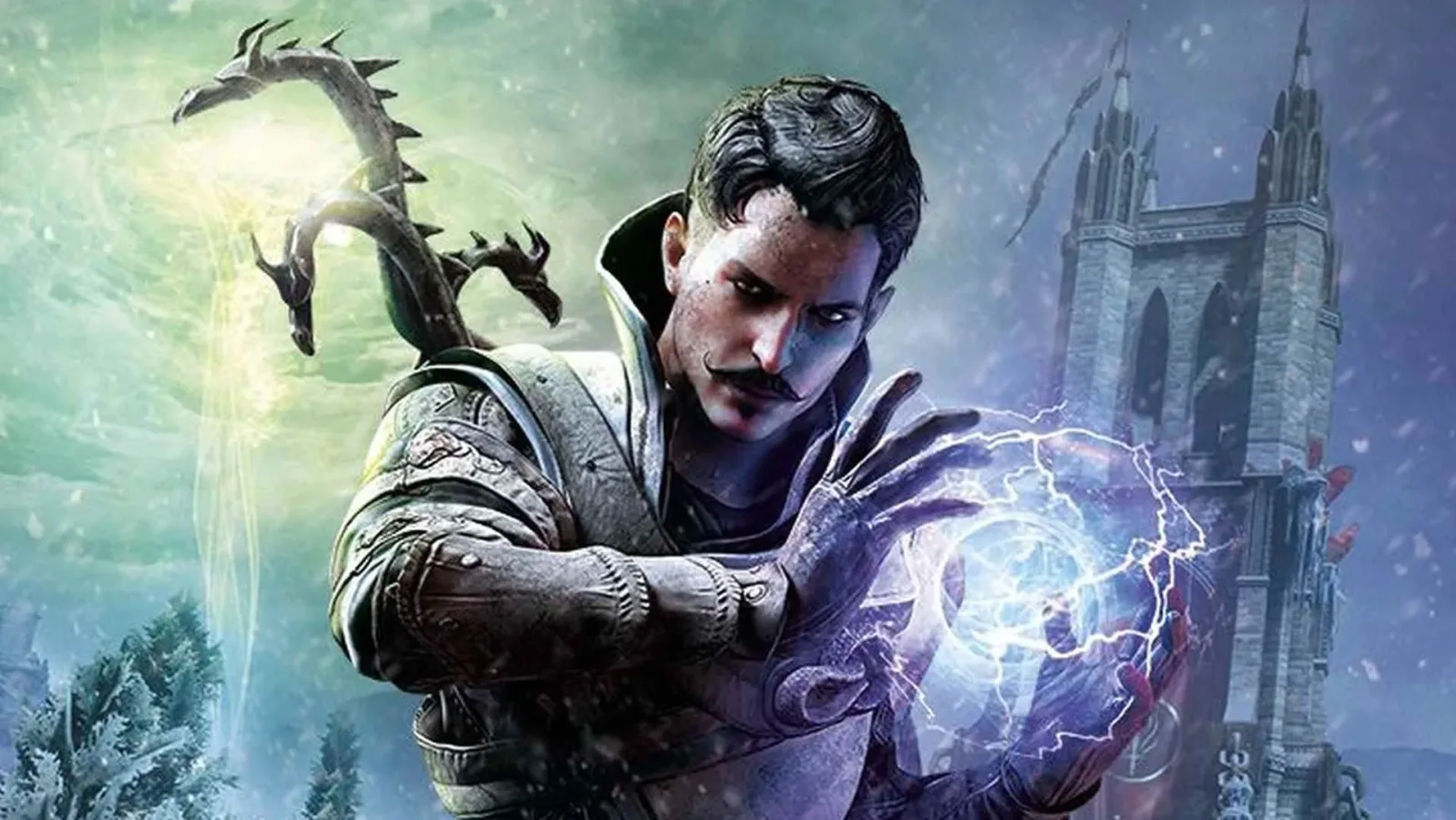
Dragon Age: Inquisition arrived in November 2014, ultimately becoming one of BioWare's largest commercial successes. But years before players set foot in the Hinterlands, the role-playing game was apparently associated with a far more ambitious public-facing schedule: an Xbox One launch-window release in 2013.
Former Dragon Age series lead Mark Darrah has said that schedule was not a genuine target inside the studio. Speaking in a recent interview with Pembridge TV, Darrah recalled BioWare presenting the game to Electronic Arts as though it could arrive alongside Microsoft's then-new console. Yet he said the team did not actually structure development around meeting that date.
"To be clear, we were lying," Darrah said. "It was never gonna happen."
The recollection offers a candid look at the disconnect that can exist between a publisher pitch, an announced or implied release ambition, and the practical reality of making a major game. It also adds context to the long, complicated development history behind Inquisition, a project that launched across PC, PlayStation 3, PlayStation 4, Xbox 360, and Xbox One before going on to sell 12 million copies.
For useful background on this topic, read Bandai, Square Enix and Capcom Join Anti-Counterfeit Push as Fake Gundam Goods Are Seized.
A proposed 2013 release for a game that needed more time
Darrah initially described the pitch as a plan for Inquisition to be a launch title for Xbox 360, then corrected himself to say he meant Xbox One. Microsoft launched the Xbox One in November 2013, while Sony's PlayStation 4 also debuted that month. Inquisition eventually launched roughly a year later, in November 2014.
Because the game released on both PlayStation 4 and Xbox One, the Xbox One shorthand appears to refer broadly to the incoming console generation rather than an exclusive arrangement with Microsoft. In practical terms, a 2013 Xbox One launch plan would have put the game in position for the PlayStation 4 launch period as well.
But Darrah said that was not a deadline the developers were quietly striving to hit. His point was not simply that the team missed an aggressive date after attempting to make it work. Rather, he characterized the 2013 timing as something BioWare knew was unattainable from the outset.
"We didn't even build around -- like, we didn't pretend and make the team work to that date," Darrah said. "We just lied."
That distinction matters. Crunch and unrealistic internal milestones are familiar issues across the industry, but Darrah's account suggests the stated launch ambition did not become the project's day-to-day production plan. The game was not built as though it had to be finished for November 2013, even as that target was used to help secure support.
Why the pitch was appealing to EA
Darrah tied the pitch to EA's satisfaction with Dragon Age 2. That game was divisive among some fans, particularly due to its reused environments and a more constrained presentation than Dragon Age: Origins. Still, Darrah said EA was very happy with it, creating an environment in which another Dragon Age project on an apparently quick turnaround looked attractive.
The proposed schedule for Inquisition was about two and a half years. For a large-scale RPG intended to bridge two hardware generations, that was a very aggressive proposition. Inquisition would eventually feature expansive regions, party-based combat, companion relationships, political choices, a major war between mages and templars, and an enormous amount of voiced dialogue and narrative branching. It was also built during a period when BioWare was adapting its role-playing design to EA's Frostbite technology.
Darrah said EA accepted the plan, after which the timetable changed. The release was moved by approximately a year and then shifted again by six weeks. The final result was a November 2014 launch rather than the Xbox One and PlayStation 4 launch-period release originally presented.
There is no shortage of reasons a project of Inquisition's scale would require additional time, particularly amid a transition to new tools and new console hardware. Still, Darrah's comments frame the delay less as an unexpected production setback and more as a correction to a promise that was not intended to be fulfilled on the original timeline.
Inquisition's success changed the conversation
Whatever frustration EA may have had over the changed schedule, Inquisition's eventual performance gave BioWare a powerful answer. The game became BioWare's best-selling individual release, reaching 12 million units sold. That result significantly exceeded EA's expectations and made the extra development time easier to justify from a business perspective.
Inquisition also received substantial critical recognition, including Game of the Year honors at The Game Awards in 2014. It represented a major reinvention for the series after the sharp differences between Origins and Dragon Age 2. BioWare expanded the playable spaces, gave players a more visible role as the head of the Inquisition, and sought to combine tactical party combat with more accessible action-oriented systems.
The game was not without its critics. Some players found its open-area structure overly dependent on scattered tasks and collectible-style objectives, while others preferred the tighter pacing and darker atmosphere of Origins. Yet its scale, companion cast, political storytelling, and sense of player agency resonated with a large audience. Expansions including Jaws of Hakkon, The Descent, and especially Trespasser further developed its story and helped establish the foundation for the next chapter.
Viewed from that perspective, the additional year was not merely a delay. It allowed BioWare to deliver the version of Inquisition that reached the market and became a defining commercial success for the studio.
A high point in a difficult BioWare timeline
Darrah's story also lands differently because of what followed. Inquisition marked both a high point and, in retrospect, a turning point for BioWare. Later projects faced substantially tougher commercial and critical circumstances, including Mass Effect: Andromeda and Anthem.
The Dragon Age series itself later returned with Dragon Age: The Veilguard. Its release closed a very long gap after Inquisition and arrived following years of reported changes and uncertainty surrounding the franchise's direction. The game's commercial performance did not meet EA's expectations, and EA shut down BioWare in October.
That larger history gives Darrah's account of the Inquisition pitch an unusually bittersweet quality. It describes a moment when BioWare had enough internal reputation and publisher confidence to secure a major project with a highly optimistic schedule, then enough creative and commercial momentum to turn a postponed release into a record-setting success.
It is also a reminder that the games players remember as polished, expansive milestones often emerge from uncertain plans. A launch title would have placed Dragon Age: Inquisition among the first wave of Xbox One and PlayStation 4 software in 2013. Instead, its 2014 release gave it time to become a far bigger, more fully realized RPG--and, by sales, the most successful single game BioWare ever made.
What the admission says about game development pitches
Darrah's blunt wording is striking, but the broader lesson is familiar across major game development: schedules used to obtain approval are not always the schedules that can produce a finished game. New hardware launches create enormous marketing opportunities, and being associated with a console debut can make a pitch seem especially valuable. At the same time, those windows can place extraordinary pressure on projects that are still defining their technology, scope, and creative identity.
Inquisition had to satisfy multiple audiences at once. It needed to continue a beloved RPG series, function on aging PlayStation 3 and Xbox 360 hardware, demonstrate value on PlayStation 4 and Xbox One, and justify BioWare's move to Frostbite. The finished game's broad platform release was a strength commercially, but it likely increased the technical and production complexity behind the scenes.
Darrah's account does not erase the unusual nature of the claim: he says the 2013 promise was knowingly unrealistic. But it does explain why the eventual delay did not mean BioWare was forcing its staff to chase an impossible console-launch finish line. Instead, the studio moved toward a later date that could accommodate the game it was actually making.
For Dragon Age fans, the most concrete outcome is simple. The Inquisition that arrived in 2014 was not the game that could have been finished for the Xbox One's 2013 launch. And given its sales, awards, long-term influence on the series, and enduring place in BioWare's catalog, the later release became one of the clearest examples of a delayed project finding success on its own timetable.
Community
Discussion
Start the conversation.
No comments have been posted yet.