

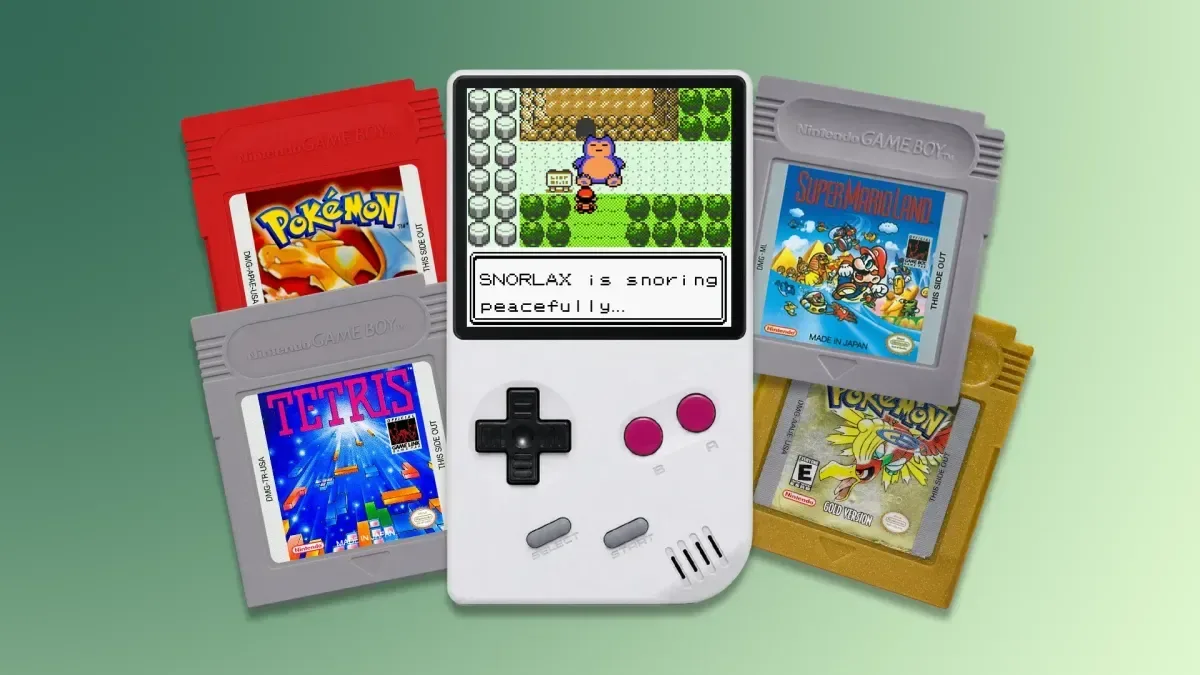
FunnyPlaying has revealed the core hardware specifications for the FPGB Mini, a compact retro handheld designed around original Game Boy and Game Boy Color cartridges. Styled after a dramatically downsized original Game Boy DMG, the device is intended to combine physical cartridge support with MicroSD-based ROM playback in a small, modernized package.
The specification sheet answers several of the largest remaining questions about the FPGB Mini's screen, battery, storage, physical size, and cartridge hardware. It also clarifies a few important limitations: link play will require FunnyPlaying's own USB-C cable, and compatibility with flash cartridges or clone carts is not guaranteed.
There is still no announced launch date or price. Those details remain unconfirmed, but the newly published hardware information provides a much clearer sense of what FunnyPlaying is aiming for with this unusual Game Boy-focused portable.
A purpose-built handheld for GB and GBC cartridges
The FPGB Mini is not simply another general-purpose emulation handheld placed inside a Game Boy-like shell. Its standout feature is an original 32-pin GB/GBC cartridge slot, allowing users to insert standard Game Boy and Game Boy Color game cards directly into the system.
For useful background on this topic, read Zombi Returns in a New Atari Lynx Demo for Its 40th Anniversary.
That makes it a different proposition from the many compact devices that run ROM libraries exclusively from microSD cards. Players with collections of original cartridges will be able to use those games on a new handheld with a modern display and USB-C charging, while also having the option to put ROM files on removable storage.
The device supports both approaches to saving progress, although the method depends on how a game is being played. Physical cartridges are expected to retain saves in their normal cartridge-based manner. ROM titles, meanwhile, will save their data to the inserted MicroSD card. That distinction is worth noting for collectors, users managing several save files, and anyone who wants to move between original media and digital backups.
FunnyPlaying is best known in the retro space for console modification components and replacement hardware. The company has also explored complete handhelds before, including the Retro Pixel, which placed an RK3326 processor in a Game Boy Pocket-style body. The FPGB Mini appears to be a more specialized project, with its design and feature set focused specifically on the Game Boy and Game Boy Color ecosystem.
800×720 IPS screen could be the defining feature
The headline component is a 2.98-inch IPS TFT display with an 800×720 resolution. FunnyPlaying lists the panel as RGB565 with 16.7 million colors. On paper, that is a notably high-resolution screen for a device this small and for systems whose original displays operated at far lower resolutions.
Game Boy Color software was designed for a 160×144 image. An 800×720 panel is exactly five times that resolution in each dimension, though the FPGB Mini information specifically points to the potential for 4x upscaling of GBC games. How scaling modes, aspect handling, filters, screen borders, and integer scaling choices will work in the final software has not been detailed.
Even without those answers, the panel creates considerable potential. A good IPS screen can offer wider viewing angles, brighter output, and more consistent color than the original hardware's screens. The high pixel count should also provide flexibility for displaying Game Boy and Game Boy Color images sharply, while leaving room for interface elements or alternate presentation options.
Of course, display quality is more than a resolution figure. Color tuning, motion behavior, brightness range, latency, and the way the system treats Game Boy's monochrome titles will matter just as much in practical use. Those details will need hands-on testing once retail hardware becomes available. Still, the listed panel is substantially more ambitious than what might be expected from a miniature cartridge handheld.
Small dimensions, removable battery, and USB-C charging
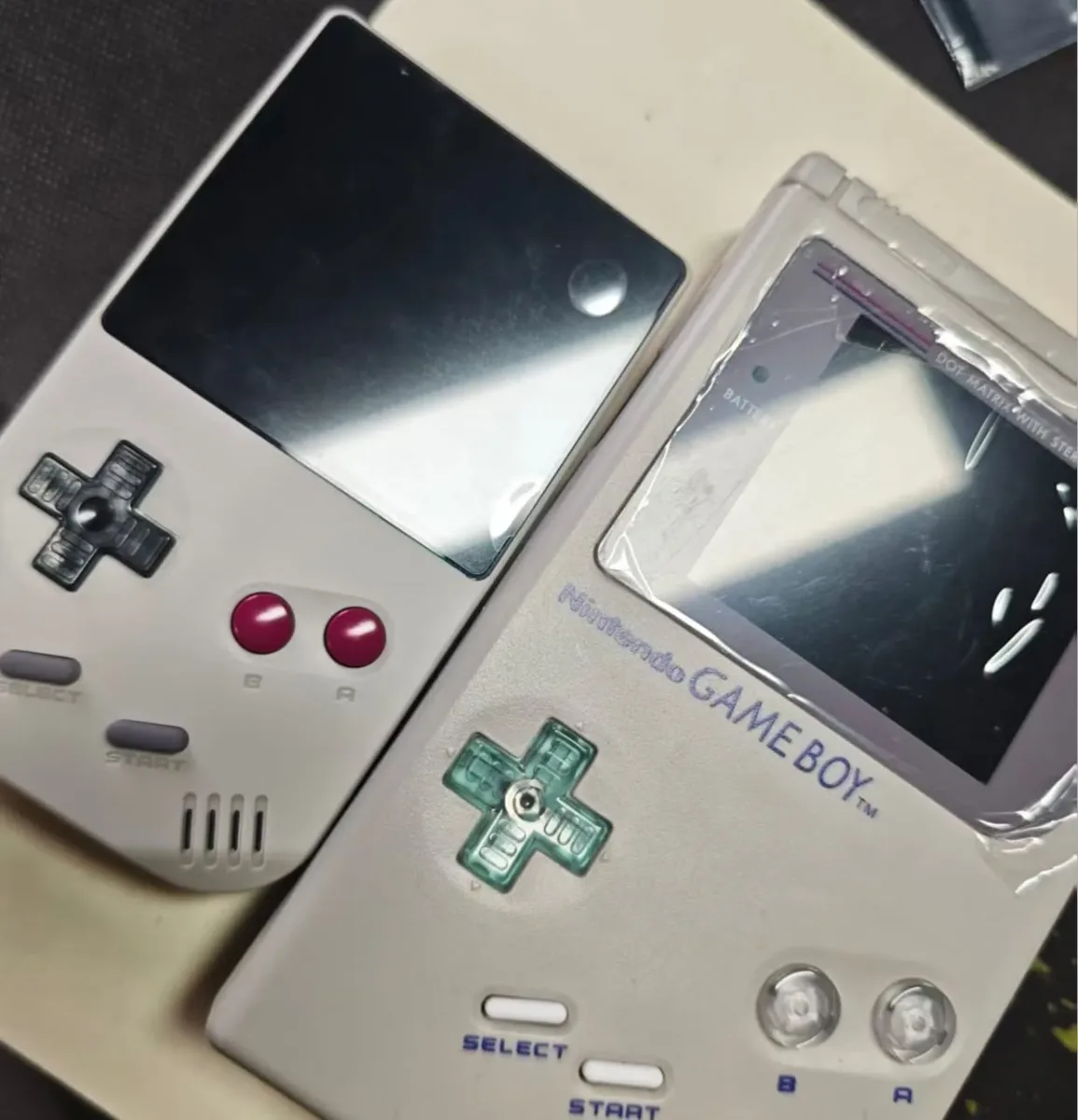
The FPGB Mini measures 113 × 64 × 22 mm and weighs 135 grams with its battery installed. Those measurements reinforce the device's miniature premise. It is meant to evoke the broad shape and vertical layout of Nintendo's original Game Boy, but at a size that should be much easier to carry in a bag or pocket.
FunnyPlaying lists an 1800mAh removable Li-Po battery. Battery life is estimated at roughly four to six hours, depending on use. That is a reasonable range for a small system with a bright, high-resolution IPS panel, although actual endurance may vary with screen brightness, cartridge type, audio volume, and whether ROMs or physical games are in use.
Charging is handled through USB Type-C. The device supports USB Power Delivery and other charging protocols, while the stated actual charging input is 5V/1A. A complete charge is expected to take about two to three hours. The combination of USB-C and a removable battery is particularly welcome for a retro-oriented handheld: USB-C simplifies everyday charging, while a replaceable power cell could be useful for maintenance over the longer term.
Audio will come from a 0.5W speaker. No information has yet been provided about headphone output, Bluetooth audio, volume controls, stereo support, or other audio features. Since Game Boy and Game Boy Color games were built around very specific audio hardware, sound quality and any available headphone solution will be important areas to watch.
MicroSD storage has a stated 32GB ceiling
ROM storage is supplied through a MicroSD, referred to in the specifications as a TF card. The FPGB Mini supports cards up to 32GB using the FAT32 file system.
For a Game Boy and Game Boy Color-focused platform, 32GB is an extremely generous amount of space in practical terms. These libraries are made up of very small files by modern standards, so users should have no difficulty fitting a substantial personal collection onto supported storage. The limitation matters less as a capacity concern than as a point of compatibility: users will need to ensure their card is correctly formatted and within the stated size limit.
FunnyPlaying has not outlined the device's ROM interface, menu options, file support beyond its GB/GBC focus, save-state functionality, shader settings, or the precise technical approach used to run digital files. Those omissions are understandable at this stage, but they are central to whether the system feels polished rather than merely capable.
There is also no indication that the FPGB Mini is intended to support platforms beyond Game Boy and Game Boy Color. Prospective buyers should not assume it will play Game Boy Advance titles or serve as a broad multi-system emulator simply because it accepts MicroSD storage.
Link cable support comes with an important catch
The FPGB Mini will support link cable functionality, opening the door to multiplayer sessions and compatible Game Boy-era features. However, it will not use a standard original Game Boy link cable directly. Instead, owners will need FunnyPlaying's proprietary USB-C link cable, which is expected to be sold separately once the device is available.
That requirement is a significant detail for enthusiasts. Link functionality is part of the appeal of original Game Boy and Game Boy Color cartridges, particularly for games built around trading, battling, co-operative modes, or hardware-to-hardware communication. A dedicated cable means users will need to make an additional purchase and rely on FunnyPlaying's accessory availability.
It also remains unclear exactly what devices and configurations will be supported. Compatibility between two FPGB Mini units seems like the obvious use case, but further information would be needed to establish whether the cable can connect the handheld to original Game Boy-family hardware or other compatible systems. Until FunnyPlaying provides those details, buyers should treat link support as promising but not fully defined.
Flash carts and clone cartridges may be inconsistent
The system's original-style cartridge slot does not mean every Game Boy-format cart will work. FunnyPlaying has cautioned that flash carts and clone cartridges may have mixed results: some could run successfully, but complete compatibility is not promised.
This is especially relevant in the modern Game Boy scene, where flash cartridges are widely used to carry multiple games, run homebrew software, or access fan-made projects. Reproduction cartridges are also common, although their quality and internal design vary heavily. Anyone planning to use the FPGB Mini primarily with a particular flash cart should wait for direct compatibility testing rather than assume support.
For original licensed GB and GBC cartridges, the device's dedicated 32-pin slot remains the central attraction. But the flash-cart caveat underscores the importance of knowing exactly which media a buyer intends to use before making a purchase decision.
What remains unknown before launch
The official specifications make the FPGB Mini much easier to evaluate, but several major questions are unresolved. Most importantly, FunnyPlaying has not announced a price or release date. Those two factors will strongly determine where the handheld fits among existing Game Boy restoration options, FPGA-based devices, modded original hardware, and inexpensive emulation handhelds.
Further details are also needed on controls, build materials, display settings, firmware updates, operating system behavior, ROM compatibility, audio connections, and the availability and price of the proprietary link cable. Hands-on impressions will be especially valuable for judging ergonomics, button feel, screen quality, cartridge fit, and battery performance.
For now, the FPGB Mini stands out because it is attempting to serve two audiences at once: players who want to keep using their original Game Boy and Game Boy Color cartridges, and players who want the convenience of a compact MicroSD library. Its 800×720 IPS panel, USB-C charging, removable battery, and unusually small body give it a distinctly modern character, while the physical cartridge slot keeps it rooted in the hardware it is designed to celebrate.
Whether that balance translates into a must-have retro handheld will depend on the remaining details. The specifications suggest a compelling concept, but price, software experience, accessory support, and real-world compatibility will decide how well the FPGB Mini fits into the increasingly crowded Game Boy handheld market.
Community
Discussion
Start the conversation.
No comments have been posted yet.