

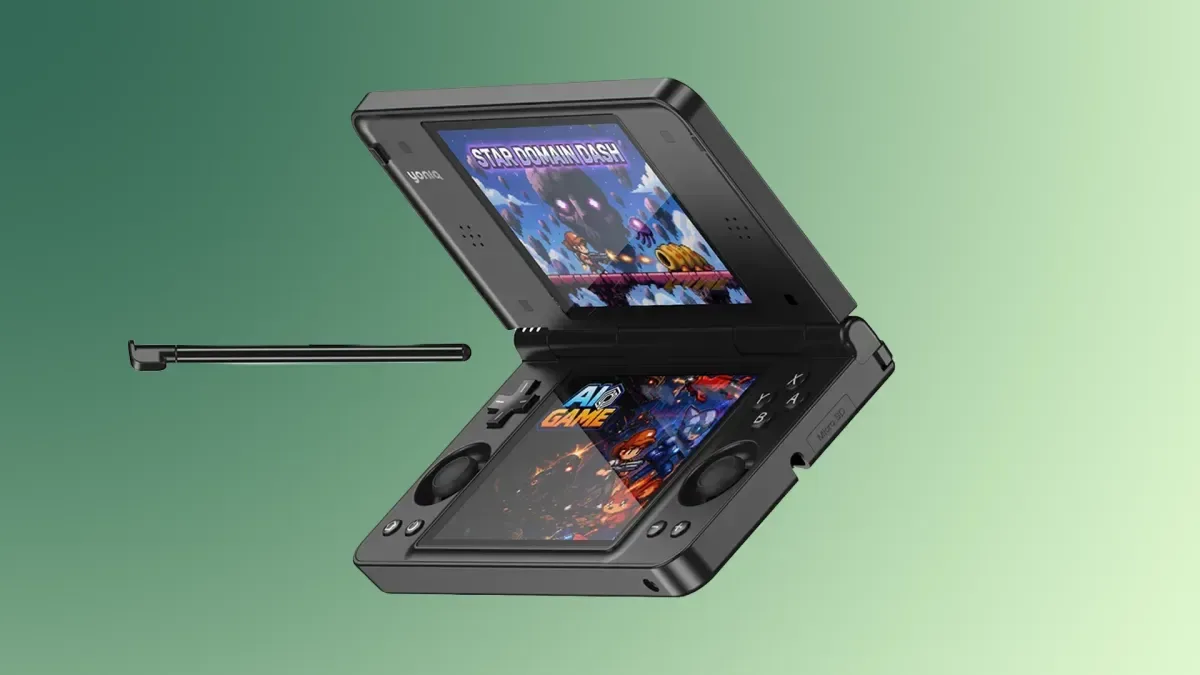
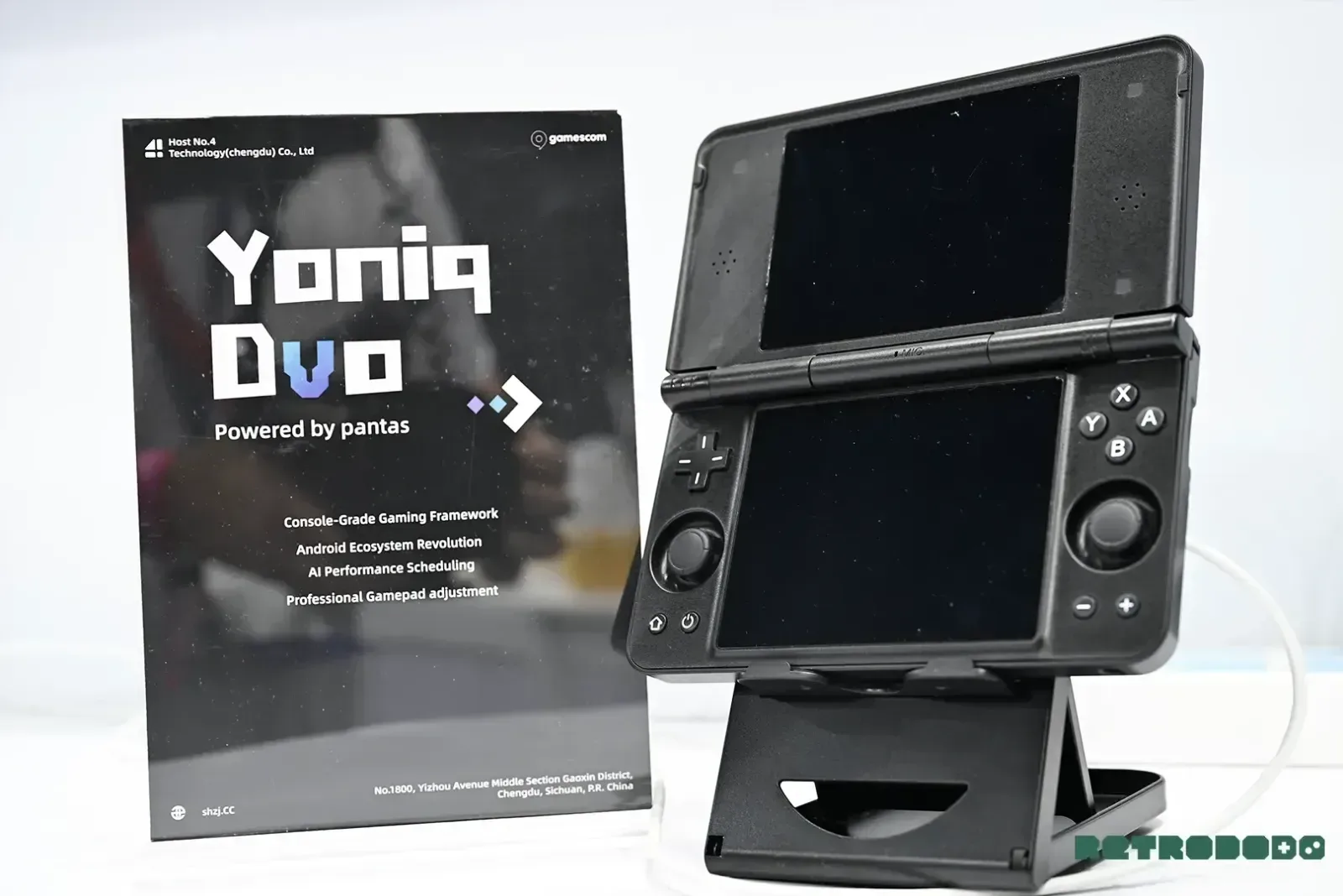
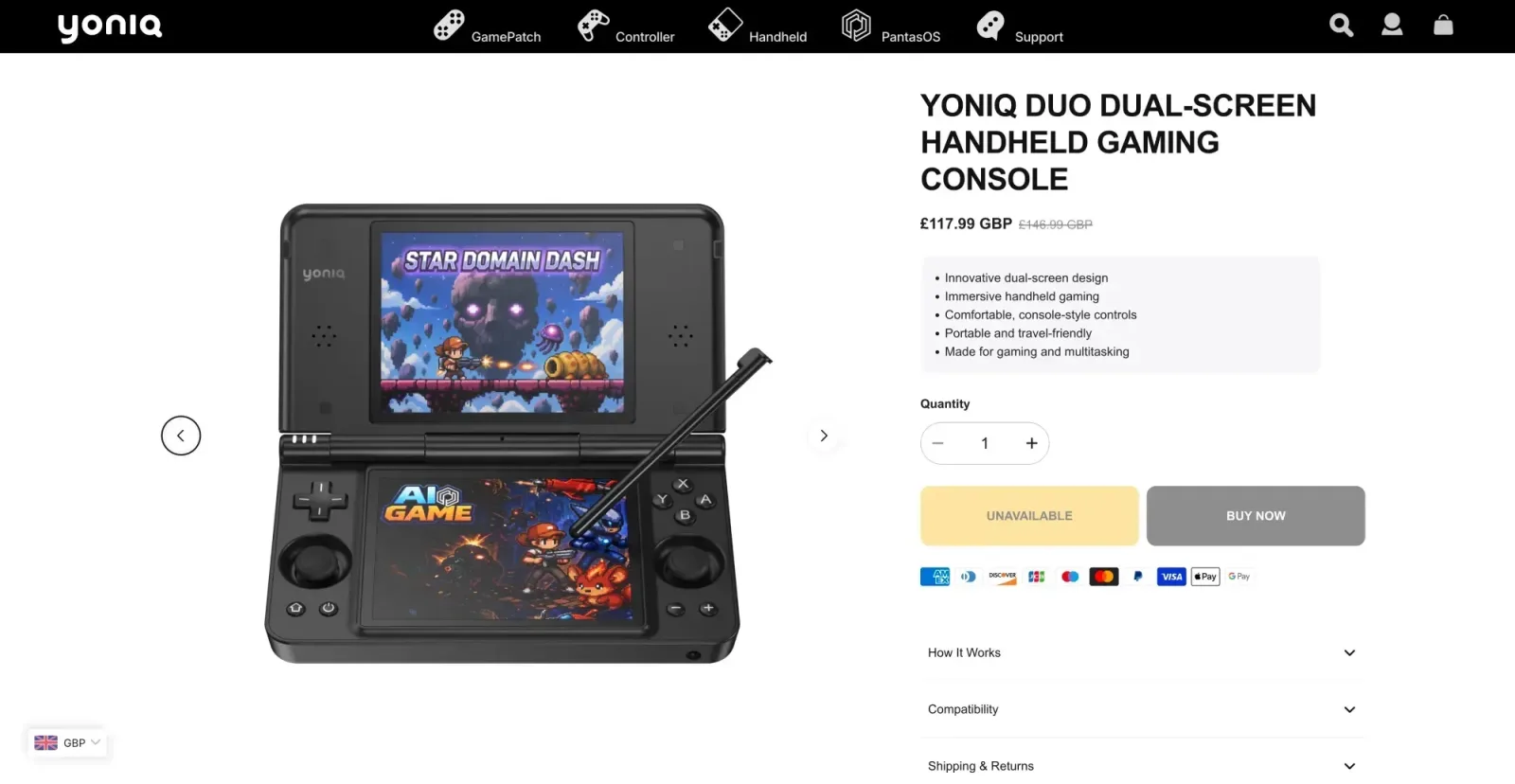
Yoniq's mysterious Duo handheld has taken another step toward release. After appearing publicly at Gamescom 2026, the dual-screen device is now listed on Yoniq's own website with fresh product imagery, a stated price and a broad "coming soon" indication. The listing does not currently provide a way to place an order, nor does it answer many of the technical questions surrounding the hardware, but it does offer the clearest official look yet at where the product may sit in the increasingly competitive dual-screen handheld market.
The price shown is £117.99, presented as a reduced early offer against a crossed-out standard price of £147. Yoniq's page also displays US pricing of $159.99, with a previous $199 figure struck through. That presentation strongly suggests an early-buyer promotion is planned, although the company has not yet outlined when ordering will begin, how long that offer might last, or which regions will be served.
For now, the Duo's listing looks more like a preliminary storefront page than a complete launch announcement. Some text on the page appears to have been carried over from Yoniq's older GamePatch product, including references to attaching a GamePatch and operation that requires no charging. Those details should not be treated as confirmed Duo features. They instead underline that the page may still be under construction, or that it was published before its product information had been fully replaced.
A new contender in the dual-screen handheld race
Even with limited official specifications, the Yoniq Duo is notable because it arrives at a moment when manufacturers are once again pursuing handheld designs built around two displays. This category naturally attracts attention from players interested in software designed for dual-screen systems, as well as enthusiasts who want a more specialized retro gaming device than the usual single-panel Android handheld.
For useful background on this topic, read FPGB Mini Specs Detail a Tiny Game Boy Cartridge Handheld With 800×720 Display.
Competition is already building. The ANBERNIC RG DS Plus has launched, while the Retroid Pocket Duo Lite is also expected to arrive during the same month. That gives Yoniq an opportunity, but it also leaves little room for an unfinished product pitch. Buyers comparing these devices will want practical details: screen resolution and aspect ratio, chipset, memory configurations, battery capacity, operating system, control layout, display hinges, software support and the expected level of emulation performance.
None of those areas have been fully detailed through the new listing. Until Yoniq supplies a finalized specification sheet and hands-on units become more widely available, it is too early to judge the Duo on raw performance or determine whether its price represents a genuine value next to established alternatives. Still, its presence at Gamescom and its appearance on the company's website indicate that it is more than a concept render or a distant idea.
New images show the back and connection options
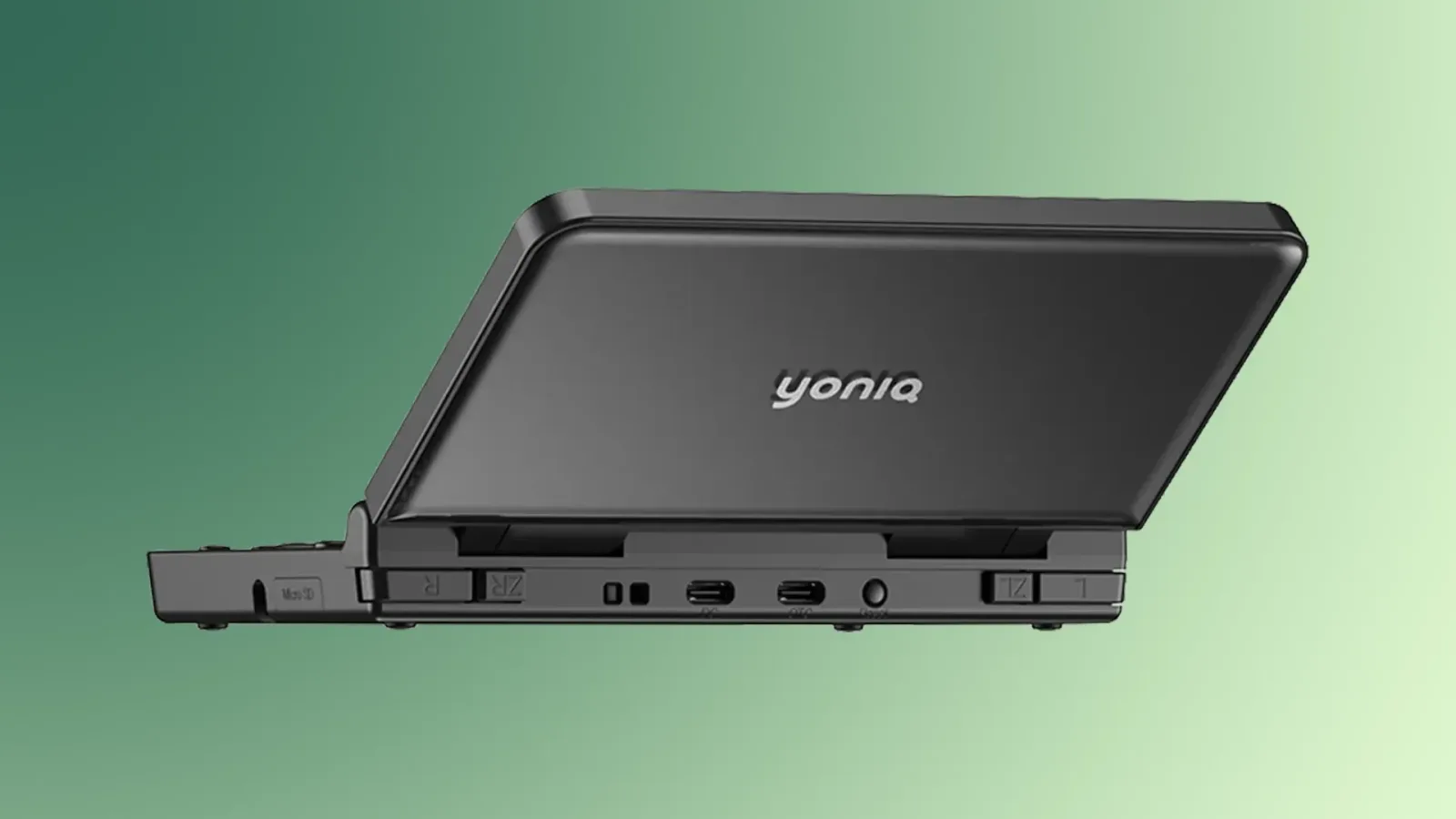
The most useful part of the listing may be its additional product images. One view offers a look at the back of the unit, where the Yoniq logo is visible alongside the shoulder-button arrangement. The image also appears to show two USB-C ports, a potentially welcome design decision for a handheld that may need to balance charging, accessories and desktop-style connectivity.
The same imagery gives a clearer view of the stylus storage arrangement along the side of the system. A stowed stylus is a small but meaningful feature for a device centered on a lower touchscreen, especially if Yoniq intends the Duo to be used with touchscreen-focused games and applications rather than only as a conventional controller-based emulator. It is also a physical usability advantage that can matter over months of ownership: a dedicated storage location reduces the chance of losing an accessory that may be essential for certain titles.
Yoniq has not provided an exhaustive explanation of the Duo's input features or indicated whether the stylus will be included in every package. The available images nevertheless suggest that the company is taking the two-screen concept seriously as a hardware format, rather than simply adding a second display as a novelty. The success of that approach will depend heavily on software. Dual displays need flexible screen mapping, readable scaling options, easy touchscreen calibration and reliable sleep behavior if players are expected to use the unit as an everyday handheld.
Yoniq says its background reaches beyond a new brand name
Yoniq may be unfamiliar to many gaming-handheld buyers, but the company has said its team has access to experienced Chinese manufacturing and supply-chain resources. It has also stated that people involved with the brand have previously worked on the development and production of numerous handheld gaming devices already available on the market. The Duo represents the first time this group is bringing a product directly to consumers under its own name.
That distinction is important. The retro handheld scene frequently sees brands emerge with little publicly visible history, and consumers often have to decide whether a promising render will turn into a polished retail product with dependable quality control and after-sales support. Manufacturing experience can be valuable, particularly in areas such as component sourcing, assembly, testing and avoiding production delays. It does not automatically guarantee a strong consumer launch, however. Building a recognized brand also requires clear communication, accurate listings, customer service and frequent software support.
At present, Yoniq's public-facing presentation remains a concern. Its website has previously shown inaccurate material, removed or changed information and assets that have raised questions. The newly listed Duo page continuing to display unrelated GamePatch wording fits that pattern. Yoniq has acknowledged that its marketing operation is still being developed and is less mature than its product and engineering functions, describing this as one of the challenges of a traditionally product-focused team.
That candor may help explain the inconsistent messaging, but it also means prospective buyers should be cautious about treating every visible detail as final. A product page with conflicting feature text is not an ideal foundation for pre-orders, particularly for a first consumer-branded device. The most sensible next step for Yoniq would be a full corrected product page accompanied by unambiguous specifications, software information, regional shipping plans, warranty terms and a confirmed ordering date.
Price could position the Duo aggressively, if it holds
If the £117.99 and $159.99 figures are genuine early pricing, the Duo could enter the market at a relatively aggressive point for a dedicated two-screen handheld. The £147/$199 standard price shown on the page would still be a major part of the buying decision, but the lower launch-style figure could help Yoniq gain attention from early adopters willing to take a chance on a new entrant.
Price alone will not decide the outcome. Players evaluating a dual-screen device are likely to scrutinize the screens themselves first. A poor hinge, dim panel, weak touchscreen, awkward display gap or limited brightness can undermine the central reason to buy this kind of handheld. The quality of the controls will matter just as much. Retro enthusiasts expect a comfortable d-pad, responsive face buttons and shoulder controls that can withstand repeated use, while users hoping for broader Android gaming or streaming support will look for sufficient performance and connectivity.
Yoniq also needs to demonstrate how the Duo handles the situations that make dual-screen devices more demanding than standard handhelds. Can screens be rearranged? Can one display be enlarged temporarily? Are there portrait and landscape modes? Is there a clean solution for games that make unusual use of both panels? Are settings accessible without disrupting play? These are the details that separate an interesting shell from a handheld people will continue using after the first week.
More details are still needed before launch
The current Yoniq Duo listing is encouraging chiefly because it provides an official price reference and confirms that the device remains on the company's release path after Gamescom 2026. It also offers a closer look at the rear hardware, shoulder buttons, dual USB-C ports and integrated stylus storage. Yet it stops short of delivering the information needed for an informed purchase decision.
Yoniq has another handheld in development as well, the Yoniq Portal, which was also shown at Gamescom. That wider product ambition suggests the company is aiming to establish itself as more than a one-device experiment. For the Duo, though, execution will be everything. A compelling price, thoughtful physical design and experienced production support could give the system a real chance in a fast-moving segment. Incomplete web pages and sporadic communication could just as easily make potential customers wait for reviews and retail availability.
Until the company shares its complete specifications and opens sales, the Yoniq Duo remains a promising but unproven entry in the dual-screen handheld boom. The official listing makes it easier to believe that a launch is approaching. It does not yet make clear exactly what buyers will receive, when they will receive it, or whether the early price will be available when orders finally go live.
Community
Discussion
Start the conversation.
No comments have been posted yet.