

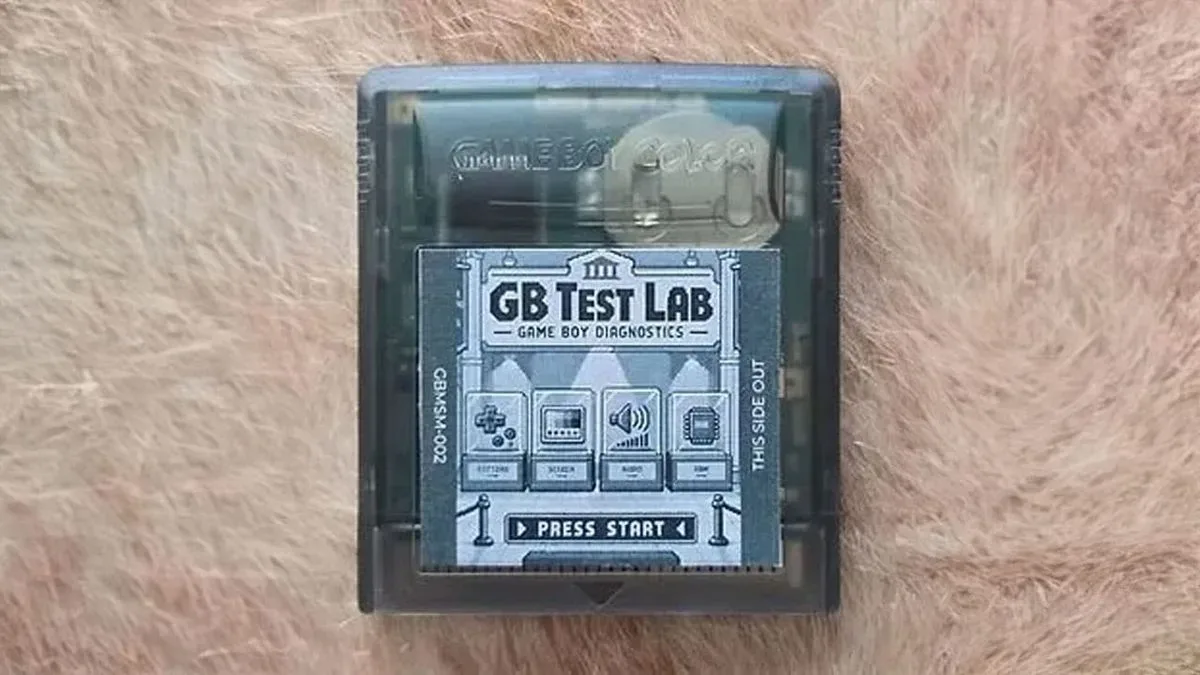
Original Game Boys have reached the age where a quick power-on test is no longer enough to call a system healthy. Nintendo's iconic DMG-01 may be famously durable, but decades of use, storage, repairs, corrosion, worn controls and ageing internal connections can all produce problems that are not immediately obvious. A console can load a game and still have intermittent faults waiting to affect link play, accessories, timing-sensitive software or long-term reliability.
GB Test Lab, a diagnostic ROM created by Marcel Pflug of Game Boy Museum, is designed to give owners, collectors and repair enthusiasts a much deeper look at the condition of an original Game Boy. Rather than functioning as a game or a basic cartridge reader check, the software puts the machine through a broad set of tests intended to identify issues across its hardware. The goal is to make a Game Boy's internal state more visible before, during or after repair work.
The project arrives at a useful time for the retro-hardware community. The original Game Boy launched in 1989, meaning the earliest units are now approaching four decades in service. Even systems that appear clean and well cared for can have weak batteries, ageing capacitors, imperfect solder joints, dirty ports or buttons whose electrical behavior has changed. Those faults do not always present as a permanent failure. Sometimes they show up only when an accessory is connected, when the machine is under heavier demand, or when a player presses a direction at exactly the wrong moment.
A diagnostic cartridge for the DMG-01
GB Test Lab is specifically built around the baseline hardware characteristics of the original DMG-01 Game Boy. That distinction matters. It is not presented as a universal test suite for every machine in Nintendo's Game Boy family, and its expected readings are based on the classic launch-model hardware rather than the Game Boy Pocket, Game Boy Color, Game Boy Advance or later revisions.
For useful background on this topic, read Human-Made Decomp and Recomp Directory Aims to Highlight Community Coding Work.
For owners of a stock grey Game Boy, that focus gives the software a clear purpose. It aims to test the system in the form most commonly encountered by restorers: an original unit that may have a mix of factory parts, replacement components and unknown repair history. A machine that only needs a shell clean and a new screen lens could pass with ease, while a system with a subtle communication or input problem may finally have a way to reveal where further investigation is needed.
The utility reportedly examines a wide collection of functions, including CPU and RAM behavior, key bounce timing, link-port functionality, wiring-related faults and Game Boy Printer communication. This is substantially more comprehensive than the usual test of inserting a commercial cartridge and confirming that the Nintendo boot logo appears. That familiar startup check can prove that some core functions work, but it cannot guarantee that every component is operating within expected limits.
Looking beyond a cartridge that loads
For retro players, "working" can mean different things. Someone who only wants to play Tetris for a few minutes may be satisfied if the power switch responds and the screen displays an image. A collector seeking an accurate restoration, however, may need to know whether the d-pad has inconsistent contact timing, whether the link cable circuit is reliable, or whether a port works only after being held at a particular angle.
For another perspective on this story, read GB Test Lab Offers Deep Diagnostics for Original Game Boy Hardware.
GB Test Lab addresses that gap by treating the Game Boy as a collection of individual systems rather than one all-or-nothing device. Input testing can be especially valuable because worn buttons are common on handhelds that have had years of intense use. A control may register most presses yet occasionally produce an unwanted repeat or fail under quick inputs. The software's key bounce measurements are intended to provide data on that behavior instead of leaving repairers to rely entirely on feel.
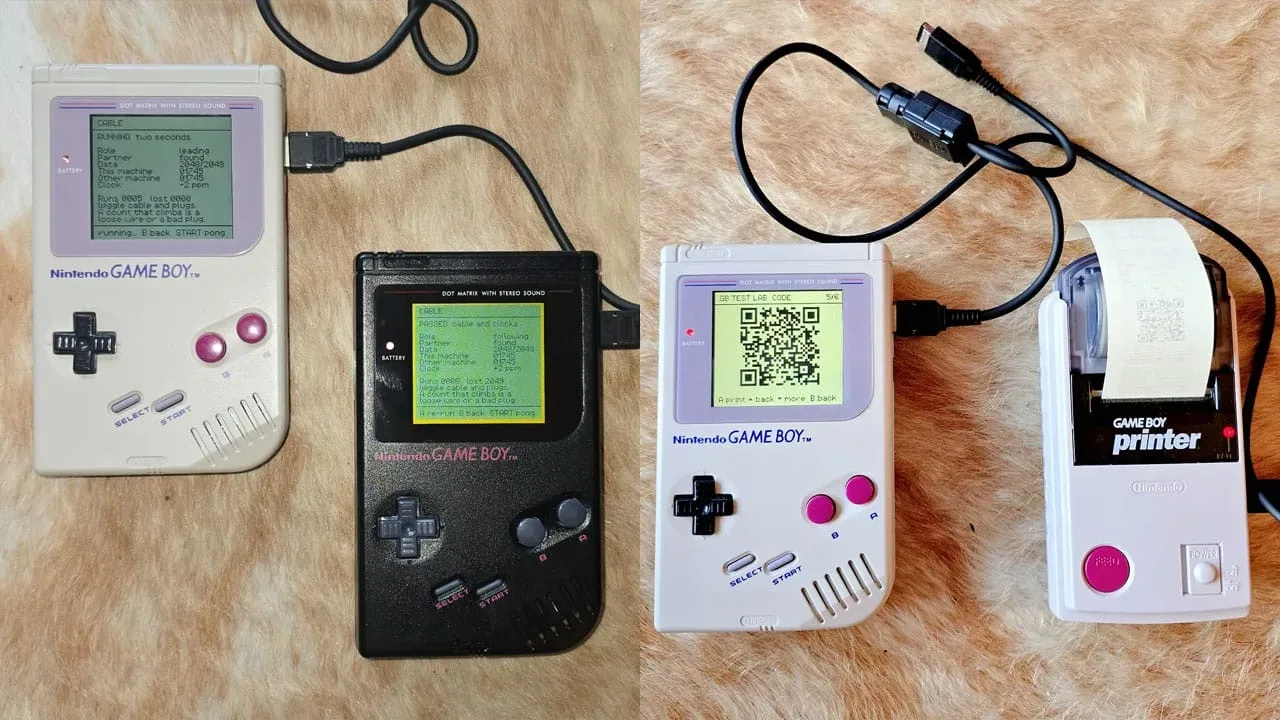
Communication hardware is another area that is easy to overlook. The Game Boy link port is central to many multiplayer experiences and accessory functions, but it is rarely tested during a casual console check. A corroded connector, damaged traces, poor soldering or an issue with the port itself can turn a seemingly functional handheld into an unreliable one when another unit is attached. GB Test Lab includes cable-screen testing for users who have the required second system and link cable.
Printer support also receives attention. The Game Boy Printer remains a popular accessory among enthusiasts, especially for players using Game Boy Camera and other compatible software. If a Game Boy has trouble communicating with the printer, the cause may not be obvious without targeted testing. The diagnostic ROM can help establish whether the DMG is connecting efficiently, although making a physical paper report naturally requires a functioning Game Boy Printer and thermal paper.
What is needed to run GB Test Lab
GB Test Lab is distributed as a ROM file, so it needs to be loaded onto a compatible flash cartridge rather than bought as a conventional retail cartridge. The compatibility requirements are important, and they may rule out some inexpensive flash carts. The cartridge must support MBC5 and provide 256 kilobytes of capacity. Devices limited to MBC1 or MBC3 emulation, or those capped at 32 kilobytes, are not sufficient; the expected result in that situation is simply a black screen rather than a successful launch.
An EverDrive is identified as a compatible option. Users who want records to persist after the console is switched off also need a battery in their flash cartridge. That detail is easy to miss, but it is significant for anyone hoping to compare readings over time, document a restoration, or keep a record of a particular console's condition before selling or servicing it.
- An original classic Game Boy, with DMG-01 baseline hardware in mind.
- A flash cartridge supporting MBC5 and 256 kilobytes of storage.
- A battery in the flash cartridge if saved records are required.
- Fresh alkaline batteries for the Game Boy.
- For link-cable testing: a second Game Boy, a link cable and another copy of the ROM on a compatible cartridge.
- For a printed report: a Game Boy Printer and thermal paper.
Fresh alkaline batteries are more than a routine recommendation here. Flash cartridges can draw noticeably more power than original Game Boy software, and weak cells may create symptoms that resemble faults in the handheld. A dim or unstable system, strange boot behavior or intermittent errors could therefore be caused by tired batteries rather than a failing motherboard. Starting with known-good power helps prevent a misleading diagnosis.
A modern counterpart to Nintendo's ageing tests
Veteran Game Boy hardware fans may recognize the broader idea behind GB Test Lab. Nintendo has its own service-oriented cartridge, known as DMG-AGING-01. In this context, "aging" does not merely mean that a console is old. It refers to operating hardware under load over a period of time to observe how it behaves. Such testing can expose instability that would not be apparent during a short boot check.
GB Test Lab belongs to the same general tradition of taking the Game Boy's health seriously, but it puts a detailed tool into the hands of ordinary enthusiasts with appropriate flash-cart hardware. That could make it particularly useful for hobbyists who repair multiple consoles, modders validating their work, and collectors who want a more repeatable inspection process. It may also help newcomers learn that a successful game boot is only one piece of a much larger technical picture.
The software does not remove the need for careful troubleshooting. A failing test still needs interpretation, and physical repairs can involve cleaning, continuity checks, soldering and component replacement. Likewise, an individual result may be influenced by a bad cable, weak batteries, a problematic flash cartridge or attached accessories. But a structured test suite can narrow down where to look, saving time compared with swapping parts at random.
A valuable tool for preservation-minded players
Retro gaming increasingly depends on maintenance as much as nostalgia. The more original Game Boys remain in active circulation, the more valuable accessible diagnostic tools become. A handheld can be cosmetically restored with a new shell, screen lens and buttons, yet still carry an underlying fault that only becomes clear during multiplayer use or accessory testing. GB Test Lab offers a way to investigate those less visible problems before they become more frustrating.
For players with a compatible flash cartridge, the ROM can be downloaded from Game Boy Museum. The project is also accompanied by technical material for those interested in the methodology behind its tests. Whether it is used to confirm that a prized childhood DMG-01 remains healthy or to bring a flea-market find back into dependable condition, GB Test Lab gives original Game Boy hardware a far more thorough check-up than loading a single cartridge ever could.
Community
Discussion
Start the conversation.
No comments have been posted yet.