

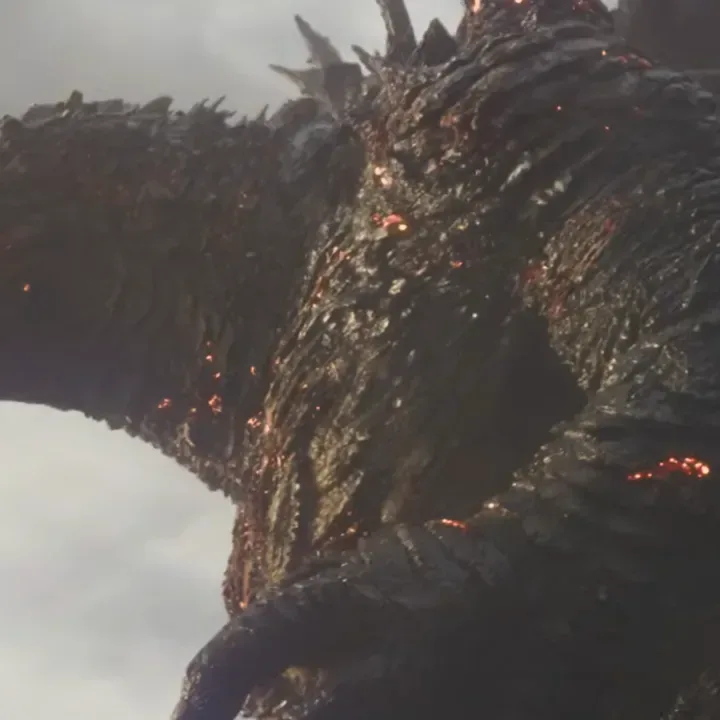
Godzilla Minus Zero has released a new trailer that puts its central monster conflict into sharper focus without fully giving away one of the sequel's biggest visual reveals. Debuting during New York Comic Con 2026, the roughly one-minute preview shows Godzilla unleashing his atomic breath as King Ghidorah answers with lightning-like gravity beams. The footage offers a destructive glimpse of the Kaiju battle to come, but Toho is still holding back Ghidorah's complete redesigned appearance for the film itself.
The follow-up to 2023's Godzilla Minus One arrives on November 6, and the latest footage makes clear that the scale of the threat has increased substantially. Godzilla's prior devastation is still important to the human story, particularly through the question of how Noriko Oishi, again played by Minami Hamabe, survived the first film's catastrophic attack. Yet the new trailer also signals that the survivors will now face an enemy capable of meeting Godzilla's destructive power head-on.
For audiences hoping to see every detail of the new Ghidorah design before opening night, the trailer is deliberately restrained. The three-headed kaiju is present through movement, attacks, and destructive aftermath, but the film's marketing continues to avoid a clean, comprehensive showcase of the creature. That approach preserves a major theatrical surprise while still making Ghidorah's abilities unmistakable: its beams tear through the sky and target airborne structures with frightening force.
Embedded X/Twitter post
Godzilla and Ghidorah Bring a New Level of Destruction
The trailer's most immediately recognizable image is the contrast between Godzilla's atomic breath and Ghidorah's gravity beams. Godzilla's signature attack remains a defining part of the Minus-era visual identity, while Ghidorah's energy crackles across the frame like violent lightning. The matchup gives the sequel a classic rivalry at a scale suited to its title characters, with both monsters presented as forces that can reshape the environment around them in seconds.
For useful background on this topic, read Street Fighter Movie Aims for Character-Specific Combat in Every Matchup.
That destruction is not limited to monster-versus-monster spectacle. The trailer repeatedly emphasizes the danger facing the human cast, from the chaos in the air to the collapse and devastation that follow the creatures' attacks. The returning group appears to be confronting the crisis with a strategy framed as fighting fire with fire, suggesting that human ingenuity and desperation will once again be crucial alongside the enormous Kaiju conflict.
The emphasis on aerial danger is particularly notable. Ghidorah's gravity beams appear capable of striking targets above the city and knocking airborne objects from the sky, creating a different kind of threat from Godzilla's massive physical presence and atomic blast. While the trailer does not explain the full circumstances of the confrontation, it positions the three-headed monster as an adversary whose arrival changes the rules for everyone involved.
There is also a continuing emotional thread in Noriko's survival. Godzilla Minus One centered much of its impact on the human cost of disaster, and Godzilla Minus Zero appears ready to revisit that trauma rather than simply treating the previous destruction as background. The footage teases answers surrounding Noriko while leaving the details unresolved, giving the sequel a personal mystery to carry alongside its larger monster story.
A Sequel Built for IMAX Raises the Technical Stakes
Beyond the trailer, members of the production team used the New York Comic Con panel to discuss the demanding work required to bring Godzilla Minus Zero to the screen. The sequel is the first Japanese production filmed for IMAX, a distinction that adds another layer of complexity to a project already centered on massive digital creatures, large-scale environmental effects, and intricate sound design.
One trailer sequence sees Godzilla rise from the ocean while pursuing a plane. It may last only a short time onscreen, but the work behind it is immense. The ocean sequence required 2 billion particles and was created by only two people. That figure illustrates the unusual balance at the heart of the production: imagery intended to feel colossal and overwhelming is being shaped through highly focused work by a comparatively small number of artists.
Visual effects artist and compositor Tatsuji Nojima discussed his path into the series during the panel. His involvement with Godzilla Minus One began as a hobby before director Takashi Yamazaki recognized his abilities. Nojima later became the first Gen Z winner of the Academy Award in the visual effects category for his work on the 2023 film, and his continued participation gives the sequel a direct creative link to the team that established the recent film's acclaimed visual approach.
Producer Kazuaki Kishida highlighted the importance of younger artists across the production. Through a translator, he explained that the Godzilla Minus Zero team includes members as young as 22 and 23 who are trusted to manage an entire cut or scene independently. Kishida described Yamazaki as open to fresh methods and perspectives, with a collaborative environment that does not rely on a strict age-based hierarchy.
That philosophy matters for a project where every shot can involve a complicated mix of digital effects, miniature-scale detail, live-action performance, compositing, and sound. A Godzilla film needs its monsters to feel physically immense, but it also needs the surrounding world to respond convincingly. The ocean chase shown in the trailer is a useful example: water, aircraft movement, the creature's scale, atmospheric conditions, and camera presentation all need to work together if the scene is to feel believable on an IMAX screen.
Creating the Sound of a Monster Battle
The panel also shed light on the audio work behind the sequel. Godzilla's roar is among the most recognizable sounds in monster cinema, but the team's process shows how much experimentation is needed to make familiar elements feel powerful in a new production. For Godzilla Minus One, the echo surrounding Godzilla's roar was captured by recording the sound in a baseball stadium.
Ghidorah required another distinct approach. Sound designer and Foley artist Natsuko Inoue explained that the crew went to a dam while searching for an appropriate acoustic identity for the new creature. The location was not empty: people were out picnicking and walking nearby, and one dog reacted badly to the unusual noise-making process, barking in response as the recording work continued.
The anecdote is amusing, but it reflects the practical experimentation behind effects that can seem effortless once they reach the final mix. A character such as Ghidorah cannot simply sound big; the audio needs to communicate an unnatural, intimidating presence that stands apart from Godzilla while still fitting the same world. The gravity beams shown in the trailer will have their own role in that sonic identity, especially as they cut through scenes involving aircraft, buildings, and open spaces.
Production and post-production sound mixer Hisafumi Takeuchi also joined the panel alongside Kishida, Nojima, and Inoue. Their combined work points to a sequel aiming to use its premium large-format presentation for more than sheer visual scale. The soundscape has to carry the weight of each roar, impact, beam, and distant collapse, making the conflict between Godzilla and Ghidorah feel as physically imposing as it looks.
What the New Footage Leaves for Theaters
The latest Godzilla Minus Zero trailer gives viewers enough to establish the sequel's stakes: Godzilla is back, King Ghidorah has arrived, and the human survivors are dealing with consequences that extend beyond the first film. It also confirms that the franchise is leaning into one of its most famous monster rivalries without abandoning the character-driven tension that helped make Godzilla Minus One resonate.
At the same time, the preview carefully avoids explaining too much. Ghidorah's full Minus-universe redesign remains hidden, the details of Noriko's survival are still unresolved, and the exact plan the human cast will use against the escalating threat has yet to be revealed. Rather than treating those absences as gaps, the marketing appears to be preserving them as reasons to experience the finished film in theaters.
With its November 6 premiere approaching, Godzilla Minus Zero is positioning itself as both a continuation and an escalation. The return of Godzilla's atomic breath, the introduction of Ghidorah's gravity beams, a larger IMAX canvas, and the intricate work of a cross-generational production team all point toward a sequel built around enormous spectacle. The final shape of Ghidorah, however, remains one secret the film intends to keep until audiences are in their seats.
Community
Discussion
Start the conversation.
No comments have been posted yet.