

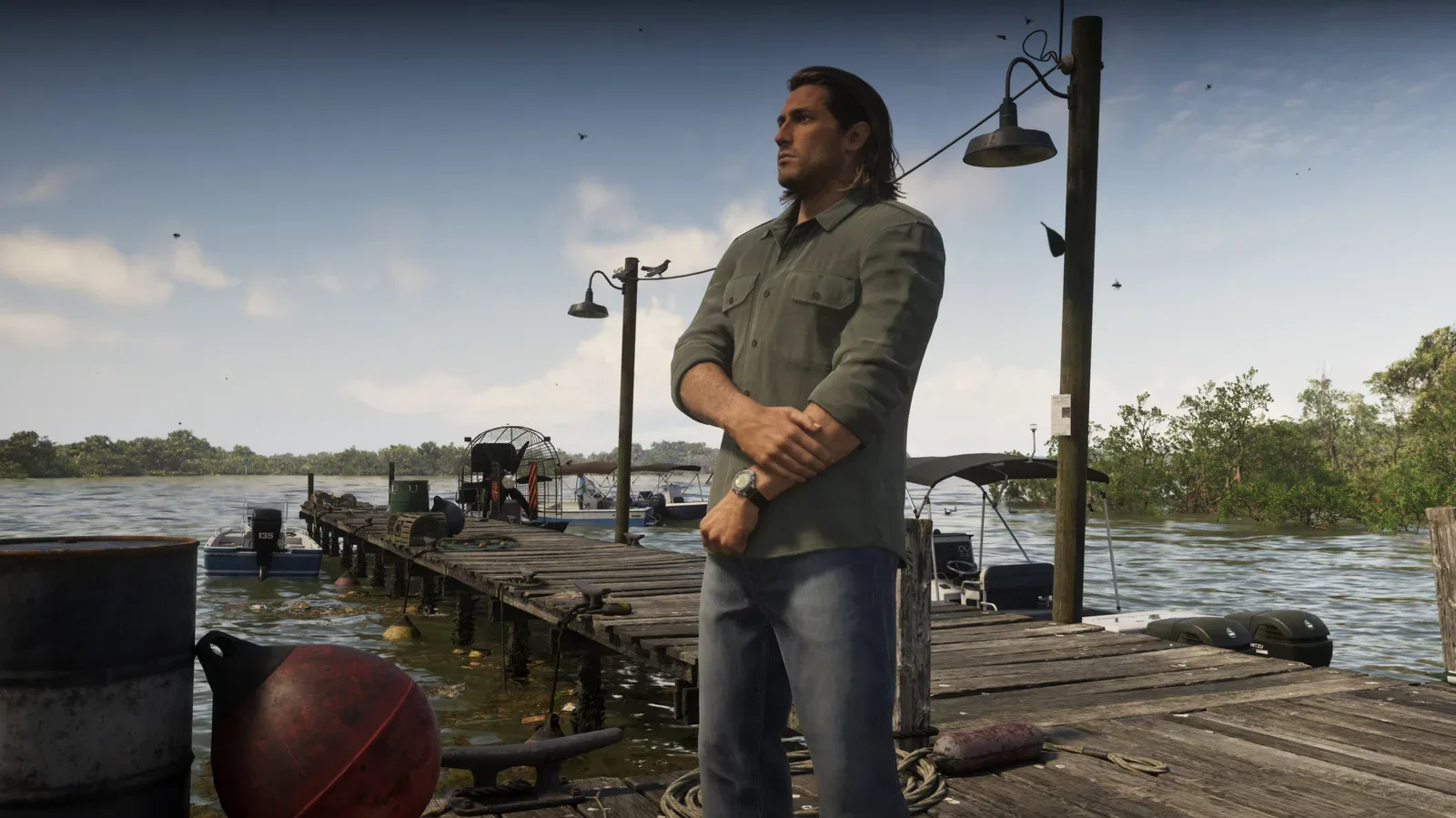
Grand Theft Auto 6 has been out for less than a week, but the familiar race to expand Rockstar's blockbuster beyond its official boundaries is already underway. Developers are attempting to recompile the game for PC, while console players are experimenting with methods that can make its 30 frames-per-second presentation appear smoother. None of these approaches is a replacement for an official PC edition or a native 60 fps console mode, and several carry major technical, legal, or practical limitations. Still, the speed at which the community has begun probing the game is notable.
The central issue is straightforward: Rockstar has not announced when GTA 6 will receive a true PC release. Rumors have pointed to early next year, but there is no confirmed date. That uncertainty has created room for unofficial recompilation projects, which aim to make software designed for a console run on PC hardware without relying on full console emulation.
At the same time, players on PlayStation 5 and Xbox are looking for any route around the game's 30 fps ceiling. A higher frame rate does not change the game's design or its underlying simulation on its own, but it can substantially affect perceived responsiveness and motion clarity. For a game as high-profile as GTA 6, the gap between 30 fps and 60 fps has become one of the first major technical conversations following release.
Recompilation efforts are already being tracked
One early project, called Leonida, reportedly managed to boot GTA 6 before its Discord server was taken down by Rockstar. The takedown is an immediate reminder that unofficial attempts to distribute, host, or coordinate work around a new release are likely to draw close attention from the publisher.
For useful background on this topic, read CD Projekt Red Expects The Witcher 4 to Make a Leap Comparable to GTA 5 to GTA 6.
Leonida is not the only effort being watched. A tracking site called Port Watch VI is following multiple recompilation projects. It has claimed that the leading work in progress has loaded the game and allowed a player to move around and speak with non-player characters, albeit "very slowly." That is a long way from a playable, stable PC build, but getting a modern game to load and reach interactive gameplay is still an early technical milestone.
These projects should not be mistaken for a finished PC port. A game can boot, render some scenes, accept input, or allow limited interaction while still lacking the performance, compatibility, audio behavior, graphics stability, save support, and broad hardware coverage needed for normal use. GTA 6 is also an enormous and technically demanding open-world release, which makes a smooth unofficial build especially difficult to achieve.
Recompilation differs from traditional emulation in an important way. Rather than recreating the behavior of an entire console environment, recompilation-focused work attempts to translate or adapt a game's executable code to operate on PC hardware. In theory, that can avoid some of the overhead associated with console emulation. In practice, the process remains extraordinarily complicated, particularly for a recent game built around tightly integrated console hardware assumptions, proprietary systems, and modern rendering features.
Leaked Xbox materials could accelerate interest
More unofficial work may emerge following reports that hacking group Cyberleek dumped files from GTA 6's Xbox build, along with an executable that could assist developers attempting to recompile the game. Materials of that kind can attract technical attention quickly, especially when an official PC version has not yet been dated.
However, greater access to files does not mean an unofficial PC release is imminent, functional, or safe. It also does not settle the legal questions around acquiring, using, distributing, or building tools from leaked game materials. Rockstar has already shown a willingness to act against high-profile community spaces connected to the work, and it is reasonable to expect further enforcement where the company believes its rights are being infringed.
There is also a distinction between a technical proof of concept and something ordinary players could use. The earliest recompilation builds for complex games often require specialist knowledge, very specific software setups, and tolerance for severe problems. Even if a project reaches a publicly discussed milestone, that does not establish that it will become broadly available or remain available.
Modern coding tools, including AI-assisted development tools, may help developers inspect code, automate portions of a workflow, or iterate on compatibility problems faster than older projects could. They do not eliminate the underlying challenges, though. A game like GTA 6 has countless systems that must function together: streaming a massive city, AI behavior, physics, traffic, missions, animation, audio, input, rendering, and online-connected components. Any one of those areas can create a major obstacle.
Why the 30 fps debate has intensified
The separate frame-rate discussion is driven by the game's official console performance target. GTA 6 runs at 30 fps on its current console versions, and Rockstar has confirmed that a 60 fps console mode is not planned because the available CPUs are not powerful enough to simulate its complex world at that higher rate.
That explanation points to a key limitation often missed in frame-rate debates. Visual settings can be reduced to ease pressure on graphics hardware, but the CPU still has to process the systems that make a dense open world function. Pedestrians, vehicles, physics, world streaming, AI routines, mission logic, and countless other calculations must all be completed in less time when a game moves from 30 fps to 60 fps. If the simulation cannot consistently meet that budget, a higher target can cause unstable performance or force compromises elsewhere.
For some players, 30 fps remains perfectly playable, particularly when frame pacing is consistent and motion blur is used effectively. Others strongly prefer 60 fps because it reduces the time between frames and generally makes camera movement and input feel more immediate. Neither preference changes the technical reality that GTA 6's simulation load appears to be the determining factor for Rockstar's current console configuration.
PlayStation 5 enhancements come with meaningful trade-offs
PlayStation 5 owners have found a workaround intended to improve the game's perceived fluidity rather than unlock a native frame-rate mode. The method uses Veyra, a video enhancement tool, together with NVIDIA DLSS 5 capabilities such as frame generation. The PS5 version can be fed into the setup through a 4K capture card or through Sony's Remote Play feature, after which the external tools generate additional frames and apply other image enhancements.
The result can look smoother than the standard 30 fps output, but it is important to be precise about what the method does and does not do. Frame generation creates intervening visual frames from existing ones. It can improve apparent motion smoothness, yet it does not make the console's CPU simulate GTA 6 at a real 60 fps. The game itself is still operating at its original base rate.
Latency is the largest compromise. Frame generation can add delay, and so can the GPU processing required for enhancement. Capture hardware and Remote Play streaming may introduce further latency. For slower-paced exploration or cinematic scenes, some players may find the trade-off worthwhile. For driving, combat, rapid camera movement, or any situation where immediate input response matters, the accumulated delay could be distracting or unacceptable.
Image quality may vary too. Generated frames can occasionally produce artifacts around fast-moving objects, UI elements, particles, or sudden scene changes. Such effects are not unique to GTA 6, but they are part of the cost of using post-processing techniques to alter a video signal after the console has rendered it.
An Xbox glitch offers a different route to 40 fps
On Xbox, players have identified a simple glitch that unlocks a 40 fps version of GTA 6. A move from 30 fps to 40 fps is not the same as reaching 60 fps, but it should be visibly smoother than the default mode. In percentage terms, it represents a one-third increase in displayed frames over the stock 30 fps presentation.
Unlike external frame generation, a 40 fps option would potentially alter the game's actual output rate, making it a more direct improvement if it remains stable. The major question is how long the glitch will persist. Because it is reportedly easy to perform, it could be addressed in a future update if Rockstar decides it is unintended behavior.
Players should also be cautious about treating an accidental mode as equivalent to a fully tested performance setting. A glitch may have inconsistent behavior across displays, game states, or system setups. It may also carry limitations that are not immediately obvious during brief testing.
Official support remains the clearest long-term answer
For now, GTA 6's technical future is split between confirmed limitations and fast-moving unofficial experimentation. Rockstar's public position is clear on one point: current consoles will not receive an official 60 fps mode because the CPU simulation demands are too high. The timeline for a PC version, meanwhile, remains unconfirmed.
That leaves enthusiasts with choices that are all incomplete. Recompilation projects may demonstrate impressive technical progress, but they face enormous development hurdles and probable legal pressure. External enhancement pipelines can make 30 fps footage look smoother, but they add latency and do not change the game's underlying simulation rate. The Xbox 40 fps glitch may offer a more immediate improvement, though it could disappear at any time.
As a result, the most dependable path for players seeking a native, polished PC experience or a properly supported higher-frame-rate option remains official support from Rockstar. Until the company shares more about its plans, GTA 6's first post-launch technical story will likely continue to be shaped by a determined community testing the limits of what can be changed--and by the constraints that cannot be bypassed so easily.
Community
Discussion
Start the conversation.
No comments have been posted yet.