

The Legend of Zelda: Skyward Sword has spent much of its life carrying an unusually heavy burden for a mainline Zelda game. Its original Wii release became closely associated with motion-control frustrations, its segmented world drew unfavorable comparisons with more open Zelda adventures, and its reputation hardened around the idea that it was a noble experiment rather than an essential entry. Yet revisiting the game, particularly through its Nintendo Switch version, makes a persuasive case that it has been underestimated.
Skyward Sword is not secretly every kind of Zelda game fans might want it to be. It does not offer the ocean-spanning freedom of The Wind Waker, nor the immense, self-directed wilderness of Breath of the Wild. Its structure is more guided, its regions are more compact, and its original control scheme created real barriers for plenty of players. But those limitations can obscure its considerable strengths: combat built around attention and intention, superb puzzle-box dungeons, inventive uses of time manipulation, and one of the series' most emotionally resonant portrayals of Link and Zelda.
With the benefit of hindsight and the refinements made for Switch, Skyward Sword feels less like an awkward detour and more like a major transitional chapter. Many of the ideas that later became familiar parts of the series are visibly taking shape here.
The Switch version changes the combat conversation
The biggest obstacle to appreciating the Wii original was always its motion-driven swordplay. Skyward Sword was designed around the Wii Remote's ability to detect the direction of a swing, but the execution could be temperamental. A fight that was meant to reward precision could instead become a dispute with calibration, wrist movements, and the occasional disconnect between a player's intent and Link's onscreen action.
For useful background on this topic, read CD Projekt Red Expects The Witcher 4 to Make a Leap Comparable to GTA 5 to GTA 6.
The Switch release does not erase the original approach. Players who want that style can still use detached Joy-Con controllers for motion controls. However, it also supplies a button-based alternative that maps sword directions to the right analog stick. That change matters because it makes the game's underlying design easier to assess on its own merits. Rather than physically forcing a swing with the right angle, players can make a controlled thumb movement while keeping the focus on the enemy's behavior.
What emerges is a Zelda combat system that asks more of the player than simply rushing in with repeated attacks. Many enemies guard specific areas of their bodies and react to Link's sword position. The solution is not always speed or aggression; it is observation. A player has to read the opponent, identify a vulnerable line, and cut through it deliberately.
That makes combat feel distinct within the series. It is not soulslike in the conventional sense of punishing difficulty or stamina management, but it shares a similar emphasis on committing to considered actions. Wildly swinging at an enemy is often ineffective. The game wants players to slow down, study a defense, and act with purpose. For a franchise where combat can sometimes lean on familiar sword-and-shield rhythms, that added layer gives Skyward Sword a valuable identity.
A focused world with exceptional dungeons
Skyward Sword's exploration is one of its most common points of criticism, and the criticism is understandable. Flying through the skies on Link's Loftwing does not provide the range of discoveries found sailing the Great Sea or wandering Hyrule in the modern open-world games. The surface regions are revisited several times, and the game's progression tends to direct players along a clear path.
Still, its design is more purposeful than it is often given credit for. Skyward Sword treats areas outside traditional dungeons as extensions of the puzzle-solving experience. Forests, volcanic paths, deserts, and ruined facilities frequently ask players to navigate obstacles, locate mechanisms, and reinterpret spaces rather than merely travel through them. The result can feel constrained, but it also gives the game a strong sense of authored adventure.
Its finest work is found in the dungeons. The Lanayru Mining Facility and the Sandship are especially memorable examples of how Skyward Sword turns the series' long-running fascination with time into a tactile, local mechanic. Rather than building an entire adventure around a grand time-travel premise, the game lets players alter specific objects and spaces. Ancient machinery can be restored, environmental conditions can shift, and ruined places can reveal their former purpose.
The Sandship takes that idea further in a setting that remains one of the series' most imaginative. It layers a vessel from the past over its weathered present-day remains, creating puzzles that make players consider what a room was, what it has become, and how to move between those states. The approach recalls the clever temporal design associated with Majora's Mask, while applying it to individual dungeon challenges instead of an entire repeating world.
These dungeons are proof that a narrower structure does not automatically mean a less creative game. Skyward Sword may not offer endless directions to wander, but it regularly provides intricate spaces worth mastering.
Groose is more than a comic rival
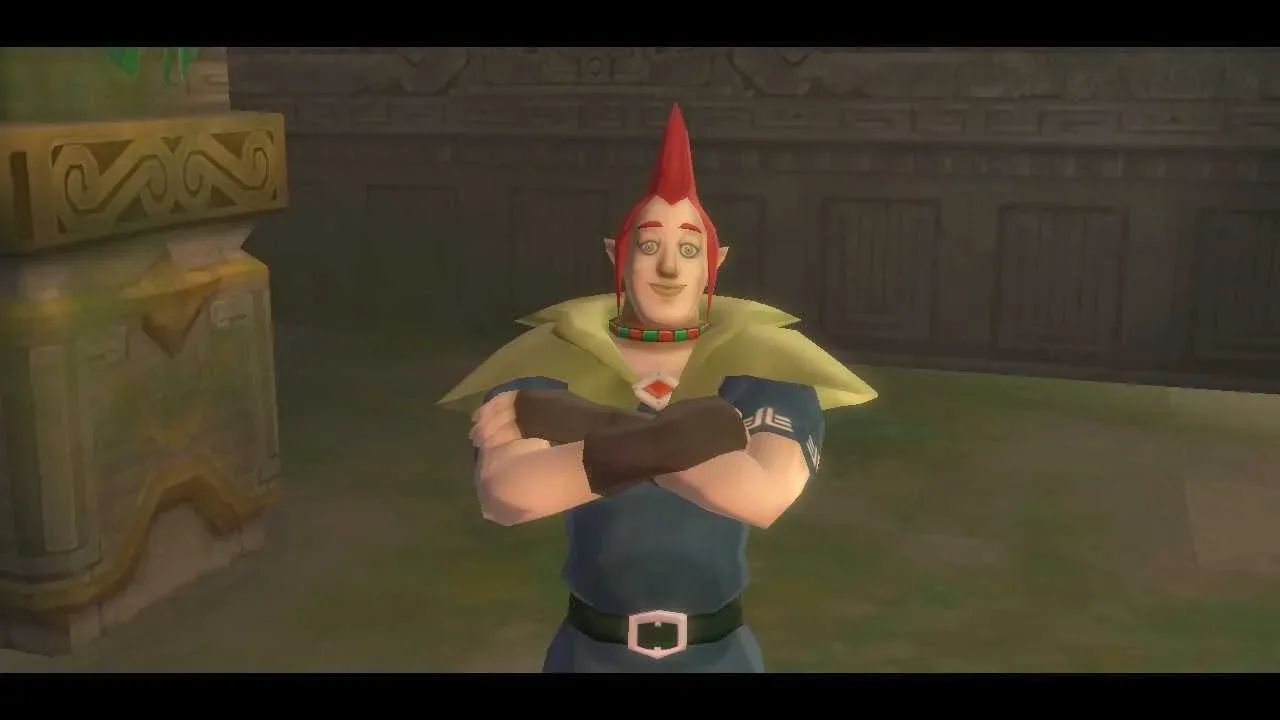
Skyward Sword's most lasting achievement may be its cast. Zelda games have no shortage of memorable supporting characters, but Groose remains one of the most effective because the game gives his development room to breathe. He begins as an overconfident bully, frustrated by Link's closeness with Zelda and eager to assert himself as the hero of Skyloft.
That setup could have easily led to a predictable antagonist. Groose might have become a resentful rival who returns as an obstacle late in the game, defined entirely by jealousy. Instead, Skyward Sword allows him to grow. His insecurity does not vanish, but he finds a purpose beyond competing with Link. By the time the stakes rise, Groose has become someone who can meaningfully contribute to the larger fight.
The arc works because it does not ask players to forget who Groose was at the beginning. His broad personality and comic energy remain intact. But beneath the bravado is a person learning that heroism is not reserved for the chosen swordsman. In a series built on destiny, that is an especially satisfying idea. Groose earns his place through persistence and self-discovery rather than prophecy.
A Link and Zelda relationship with genuine warmth
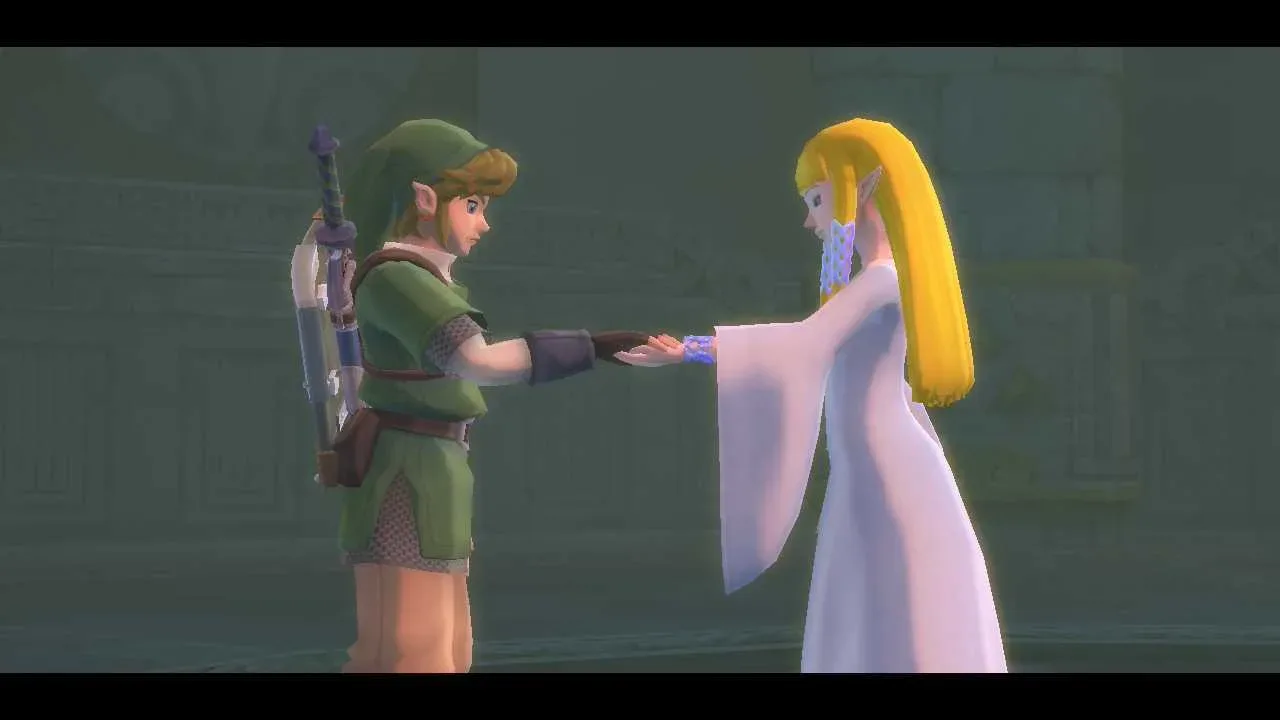
The relationship between Link and Zelda is also unusually central. Across the franchise's many incarnations, they are often connected by fate, royal duty, and the recurring struggle against evil. Skyward Sword retains those foundational ideas, but it starts from a more personal place. Before the epic responsibilities take over, they are friends from Skyloft with an easy closeness and a shared history.
That foundation gives the story more emotional weight once Zelda's journey and obligations pull the pair apart. Zelda is portrayed as bold and compassionate, but she is also aware of the cost that destiny places on Link. One of the game's defining scenes comes when she apologizes for the emotional pain caused by pushing him toward the role the world requires. She accepts responsibility while also accepting the sacrifice she believes must be made to protect everyone else.
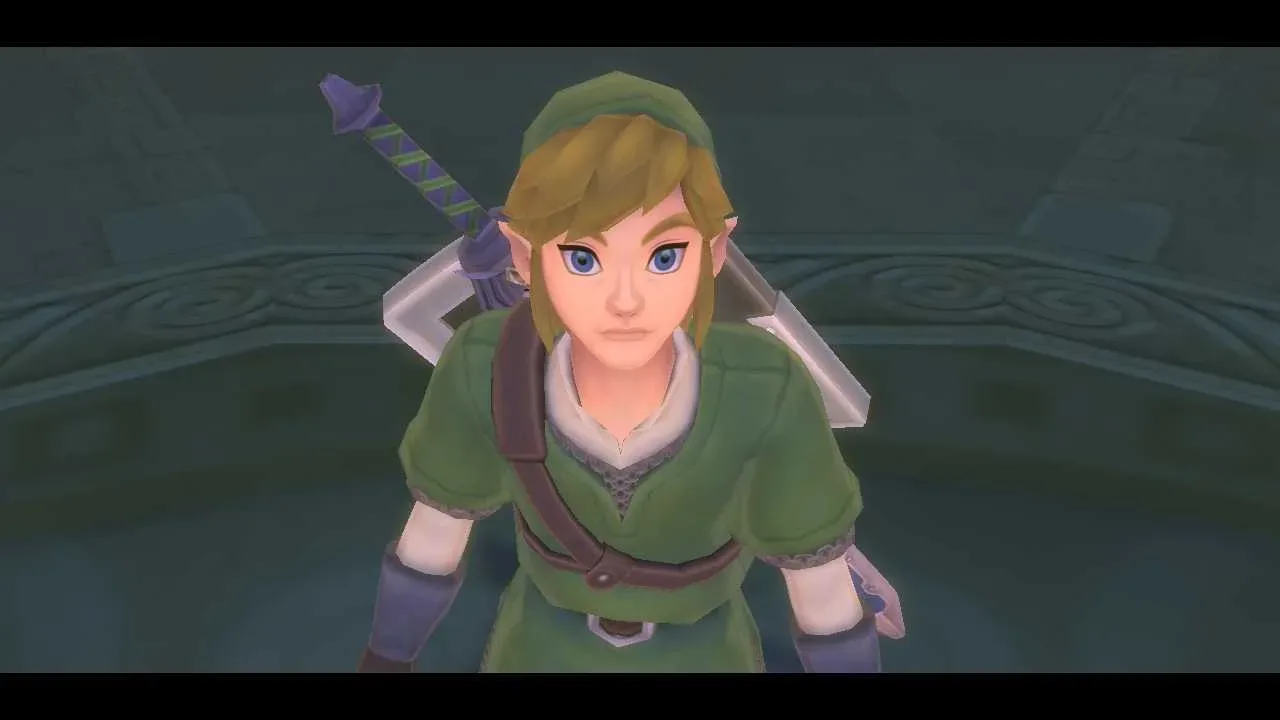
Link, as usual, says little. Yet Skyward Sword finds a powerful way to use that silence. His response is communicated through movement and urgency, particularly as he rushes toward Zelda before she seals herself away. The moment captures affection and grief without needing a lengthy declaration. It makes clear that this is not merely a knight obeying a princess, but a person trying to reach someone he deeply cares about.
That intimacy helps explain why Skyward Sword can feel like an important narrative predecessor to the versions of Link and Zelda seen in Breath of the Wild and Tears of the Kingdom. Those later games develop their own distinct relationship, but Skyward Sword demonstrates how compelling the pair can be when their connection is treated as more than a symbolic legend.
An important step toward Zelda's future
Skyward Sword also contains ideas that would become increasingly meaningful to the franchise. The ability to leap from great heights and deploy a sailcloth to slow Link's descent is a clear early expression of the vertical freedom that later Zelda games would greatly expand. Its sky setting, aerial travel, and emphasis on movement between elevated and grounded spaces all feel like experiments whose influence can be seen in the series' future.
That does not make Skyward Sword flawless. Its pacing will still be too deliberate for some players, its world design remains more restrictive than the adventures many fans prefer, and even improved controls cannot make its combat style universally appealing. But a game does not need to be flawless to deserve reappraisal.
Viewed beyond the noise surrounding the Wii era, The Legend of Zelda: Skyward Sword is a confident, emotionally rich adventure with some of the franchise's smartest dungeon design and most distinctive combat. Its willingness to make players think before swinging, to turn time into an immediate puzzle tool, and to invest deeply in Link and Zelda's bond gives it a character few other entries replicate. For anyone who dismissed it years ago--or skipped it because of its reputation--the Switch version offers an excellent opportunity to see why this chapter of Zelda's legend has so much more to offer than its critics once suggested.
Community
Discussion
Start the conversation.
No comments have been posted yet.