

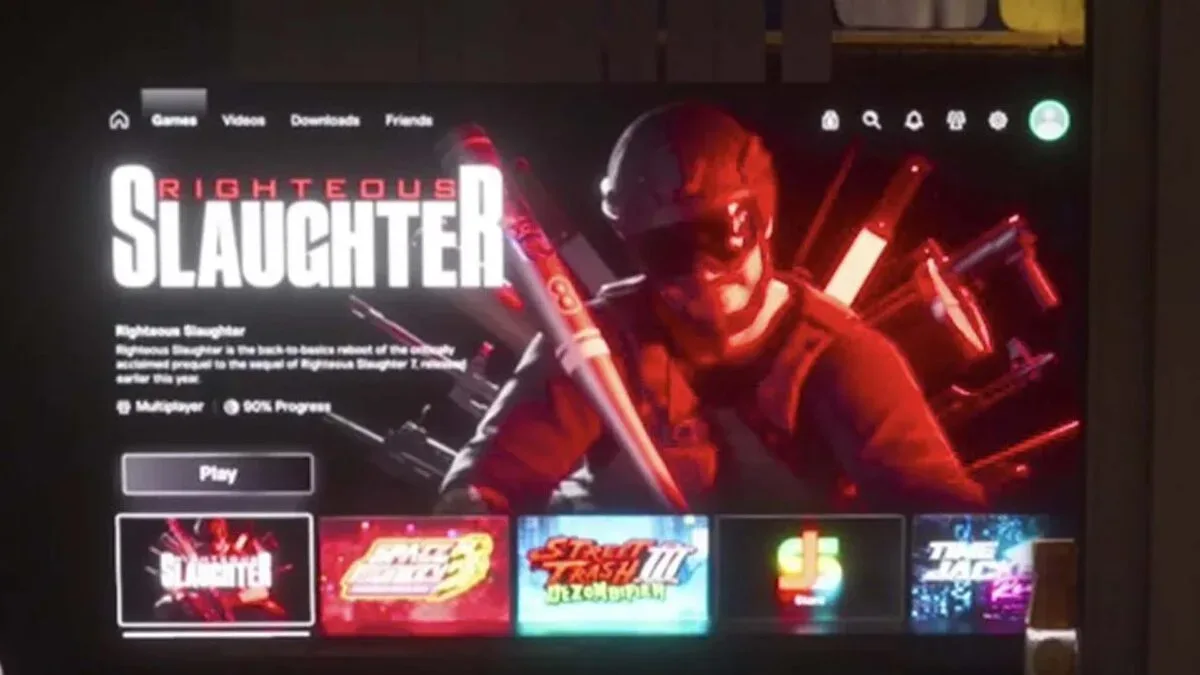
Grand Theft Auto 6 has never been subtle about taking shots at American culture, corporate absurdity, media hysteria, and the entertainment business. Its fictional radio broadcasts and commercials are designed to make Vice City feel loud, overstuffed, and sharply satirical. One newly highlighted commercial, however, lands with unusual force beyond the confines of the game's world.
Among GTA 6's in-universe ads is a promotion for Righteous Slaughter: Domestic Infection, a fictional AAA military shooter that appears to be Rockstar's latest broad spoof of the Call of Duty formula. The ad presents an exaggerated vision of a patriotic action game where the greatest threat to the country is a supposed disease causing people to think "anti-American thoughts." Its targets include fear-driven political messaging, military-game bombast, and the tendency to frame basic labor rights as dangerous ideology.
That is already a pointed gag. But it is also arriving while Rockstar employees are voting on the future of union recognition at the company. At the same time, 31 former Rockstar employees are involved in a court dispute in the UK over claims that they were dismissed as part of anti-union activity. Rockstar denies those allegations. With those real-world events unresolved, a GTA 6 joke about workers seeking benefits, security, and union representation has become far more than a routine parody commercial.
A Military Shooter Where Unions Are Treated Like an Infection
Rockstar's GTA games traditionally build their satire through details players may hear in passing. Radio stations do more than play music: DJs comment on the city, callers rant, news segments report bizarre events, and commercials advertise products, films, books, television programs, and games that do not exist outside the GTA universe. Righteous Slaughter: Domestic Infection is one of those fictional products.
For useful background on this topic, read Grand Theft Auto movie Remains Unlikely as Take-Two Sets a High Bar for Adaptations.
The premise is deliberately ridiculous. The commercial claims that a "Liberal Cuck Contagion" is spreading through the population, infecting people with thoughts that the ad treats as intolerable. Those supposedly dangerous thoughts include wanting fair wages and considering union membership. The joke is not merely that the fictional shooter is hyper-patriotic; it is that its worldview is so warped that workplace protections become evidence of national betrayal.
The punchline arrives during an exchange between two soldiers. One observes that they have been carrying out their mission without benefits or security, then tentatively suggests that they might consider unionizing. The other immediately reacts as though his fellow soldier has become infected, shouting that "Jimmy" has caught the contagion.
It is an intentionally blunt bit of satire. The commercial mocks a strain of rhetoric that celebrates workers as heroes when they are fighting, serving, or producing, while treating them as villains when they request a stronger say in their pay, conditions, or job security. By placing that contradiction in a military-game parody, Rockstar also draws attention to the genre's familiar language of unquestioning duty, national identity, and heroic sacrifice.
The Real Context Makes the Joke Harder to Ignore
On its own, the ad can be read as another entry in Grand Theft Auto's long history of lampooning conservative media panic and blockbuster game culture. The timing, though, gives the material a considerably more awkward and potentially more revealing context.
Rockstar developers are currently voting on whether their union will be formally recognized. The outcome matters because recognition can give workers a structured means to bargain collectively over concerns such as compensation, bonuses, employment conditions, and security. Those issues are particularly prominent in game development, an industry known for long production cycles, shifting studio structures, layoffs, and pressure around major releases.
The company is also dealing with a separate legal conflict involving 31 former employees. The former workers contend that their firings were connected to union-busting tactics. Rockstar disputes the claims. A judge's ruling is still awaited, meaning there is no final resolution to the case at this stage.
That backdrop changes how the commercial's dialogue can be heard. A fictional soldier says he has no benefits or security and wonders whether collective organization might help. Rather than answering the concern, the commercial's other soldier treats the mere suggestion as proof of a dangerous mental infection. It is a satire of anti-union fearmongering, but it appears in a game released amid a real dispute over how workers at Rockstar can organize and what happened to former employees associated with union activity.
The contrast is difficult to miss: the game's fictional world ridicules the idea that wanting fair treatment is somehow unpatriotic, while the studio behind it is confronting serious labor questions of its own.
Satire That May Be Pointing in More Than One Direction
It would be easy to describe the commercial simply as Rockstar poking fun at Call of Duty. The fake title, Righteous Slaughter: Domestic Infection, uses the kind of aggressive subtitle and escalating sequel language associated with massive military franchises. Its melodramatic mission framing similarly sends up shooters that turn geopolitical anxiety into explosive entertainment.
Yet the union material gives the ad a wider target. It is criticizing a political posture in which workers are valued only as long as they remain compliant. The absurdity comes from treating the desire for benefits and protection as a condition requiring containment. The soldiers are presumably risking their lives in service of the country, but one is suddenly considered a threat the moment he wonders whether his employer owes him more.
That tension can also make the ad feel unexpectedly subversive. Games of GTA 6's scale are made by huge teams across numerous disciplines, including artists, programmers, writers, designers, quality assurance staff, audio teams, production workers, and many others. A scripted joke can pass through multiple creative hands before players ever hear it. There is no public indication that the commercial was intended as a direct statement about Rockstar's own labor situation, and it should not be presented as one.
Still, the irony is unavoidable. Whether intentional or not, the ad's mockery of anti-union thinking now sits beside the real efforts of some Rockstar workers to secure collective representation. It demonstrates how satire inside a game can take on meanings its creators may not fully control once it encounters current events.
What Workers Say Is at Stake
Rockstar developer and union member Nestor Uriarte has argued that formal recognition would help ensure that employees throughout the company share fairly in the success they helped create. In a recent public statement, Uriarte said Rockstar's games lead the industry and that its wages, workplace conditions, and bonuses should reflect that standing as well.
Uriarte also stressed that the union's work will continue regardless of the result of the ballot. The broader argument is that organizing should not be viewed as something limited to other industries or historic labor movements. Game workers, too, can pursue collective power over the conditions under which games are made.
That perspective is directly echoed by the GTA 6 commercial's central gag, even if through ridicule. The fictional soldier recognizes a practical problem: no benefits and no security. His proposed solution is unionizing. The ad's joke comes from a system so ideologically committed to suppressing that idea that it cannot even acknowledge the problem without declaring the person who raised it to be contaminated.
For workers advocating union recognition, that is likely to feel less like distant comedy than a sharp illustration of why organization matters. The commercial caricatures an employer-friendly or nationalist response to worker demands, while the real conversation at Rockstar concerns whether employees will have a recognized collective voice.
A GTA Tradition Meets an Industry-Wide Conversation
Grand Theft Auto has always mixed juvenile absurdity with observations that can be more incisive than they first appear. Its ads are often funny because they take real advertising language, political talking points, or consumer trends and push them to extremes. The best ones expose a contradiction without pausing the game to explain it.
Righteous Slaughter: Domestic Infection works in that tradition. It turns an anti-union argument into a horror scenario because that is effectively how the fictional game's creators perceive workplace solidarity. The commercial is outrageous, but the underlying idea is recognizable: persuade people that asking for more at work is selfish, threatening, or disloyal.
In 2026, that subject has particular relevance across video games. Labor organizing, workplace instability, studio closures, layoffs, and questions about the people behind blockbuster releases have become central parts of the industry conversation. GTA 6 is one of the biggest games of its era, so even a fleeting radio commercial inside it carries unusual visibility.
For now, the in-game ad remains a clever, caustic piece of GTA world-building. But Rockstar's union recognition ballot and the pending court decision involving the 31 former employees give it additional weight. The game mocks a world where workers are branded dangerous for wanting security. Outside the game, the debate over workers' ability to organize at Rockstar is still playing out.
Community
Discussion
Start the conversation.
No comments have been posted yet.