

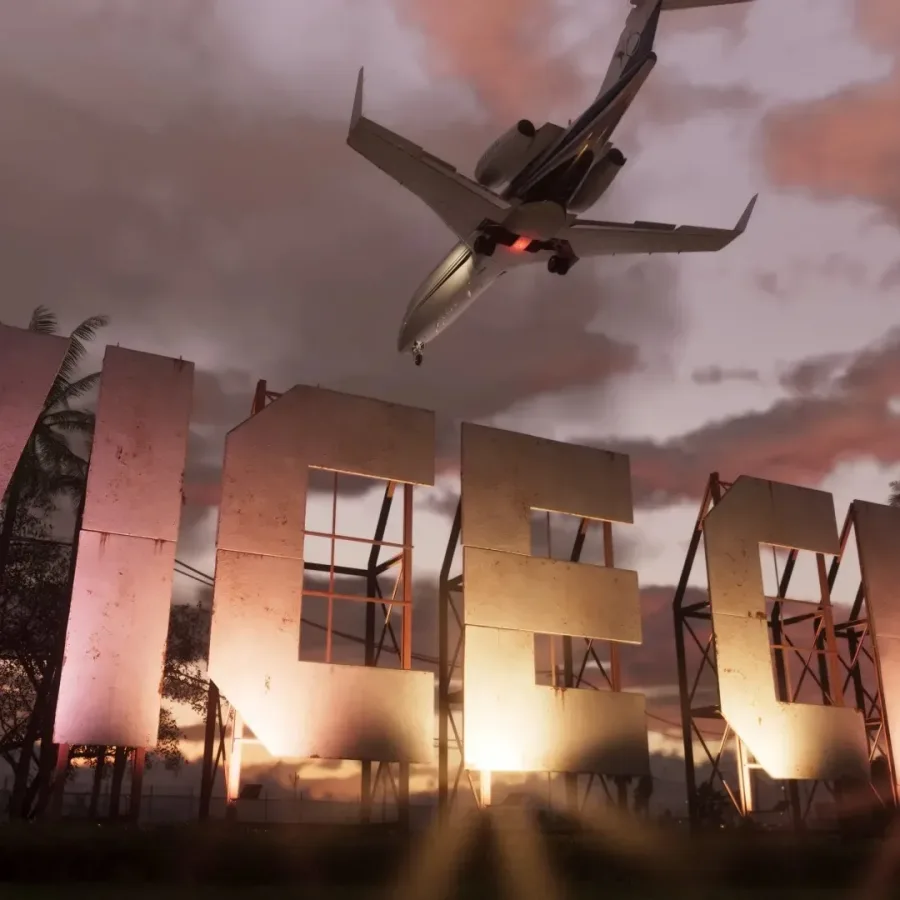
Grand Theft Auto 6 is aiming to make Leonida's climate as much a part of the open world as its roads, beaches, businesses and city streets. Rockstar has confirmed that the game will simulate tropical storms and hurricanes, building on a redesigned weather system intended to make conditions more local, more persistent and more visually reactive than in previous Rockstar worlds.
The news adds an important new dimension to the long-awaited return to Vice City and its surrounding Florida-inspired state. Weather in open-world games often functions as atmosphere: a cloudy sky can change the mood, and rain can make a nighttime drive look dramatic. GTA 6 appears to be taking a broader approach. Rainfall may be limited to particular parts of the map, storm clouds can travel over the world, and areas hit by a shower are expected to retain visible evidence after the skies clear.
For a setting modeled around Florida's famously volatile climate, that focus makes sense. Leonida is designed to encompass more than a single neon-lit city, and the game's weather could help each journey through that larger space feel less predictable. A player leaving sunshine behind could drive toward a darkened horizon, enter a downpour, and later find wet streets and pooled water even after the storm has moved elsewhere.
A rebuilt system for localized and lasting weather
Rockstar vice president of art for lighting and rendering Owen Shepherd described the underlying work as a re-engineering of the weather system. The goal, he explained, is to make weather substantially more localized and persistent. Rather than presenting one uniform set of conditions across the entire world, GTA 6 will use fully dynamic cloud formations that move over the map.
For useful background on this topic, read GTA 6's Florida Research Included Beach Days, Nightlife and Rides With Former Police.
That detail has major implications for everyday exploration. One district may be under rainfall while another remains dry and bright. Coastal drives, long highway journeys and trips between urban and rural parts of Leonida could therefore involve genuine transitions in conditions rather than an abrupt world-wide switch from sun to rain.
Localized weather is not entirely new as an idea in games, but it becomes more meaningful in a world of GTA 6's stated scale. Leonida has been described as a map roughly three times larger than the worlds of both Grand Theft Auto 5 and Red Dead Redemption 2. Simulating cloud systems that travel through a space of that size is an ambitious visual and technical proposition, particularly if the effects remain visible after a storm has passed.
Marcus Stewart, who detailed the weather features in a cover-story preview, said rainfall can produce realistic rainbows when lighting conditions line up correctly. That is a small environmental touch, but one that suggests Rockstar is considering the transition after a storm as carefully as the storm itself. The same report indicates that recently soaked ground will remain wet, while puddles can persist after the rain stops.
Those details could make Leonida feel more coherent over time. Instead of rain disappearing the moment a weather state changes, the ground may tell the story of what just happened. Pavement could glisten in the sun, roadside puddles could linger, and a break in the clouds may create a notably different scene from the one players experienced minutes earlier.
Hurricanes bring Florida-scale extremes to Leonida
The most striking confirmation is the presence of simulated tropical storms and hurricanes. Florida is associated with sudden heavy rain, tropical weather and the threat of powerful hurricanes, so bringing those events to Leonida gives GTA 6 an opportunity to turn regional identity into gameplay atmosphere.
Shepherd's description of the storms paints a vivid picture: thick cloud cover, forceful winds, dense atmospheric effects and sustained rainfall working together. During these events, water will run from roof edges and lamp posts, surfaces will become drenched, and thunder and lightning will cut through the darker skies.
It is easy to imagine how much a severe storm could transform familiar places. A beachside street, a canal-side neighborhood or a crowded commercial strip can look very different beneath clear skies than it does during a hurricane-level downpour. Headlights reflecting on soaked roads, wind-driven rain reducing visibility and lightning briefly illuminating the skyline could make even routine travel feel tense.
Rockstar has not yet specified every gameplay consequence of those storms. There is no confirmation that hurricanes will flood roads, destroy objects, knock down trees or alter the availability of missions and activities. Those are possibilities that naturally follow from the concept of major weather events, but they remain unconfirmed. For now, the confirmed focus is on the visual and environmental simulation: intense rain, wind, cloud cover, atmospheric density, wet structures and dramatic thunder and lightning.
That restraint is worth keeping in mind. A hurricane can be compelling in an open world without becoming a disaster-management system. It could serve as a spectacular dynamic backdrop for a mission, create difficult driving conditions, or simply offer players a striking moment to explore the world from a different perspective. Until Rockstar shows the systems in motion, the degree to which storms affect pedestrians, vehicles, waterways and mission design is still unknown.
Why persistence matters in an open-world crime game
Persistent weather effects may prove to be more important than the headline-grabbing hurricanes. Grand Theft Auto games are built around movement: driving between objectives, wandering through neighborhoods, escaping police, taking detours and discovering side activities. If the environment retains moisture and puddles after rainfall, the visual state of the world can evolve alongside the player's route.
That could add texture to the familiar GTA rhythm. A fast escape through a storm might eventually lead into a sunlit district with damp streets. A quiet drive after a mission may be accompanied by dripping buildings and puddles reflecting the changing sky. Even when such effects do not alter a mission mechanically, they can make the world appear less staged and more responsive.
The lighting component is particularly significant. Shepherd's role covers lighting and rendering, and many of the announced weather details concern how light interacts with the environment: rainbows under suitable lighting, lightning illuminating clouds, rain-darkened surfaces and water shedding from built structures. GTA 6's weather system is therefore not just about placing raindrops in the scene. It appears designed to reshape color, reflections, visibility and the overall feeling of a location.
Dynamic cloudscapes may also make the sky itself a useful part of the game's visual storytelling. Players could see an approaching weather front before they encounter it, while clearing skies may signal the aftermath of an earlier storm. In a state as large as Leonida, looking up could become a practical way to understand conditions beyond the immediate neighborhood.
What remains to be seen
There is still no gameplay footage dedicated to demonstrating GTA 6's tropical storms or hurricanes in action. As a result, several practical questions remain unanswered. It is not known how frequently extreme weather will occur, whether it follows a fixed seasonal pattern, whether players can predict or track approaching systems, or how storms will interact with missions.
There is also no confirmation of flooding, structural damage, falling debris, altered traffic behavior or changes to NPC routines. Rockstar's description establishes a convincing environmental foundation, but the game's final rules during severe weather have not been detailed. The distinction matters: a spectacular hurricane sequence and a fully systemic hurricane that changes the entire open world are very different design goals.
Still, the announced features point to an unusually ambitious weather model. Localized rain, traveling cloud formations, wet ground that remains wet, puddles, rainbows, tropical storms and hurricanes all suggest that Leonida's weather is meant to be experienced as a connected system rather than a simple visual toggle.
Grand Theft Auto 6 launches on November 19. When players finally arrive in Leonida, the forecast may be just as important as the destination. Clear skies can showcase the state's sun-soaked appeal, but the game's most memorable drives may happen when the clouds roll in, the streets begin to shine and a tropical storm changes the entire mood of the world.
Community
Discussion
Start the conversation.
No comments have been posted yet.