

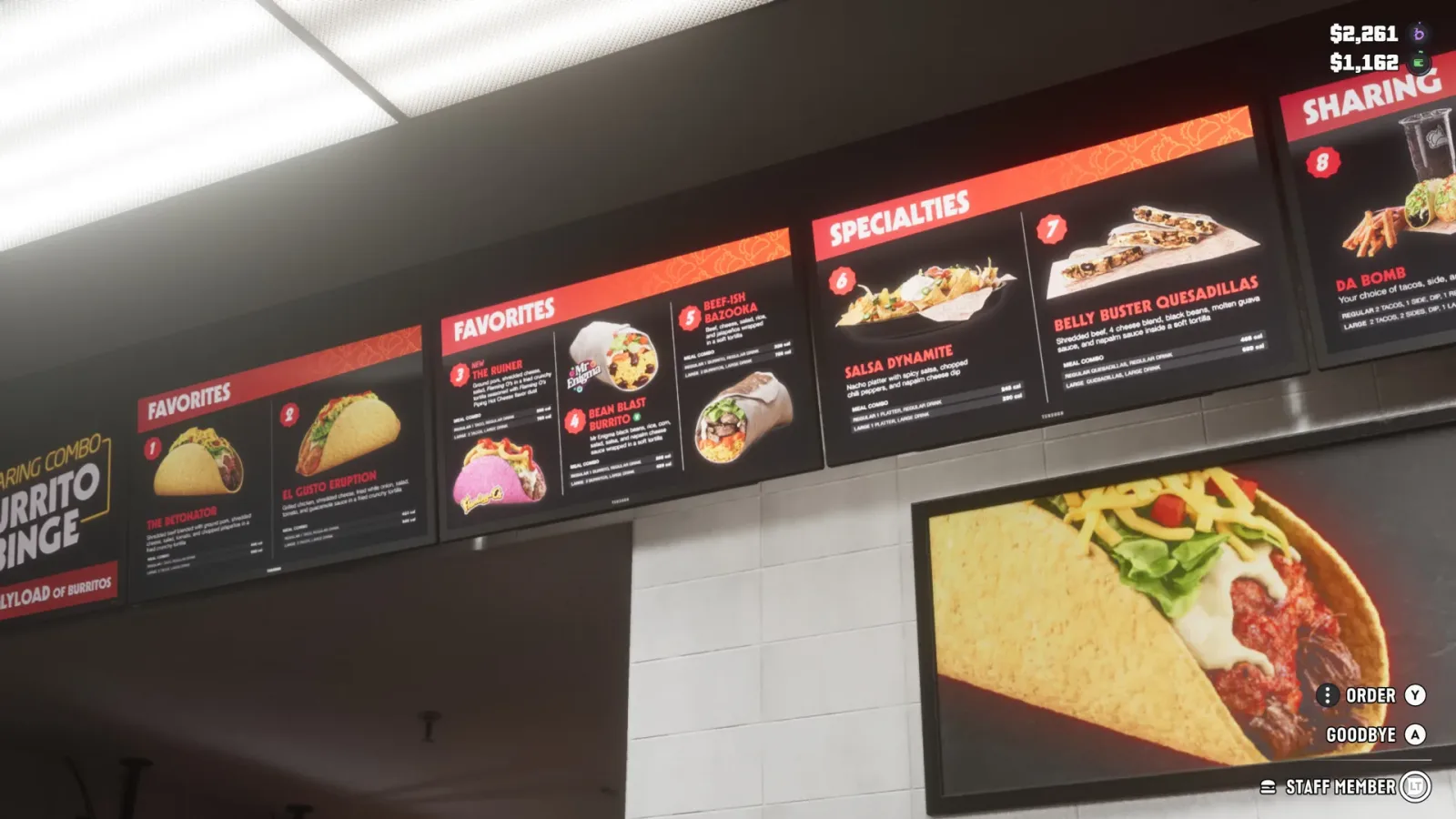
Grand Theft Auto 6 appears determined to make Leonida feel densely lived-in. Small conversations, shifting weather, character animation, clothing, broadcasts, and countless other details all contribute to a world that seems designed for close observation. Even food, an aspect many open-world games treat as a quick health-restoration tool, receives unusually careful attention.
And yet one apparent limitation of the game's food options may reveal something much more significant about its central duo. Jason and Lucia can buy drinks and handheld food, carry multiple items at once, and visibly consume them piece by piece. But they seemingly cannot settle into a restaurant for a long, comfortable dinner. They do not prepare substantial meals at home either. In a game packed with businesses and restaurant signage, many of the places that look suited to a proper meal are closed to them.
That sounds like a minor complaint, perhaps even an oddly specific one. But food has always been one of the clearest ways games communicate comfort, routine, belonging, and safety. The absence of those things may make the lack of spaghetti, lo mein, or a leisurely dinner date feel less like a missing activity and more like a deliberate thematic choice.
Leonida's food is detailed when it is meant to be eaten on the move
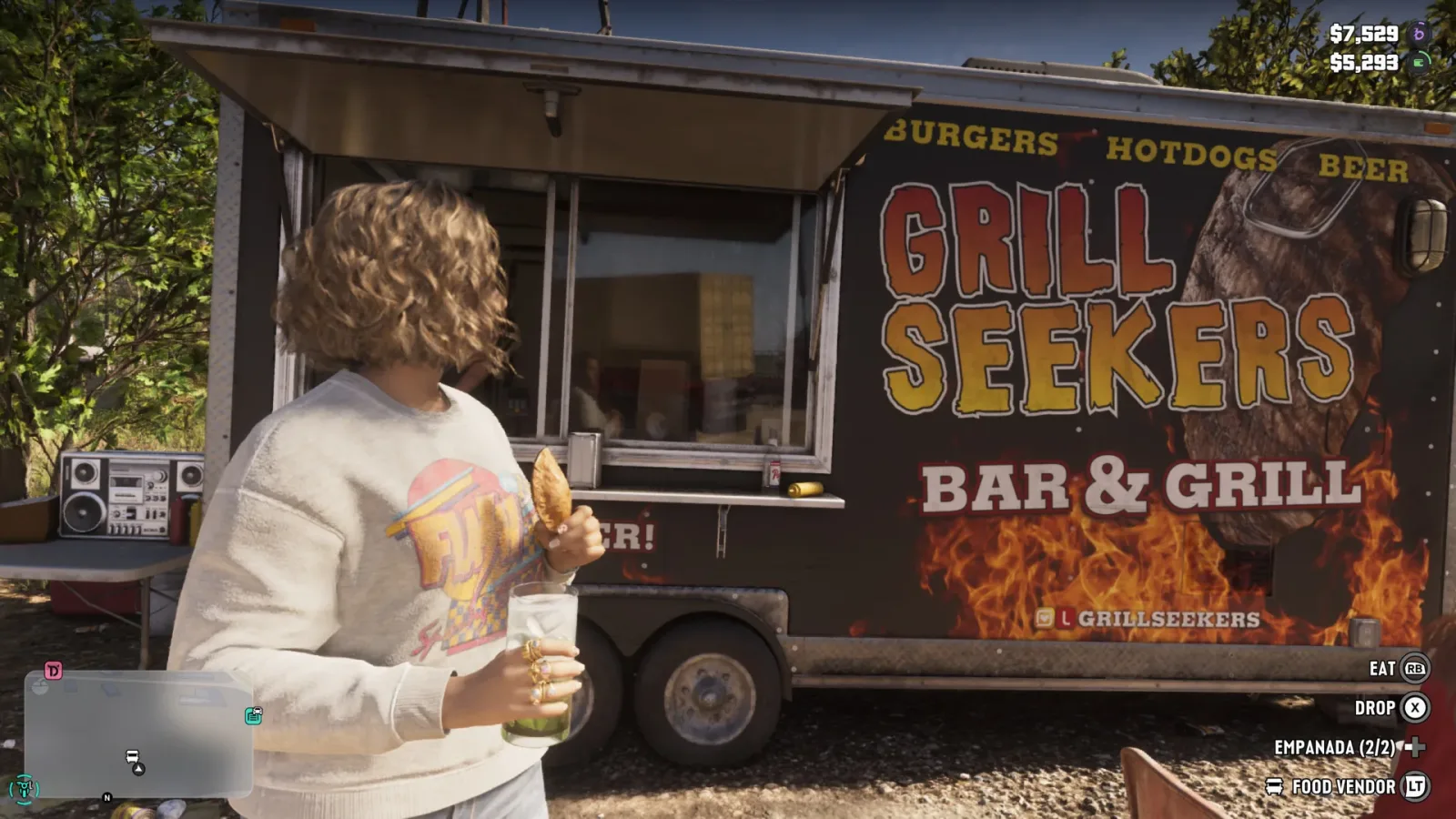
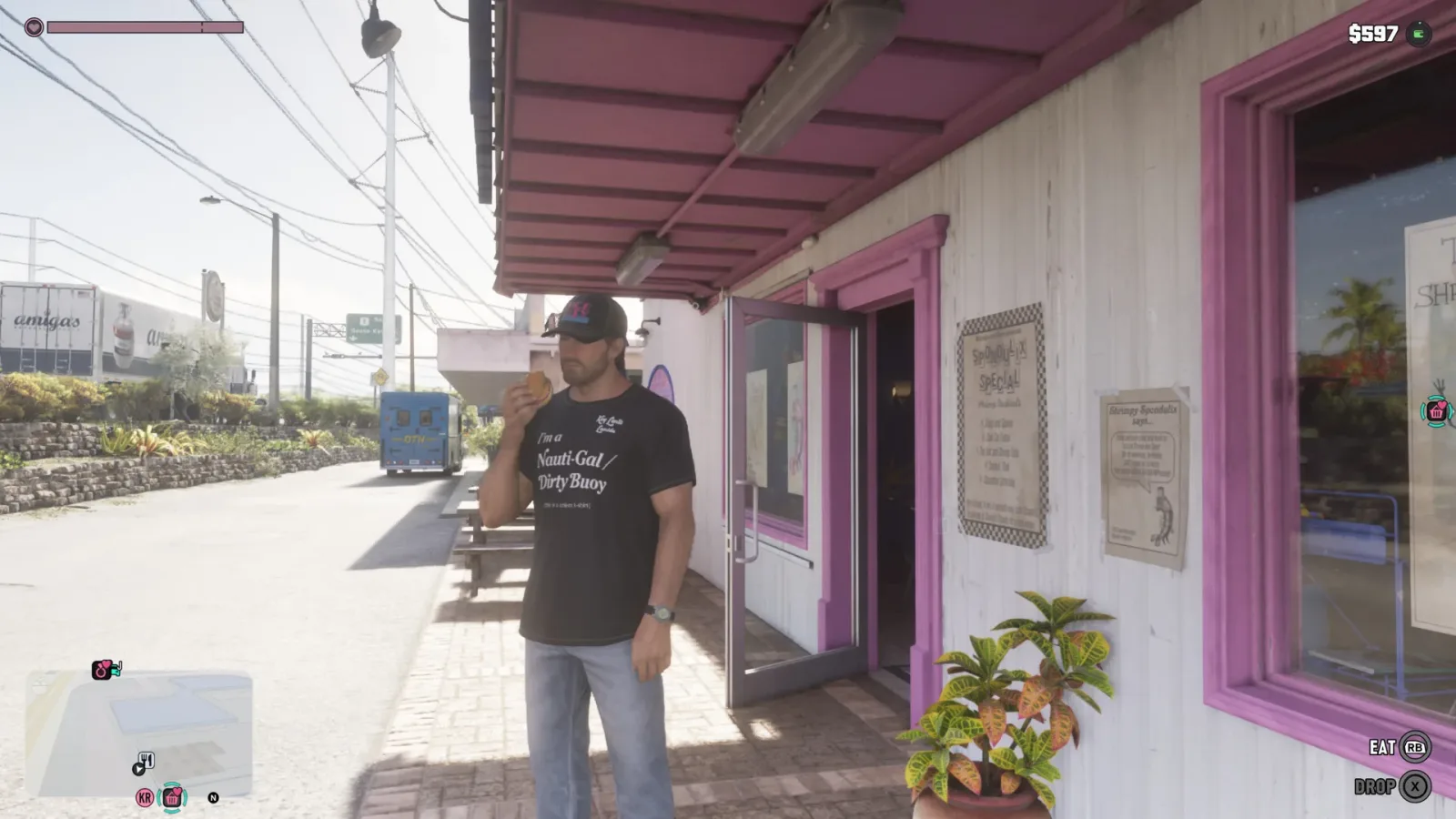
GTA 6 does not appear indifferent to food. Quite the opposite: its individual eating animations sound remarkably elaborate. Jason and Lucia can hold food and beverages separately, including a combination of two foods or two drinks, then switch between consuming them. That is an unusually tactile interaction for a system that could easily have been reduced to a single button press and a restored health bar.
For useful background on this topic, read 12 Video Game Stocking Stuffers Under $30 That Gamers May Actually Use.
The visual details are especially striking. An empanada gradually vanishes through successive bites rather than disappearing all at once. Apples can retain visible bite marks until little more than the core remains. Liquids lower inside their containers as characters drink. Burgers, tacos, croissants, and other items have their own models, while grilled fish sandwiches prepared during an early mission can visibly vary based on how much Jason chars them.
Those features make food feel physical in a way many games avoid. They also establish that Jason and Lucia's relationship to eating is not merely abstract. The game is willing to make the player notice the object in a character's hand, the state it is left in, and the passing seconds involved in consuming it. That attention makes the other side of the system more conspicuous.
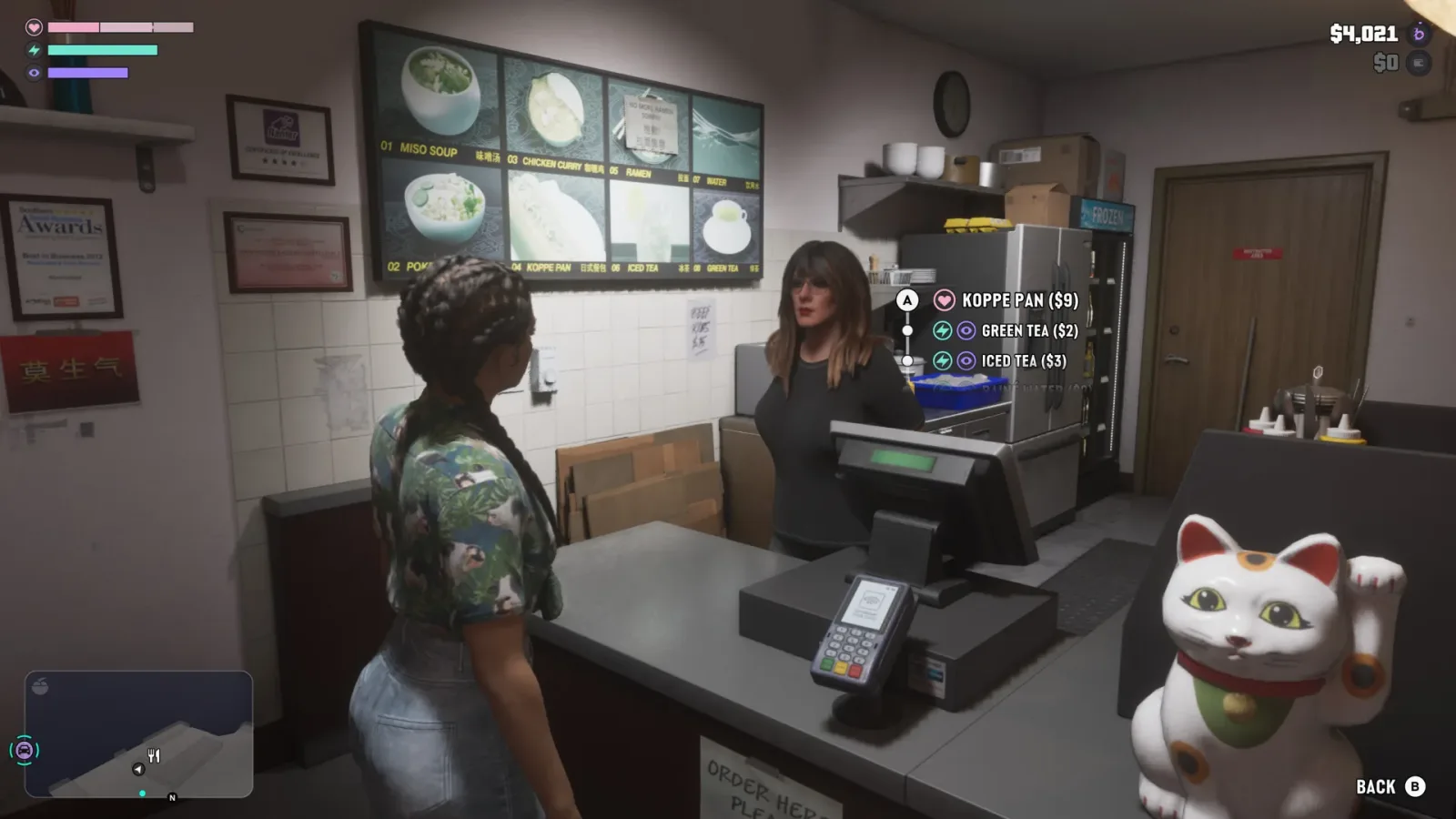
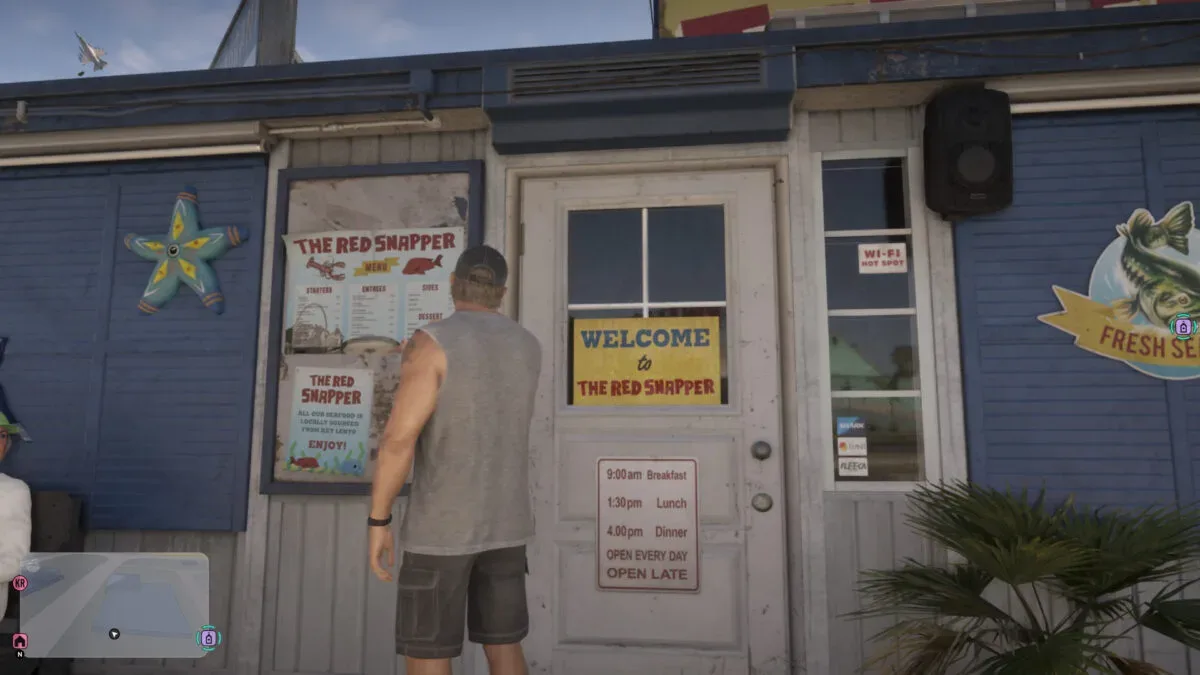
For all the care given to portable meals, the characters' choices apparently remain narrow. Open vendors tend to offer water, soda, beer, and a small selection of handheld foods. The same limited group of items can recur across restaurants even when the posted menus imply a much broader culinary selection. There are a few places where the protagonists can sit while eating, but that still does not necessarily create the feeling of a relaxed meal shared over time.
It is one thing for an open-world crime game to favor food trucks, quick-service counters, and convenience items. It is another for those options to remain the defining pattern after the story has moved beyond its earliest, poorest, most unstable circumstances.
Jason and Lucia never seem to establish a home routine
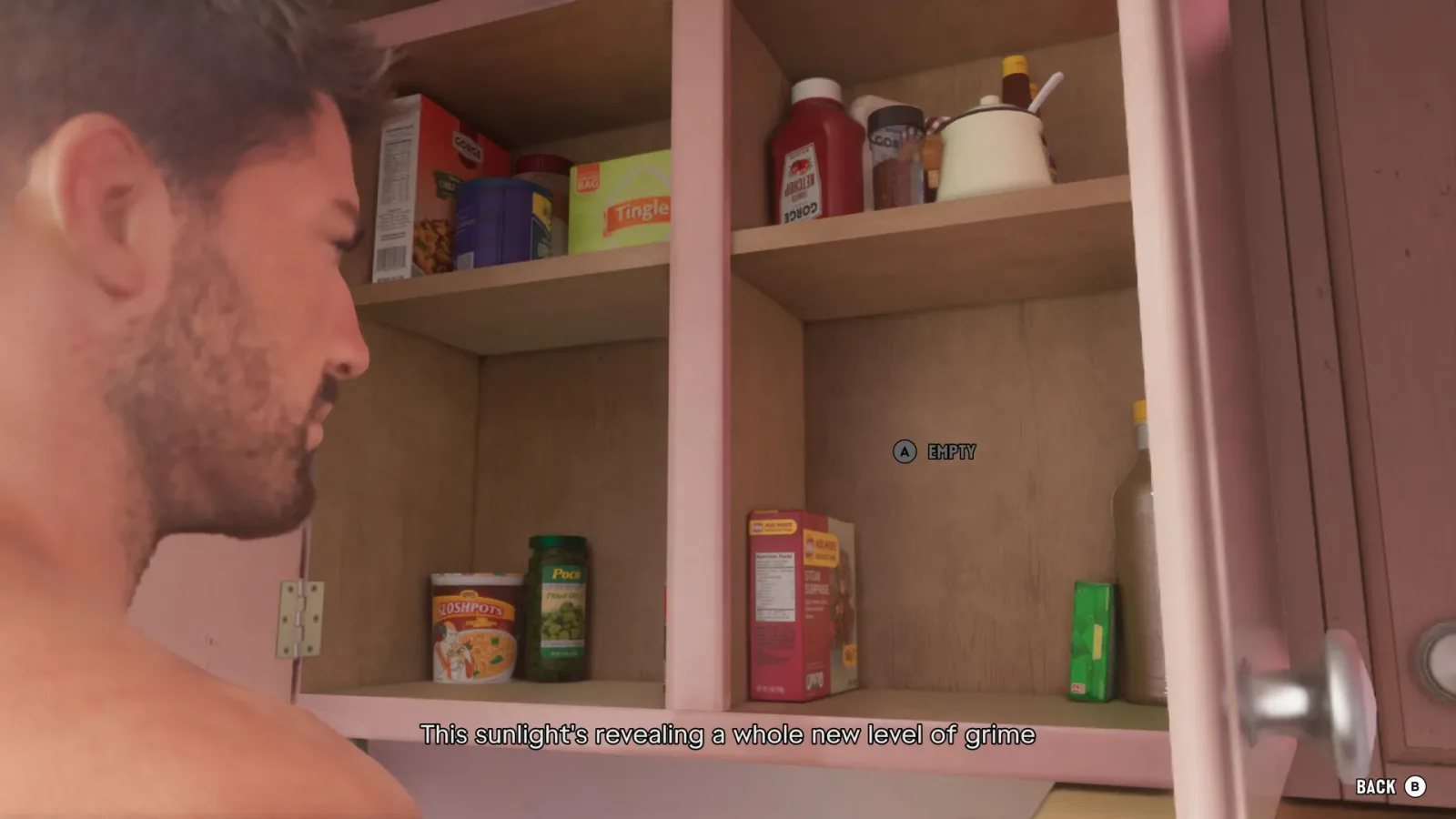
The food question is not limited to restaurants. It extends to domestic life. Early signs of the pair's eating habits are bleak: a refrigerator associated with them contains mostly alcohol and protein shakes rather than ingredients for regular meals. Their cupboards are said to remain filled with basics such as plain bread and cereal, while pots and pans go unused.
At the beginning of a criminal story, this can be easy to understand. People who are broke, hiding, traveling, or living out of motels are not likely to be planning elaborate dinners. A Chapter 2 motel room without even a coffee maker neatly reinforces that instability. Jason's bachelor-like routine and the pressure of being on the run make quick food feel appropriate rather than disappointing.
But the situation apparently does not evolve in parallel with the protagonists' fortunes. As Jason and Lucia reach Vice City, acquire more money, and begin living at a higher standard, there is still no meaningful sign of a meal becoming part of a stable private life. No cooking mechanic is present. No accumulation of dishes in a sink, leftover food, dinner trays, or other environmental evidence suggests that the household has developed a rhythm beyond grabbing whatever is fastest.
Even a brief story scene could have changed that reading. A dressed-up date at a restaurant, a meal placed between them at home, or a conversation about something they ate would signal that the characters had access to ordinary moments of rest. Instead, their food remains functional: a bite, a drink, perhaps a health boost, and then back to motion.
That can make the world's locked restaurants feel unusually expressive. They are not simply inaccessible interiors in a massive map. They can be read as doors into a normality that Jason and Lucia are never able to claim.
A proper meal represents more than money
The desire to take characters out for spaghetti is not really about demanding luxury cuisine from a game. It is about the luxury of being able to stop. A good dinner requires time, relative security, and the belief that nothing will force an immediate escape. Sitting in public, ordering something that arrives on a plate, talking while it cools, and lingering after the first course are all acts that assume a person can be still.
Jason and Lucia's handheld meals suggest the opposite. They can eat with one hand while remaining ready for whatever comes next. They can stand near a food truck, finish a snack quickly, and leave. They can occupy chairs that are easy to abandon. The structure of the interaction keeps them close to the street, to movement, and to risk.
That is where GTA 6's food detail could become narratively powerful. The game may be communicating the protagonists' lack of safety without spelling it out in dialogue. They may gain wealth, clothing, properties, and access to the spectacle of Vice City, but they still may not gain the ordinary, unremarkable peace of sharing a slow dinner.
There is a stark difference between being able to buy food and being able to enjoy a meal. The first is transactional. The second suggests a life with enough breathing room for companionship, reflection, and routine. A couple whose every meal is eaten while standing, walking, hiding, or waiting for trouble is a couple whose success may always be provisional.
Food has long been a storytelling tool in games
Video game meals often matter precisely because they slow the player down. Sometimes they demonstrate technical artistry, as when a game renders a lavish feast with improbable realism. Sometimes they create humor or character flavor. Sometimes they become a mechanical loop built around gathering ingredients, cooking, and sharing the results.
Even small food scenes can accomplish a great deal. A character commenting on a meal can convey mood, class, cultural background, friendship, or conflict. A home-cooked dish can make a virtual space feel inhabited. A restaurant sequence can place characters together without gunfire, allowing their relationships to breathe.
Games such as Dragon's Dogma and Monster Hunter have become memorable in part because they treat eating as spectacle. The Yakuza series has found a different route, letting restaurants and food-related conversations add texture to its city life even when the meal itself is not always the visual centerpiece. In those cases, food is not just recovery; it is atmosphere.
GTA 6's approach may intentionally withhold that atmosphere from its leads. It offers the enticing visual surface of dining culture--restaurant exteriors, menus, vendors, drinks, and carefully modeled snacks--while denying Jason and Lucia the fullest version of the experience. Players can see what exists around them, but the central characters cannot truly participate in it.
The closed doors may foreshadow the story's destination
There remains room for uncertainty. A later moment could still surprise players with a peaceful date, a domestic scene, or a meal that changes how the pair's lives are understood. A happy ending is not impossible simply because a game spends much of its time emphasizing danger. Jason, Lucia, and their son could conceivably reach a future where they are allowed to be a family rather than fugitives or partners in crime.
But the persistent absence of calm dining spaces gives the opposite impression. It implies that, whatever money they earn and whatever status they build, the consequences of their lives will keep them from fully relaxing into comfort. They may be able to look at the city's promises from the outside, but not inhabit them.
That makes the humble idea of a plate of pasta unexpectedly poignant. It is not a grand mansion, a yacht, or a dramatic final score. It is a modest sign of normal life: sitting across from someone you love, with nowhere urgent to be and nothing immediately threatening to interrupt the evening.
If GTA 6 never lets Jason and Lucia have that, its food system may be making a quiet but devastating point. In Leonida, the characters can hold almost anything in their hands. They just may never be able to put everything else down long enough to enjoy it.
Community
Discussion
Start the conversation.
No comments have been posted yet.