

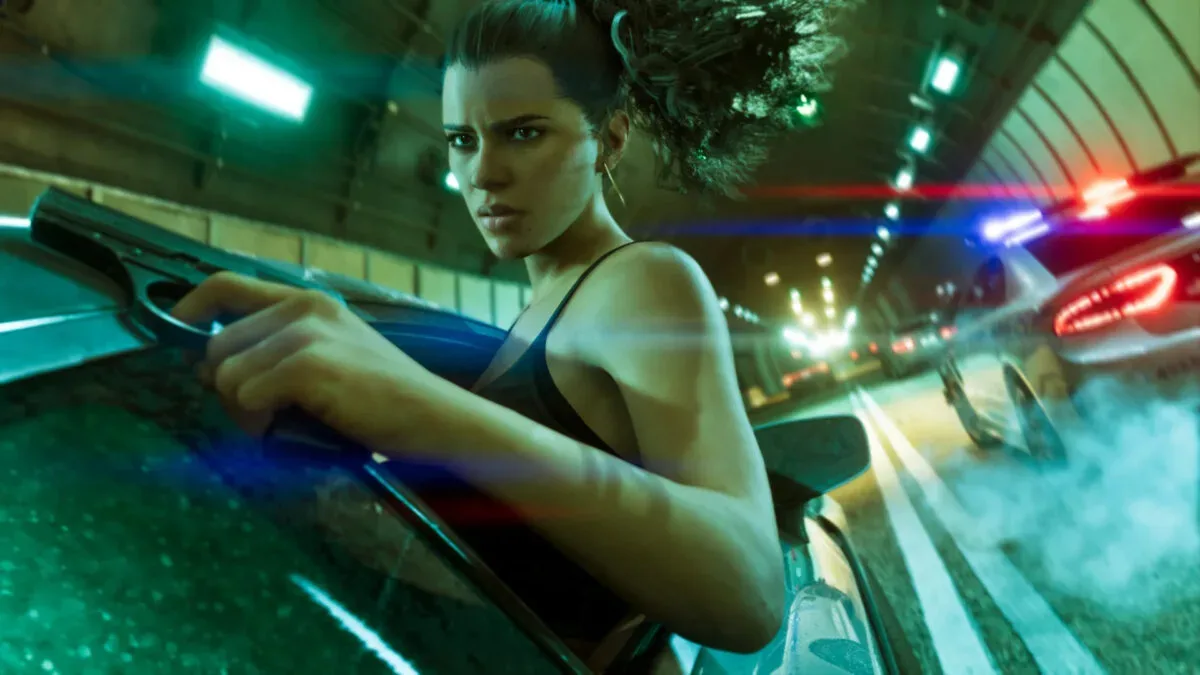
Grand Theft Auto 6 is reportedly set to launch at 30 frames per second on current-generation consoles, including PlayStation 5, Xbox Series X/S, and PlayStation 5 Pro. The news has prompted immediate and intense debate among players, particularly after this console generation helped make 60 FPS performance modes a common expectation for major releases.
For some, a 30 FPS cap is an understandable trade-off for an exceptionally detailed open world from Rockstar Games. For others, it feels out of step with premium hardware and with the standards players now expect from enormous blockbuster releases. The disagreement is not simply about numbers on a specification sheet. It is about how games feel in motion, what audiences value in technical showcases, and how much flexibility they expect when buying a game on powerful modern consoles.
The reported target was confirmed on November 10, following earlier indications from Rockstar development head Rob Nelson during an extended gameplay presentation in August. At that time, GTA 6 was shown running at 30 FPS. Nelson reportedly did not rule out a 60 FPS option arriving later, but no higher-frame-rate mode was promised for launch.
Embedded X/Twitter post
Embedded X/Twitter post
Embedded X/Twitter post
Why 30 FPS Still Matters to Players
Frame rate measures how many individual images a game displays each second. At 30 FPS, a game shows 30 frames every second; at 60 FPS, it doubles that output. The practical result is usually clearer motion, more responsive-looking camera movement, and smoother animation at 60 FPS. The difference can be particularly apparent during fast driving, camera pans, shooting, and quick traversal through dense environments.
For useful background on this topic, read Samsung Odyssey G5 32-Inch Gaming Monitor Drops to $180 in 40% Deal.
Not every player experiences that difference in the same way. Some are comfortable playing at 30 FPS and may place far greater value on sharp image quality, visual effects, dense crowds, long draw distances, or realistic lighting. Others find a move from 60 FPS down to 30 FPS instantly noticeable, especially after spending years with performance modes in console games.
That divide has been on full display in response to GTA 6's reported launch setup. Some players questioned why the game would target 30 FPS even on PS5 Pro. Others joked about people who may have upgraded their display or console specifically with GTA 6 in mind, only to learn that a performance option may not be available at release.
The wording around a game "targeting" 30 FPS has also attracted attention. A target is not necessarily identical to an unbreakable lock, and players understandably want to know how consistently the game will maintain that level during its busiest sequences. Rockstar has not detailed the resolution, graphical settings, or technical compromises involved in the reported console configuration.
A New Expectation for the PS5 and Xbox Series Era
The PlayStation 5 and Xbox Series X/S generation has changed the conversation around console performance. Many major games now offer two broad options: a quality mode that emphasizes resolution and graphical features, and a performance mode that reduces some visual settings to reach 60 FPS. The exact results vary widely, but the choice itself has become a prominent selling point.
As a result, players often see 60 FPS not as a luxury, but as a baseline feature for high-profile releases. That expectation is especially strong for games that involve precision combat, first-person action, racing, or other mechanics where controller response and motion clarity are central to the experience.
GTA 6 sits in a more complicated place. Its world will seemingly ask consoles to simulate a huge number of systems at once: a dense fictional take on Miami, traffic, pedestrians, interiors, weather, activities, cinematic storytelling, driving, gunfights, and a criminal-underworld story centered on a couple. If the final game is as ambitious as its presentation suggests, Rockstar may be placing its technical budget into environmental complexity and simulation rather than a 60 FPS option.
That reasoning will not automatically persuade everyone. A visual showcase can still benefit from smoother motion, and an open-world crime game includes plenty of activities that can feel better at higher frame rates. Driving at high speed through busy streets, aiming during shootouts, and moving the camera around a richly populated city are all areas where 60 FPS could have a meaningful impact.
Rockstar's History Gives the Debate Context
Modern Rockstar releases have not historically launched at 60 FPS on consoles. Red Dead Redemption 2, released in 2018, arrived before the PS5 and Xbox Series X/S era made higher frame rates much more common on home consoles. Later updates and ports of Rockstar's older catalog have supported higher frame rates on newer systems, but that is not the same as building a massive new game around a 60 FPS target from day one.
That history makes the reported GTA 6 cap less surprising than it may initially sound. Rockstar's games have often emphasized scale, animation work, atmosphere, cinematic presentation, and world detail. Those priorities can be demanding even before accounting for the leap in complexity expected from a new entry arriving more than a decade after Grand Theft Auto V.
Still, the industry has changed since Rockstar's last major launch. A game's age matters as much as its developer's history. Players comparing GTA 6 with the technical options available in other contemporary releases are not necessarily judging it by standards from 2018. They are judging it by what their current consoles, televisions, and game libraries have led them to expect.
The Starfield Comparison Is Hard to Avoid
A large portion of the discussion has centered on Starfield. Bethesda's space RPG faced substantial criticism when it launched with a 30 FPS cap on Xbox Series X/S. Before its release, director Todd Howard explained that the team had chosen to lock the game at 30 FPS in pursuit of fidelity and did not want to sacrifice its intended visual experience.
That explanation did little to quiet concerns at the time. Starfield later received a 60 FPS mode, and the comparison has become a way for players to ask whether GTA 6 should receive the same scrutiny. The question is less about whether the two games have identical technical needs and more about consistency. If 30 FPS was treated as unacceptable for one ambitious current-generation open-world RPG, why should another giant open-world release be judged differently?
There is no simple answer. Each game has its own engine, workload, design priorities, visual style, and production constraints. GTA 6 may ultimately achieve a level of density or simulation that makes a 60 FPS launch mode impractical without dramatic compromises. At the same time, players who want the option are not asking for an unreasonable feature in the context of this generation's broader market.
Filmic Presentation Versus Player Control
The debate also revives a long-running argument about the so-called "filmic" look. Some developers have argued that lower frame rates can complement cinematic lighting, animation, and presentation. Films traditionally run at 24 frames per second, while 30 FPS can retain some of that visual character without feeling as sluggish in interactive play.
Years ago, The Order: 1886 game director Dana Jan discussed that balancing act, saying he enjoyed 60 FPS but felt the aesthetic of a game could change at higher frame rates. His explanation was that his team was seeking a film-like presentation while still selecting 30 FPS because 24 FPS did not feel good enough for gameplay.
Whether Rockstar shares that philosophy is unknown. The reported GTA 6 target could reflect an artistic preference, a hard technical limitation, or a mixture of the two. Without further detail from the developer, it would be premature to claim that the decision is solely about cinematic style or solely about hardware limitations.
What is clear is that many players increasingly prefer to decide for themselves. The most popular compromise across recent console games has been the presence of both modes: one optimized around presentation and one optimized around smoother gameplay. A 30 FPS-only launch would remove that choice, at least initially.
Will It Define GTA 6 at Launch?
Probably not for most players. GTA 6 is one of the most anticipated games in the medium, and its setting, characters, world design, activities, and online future are likely to dominate the conversation once players can actually explore it. Rockstar games also tend to have extraordinarily long lifespans, meaning technical options introduced after launch could matter almost as much as those included on day one.
But that does not make the frame-rate issue meaningless. A 60 FPS mode has become a highly visible marker of modern console performance, and the absence of one will remain a valid concern for people sensitive to motion smoothness or those who bought higher-end hardware expecting a corresponding gameplay benefit.
For now, the central uncertainty is whether GTA 6 will remain a 30 FPS experience on consoles indefinitely or eventually add a higher-frame-rate mode after launch. Until Rockstar shares more specific technical information, players are left weighing the potential scale of its next open world against the performance expectations of a generation that has grown accustomed to having options.
Community
Discussion
Start the conversation.
No comments have been posted yet.