

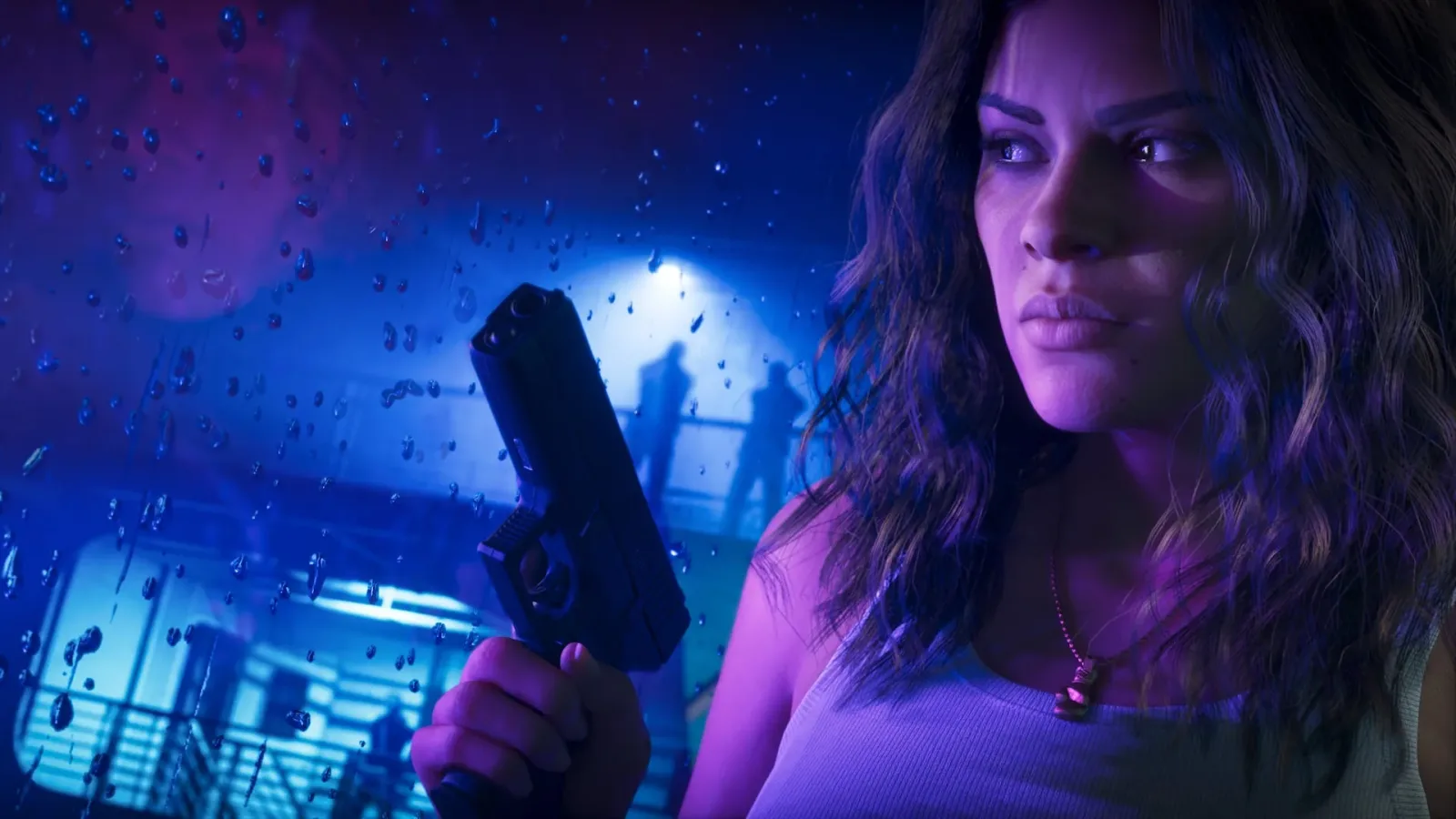
Grand Theft Auto 6 does have thunderstorms, fog, and rainstorms, even if some players have spent hours driving around Vice City without seeing more than a few clouds. The confusion stems from two overlapping factors: an issue at launch could leave the weather unchanged for unusually long stretches, and the game's weather is designed to happen locally rather than blanket the entire map at once.
A first post-launch update released Monday included a specific correction for a problem that could prevent weather from changing for extended periods. That means players who saw uninterrupted sunshine, or any other single weather condition that seemed to last forever, may genuinely have encountered a technical problem. The patch is an important part of the story, particularly because GTA 6's dynamic weather had been heavily emphasized before release.
Still, the update does not mean every player will suddenly experience constant rain. GTA 6 appears to treat weather as a regional, shifting part of its world simulation. A storm can soak one section of the map while another remains bright and dry. For players accustomed to older open-world games, where rain often covers every neighborhood as soon as a weather state triggers, that difference can make it seem as though rainfall is absent altogether.
Embedded X/Twitter post
A fix for weather that would not move on
The launch-period weather issue was not merely a case of bad luck or players misunderstanding a complicated simulation. Rockstar's patch notes identified a fault that could cause weather conditions to remain static for too long. In practical terms, someone could play for a substantial amount of time under the same skies without the transitions expected from a dynamic system.
For useful background on this topic, read How to Steal a Bravado Banshee in GTA 6 and Earn the Capital Offense Trophy.
That helps explain why complaints about a lack of rain gained traction so quickly. Weather is one of the most immediately visible features in a large open-world game. Players do not need to inspect technical menus or compare performance metrics to notice when a promised environmental system seems inactive. If the sun stays out through long drives, missions, and several in-game days, it is understandable that players would question whether the feature is working.
The arrival of the patch establishes that at least some reports had a concrete cause. It also illustrates a familiar reality of huge simulation-heavy games: a system may be present and functioning for many players while a bug prevents others from seeing its full range of behavior. Individual experiences can therefore look completely contradictory. One person may find nothing but cloudless roads, while another records lightning, heavy rainfall, and reduced visibility.
Even after the update, some players have continued to say they are not seeing rain. It remains possible that additional problems exist, as is often the case when a complex feature is running across an enormous game world. But the way GTA 6 handles localized weather offers a more likely explanation for many of those reports.
Rain does not have to cover all of Vice City
In earlier Grand Theft Auto games, and in plenty of other open-world titles, a rain event generally works as a map-wide condition. When the game decides it is raining, the player sees wet streets and falling water wherever they travel. The system is easy to read because the answer is universal: if rain starts, everyone in the world is effectively experiencing rain.
GTA 6 takes a different approach. Storms, fog, and comparable events can form in limited areas. The world is large enough that a player can remain in a dry district while rain falls elsewhere. This can be especially misleading during ordinary play, when missions, side activities, and habitual driving routes keep someone in a relatively small portion of the map.
A clear example comes from flying across the world. A player can be in sunny conditions, see a mass of dark clouds ahead, and then fly directly into a downpour. Once the aircraft passes through the clouds and emerges on the other side, the rain can stop again. Rather than a simple on-or-off setting for the whole map, the storm behaves like a localized atmospheric zone with boundaries that can be crossed.
That behavior is visually impressive, but it changes how players need to interpret the game's skies. Sunshine above the player's current street is no longer proof that the weather system has failed. The storm may simply be over the next district, out over the water, or beyond the player's usual travel area. A lengthy trip in one direction, a flight, or a change in activity can produce dramatically different conditions without any obvious global transition.
Why a sophisticated system can look invisible
There is an odd side effect to making environmental simulation more detailed: it can become less obvious than a simpler version. Map-wide rain announces itself to everyone. Local rain rewards the player who happens to go looking for it, or who crosses paths with it naturally. Anyone who stays outside the affected area may conclude that nothing is happening.
Randomness intensifies that effect. Even with the launch bug resolved, weather does not appear to follow a schedule designed to ensure every session includes a thunderstorm. A player may encounter frequent showers across several in-game days, then go a long time with comparatively calm conditions. That variation is part of what makes the system feel less scripted, but it also means no two players will have matching anecdotes.
Map scale matters as well. In a smaller game world, it is difficult for a storm to exist without the player quickly running into it. GTA 6 gives localized systems room to operate. That allows for striking moments such as approaching a visible storm front from clear air, but it also means a player can effectively avoid bad weather by chance. Someone focused on a sunny coastal route may keep missing the conditions taking place inland, and someone moving quickly between mission destinations may never pause long enough to notice a change on the horizon.
A dry play session does not necessarily mean GTA 6 has no rain; it may mean the player has not reached the portion of the map where the storm is happening.
Progression may also affect what players see
Another possibility being discussed is that GTA 6 may limit certain weather patterns during its earlier story sections. That has not been confirmed, so it should not be treated as an established rule. However, it would be a plausible design choice for a game that uses atmosphere to support its opening hours, tutorial flow, or narrative tone.
There is at least anecdotal reason for players to consider story progress when comparing experiences. After reaching chapter three, the game can produce multiple in-game days with substantial rainfall--enough rain that the return of sunshine becomes welcome. That does not prove weather is locked behind a particular chapter, and it does not rule out storms occurring earlier. It does show that extended periods of wet conditions are possible during regular progression.
Until there is official clarification, the safest conclusion is that several variables are likely interacting: the now-addressed static-weather bug, localized storm behavior, random chance, the size Of the World, and possibly progression-dependent tuning. Players comparing only a few hours of gameplay may be comparing very different circumstances.
How to spot GTA 6's changing weather
Players hoping to see a storm should pay attention to the distance rather than only checking the sky directly overhead. Dark cloud banks, changing light, haze, and fog can signal that a weather event is active nearby. Traveling toward those conditions may be more effective than waiting in one place for rain to begin.
- Look across the horizon: A sunny location can sit close to visibly darker skies.
- Travel beyond familiar routes: Localized weather is easier to encounter when exploring more than one neighborhood or region.
- Use altitude when possible: Flying makes storm fronts and the borders between weather zones easier to observe.
- Allow for variation: Dynamic conditions are not guaranteed to deliver a thunderstorm during every session.
- Install the latest update: The patch addressing long stretches of unchanging weather is essential for anyone who experienced the launch issue.
None of this means every lingering report should be dismissed. If weather remains completely static for exceptionally long periods after the patch, further technical investigation may be warranted. But clips and firsthand play experiences already demonstrate that intense rain and thunderstorms exist in GTA 6. Fog and other localized conditions are part of that same broader environmental design.
The key point is that GTA 6's weather system may be working in a way that is more realistic than players expect. Real storms are not evenly distributed across an entire city or region, and neither are the game's. For some players, the result is a memorable drive through pounding rain and flashes of lightning. For others, it is an unexpectedly long run of pleasant weather--until they finally head toward the dark clouds and discover that the storm was there all along.
Community
Discussion
Start the conversation.
No comments have been posted yet.