

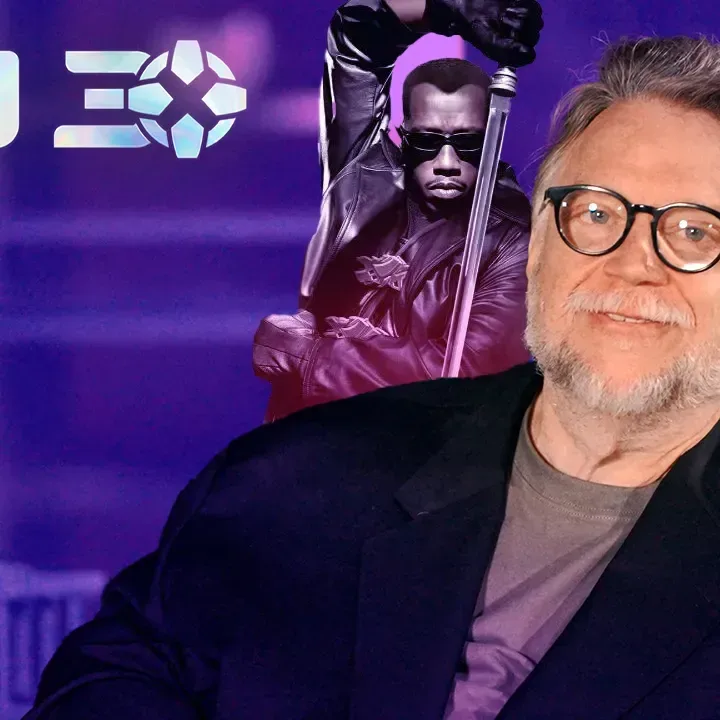
Guillermo del Toro has spent decades creating some of modern fantasy and horror cinema's most recognizable creatures, but his connections to video games have been equally memorable--even if they have rarely led to finished projects. In a wide-ranging new conversation, del Toro spoke frankly about the game concepts that never made it to release, his collaboration with Hideo Kojima, a troubled attempt to adapt BioShock, and the games he still returns to in his free time.
The clearest takeaway is that del Toro does not expect to directly make another game. Asked whether his stance on game development had softened after previously saying he did not want to work on games again, he answered with an emphatic no. His explanation was not a lack of enthusiasm for the medium, but the difficult history he has had with projects that were announced, developed, or discussed without ultimately becoming playable releases.
"I'm the albatross of video games," del Toro said, referring to his own record in the space. It is a self-deprecating summary of a career that includes the cancelled Silent Hills project, the abandoned Insane concept, and exploratory conversations around a BioShock movie that did not work out.
P.T. Was Kojima's Vision, Del Toro Says
Del Toro's best-known gaming association remains his work alongside Kojima. The two were attached to Silent Hills, the now-cancelled horror game that was teased through 2014's remarkable P.T. playable teaser. While the teaser became a landmark of modern horror game design and continues to influence developers, del Toro was careful to put its creative credit on Kojima.
For useful background on this topic, read Old School RuneScape Takes Worlds Offline After Death Bug Deletes High-Value Gear.
He described P.T. as a great game, but said that what audiences saw there was Kojima's work. Del Toro characterized his role as being fortunate enough to join the project rather than presenting himself as its driving author. That distinction is consistent with his admiration for Kojima, whom he described as a pure artist focused above all on stories.
For del Toro, the most valuable part of the relationship is not necessarily whether another game materializes. He highlighted spending time with Kojima over karaoke and shabu-shabu, joking that those experiences matter regardless of whether a game happens. The two later collaborated in a more visible capacity through del Toro's appearance in Kojima Productions' Death Stranding.
That game is among del Toro's most celebrated personal favorites. During a rapid-fire discussion of great games, he said Death Stranding made him cry. He also named Shadow of the Colossus as a game that prompted him to think about intangible ideas, while BioShock remains a world he feels he could inhabit for a very long time.
Why Del Toro Thinks Games and Movies Work Differently
Although film and games increasingly share visual language, performance capture, cinematic camera work, and large-scale production values, del Toro sees a fundamental split between their storytelling structures. That divide is a major reason he is wary of adapting games for the screen, even though he has spent much of his film career reinterpreting existing stories and myths.
He said game storytelling is built around different dynamics. Players solve problems, assemble information, and move through spaces in ways that require designers to create the impression of freedom while still shaping progression. Del Toro recalled that, while developing Insane, the team built what he called a "mandala" structure: an approach meant to make the experience feel like an unlimited sandbox while quietly guiding players through carefully planned paths.
That is a different job from writing a film, where the viewer does not actively choose a route or solve the work's central puzzles. The medium may look cinematic, del Toro argued, but its narrative demands are distinct.
This perspective also explains his blunt response when asked if he would adapt a video game into a movie. Del Toro said he had tried, and mentioned discussions around BioShock that he described as among the most disastrous calls he has ever experienced. He did not offer specific details about those conversations, but the end result was clear: he has no interest in revisiting that path.
Del Toro's view is that games can borrow cinematic techniques without becoming films, because player interaction changes the shape of the story itself.
That does not mean he dismisses game worlds. Quite the opposite: his answers suggest an intense appreciation for games that create a sense of place, emotional weight, and imaginative scale. His hesitation is about the development and adaptation processes, not about the artistic potential of games.
Insane's Ideas Did Not Transfer to Film
Insane was one of the most high-profile uncompleted game projects linked to del Toro. Announced as a horror title, it was being developed with THQ before that company's collapse ended the arrangement. Del Toro said the project aimed very high, and he later saw ideas in other games that felt similar to concepts his team had explored.
Rather than framing that as a grievance, he expressed satisfaction that someone had made those kinds of ideas happen. Still, unlike concepts from his unrealized film projects, he said he has not taken pieces of Insane and repurposed them for his movies.
There is one exception-adjacent idea from his time with Kojima: del Toro said he has an idea that Kojima did not use, and he hopes to employ it in another medium someday. He did not reveal what the idea is, where it might appear, or whether it is currently in development.
Del Toro has often reused visual notions from old sketchbooks and abandoned concepts elsewhere in his creative work. He described that process as a dialogue with his younger self. In this case, though, the game projects have largely remained separate from his filmography.
A Wide-Ranging List of Favorite Games
While del Toro may be done with hands-on game development, he is still playing. His preferences span major cinematic releases, indie games, mobile games, and titles built around mood rather than spectacle.
- Left 4 Dead: One of several games he singled out when asked to name the best ever made.
- Death Stranding: A game he said made him cry.
- Shadow of the Colossus: Noted for the introspection it inspired.
- BioShock: A setting he said he could become lost in for ages.
- Dead Cells: A recent game he found especially interesting, praising its world and design.
- Journey and Monument Valley: Games he described with clear affection for their distinctive worlds.
- Angry Birds: A daily habit, with del Toro saying he pursues every possible star and aims for perfect completion across its levels.
His comments on Dead Cells were especially relatable for players with limited time. Del Toro said he dislikes being sent all the way back through a roguelike run after reaching deep into the game. He appealed, half-jokingly but sincerely, for a version that would let older players resume their progress rather than constantly starting again.
He also said he had never played Castlevania, despite being told that the series could be a good fit for what he wants from a game. Given his lifelong fascination with monsters, gothic design, and tragic fantasy, it is easy to see why that recommendation came up.
Games as Part of a Larger Storytelling Library
Del Toro's gaming comments fit into a larger creative philosophy. He argued that people should look widely for art rather than limiting themselves to a single tradition, country, genre, or era. For him, stories remain vital because they continually need to be retold and reimagined by new generations.
That outlook leaves room for games even as he rules out another attempt to make one himself. He sees them as their own art form, one with tools and structures that deserve to be understood on their own terms. He may not want to navigate the complexity of a large game production again, but he remains an attentive player--and an enthusiastic admirer of the artists who build interactive worlds.
For fans still hoping for another Guillermo del Toro-directed game, his answer is not encouraging. But his ongoing friendship with Kojima, his love for games ranging from Death Stranding to Angry Birds, and his willingness to champion unusual interactive worlds make it clear that he has not stepped away from games as an audience member. He simply prefers to experience their stories from the player's side.
Community
Discussion
Start the conversation.
No comments have been posted yet.