

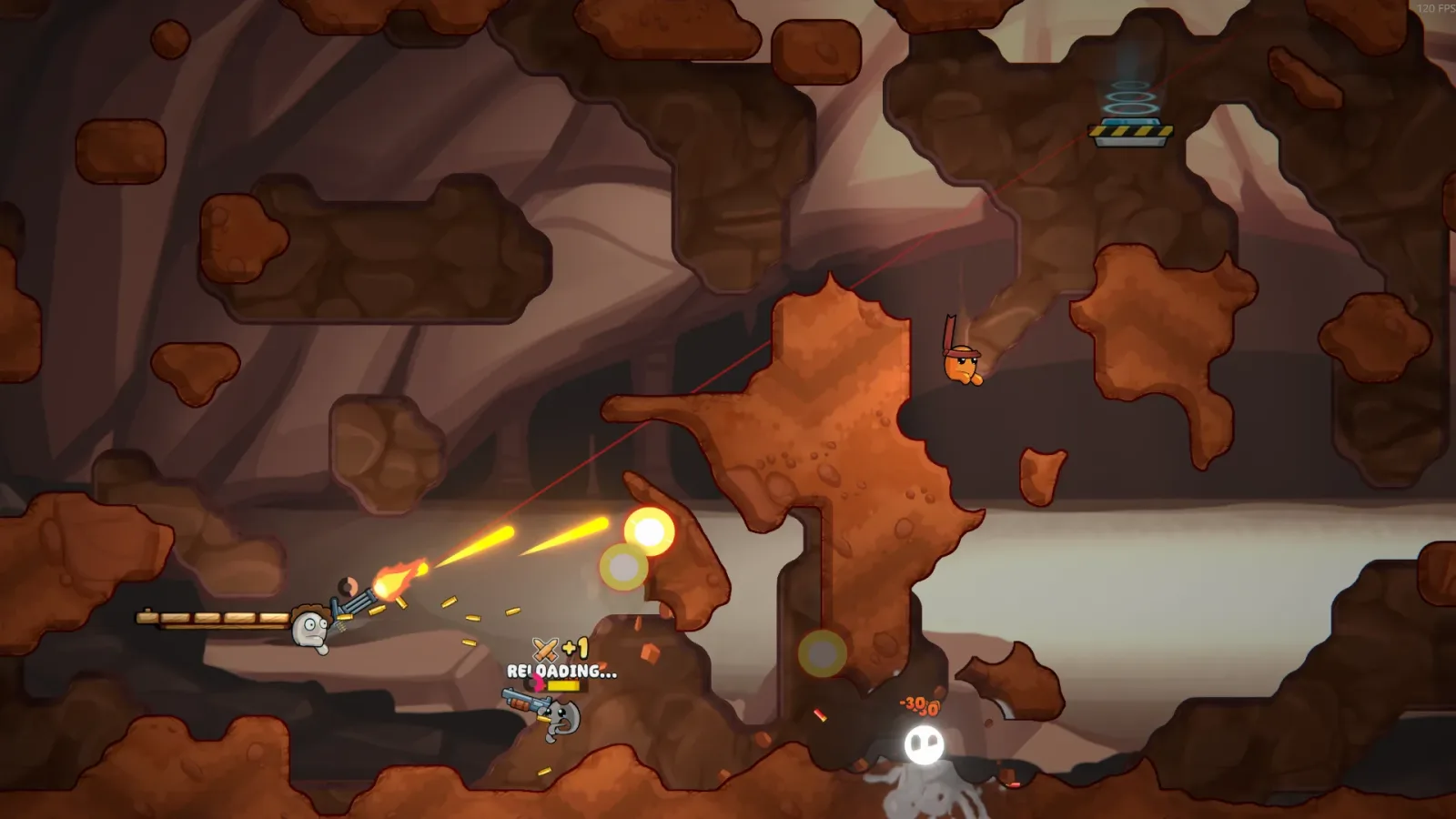
Guns & Goo, a newly announced 2D multiplayer shooter from Finnish developers John Rantala and Joona Hautala, is headed to Steam with Bonus Stage Publishing. Revealed on October 27, 2026, the game is centered on rapid single-screen battles in environments that can be torn apart, flooded, transformed, and turned into the catalyst for unpredictable chain reactions.
The pitch is immediately familiar in the best possible way: a compact multiplayer game where a single well-placed shot can change the whole arena. But Guns & Goo is looking to push that idea through highly detailed destructible terrain, flowing physics-based liquids, match-altering rule modifiers, and creation tools intended to give players control over maps and modes. Both cooperative and competitive play are planned, with local and online options confirmed.
For players who miss the chaotic accessibility of older shared-screen action games, the announcement points toward a shooter designed to create memorable disasters as often as precise victories. One moment may involve a clean tactical play; the next may involve collapsing cover, a spreading pool of liquid, and a chain reaction nobody in the match anticipated.
Arena Destruction Is Central to Guns & Goo
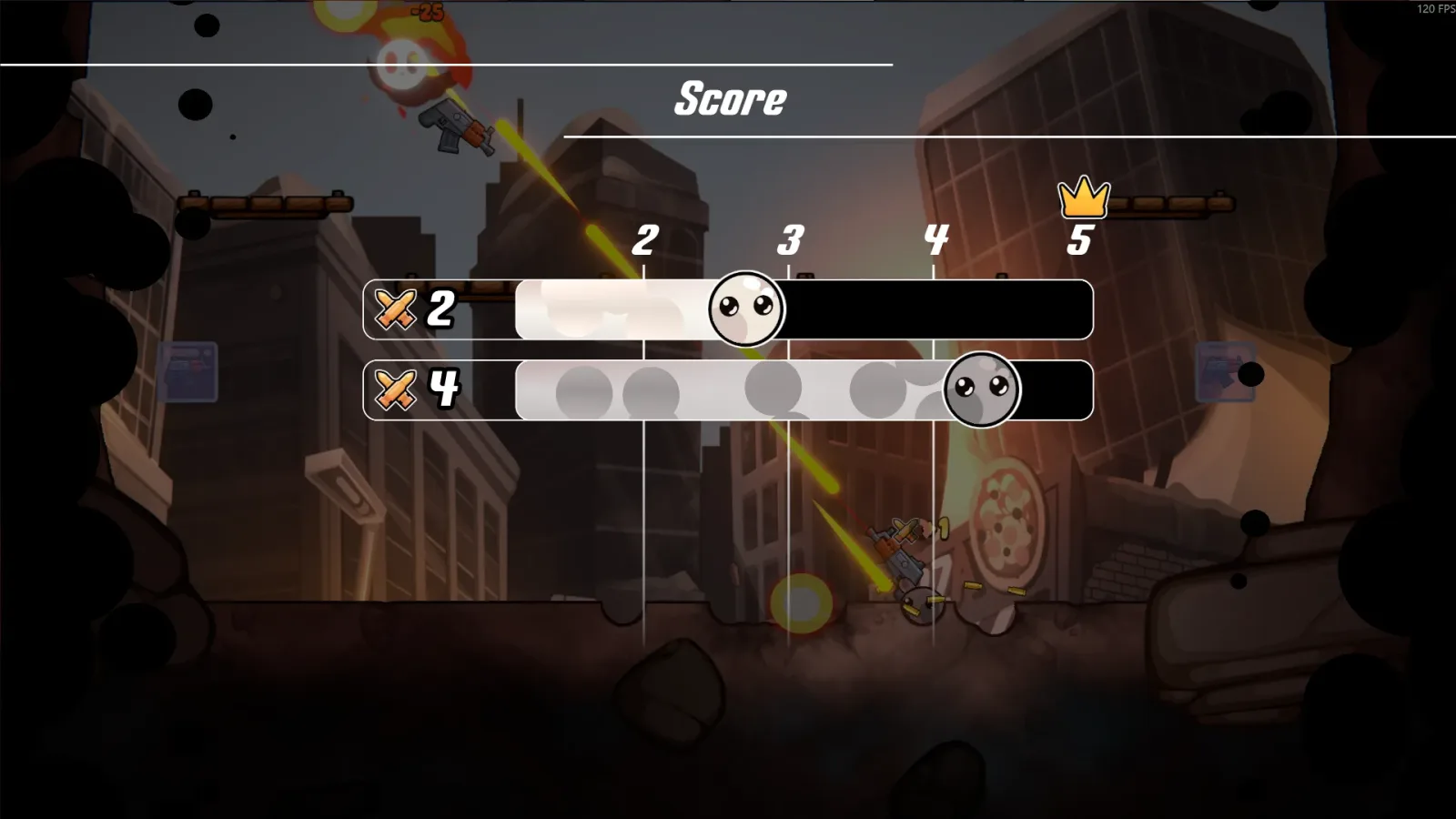
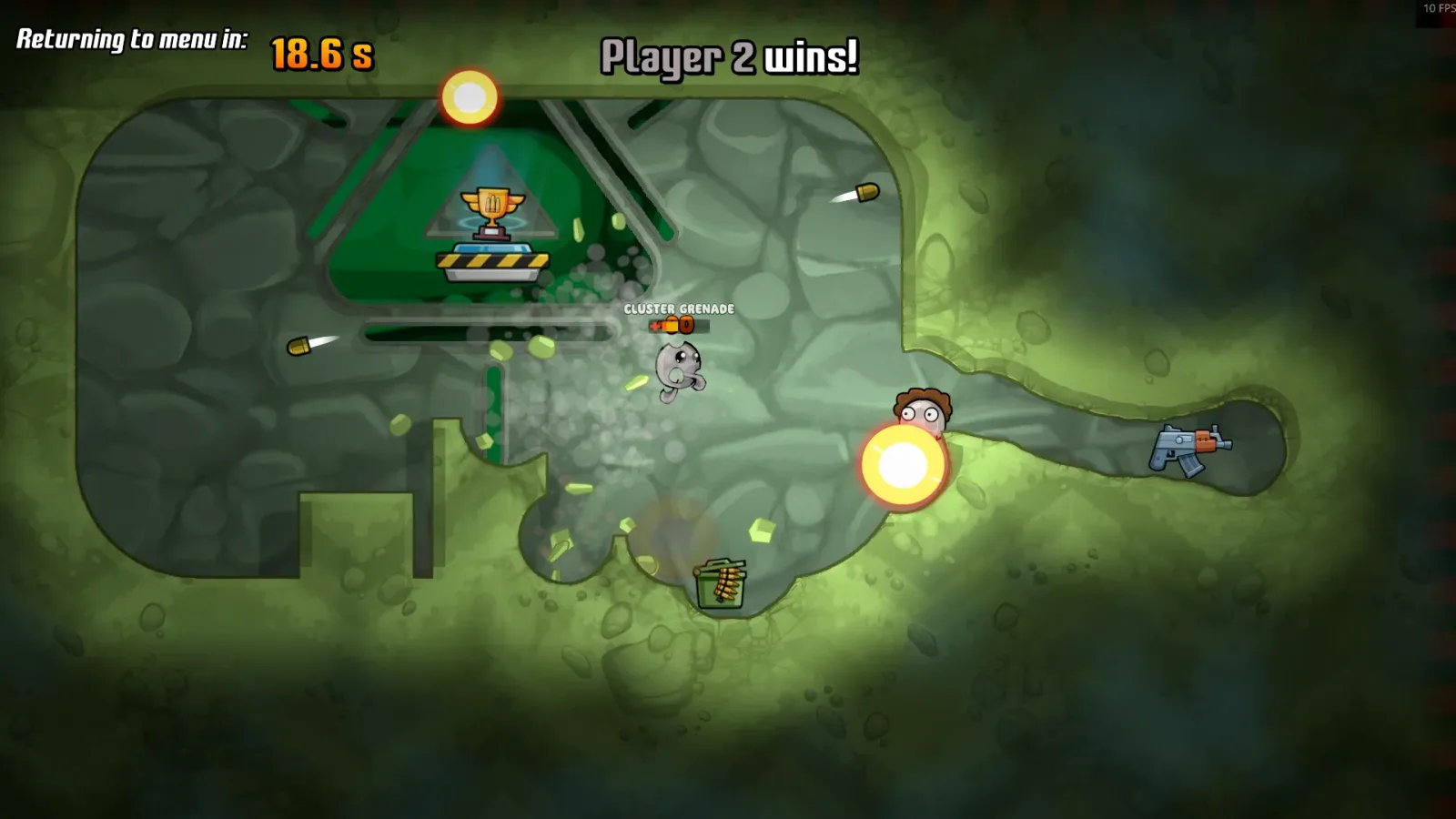
Guns & Goo places fully destructible arenas at the heart of each battle. Rather than treating the map as a fixed backdrop, the game will allow the level to be reshaped as the match unfolds. That means cover can disappear, routes can open up, and areas that seemed safe at the beginning of a round may become dangerous or inaccessible later on.
For useful background on this topic, read Dead by Daylight Explains Chucky's Store Removal, Leaves Door Open for a Return.
Destructible environments have long been a compelling ingredient for multiplayer action because they give players more than one way to approach a conflict. A direct attack is only one possibility. Players can potentially undermine an opponent's position, create a new line of sight, remove a hiding place, or force movement by altering the space around them. In a single-screen game, where everyone is always working within the same visible battlefield, those changes should be especially immediate.
The developers describe the arenas as high-resolution environments, suggesting that the destruction is meant to be visually significant rather than limited to a handful of pre-set breakable objects. The appeal is not simply that walls can vanish. It is that every round can leave a visible history of what happened there: tunnels blown through terrain, ruined defensive positions, opened pathways, and hazards created by earlier exchanges.
This approach also creates a natural sense of escalation. Even if a battle begins with players cautiously testing the map, the arena can become increasingly unstable as weapons, liquid, and explosions alter its layout. A late-round showdown may therefore look and play very differently from the opening seconds.
For another perspective on this story, read Guns & Goo Targets Destructible 2D Mayhem With Local and Online Multiplayer.
Physics-Driven Liquids Add Another Layer of Mayhem
The "goo" in Guns & Goo is not just there for the title. Physics-driven liquids are one of the game's defining features, with flowing material and absurd chain reactions expected to generate emergent moments during matches. Details on every interaction have not yet been outlined, but the idea is clear: the battlefield will include systems that can produce consequences beyond a player's original plan.
Physics systems can be particularly effective in party-focused multiplayer games because they help make a match entertaining even when things go wrong. An intended attack may cascade into an accidental environmental disaster. A carefully selected position can become compromised when liquid flows into the wrong part of the map. A reaction started by one player may suddenly involve everyone else on screen.
That unpredictability is an important distinction for Guns & Goo. The game is not being presented as a purely technical competitive shooter where success depends only on repeatable execution. Instead, it is leaning into the stories that emerge when players are forced to react to changing terrain and unexpected consequences. Skill should still matter, particularly in a game built around shooting and positioning, but the systems are designed to ensure that no two battles need play out exactly alike.
For local multiplayer, this kind of chaos can be especially effective. When everyone sees the same accident happen at the same time, the result is often immediate laughter, blame, and calls for a rematch. Online play can deliver the same rapid reversals while opening the game to groups that cannot gather around one display.
Dynamic Modifiers Could Keep Matches From Settling Into Routine
Alongside destruction and physics, Guns & Goo will use dynamic match modifiers. These rule changes are intended to keep battles fresh and unpredictable, giving individual rounds conditions that can alter the usual rhythm of play.
The announcement has not specified the full range of modifiers, so it remains unclear exactly how frequently they appear or how dramatic their effects will be. Still, the system fits the game's wider design direction. If destructible arenas change the physical layout of a battle, modifiers can change the rules players must follow within that damaged and evolving space.
That can be valuable in multiplayer games with short, repeatable rounds. The core controls and objective may stay approachable, while modifiers introduce situations that demand a different strategy. Players may need to adapt their movement, rethink which sections of the arena matter most, or alter how aggressively they pursue an opponent. The result can help the game remain welcoming for casual groups without making every match feel identical.
It also gives the developers a framework for creating combinations. A particular map layout, a specific set of destructible features, and a modifier can combine into a scenario with its own personality. The strongest party games often thrive on this kind of variety, where players recognize the fundamentals but never completely know what a new round will ask of them.
Map Editor and Custom Modes Put Players in Control
Guns & Goo is also planned to include a user-generated-content map editor and customizable game-mode rules. Players will be able to make and share their own maps and modes, extending the game beyond the arenas and rules supplied at launch.
For a systems-heavy multiplayer game, creation tools can be a major part of the appeal. A destructible arena is not merely scenery; it is a machine that players can test, break, and redesign. Community creators may be able to build maps around chokepoints, unstable structures, open firefights, confined tunnels, liquid-based hazards, or entirely different ideas that take advantage of the game's physics.
Customizable mode rules could be equally important. Groups often have their own preferences for multiplayer sessions, whether that means more relaxed cooperative play, highly competitive rules, a strange one-off challenge, or a format built specifically for a circle of friends. Letting players shape those conditions supports the social spirit that Guns & Goo is aiming for.
The ability to share creations gives this feature broader potential than a private lobby setting. If the community embraces the tools, players could have a steady supply of new arenas and unusual modes to try. It also means the most inventive uses of Guns & Goo's destruction and physics may come from players experimenting with the same building blocks in ways the developers did not originally anticipate.
Inspired by Party-Game Classics, With Co-op and PvP Planned
Rantala and Hautala say Guns & Goo comes from their affection for 2D art and party games. They identify Worms, Duck Game, and 1990s shareware title Liero among the inspirations behind the project, while emphasizing that they want to give that lineage their own twist.
"We are making Guns and Goo specifically because of our love for 2D artwork and party games. It's inspired by wacky multiplayer games like Worms, Duck Game, and some 90's shareware classics such as Liero. We wanted to add our own spin to these games and offer both Co-op and PvP experiences - locally and online." -- John Rantala & Joona Hautala
Those reference points help establish what kind of energy the developers are pursuing. Worms is associated with destructive terrain and turns that can swing wildly through a single clever or disastrous action. Duck Game built a reputation on quick rounds, unconventional weapons, and the sort of instantly readable silliness that works well with friends in the same room. Liero remains a notable touchstone for fast 2D combat and terrain deformation.
Guns & Goo appears to bring elements of those traditions into a real-time, single-screen format of its own. The emphasis on rapid battles, environment damage, and chain reactions suggests an experience where players need to make decisions quickly rather than wait for the battlefield to stabilize. In fact, stability may be the one thing the game deliberately avoids.
What Has Been Confirmed So Far
- Guns & Goo is a 2D multiplayer shooter from Finnish developers John Rantala and Joona Hautala.
- It is planned for release on Steam with Bonus Stage Publishing.
- The game supports fast-paced single-screen battles.
- Arenas will be fully destructible and reshape during a match.
- Physics-driven liquids and chain reactions are core gameplay elements.
- Dynamic match modifiers will alter rounds and add variety.
- A map editor and customizable game-mode rules will support player-made maps and modes.
- Both co-op and PvP are planned, with local and online multiplayer.
A release date has not been announced. Likewise, the reveal does not detail the game's full weapon selection, player count, exact mode lineup, or the scope of its creation tools. Those will be key points to watch as Guns & Goo moves closer to launch.
For now, the announcement presents a promising proposition for fans of compact multiplayer games: give players a screen-sized arena, make every part of it vulnerable, add liquid physics and shifting rules, then let the resulting chaos decide how the next story unfolds. If Guns & Goo can balance that disorder with responsive controls and meaningful choices, it could become a strong option for both couch sessions and online groups looking for a new destructive 2D battleground.
Community
Discussion
Start the conversation.
No comments have been posted yet.