

Hideki Kamiya has forcefully denied online claims alleging that money allocated to Scalebound was used to finance unrelated projects during the game's troubled development. In replies to social-media users, the veteran director raised the possibility of pursuing defamation action against people spreading the allegation, calling the narrative false.
The renewed dispute arrives as Kamiya has also reiterated that he would be interested in bringing Scalebound back if Microsoft ever wanted to revisit the canceled action RPG. It is a striking contrast: one of the most talked-about cancellations in Xbox history remains something its former director would happily return to, but he is clearly unwilling to let speculation about its budget and development be presented as fact.
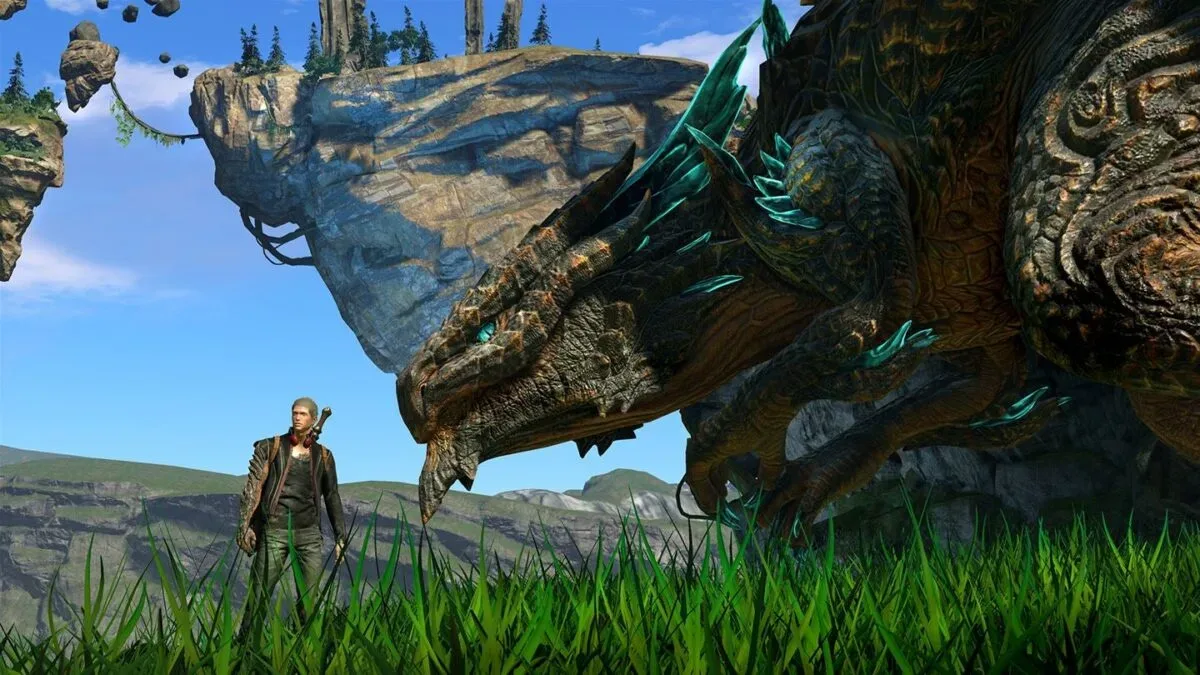
Scalebound was being developed by PlatinumGames with Microsoft Studios set to publish it. The project was publicly associated with Kamiya and spent roughly four years in development before Microsoft canceled it in 2017. It has remained an enduring subject of interest ever since, in part because the game's dragon-riding premise, large-scale creatures, and action-focused design made it look unlike many other Xbox projects of that era.
Embedded X/Twitter post
Embedded X/Twitter post
Kamiya challenges allegations over development money
The immediate issue stems from a rumor repeated by some users on X: that Kamiya supposedly took funds intended for Scalebound and redirected them to other work. Variations of the accusation specifically claim that the project's budget was used to help make other games at the studio.
For useful background on this topic, read Fable's Economy Lets Players Build Fortunes, Shape Lives, and Become Albion's Worst Boss.
No public evidence has established that this happened. There is also no confirmed figure for Scalebound's full development cost, and neither Microsoft nor PlatinumGames has publicly said that money intended for the game was diverted by Kamiya for another purpose.
Nevertheless, the claim has persisted in certain corners of online discussion. Kamiya, who has long been known for directly and bluntly engaging with people on social media, responded to two posts advancing that theory. In one response, translated from Japanese by machine translation, he said he was going to sue people spreading what he described as defamatory fake news. In another exchange, he more directly asked whether he should sue the user for defamation.
Those posts should not be read as confirmation that legal action has been filed or is guaranteed to happen. Kamiya's wording conveys his anger at the claims and raises the prospect of a lawsuit, but there is no indication here of a formal complaint, a court case, or a legal timetable. The central point, however, is unambiguous: Kamiya rejects the allegation that he misappropriated Scalebound funding.
Why Bayonetta 2 is part of the rumor
One especially odd version of the story links Scalebound to Bayonetta 2, suggesting that the Xbox-backed project somehow helped bankroll the sequel. The claim does not fit the basic public context surrounding Bayonetta 2, which was published by Nintendo.
The existence of separate business relationships involving PlatinumGames has likely made it easier for outsiders to connect projects that were not necessarily financially connected. PlatinumGames worked across numerous publishers and franchises over the years, while Kamiya himself became closely associated with several major series. That history is not proof that funds from one game were repurposed for another, and it does not support treating an internet rumor as an established account of what happened to Scalebound.
It is also worth separating a game's development difficulties from accusations of personal misconduct. Large-scale games can be delayed, reworked, or canceled for many reasons: production schedules, shifting design priorities, technology challenges, management decisions, publishing expectations, and disagreements between partners can all play a part. Without substantiated information, assigning a specific financial explanation--or accusing an individual of theft--goes far beyond what the public record supports.
A cancellation with shared responsibility
Fans have debated the end of Scalebound for nearly a decade, often treating Microsoft as the sole party responsible because it was the publisher and the company that announced the cancellation. But a former PlatinumGames executive has previously offered a more complicated view.
In 2023, PlatinumGames president and CEO Atsushi Inaba said it was difficult for the studio to watch fans direct anger at Microsoft alone over the cancellation. Inaba indicated that both sides bore responsibility for the project not reaching release. That does not reveal every detail of the decision or settle every question surrounding the game's development. It does, though, make clear that the studio itself did not characterize the situation as a simple case of one side abandoning a completed or problem-free project.
The distinction matters because online narratives around canceled games often become increasingly definitive as years pass. A lack of detailed public information can leave room for theories to take root, particularly when a game had a recognizable director, a major platform holder behind it, and a memorable public reveal. Yet uncertainty is not evidence. The available statements point to a difficult collaboration and a cancellation for which both partners had some responsibility, not to the allegation that Kamiya stole development money.
Kamiya is still open to a Scalebound return
The funding accusations emerged after Kamiya was asked whether he had spoken with Xbox CEO Asha Sharma about reviving Scalebound. Kamiya said he had not, but used the moment to once again make his position clear: if Xbox wants to do it, he would like to make it happen. He also said that Koyama was on board.
That is enthusiasm rather than an announcement. There is no confirmed revival, no stated agreement with Microsoft, and no indication that production has restarted. Microsoft has not announced a new Scalebound project, and a public expression of interest from a former director should not be mistaken for a green light from the publisher.
Still, the comment will inevitably reignite discussion among fans who have continued to hope for the game's return. Scalebound has occupied a rare position in the modern Xbox conversation: it was canceled before release, yet footage and concepts shown during its development created enough interest for it to remain part of broader discussions about lost games and unrealized first-party ambitions.
Kamiya is no longer at PlatinumGames. He departed the studio and joined Clovers in 2023, adding another practical question to any hypothetical revival. Even if Microsoft chose to revisit the property, the structure of a new project, the studios involved, and Kamiya's exact role would all need to be determined. None of those details have been announced.
The cost of turning rumors into facts
The latest exchanges underline a recurring problem in gaming discourse. Development stories are frequently pieced together from partial reporting, old interviews, fan assumptions, and social-media repetition. Over time, an unverified suggestion can be repeated often enough that it begins to sound like accepted history.
For creators, that can be more than an annoyance. An allegation that somebody took or misused company funding is a serious claim, especially when attached to a named individual. Kamiya's responses show that he views the Scalebound accusations in precisely those terms, rather than as harmless criticism of a project that failed to launch.
There is plenty that remains unknown about Scalebound: the exact obstacles it faced, the internal decisions that led to the end of development, and whether Microsoft might ever decide the concept deserves another chance. But there is a meaningful difference between acknowledging those unanswered questions and filling the gaps with unproven claims.
For now, the only concrete development is Kamiya's public rebuttal. He has denied the premise behind the funding rumor, suggested that defamatory posts could have legal consequences, and again signaled that he would be ready to work on Scalebound if Xbox chose to revive it. Until Microsoft says otherwise, though, the long-canceled action RPG remains exactly that: a project with a passionate following, an unresolved legacy, and no announced path back into development.
Community
Discussion
Start the conversation.
No comments have been posted yet.