

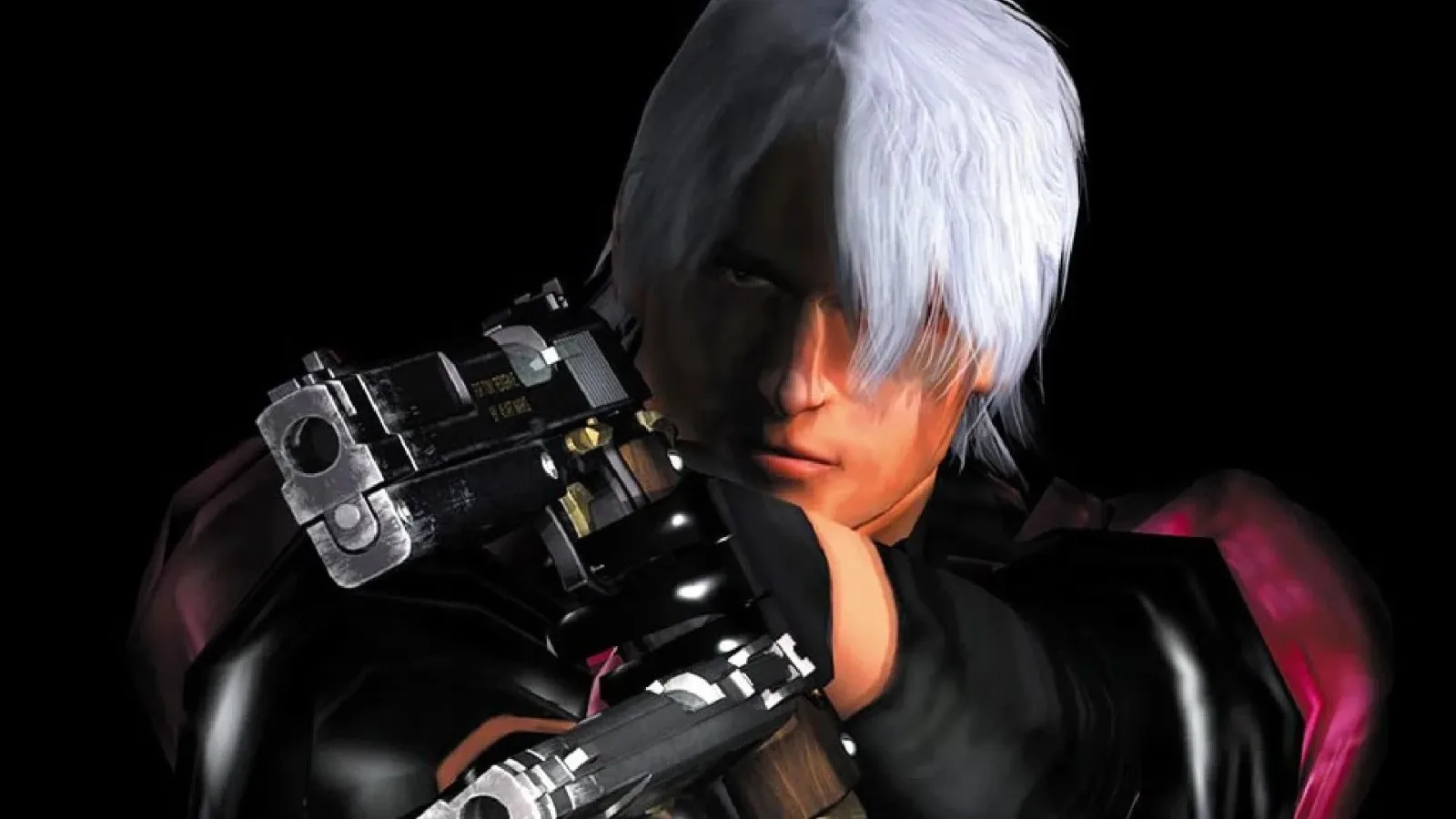
Hideki Kamiya has added his voice to the growing conversation around video game preservation, digital ownership, and the decline of physical releases. The veteran developer, known as a co-creator of Devil May Cry and for his work on series including Bayonetta, says he understands why the industry has moved steadily toward digital distribution. Even so, he believes the people and companies that control game intellectual property have a responsibility to make sure their work does not disappear as technology changes.
Speaking to Video Games Chronicle in comments reported by GamesRadar+, Kamiya said he no longer buys physical games himself. His personal purchasing habits are entirely digital, and he views the broader shift away from discs as an expected outcome of where the business has been heading for years.
“I don't buy a single physical game these days – every single game I buy is 100% digital,” Kamiya said. Discussing the reported decision to discontinue PlayStation game discs in 2028, he added: “Yeah, I guess this is where things were heading.”
But Kamiya’s concern is not rooted in nostalgia for plastic cases, boxed manuals, or a particular storage format. Instead, he is focused on what happens after a game is no longer actively sold, supported, downloadable, or compatible with modern systems. For him, whether a title survives through a disc, a digital storefront, a re-release, or another legitimate method is secondary to the more important goal: ensuring people in the future can still play it.
Physical games and preservation are related, but not identical
The loss of physical media is frequently discussed as though it automatically means the loss of games themselves. There is truth in that fear. A physical cartridge or disc can provide players with a copy that is not immediately dependent on a storefront remaining online, and used-game markets have historically offered one way for old software to stay in circulation after publishers move on.
However, Kamiya’s remarks point to a broader issue. Physical media has never been a complete preservation solution, particularly in an era of patches, downloadable content, server-connected modes, licensed music, online requirements, and games that may ship in unfinished states before receiving major updates. A disc can be valuable, but it may not contain the final version of a game, all of its content, or the infrastructure required for its intended experience.
Digital distribution brings different strengths and weaknesses. It can make niche and older games easier to reach when publishers choose to keep them available. It can also allow a classic to be updated for newer hardware, translated for new audiences, or bundled into a collection. Yet a digital purchase is usually tied to a platform holder’s account system and licensing terms. Store closures, delistings, expired rights agreements, hardware transitions, and corporate decisions can all make a title harder—or impossible—for new players to obtain.
That is why Kamiya’s central question is aimed at IP holders. The issue is not merely whether consumers can buy a game on disc today. It is whether the owner of a game will continue to take responsibility for its accessibility decades from now.
“Whether or not the IP holders are going to take responsibility for ensuring that all of these games will continue to be available to future generations in order for them to be played,” Kamiya said. “Whether that's physically or digitally is less important to me, just so long as these games will be available to people in the future.”
Classic games can vanish between hardware generations
Kamiya noted that many older classics are already unavailable on modern hardware. That reality stretches across every major gaming ecosystem. A game may be tied to a retired console storefront, limited by obsolete peripherals, blocked by complicated music or likeness licenses, or simply overlooked because a publisher does not see enough commercial incentive to revisit it.
The problem affects major hits and smaller cult favorites alike. Large franchises may receive remasters and collections, but even successful series often have gaps in their history. Meanwhile, games made for older handhelds, discontinued online platforms, mobile storefronts, and specific console generations can be especially vulnerable. In some cases, a title’s only official release may have happened on hardware that is no longer manufactured or supported.
Compatibility initiatives have helped mitigate that problem at times. Backward compatibility programs, retro libraries, subscription catalogs, re-releases, and remake projects can all give older works a new lease on life. But these efforts remain selective. They depend on technical feasibility, licensing arrangements, publisher priorities, and the willingness to devote resources to software that may not generate the same sales as a major new release.
For Kamiya, the stakes extend beyond replay value. Older games are part of the medium’s cultural record. They show how genres developed, how design ideas evolved, and how earlier creators responded to the technical limitations and creative trends of their era. Losing access to them makes it more difficult for players, developers, critics, historians, and students to understand video games as a continuing art form.
“There are already so many of these older classic games that are not playable on modern hardware at all,” Kamiya said. He added that he hopes rights holders will make them accessible “not just from a gameplay perspective, but also from a game culture perspective,” helping to foster and grow gaming culture.
Why the digital transition has intensified ownership concerns
The debate has become more urgent as publishers and platform companies increasingly build their businesses around digital stores, subscriptions, cloud-connected services, and downloadable products. These systems are convenient for many players. They allow games to be purchased instantly, updated quickly, and carried across devices in ways that were once impossible. Kamiya himself is an example of a player who has embraced that convenience.
At the same time, digital access can be fragile. Consumers commonly use the language of ownership when buying a game digitally, but in practical terms they are often receiving a license to access software under conditions set by the storefront and publisher. Those conditions can change, and availability can end.
GamesRadar+ framed Kamiya’s comments against recent industry developments, including PlayStation’s reported plan to phase out physical game discs in 2028 and public discussion around what customers receive when purchasing digital games. The outlet also referenced the difficult situation surrounding Xbox, including reports of 3,200 layoffs. These events come from different parts of the business, but together they highlight why preservation cannot be assumed to happen automatically. When companies restructure, change strategy, close stores, or pursue newer technology, legacy catalogues can become an afterthought.
That does not mean digital gaming and preservation are incompatible. In fact, a well-maintained digital archive can be an extraordinary preservation and access tool. The concern is that the continued existence of games cannot depend solely on a short-term commercial calculation or on a storefront whose future is uncertain.
A responsibility that goes beyond blockbuster franchises
Kamiya’s position places the obligation squarely on owners of valuable game libraries. Publishers control the legal rights, original assets, source code, trademarks, and distribution channels needed to return many older games to the public. Players and preservation groups can advocate, document history, and support official re-releases, but they often cannot resolve rights issues or legally distribute games on their own.
There are practical challenges. Some older titles contain licensed music, branded vehicles, sports leagues, actor likenesses, or technology agreements that may be expensive or impossible to renew. Original code and development materials may be incomplete. Hardware-specific features can be difficult to replicate accurately. Online games present further complications when their servers are gone.
Still, those challenges are precisely why planning matters. If preservation is considered only after a game has been delisted or an old platform is shut down, the cost and difficulty of restoring it can become much greater. Preserving source materials, documenting builds, preparing compatibility solutions, and considering future availability during licensing negotiations could all make a meaningful difference.
The wider preservation movement has also gained visibility through campaigns such as Stop Killing Games, which argues for stronger protections when publishers end support for games that depend on online services. Kamiya did not outline a specific policy proposal in his comments, but his concern overlaps with the movement’s larger question: what responsibilities do companies have when products that people bought become unusable?
Availability is the goal
Kamiya’s argument is notable because it avoids treating physical and digital formats as opposing camps. He is not presenting discs as the only answer, nor is he dismissing the benefits of digital libraries. His point is more fundamental: games should remain available to future generations in some reliable form.
That standard would require more than occasional remakes of famous titles. It would mean thoughtful support for back catalogues across console, PC, handheld, and mobile history. It would mean recognizing that a game’s value is not exhausted when its launch window ends. And it would mean understanding that gaming culture is built not only by the newest blockbuster, but by the ability to revisit the ideas, experiments, successes, and oddities that came before.
As physical releases become less central to the market, the responsibility to protect that history will only become more visible. Kamiya’s message is ultimately straightforward: the format may change, but the duty to keep games playable should not disappear with it.
Community
Discussion
Start the conversation.
No comments have been posted yet.