

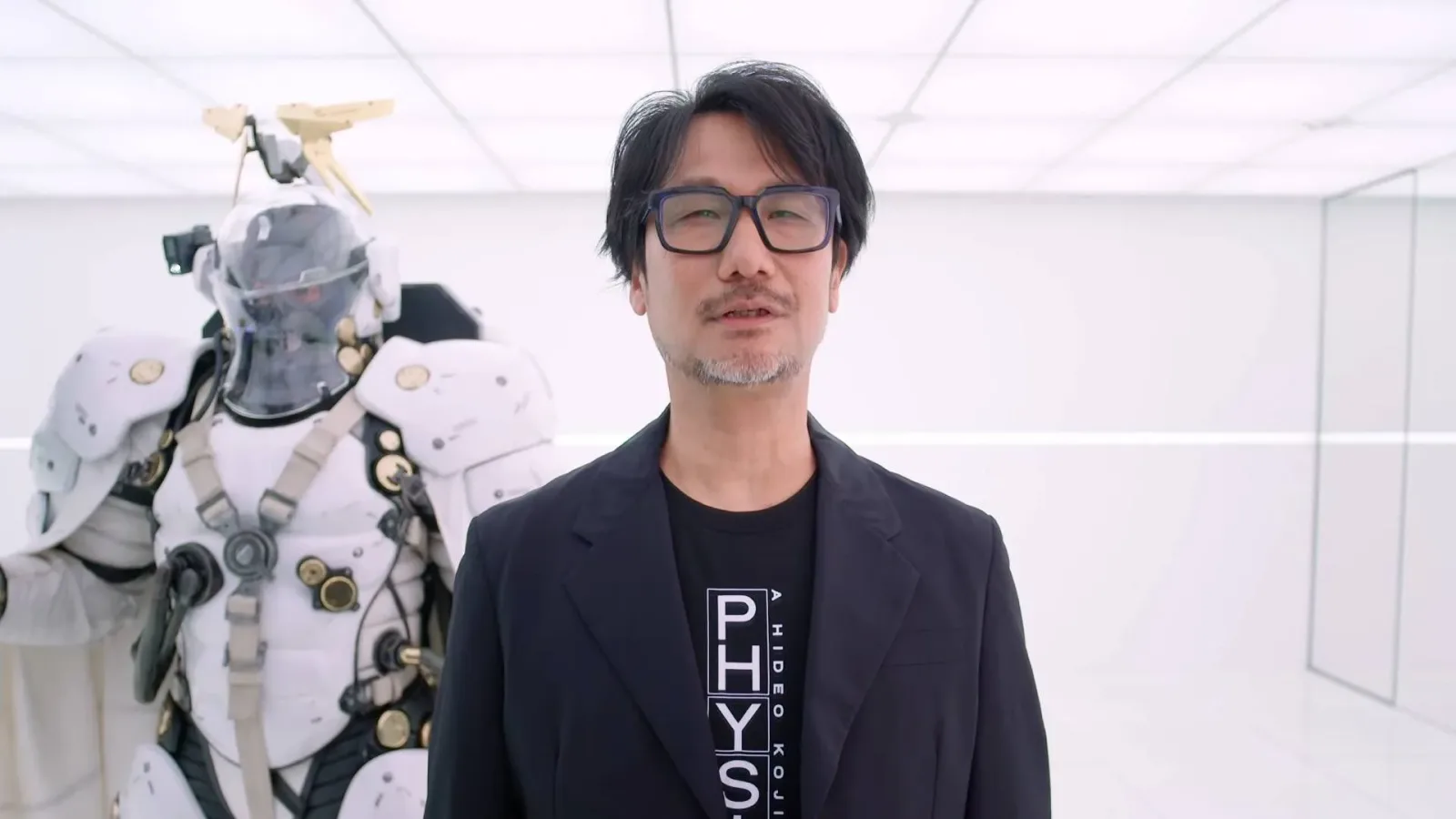
Hideo Kojima has offered a fresh, if deliberately restrained, progress report on OD, the mysterious horror game being developed with Xbox Game Studios. Speaking during an Xbox presentation at Tokyo Game Show, Kojima said the project is advancing smoothly now that important recording work, previously interrupted by the SAG strike, has resumed.
The update does not answer the biggest questions surrounding OD. There is still no release window, no detailed explanation of how it will play, and no confirmed list of platforms beyond its Xbox Game Studios publishing arrangement. But for a project defined so far by cryptic footage, high-profile collaborators, and Kojima's interest in stretching the medium in unusual directions, confirmation that production is proceeding on schedule is meaningful.
Kojima also reinforced the central ambition behind OD: it is intended to be a new type of game that pushes at the limits of what players find frightening. That is a large promise, particularly coming from a creator with a long history of mixing cinematic techniques, emerging technology, and unconventional design ideas. At present, though, Kojima Productions is keeping the exact form of that experiment closely guarded.
Performance Capture and ADR Are Back Underway
The clearest production detail concerns performance capture and ADR, or additional dialogue recording. Both had been paused during the SAG strike, Kojima explained, but resumed this year. He said the team is now continuing on schedule.
For useful background on this topic, read Bill Skarsgård Confirmed as Physint's Lead Character.
That distinction matters for OD because the game's public-facing reveal has placed a major emphasis on facial performance and close-up acting. Its early material highlighted actor Sophia Lillis in an intensely framed sequence, suggesting that performance capture is not simply a supporting production process but a key part of the project's horror identity. If OD is aiming for unease through realism, intimacy, and the subtle behavior of its characters, the work being done in the recording studio and capture stage could be central to its final effect.
Kojima specifically praised Lillis, Hunter Schafer, and the wider team for delivering intense and outstanding performances. Both actors are already confirmed as part of OD's cast, and Kojima said he is eager for audiences to see what they have done. The wording suggests that there is considerably more material to reveal, although he did not indicate when the next trailer, gameplay showing, or major announcement might arrive.
For now, the development update is also a reminder of how real-world labor disruptions can affect game production, especially projects that rely heavily on union performers. Motion capture, voice work, reshoots, and dialogue refinement can all become interdependent with other development tasks. Resuming those sessions does not automatically mean a game is close to completion, but it does mean a significant portion of OD's creative pipeline is active again.
A Horror Game Built Around Experimentation
Kojima described OD as a completely new kind of game that tests the thresholds of fear. He added that the project has been taking shape through continual experimentation and iteration.
That language is consistent with how Kojima has discussed his work throughout his career. Rather than presenting OD as a straightforward entry in a familiar horror subgenre, he appears to be positioning it as an attempt to investigate what interactive fear can be. The phrase "thresholds of fear" leaves room for many possibilities: psychological tension, audiovisual discomfort, player vulnerability, social pressure, uncertainty about what is real, or mechanics that react to a player's behavior in unexpected ways.
None of those possibilities have been confirmed as specific OD features. The game's gameplay remains unknown. Still, the emphasis on iteration suggests Kojima Productions is not merely building a conventional horror framework around famous actors. It implies an ongoing process of testing ideas, refining them, and determining what produces the intended emotional response.
That approach is especially notable because Kojima has repeatedly shown interest in the line between cinema and games. OD's reveal material was strikingly cinematic, but the project is still being described as a game. The unanswered question is how player participation will alter the experience. Horror often gains power from making an audience feel trapped or helpless, while games give players agency. Finding a productive tension between those two qualities may be one of OD's major design challenges.
It is also worth remembering that Kojima's previous work in horror, the cancelled Silent Hills project and its influential playable teaser P.T., remains an important reference point for many fans. OD has not been presented as a successor to that project, and it should not be assumed to share its structure or mechanics. Even so, the expectations around any Kojima-led horror game are understandably shaped by the way P.T. used repetition, environmental detail, sound, and uncertainty to create dread.
The Ghost-Scanning Idea Adds to OD's Mystery
OD has already attracted attention for one of Kojima's more unusual comments: his interest in scanning a ghost into the game. He previously said he would like to capture one, while also suggesting it was possible that a ghost had already been accidentally recorded during the project.
Whether treated as a serious creative goal, a playful bit of horror-world-building, or something in between, the remark fits the tone surrounding OD. Kojima later said that he and Microsoft visited a shrine to ensure they had a safe build of the game. The anecdote does not explain a gameplay system, but it reinforces the idea that OD's development is being discussed in a way that blurs technical production, folklore, superstition, and promotional mystery.
For players, the practical takeaway is simple: OD's creators are clearly interested in fear as more than a monster appearing in a dark room. The project's public messaging points toward atmosphere and unease, including the possibility that the act of recording performances and building the game world could itself become part of the fiction or the experience. Until Kojima Productions shows more, however, the ghost-related comments should be viewed as part of OD's enigmatic presentation rather than confirmation of a particular feature.
An Xbox Game Studios Publishing Partnership
OD is being published by Xbox Game Studios, placing it within Microsoft's portfolio of high-profile projects. The partnership has been notable from the start because Kojima Productions is closely associated with ambitious, auteur-driven releases, while Xbox has emphasized its interest in supporting distinctive games from major creators.
The Tokyo Game Show presentation also included discussion of Physint, Kojima Productions' separate action-espionage project. Kojima revealed that Bill Skarsgård, known for roles in John Wick: Chapter 4 and Nosferatu, will lead that game. Kojima described himself and Skarsgård as long-time admirers of each other's work.
Physint is a different project from OD, with a different genre focus and its own unanswered questions. Its appearance alongside OD nevertheless underlines the scale of Kojima Productions' current slate. One project is being framed as a boundary-testing horror experience; the other is tied to Kojima's long-running interest in tactical espionage and cinematic action. Both are still at stages where names, themes, and creative intent are clearer than concrete details such as release timing.
No Release Date, and Plenty Left to Reveal
The most important unknown is when OD will actually arrive. Kojima did not provide a launch target during the Tokyo Game Show update. There is also no confirmed breakdown of supported platforms, no stated format for its multiplayer or single-player elements, if any, and no substantial gameplay demonstration to clarify its structure.
That uncertainty may frustrate players hoping for an immediate follow-up to the game's initial reveal, but it also makes the new production report useful. Rather than offering a vague assurance with no context, Kojima identified a specific reason that performance work had been delayed and confirmed that those sessions are active again. He also made clear that the team is still experimenting and refining the concept, which suggests OD is not ready to be reduced to a familiar genre label.
For now, OD remains one of the more intriguing unknowns in modern horror games. It has recognizable talent in Sophia Lillis and Hunter Schafer, the technical and publishing support of Xbox Game Studios, and a director openly committed to challenging conventional ideas about fear. The next reveal will need to explain more than its unsettling tone. It will need to show what players actually do, how the game's experimentation translates into interaction, and why OD's approach to horror is different from what has come before.
Until then, Kojima's message is one of cautious momentum: the work interrupted by the SAG strike has resumed, the cast's performances are in place, and OD continues to evolve. The project may still be a long way from a full unveiling, but it is no longer silent on its development status.
Community
Discussion
Start the conversation.
No comments have been posted yet.