

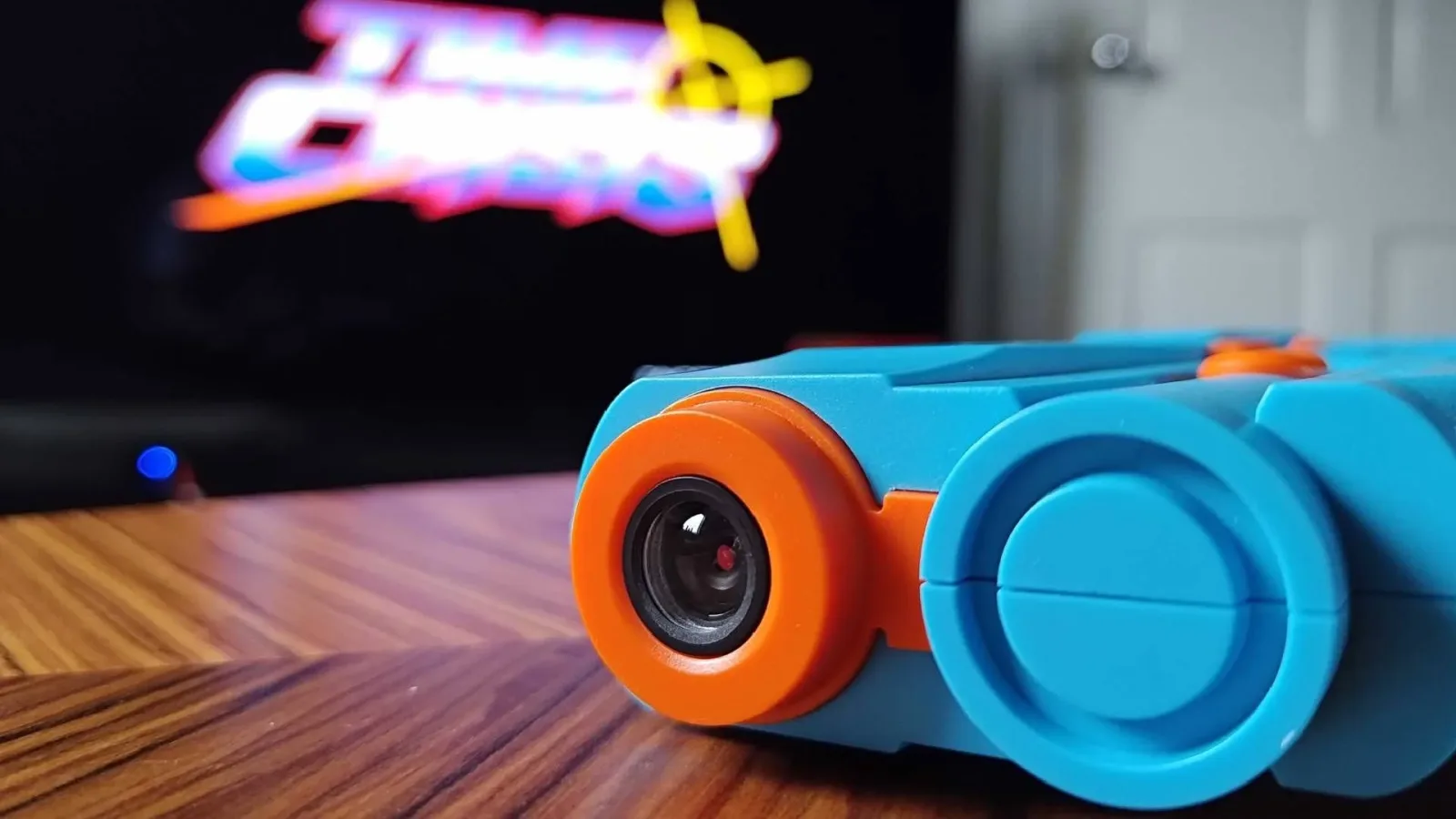
Modern lightgun gaming remains one of the stranger corners of the retro revival. Classic CRT televisions made arcade-style shooters feel simple: point a plastic gun at the screen, pull the trigger, and let the hardware handle the rest. Flat-panel displays changed that equation completely, leaving players, manufacturers, and hobbyist communities searching for convincing ways to bring games such as Time Crisis back into the living room.
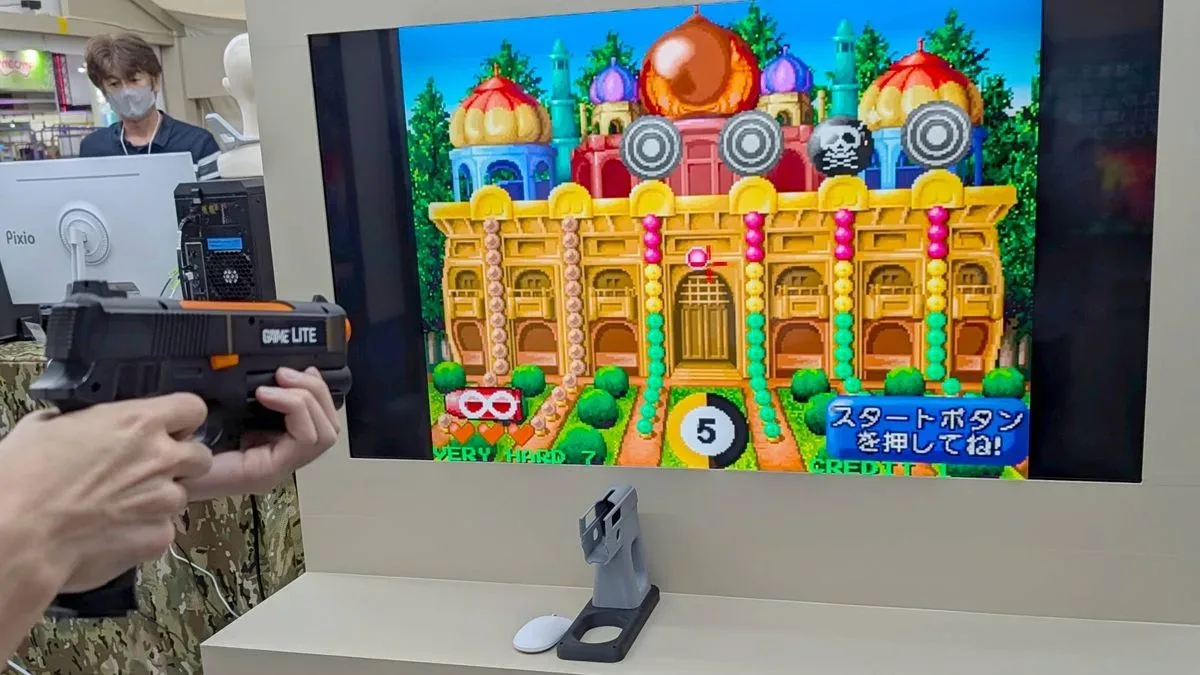
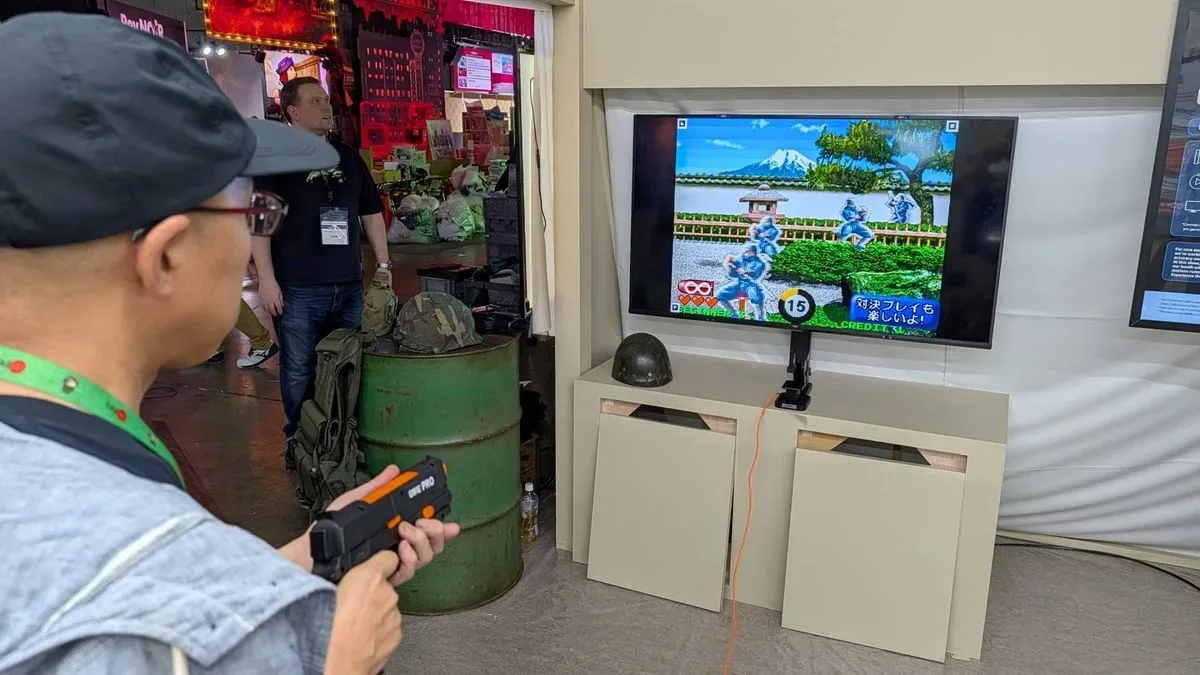
Tassei Denki is continuing that search with two newly shown G'AIM'E concepts: the G'AIM'E Lightgun Pro and G'AIM'E Lightgun Lite. Demonstrated at Tokyo Game Show 2026, the prototypes represent a notable technical shift from the company's existing G'AIM'E Time Crisis Lightgun console. Rather than using the camera-assisted system found in the 2025 release, the new designs appear to explore gyro controls, wireless functionality, and, in the Pro model's case, technology connected to the open-source OpenFIRE Light Gun project.
There is an important caveat attached to everything shown at the event. These are technology demonstrations, not final retail announcements. Neither accessory is expected to launch exactly as it appeared on the Tokyo Game Show floor, and even the console-style base hardware used in the setup may not necessarily be part of a finished product. Still, the concepts offer a useful look at where G'AIM'E may be heading after its first Time Crisis-focused release.
Embedded X/Twitter post
A different direction after the original G'AIM'E console
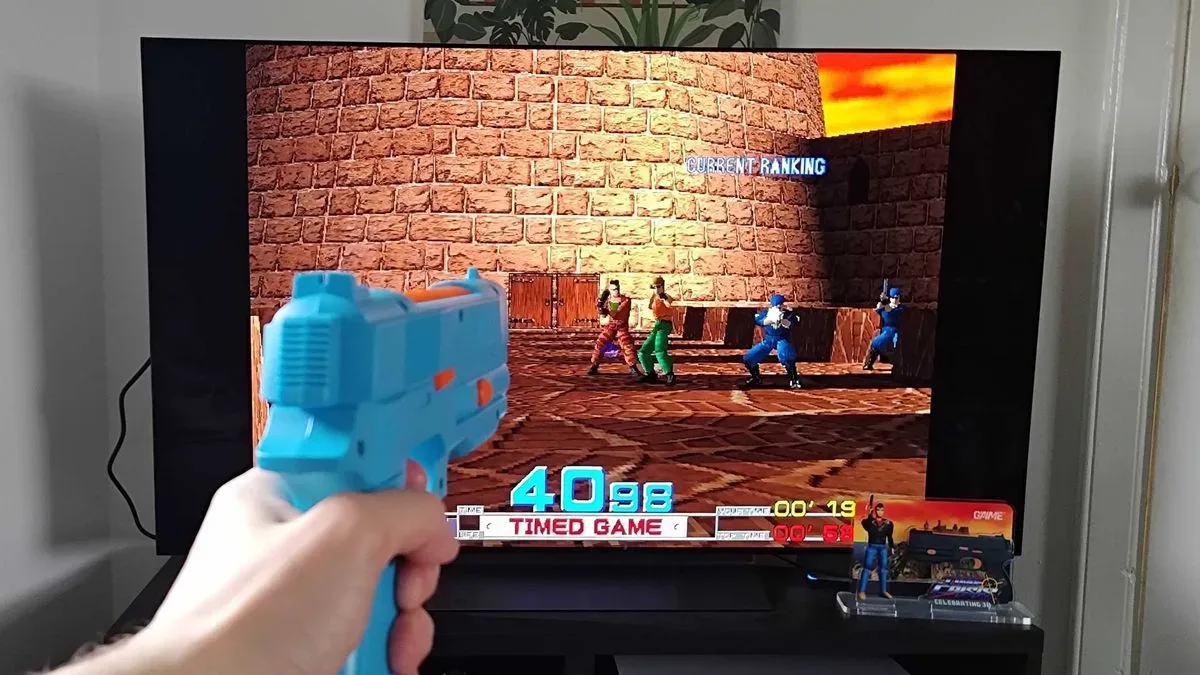
The original G'AIM'E Time Crisis Lightgun console was built around convenience. It combined an officially themed retro package with lightguns designed for modern displays, allowing players to enjoy a small selection of included games without needing a CRT, complicated emulation setup, or extensive calibration hardware. Its key technical selling point was an AI-assisted camera mounted in the gun, intended to recognize the television screen and translate a player's aim into in-game movement.
For useful background on this topic, read Twitch Chief Expects GTA 6 Multiplayer to Drive an Even Bigger Surge in 2027.
That approach delivered a route to authentic-feeling lightgun play on contemporary televisions, although it was not without compromises. Calibration could be fiddly, and the camera-based tracking was not viewed as quite as precise as alternatives such as the Sinden Lightgun. The original G'AIM'E package also came with a major limitation for enthusiasts: the guns were tied to a four-game console ecosystem, with no stated way to add more titles.
The Pro and Lite prototypes suggest Tassei Denki is at least considering a broader future. Japanese publication Game Watch first highlighted the pair, while photographs and booth signage from Tokyo Game Show indicate that the company is now examining two distinct use cases rather than producing one all-purpose gun.
One is a simpler, potentially more accessible wireless option. The other is a more performance-minded concept that could eventually be relevant to PC play and the wider ecosystem of lightgun software. If that ambition carries through to a consumer product, it would move G'AIM'E beyond a self-contained nostalgia console and toward the more flexible territory currently occupied by enthusiast hardware.
The Lite prototype trades its camera for gyro aiming
The G'AIM'E Lightgun Lite is the most immediately different-looking idea in the pair. It removes the camera housed in the barrel of the original G'AIM'E gun and instead uses gyroscopic input, described as working in a similar fashion to a conventional PlayStation controller's motion controls. In basic terms, the gun tracks its movement and orientation rather than continuously relying on the previous camera-driven screen-recognition method.
Notably, the demonstration setup did not appear to use an external light bar like the sensor bar associated with Wii Remote-style pointing. That matters because light bars can add another piece of hardware to position, power, and account for in a living-room setup. A gyro-led lightgun that avoids a bar could preserve some of the plug-and-play appeal that made the original G'AIM'E system attractive.
The Lite also appears to remove the permanently attached orange USB-C cable used by the existing model. The prototype is believed to use 2.4GHz wireless connectivity, though final technical specifications have not been confirmed. If retained, wireless operation would be a meaningful quality-of-life improvement for a genre that often involves standing, moving quickly, and reacting to sudden off-screen targets.
Gyro control does bring its own familiar issue: drift and misalignment. The demonstration reportedly required players to press a reset button on the gun when aim positioning became offset, recentering the pointer before play could continue. This could mean the system depends heavily, or possibly entirely, on gyroscopic positioning to maintain its relationship with the display. If the gun is moved abruptly or dropped during a session, a quick reset may be needed before aiming feels correct again.
That is not necessarily a deal-breaker. Motion-control players have long dealt with recentering functions, and a well-designed reset process can be fast enough to fade into the background. But it does underline the key unanswered question surrounding the Lite: what exact method does it use to keep aiming aligned with screen boundaries without the camera or an obvious Wii-like bar? Tassei Denki has not yet explained that part of the concept in detail.
The Pro model targets accuracy and lower latency
While the Lite seems focused on convenience, the G'AIM'E Lightgun Pro appears intended for players who care most about response time and precision. It is closer in spirit to the 2025 G'AIM'E hardware, including a wired USB-C connection. For an arcade shooter, a cable can be a reasonable trade-off if it helps reduce latency and creates more consistent tracking.
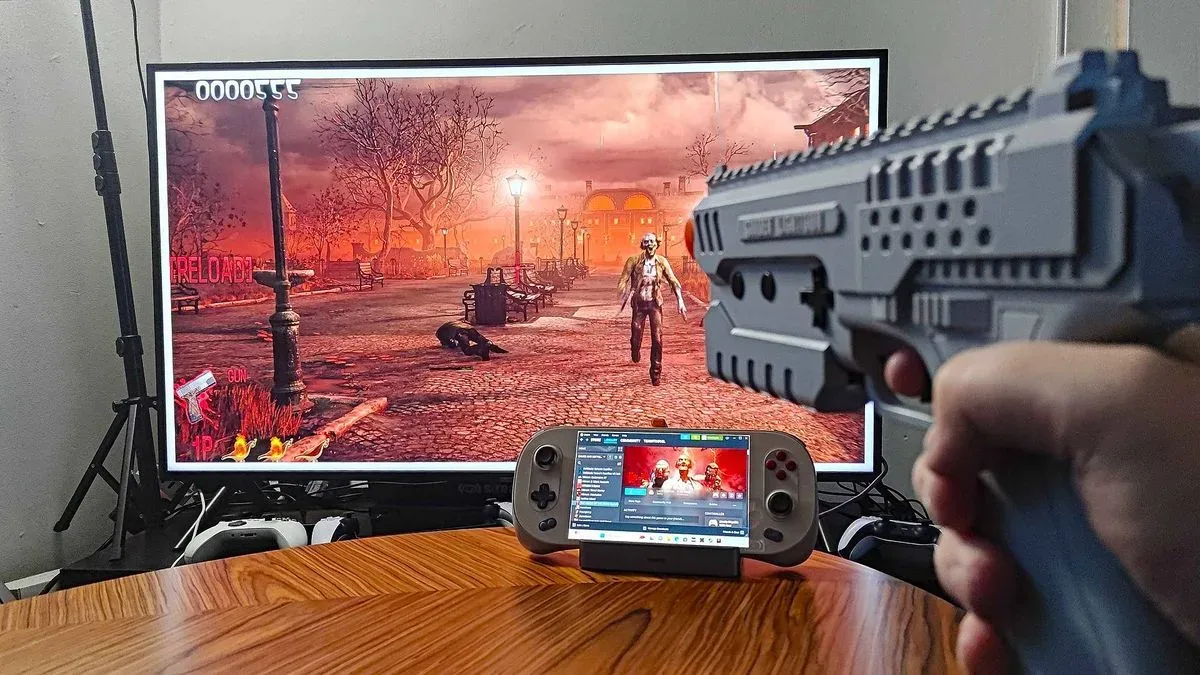
Signage displayed with the Pro concept specifically positioned it as a choice for high-score players, emphasizing improved accuracy and low-latency performance. The especially intriguing detail is its apparent connection to OpenFIRE, the open-source lightgun project used by DIY builders and retro shooter fans. Rather than keeping every element of the technology entirely proprietary, the Pro prototype seemingly looks to OpenFIRE as part of its tracking solution.
That possibility could have significant implications, even though no finished compatibility list has been announced. OpenFIRE has become relevant in a scene where players want lightgun hardware that works across numerous arcade, console, and PC games rather than being locked to a single mini-console collection. Booth information also alluded to potential support for current PC environments, although this should be treated as an early technical possibility rather than a confirmed product feature.
For now, there is no confirmation that the Pro will support particular games, emulators, operating systems, consoles, or displays. There is also no word on whether it will be sold on its own, paired with a future G'AIM'E base unit, or offered in several configurations. Its presence at Tokyo Game Show is best understood as a statement of direction: Tassei Denki is testing an option that may appeal to dedicated arcade fans as well as casual Time Crisis players.
A crowded but promising modern lightgun space
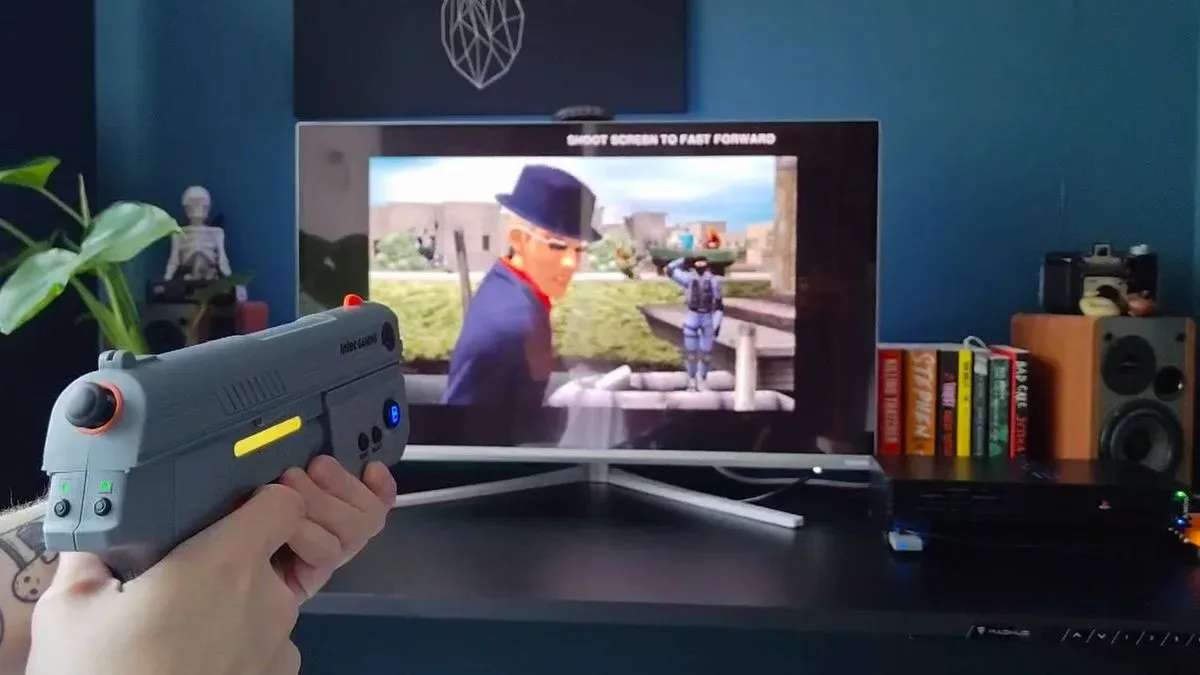
G'AIM'E is not developing in a vacuum. Sinden's approach uses a camera in the gun and a visible white border around the play area, allowing its hardware to identify the screen's edges. Intec's Time Breaker Lightgun takes another route, using a light-bar-style tracking method and connecting to original PlayStation and PlayStation 2 hardware. Each solution has advantages, but each also asks players to accept a particular setup, display condition, or hardware ecosystem.
The challenge for Tassei Denki is to find a middle ground between accessible consumer hardware and the adaptability enthusiasts expect. The existing G'AIM'E Time Crisis console succeeded at offering a contained arcade experience for modern TVs, but its four-game restriction limited its long-term appeal. A standalone gun that could work outside of one fixed firmware package would be a far more consequential product.
The Lite and Pro concepts appear to divide that challenge in two. Lite could deliver an easy, wireless way to play compatible shooters with less hardware clutter. Pro could focus on the accuracy, latency, and broader compatibility required by players who want to build a more serious modern lightgun setup. Whether either prototype can achieve those aims will depend on the final tracking technology, calibration experience, software support, and eventual pricing--none of which has been announced.
What to watch next
The most encouraging part of the G'AIM'E showcase is not that it has provided all the answers. It plainly has not. Instead, the prototypes indicate that Tassei Denki recognizes the limits of its first model and is exploring alternatives rather than merely issuing a cosmetic refresh.
The Lite's wireless gyro design could make home arcade play less cumbersome if its recentering process proves dependable. The Pro's OpenFIRE connection and possible PC ambitions could be even more important, potentially giving G'AIM'E a role in the growing ecosystem of modern-screen hardware for classic shooters.
Until Tassei Denki confirms final specifications, release plans, supported platforms, and whether these ideas will remain separate products, both guns should remain firmly in the prototype category. Yet for players who miss ducking behind the pedal in Time Crisis or chasing scores in classic arcade shooters, the company's next experiment is worth watching. Modern TVs may have made lightguns complicated, but G'AIM'E's Pro and Lite concepts show that the effort to make them feel natural again is far from over.
Community
Discussion
Start the conversation.
No comments have been posted yet.