

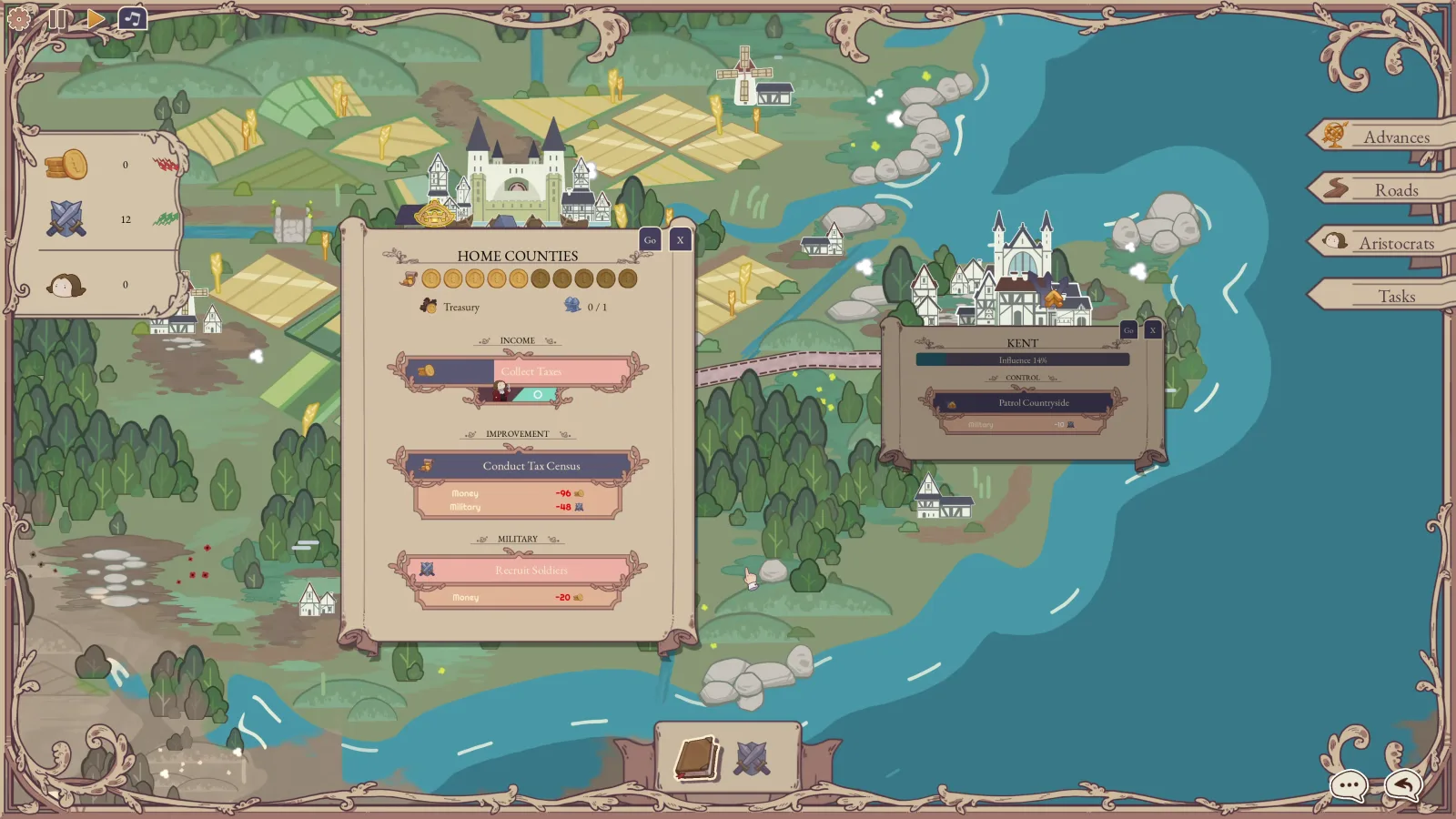
How Empires Work, the debut game from developer Crow Cottage, is now available on Steam. The PC release combines the steadily escalating structure of an incremental game with the political, economic and military concerns of grand strategy, asking players to construct not simply a powerful realm but the institutions that allow that realm to keep expanding.
Priced at $9.99 / £7.99 / EUR8.99, the game has launched with a 10% discount for its first two weeks on sale. A Steam demo is also available for players who would like to try its approach to empire management before committing to the full game.
The central idea behind How Empires Work is contained in its title: lasting power is not just about winning territory or accumulating wealth. It is about creating systems capable of doing work at a greater scale than any individual ruler can manage. Players begin with a basic button press, then gradually unlock methods to automate recurring tasks. What starts as direct intervention develops into a network of institutions designed to operate with increasing independence.
From a single action to an imperial machine
Incremental games are often built around a familiar rhythm. A player takes an initial manual action, earns resources, invests those resources into upgrades, and eventually creates self-sustaining production. How Empires Work applies that framework to the much broader subject of building a state.
For useful background on this topic, read Acclaim to Publish Dice-Driven Roguelike Shooter Die or Die in 2027.
Rather than treating automation as an abstract multiplier alone, Crow Cottage frames it as the growth of government and social structures. Repeated actions can become institutions, shifting the player's role over time. The emphasis is on constructing the machinery needed to govern, profit and project force as a small domain transforms into a far-reaching empire.
That progression places numerous historical-style levers of power in the player's hands. Taxation, trade, colonization, labour, armies and diplomatic influence all form part of the expanding administrative challenge. Each area contributes to the state's development, while the growing scale of the realm creates fresh demands and complications.
The game's premise should be especially appealing to players who enjoy watching a simple system become a complicated, interconnected engine. Early decisions may be hands-on and immediate, but the longer-term aim is to establish structures that can handle those responsibilities. The result is a strategy game where development is measured as much by organizational capacity as it is by geographic growth.
Managing the costs of expansion
How Empires Work does not present growth as a straight path from modest holdings to unquestioned dominance. As an empire develops, it changes the problems facing the player. Internal troubles and rival powers require new responses, meaning that strategies suited to the early game may not remain sufficient as the realm becomes richer, larger and more influential.
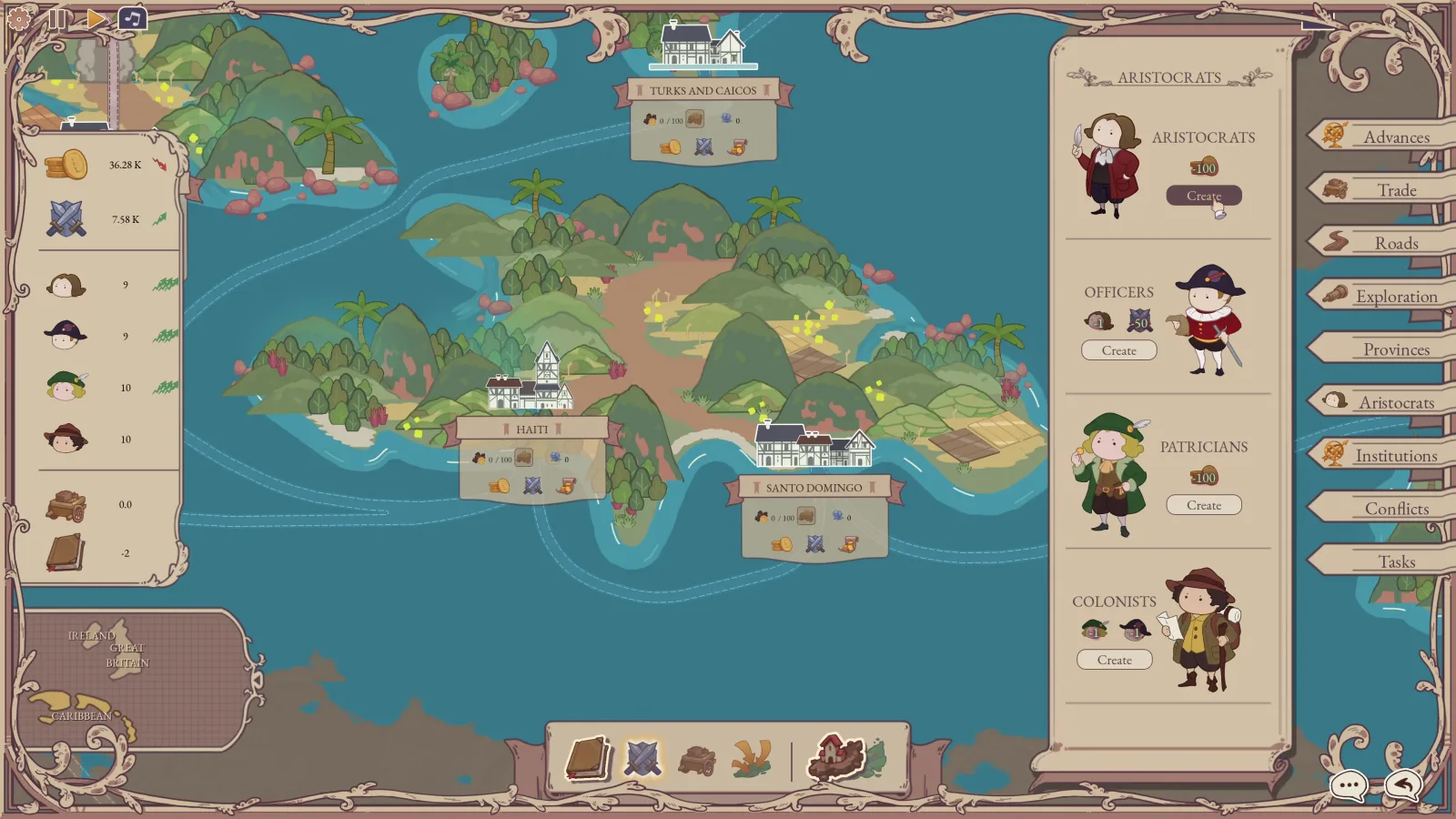
The game puts aristocracy and bureaucracy at the center of this tension. These groups are employed to support continued expansion, reflecting the need for a ruling structure that can translate resources into action. The player is therefore not only deciding what an empire should do, but also building the apparatus through which it can do it.
That concept is reinforced by the game's focus on turning profit into power. Economic activity is not isolated from military or political ambitions. Trade, taxation and labour can help finance larger goals, while infrastructure and administration can help make that wealth more reliable. The empire's engine is meant to be both productive and useful: resources need to become influence, reach and control.
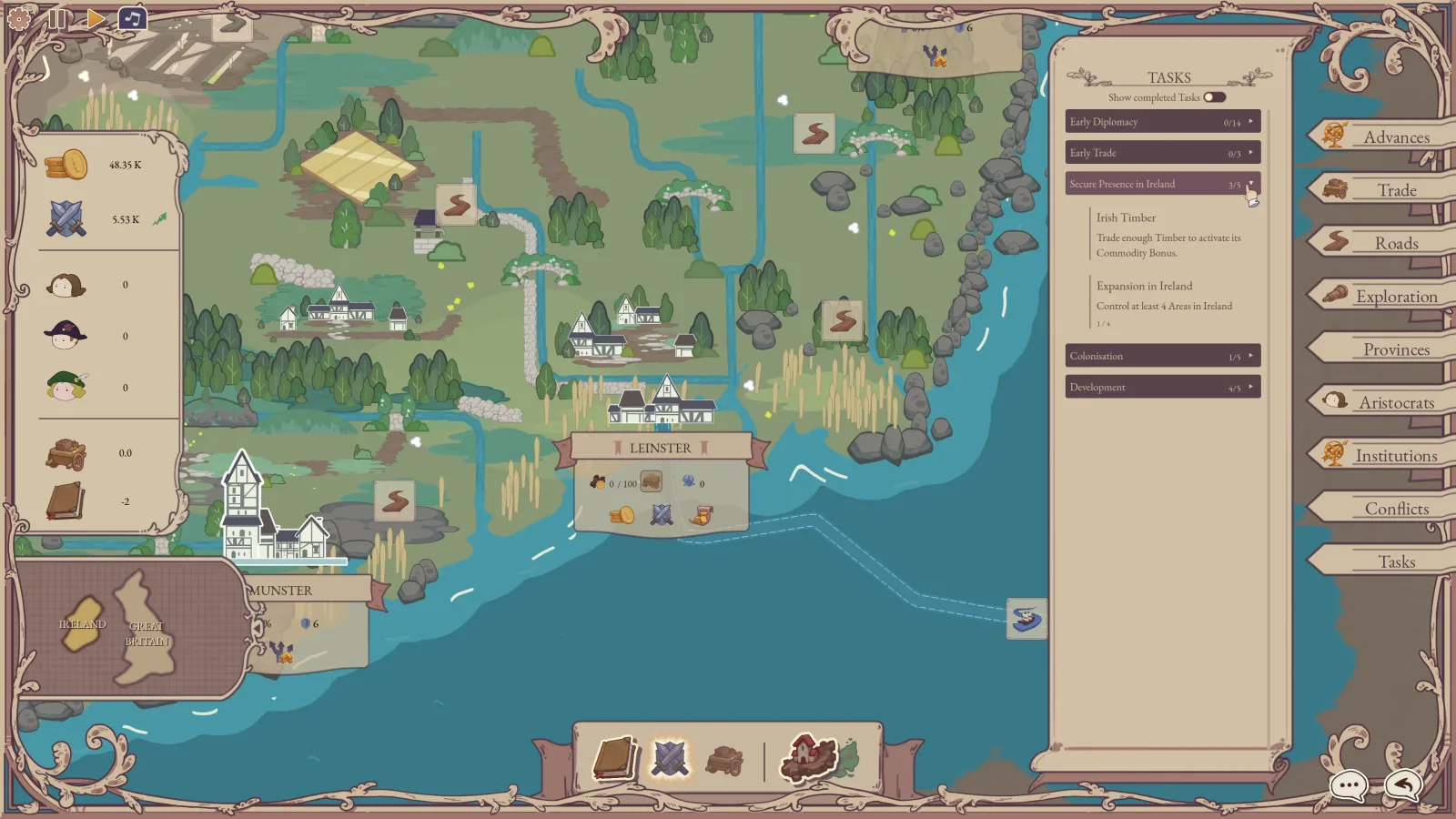
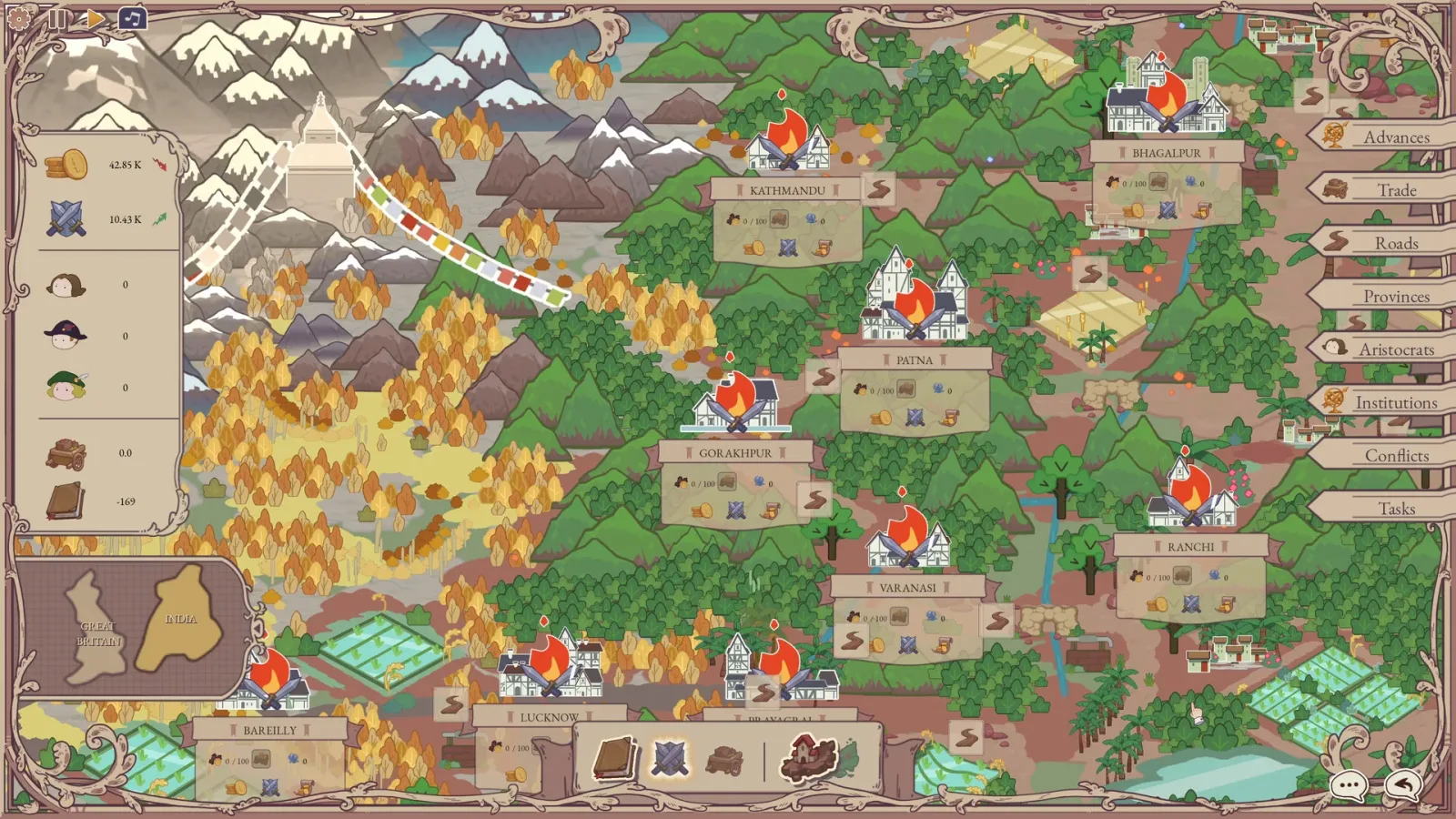
There is also a practical territorial layer to this design. Province management and road-building are listed among the game's major features, tying broad state decisions to the handling of individual places and the links between them. Roads are a natural fit for a game about institutional growth, since they suggest the movement of goods, capital, officials and armies across an increasingly connected realm.
A hand-painted world in motion
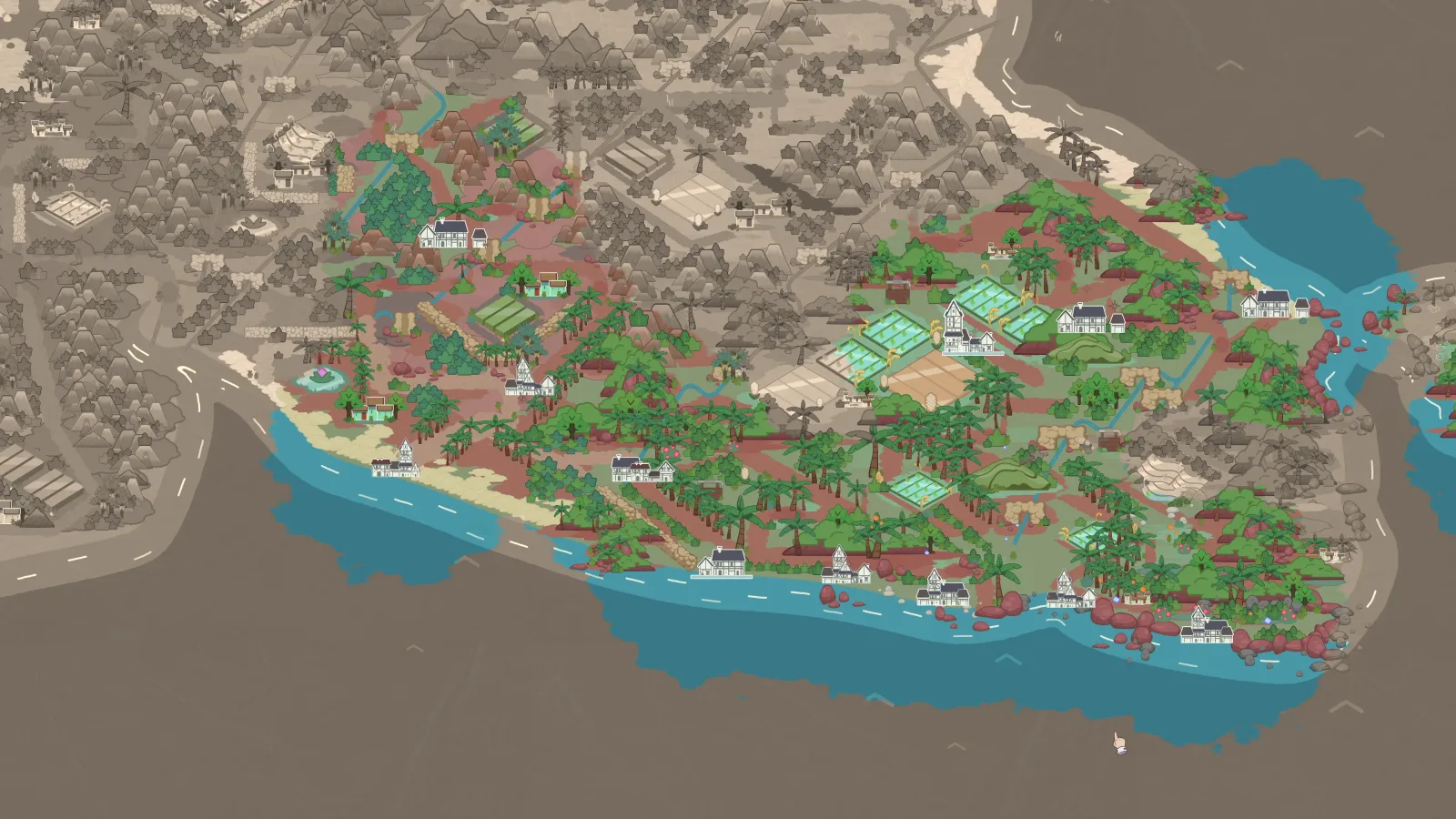
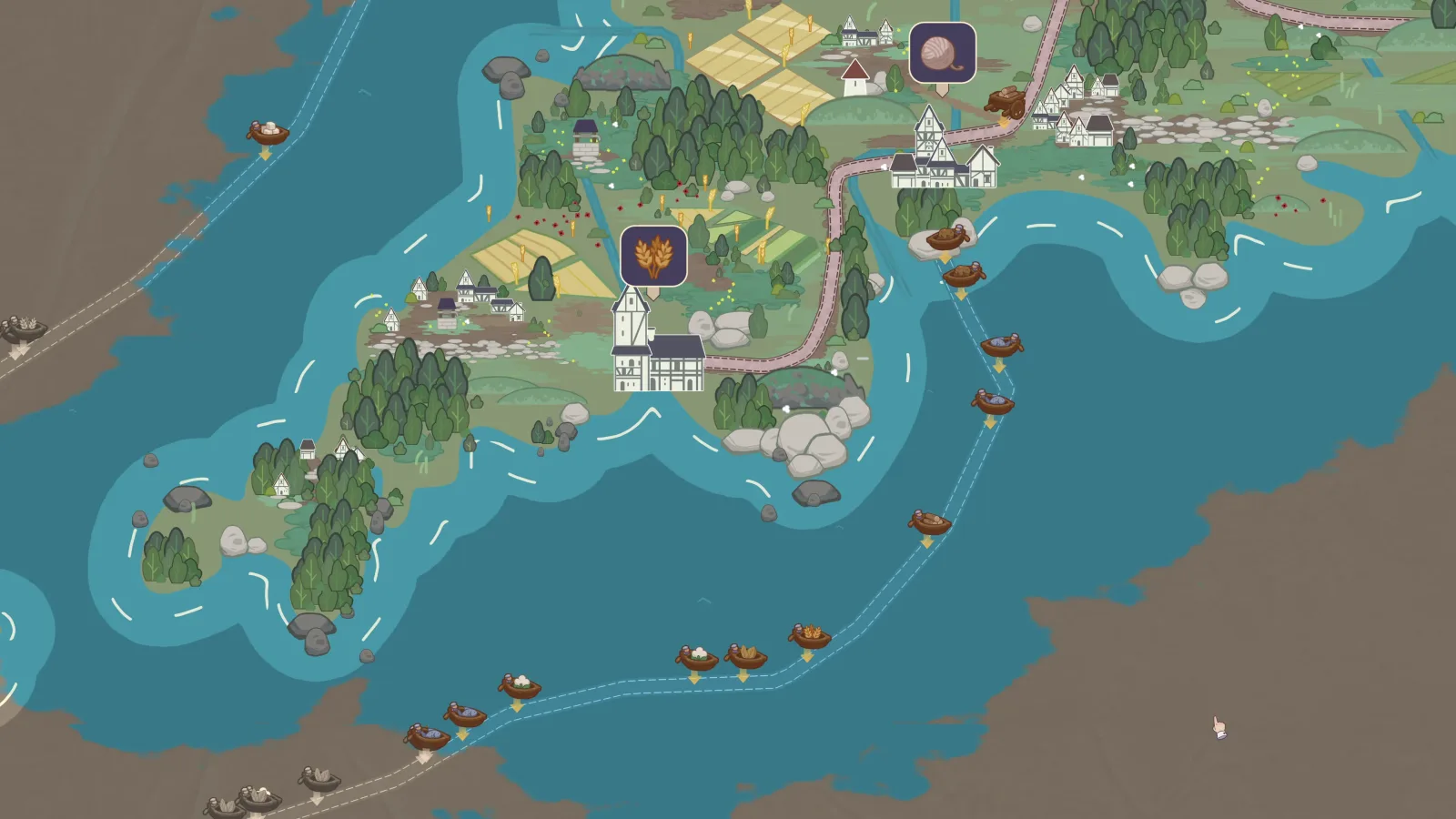
The campaign unfolds across a hand-painted world that is animated by flows of capital, commodities and armies. That presentation aims to make the state's systems visible rather than leaving them entirely in menus or spreadsheets. As players develop their empire, they can see the activity generated by commerce, military movement and economic exchange traveling through the world.
It is an appropriate visual direction for a game centered on process. Empires are often represented in strategy games through borders, flags and conquest maps, but How Empires Work is also concerned with what happens within and between those borders. The movement of material and money matters because it reveals whether the structures behind expansion are actually working.
Colonization is one of the available avenues for growth, alongside trade and military power, while diplomatic influence gives players another means of engaging with the wider world. The available details do not lay out a fixed sequence or prescribed route to success, but they make clear that the game's systems are intended to support multiple dimensions of statecraft.
As a result, players can expect the character of the game to evolve along with their empire. The opening hours are built around the humble action of clicking to begin accumulating progress. Later stages shift toward automation, provincial organization, economic engines and the challenge of sustaining a much more complicated political entity.
Grand strategy through an incremental lens
Grand strategy traditionally asks players to contend with large-scale questions: how to govern territory, build economies, field armies, respond to opponents and secure a place in the world. Incremental games, meanwhile, specialize in making growth legible and satisfying through repeated upgrades and compounding systems. How Empires Work brings those traditions together by making institutional automation the bridge between them.
The approach could make the game accessible to people who enjoy the momentum of clicker and idle-inspired design but want that progression attached to a strategic theme. At the same time, fans of empire management may find a different perspective on familiar subjects such as tax collection, logistics, labour and administration.
The key distinction is that players are not merely issuing orders to an already-functioning country. They are helping establish the mechanisms that enable the country to operate. A larger army or broader trading network has value, but the systems maintaining those things are equally important. Expansion becomes a question of whether the player has developed enough capacity to support the new scale of their ambitions.
That framing also gives the title a potentially strong sense of escalation. The first automated process can change how a player approaches the game, and further automation can reshape the entire balance of responsibilities. Decisions that once required a click may become the work of an institution, freeing attention for the next challenge created by growth.
Available now for PC players
How Empires Work is available now on Steam for PC. Crow Cottage's launch package includes the full release, a limited-time 10% discount running for the first two weeks, and a demo for those interested in sampling the game's blend of incremental progression and grand strategy management.
For players drawn to political economy, expanding maps and the satisfaction of transforming manual work into efficient systems, the game offers a focused take on empire-building. Its subject is not simply conquest or accumulation. It is the process of assembling the institutions, infrastructure and economic momentum that allow an empire to grow--and the increasing pressure required to keep that machine running.
Community
Discussion
Start the conversation.
No comments have been posted yet.